Experiencing a midlife crisis is normal. It only becomes abnormal if you remain stuck in it for an unhealthy amount of time. Daniel Weinberg sits down with Richard Sutton, Founder of The Performance Code and Director of SuttonHealth, to discuss how to reinvent yourself and rediscover your passion to unlock your most empowered version. They explain why complete self-transformation starts not with a radical overhaul, but with a return to curiosity, consistent action, and overcoming the paralyzing fear of the unknown. Richard also opens up how he overcame his rough childhood to discuss how to silence your self-critic, eliminate toxic positivity, and spend more time on positive self-dialogue.
—
Watch the episode here
Listen to the podcast here
When Shift Happens Anything Is Possible With Richard Sutton
In this episode, we talk to Richard Sutton, author of four books, his latest being Shift Happens, where we learn about how to transition our lives. Mens Anonymous. Richard, welcome to the show.
It’s amazing to be here. Thank you for having me.
I’m so excited about this. I’ve been trying to lock you down for quite some time now, so I’m mucho excited about this. If I look around at my peer group, men in their early to mid-40s up to the mid-50s range, my observation is that there are a lot of midlife crises that are happening. They’ve chosen a career path that, twenty years down the track, they’ve woken up to and see themselves as a failure. They haven’t gotten to where they expected they’d get to at this point in their life. They might be married with kids, have this responsibility, and feel the burden of that. They may have chosen a partner and feel stuck in the relationship, but maybe they can’t afford to move on.
There are a lot of these mini midlife crises that I see going on around me. The common theme is that they all feel stuck in that path. They made their choices. They’ve got to stick to it. They don’t know how to reset. They don’t know how to pivot. It’s common whether it’s a career choice, relationship choices, or life choices. They’re struggling. I came across your story and your latest book, which is a catchy, cool name, Shift Happens, not Shit Happens. You go deep into how one deals with that. You’ve got your own life story, which helped you formulate these.
These aren’t just intellectual ideas. These are ideas that you’ve experienced yourself and then translated into the difficult process of putting a book together, which you and I have spoken to about before. I want to start deep, straight in, that this is a crisis going on with men in general, the way society has positioned men as being the ones that need to be the providers, etc. There’s a lot, given where the world has gone, the economies, etc., where they have failed, with respect, if you’re going to measure in terms of monetary success or being able to successfully deliver their performance as a successful provider.
How Make A Monumental Shift To Get Out Of Midlife Crisis
I want to throw it over to you and ask you. When you are stuck, you’re so in it. You can’t see the wood for the trees. You don’t know how to get out of it. I want to understand. How do you see one being able to take control, execute that reset, execute that pivot, and change paths, knowing the risks when you do that? There is the known, which people tend to stick to, because they’re like, “I know this is not great, but I know it. What if I roll the dice here and shift paths, and I’m even more fucked than my current situation? I’ve dug myself a deeper hole.” I want to understand how one makes such a monumental or significant shift in their life to get out of where they’ve dug themselves into and move into a more positive, fruitful, and better outcome. That’s my hope.
So many of us live and exist in that space. I do a lot of work for different leadership organizations around the world. Often, the facilitator or the host will contact me and say, “Will you come and speak?” “What do you want to speak about? Performance? You want to speak about health? Health performance? What is it?” They proceed to start unpacking some of the stories of their core members.
What invariably happens is we land on one point. These are very successful people, in different parts of the world, different organizations and institutions, different roles, and different functions. The theme that we always land on is struggling with transitions. This can be transitions to new businesses, transitions in this world that’s changing, transitions in their marriages, or transitions with their kids getting older.
When you say transitions, do you mean change or the necessity for change?
It is to change and not hold on to the past and the identity that was formed in the past. This becomes a theme. At the end of the day, it is a hero’s journey. We all find ourselves at multiple stages of our lives, whether it’s in the 20s, the 30s, the 40s, the 50s, at these points where things are going well, or things are not going that well. We feel stuck, and we’re restless. We wake up, and we don’t know what’s wrong and what’s right.
It’s this no man’s land, almost like an abyss in many respects. We want change and think back to when we were 15, 18, or 20, and anything possible in the world was always there. We’re going to do this. Anyone who answers the question, we’re going to change this, be this, and live like that. We get to 50, and we might have been very successful in what we’ve chosen to do. We might have had the family that we wanted to have. We’re sitting there. We wake up. It’s just another day of repetition of the same day that we’ve had for the last five years.
There has to be more to life. We start questioning. Life at this point in time is making decisions for us. We don’t want to give up our comforts. We don’t want to give up our status. We don’t want to give up so many of these pieces, which, at the end of the day, our identities are attached to. What happens is we have those days where, “I’ve got to change. I’ve got to do something. I don’t know what to do,” and then we go back to, “No, it’s too difficult to change. I can’t do that.” We go in. We end up in this dance. Sometimes, there’s something in life that imposes itself on us.
We do not want to give up our comfort or status. At the end of the day, our gains are attached to these things. Share on XThe Challenge Of Having Change Imposed On You
When you say that, it’s almost like your hand is forced.
Change is imposed.
That’s my experience. My experience is that change was imposed. When I broke down, I had no choice. When the change is not imposed, when it’s not like you have no choice, that’s the more difficult part for you to anticipate it or to make the choice yourself. It’s almost easier to get bankrupt, wiped out. You have no choice. You’re out. When that happens, you can either lie there on the ground and play victim, or you have to get up and get back in the game. If your partner leaves you in a relationship, you have no choice. Those things are imposed. I understand when that happens, when it’s imposed on you, you have no choice. You get into action.
You see your resilience come through. You dig deep because you have no choice. If you think about the situation, if that were to happen to you, you’d be like, “If that happened to me, I’d be fucked. What would I do?” In those situations, the human spirit is pretty astounding in what you realize you can achieve when you’re in that moment. The question I want to understand is when you’re not forced, but it’s what you described, your life where you wake up, and it’s on repetition. You are unsatisfied with life. You’ve lost the spirit for life. You’re in this cycle of mediocrity of not too bad. “How are you? Not too bad.” When you’re in that mode, what do you do?
To circle back to what you said earlier, when change is imposed, it’s very stressful. Stress is a mobilizer. Stress gives you 20% more power, more acuity, more strength, and more energy. It’s 20% more of who we believe we are. That’s the gift that stress gives us. The change imposed is unpleasant. The change that is chosen is exciting and exhilarating. So often, the decisions are made by the circumstances that we’ve surrounded ourselves with.
To answer your question, in that no man’s land, we want more. We don’t know how to get more. How do we change? How do we move? Invariably, it boils down to pausing, not doing more, but pausing and asking oneself three or four questions. The question centers around not a goal at first, but rather who I want to be. You look at your life and say, “This is where I am right now. I’ve got another chapter, another decade, 2, 3, 4, 5 decades, however many decades it is. Who do I want to become?”
You drill down on that identity. Who do I want to become? It doesn’t matter who you were. It’s irrelevant because you can reinvent yourself. The second question is, ask yourself what you want for this new chapter of your life. What do you want for this phase of your life? Who do I want to be? What do I want for this phase of my life? You drill down, and you stay with it. It’s not going to be easy. Your brain is going to seize. In fact, in those questions, you’re going to blank.
When you say you do that, are you saying you write these things down, ponder, journal, and consciously think about it, even if you hit blanks?
Even if you hit blank, you go back to it the next day. What do I want to become? Who do I want to be? What do I want for my life? Probe these questions that you haven’t asked yourself since you were a teen. Going deeper, you have to start asking the question, “If I’m in this position now, what’s going to have to change for me to be this person?” You start looking at your life, whether it’s a dysfunctional relationship, whether it’s work at the expense of life, or whatever it may be. What’s going to have to change? The final question in terms of completing the set is, what am I willing to be? How important is this to me? Once you’ve mapped this out, you have your departure points, not the end point. Who do I want to be?
Stress mobilizes us, gives us more power, and offers us more energy. Share on XDealing With The Inability To Dream
I’ll stop you there for a second. Before we even get there, if I’m going to promote this message that you suggested, I’ll be very presumptuous, because I know, given the conversations I’ve had with some of these men, their first response is going to be, “Very easy for you to say. You’re successful.” I get that you can come from that perspective, one.
Two, “You wouldn’t understand. The situation I’m in is so difficult. I don’t have the luxury of thinking about what my departure points are and what I want to be. I’ve got a shitty relationship at home. I’ve got two kids. I’ve got to put them through school. I can barely afford to keep up with my financial commitments to get by. Do you think I have the luxury of thinking about what I want to be and what I can do?” That is the general response that I get. Their initial response is, “I don’t have that luxury. I can’t dream. I’m stuck. You think you can do this and that, but I have to pay bills. I have to put food on the table.” How do you get someone who’s that deep, dark, and defeated to start this process that you’re talking about?
Therein lies the problem. “I’m in too deep. I’m stuck. I can’t get out.” We become objects thrown around by life circumstances, not subjects choosing a path and destination. It takes courage. It takes strength. It takes the capacity to rise above. Without clarity, we can’t have the action. If you don’t know who you want to be and where you want to go, what are you going to do? Are you waiting for life to happen to you? You have to drill down on the clarity. It might not be these big, audacious dreams, goals, and aspirations. It might be pragmatic and practical, but you have to find clarity because you need the action.
Even if you’re fucked, and you think you’re in a fucked situation, you’re saying, do the exercise regardless. Don’t worry about what you’re going to need to do after to make it happen. The starting point is to take the first step. Start thinking and writing. Do that as an exercise of “I’m going to write about it. It’s going to be an academic exercise. I’m turning my life. I’m not making any big decisions right now. I’m just thinking about, if it’s possible, what I would want and where I would want to be.” Is that the process?
Remember that this is not a self-help hour, seminar, or symposium. This is a life transformation. It has to start somewhere, one step. If you want things to change, you’re going to have to initiate the process. You’re not going to just fall onto it. Some people are very fortunate, but the vast majority of us have to work hard to change our circumstances. We need that clarity to fuel the action. Once we start the process of action, action over time becomes momentum. The ultimate success or transformation driver is momentum. If we get more momentum, we get transformation.
If we have these dreams of change without action, they stay dreams and nothing more. The departure point, at the end of the day, is to drill down on this. James Clear, in his book, Atomic Habits, said, “Find who you want to be.” That’s it. The goals will align with that. The brain has a funny way of processing our reality. Your brain is constantly trying to align your current reality with your intended, optimistic, or aspirational reality. If you have no dreams and no goals, you’re staying exactly where you are. You have dreams and goals, whether they’re realistic or completely unattainable. It doesn’t matter. Recalibrate, reinvent, re-engineer, and adapt them. It’s okay to fail. It’s okay to hit a barrier.
It’s hard to change. We need the template. We’re sitting in a stuck position. We want to move in. Let’s assume we take this first step. We do find a little bit of clarity. We do understand a little bit more about who we want to be. We go out there into this abyss, this no man’s land. We’re not who we were. We’re not who we want to be. We get there. It is absolutely terrifying. It is petrifying. We’re losing a certain identity. We’re losing certain securities. We’re even making our ego quite vulnerable because we haven’t established ourselves in this new reality, this new paradigm. We get there. All we want to do is go back. “It’s too hard. It’s too scary. It’s too overwhelming. I can’t.” This narrative becomes self-perpetuating.
It becomes, here’s my known. Here’s the unknown. The unknown is scary because the unknown is that I’m not in control. At least I think I’m not in control. Over here, even though it’s known, I think I’m in control, even though it’s shit. I can deal with this because I’m in it. It’s okay.
It’s safety. You go back to our ancestral beginnings. If you look at something called an inertial default, if we found water and food in a certain location, we’d go there all the time. If we lived in a certain environment and it was safe, we would not want to move from the environment. Predictability means survival. We still want to think like that. We live in a very uncertain world. Thirty-three percent of the world’s population has a medical condition known as intolerance to uncertainty. You cannot handle uncertainty. It makes you anxious. It makes you depressed. It derails your emotional well-being.
Lessons On Self-Reinvention From Taylor Swift
We live in a time of uncertainty. Going back to the point, the change imposed on us is very impactful on a negative level. The change that we choose can be positive. We have to be calculated. We have to think it through. We have to follow a pragmatic model. It’s not to say, “Do a Tony Robbins now, and life will change. I’m going to throw everything out the window.” I want to bring this home. Taylor Swift is one of the featured members of my new book. Taylor Swift is an interesting performer. I didn’t know that much about her before I started the chapter on Taylor Swift.
I’ve got one daughter who is a Swiftie, so tell us the story.
You’ve got this individual. First of all, let’s talk about street cred. If you look at most of the business schools in the US, they have a section or part of their syllabus on the Swift effect. Most of the major business schools have a little module within their business program based on Taylor Swift. You’ve got the business school saying, “We recognize what a force she is.” You’ve got the English Department at Harvard. What they’re saying is, “This is an extraordinary poet. This is not an average Joe writing lyrics. She is incredible in how she structures her lyrics to the extent that we recognize that one of the best.”
You’ve got the Shakespearean society in the UK, which is notorious for saying, “Nothing but Shakespeare is the truth.” They’re saying that next to Shakespeare, not in front of or beside, Taylor Swift was one of the greatest poets of our time. She’s got this credibility, then you’ve got the actual Swift effect, where if she goes to a city, or she’s performing, the economy is radically bumped up $200 million, more jobs created. There’s a hangover of the effect, which is extremely powerful. She has won countless Grammy Awards. She produced multiple albums.
The interesting thing about Taylor is that she enters the music industry, and there’s a stereotype. You’re young. You’re beautiful. You’ve got a nice voice. She starts country and Western. She just starts. The general trend in that space is three years. You’ll be successful for three years. You’re going to hold on as best as you can. You might lose your looks. You might not lose your looks, but you’re irrelevant. The next one comes up.
She begins this journey. She makes this decision, “No.” Statistically, no is not an option. No, it’s not going to go that this is how it works. This is the music industry you’re taking on. What she does is she makes a deliberate choice to reinvent herself. Not once has she lost relevance, but in the process of high relevance, while she’s on top, she reinvents herself. She comes out with her next. Two years later, she’s got this new album. It’s slightly different, not totally different, that she loses her audience, but different enough to say, “She’s evolving.”
It is like a transition.
Transition 1.8 years later, new album, new version of Taylor. Two years later, a new version of Taylor. Two years later, a new version of Taylor.
How many times has she done this?
Nine reinventions. She has been at the top, not in the middle, sometimes at the top. She is at the top, dictating terms in the music industry, with a $2 billion net worth only from music sales. She’s been at the top for almost twenty years now. Who does that? This is the power of reinvention. This is the power of understanding your identity and being deliberate in terms of how we’re going to reposition ourselves for our future. Right now, she wants to be relevant. There’ll come a time when she’s done. She’ll check out and move on to something else that’s more important to her.
Reinvention allows you to understand your identity and be deliberate in repositioning yourself in the future. Share on XIt’s the same. I worked for a very successful tennis player, a former number-one player. In the game, she was the brand, massive contracts, all the big players, the tags, the Nikes, the Porsches, and she was absolutely extraordinary. What a consummate professional. At a certain point in her career, she realized that she was going to be done with tennis, but she would decide when she’s done. She actually retired earlier than she needed to. She loves business. She’s going to become an entrepreneur.
She starts developing her skills, not when the tennis is over, “What should I do?” While she’s playing tennis, there’s this reinvention as an entrepreneur. She had become one of the most successful entrepreneurs in the US, not on the back of her brand. The brand is on the back of her ability and capacity. This clarity piece is going to take days, months, or weeks to find. It doesn’t matter how long it takes, but drill down on what this next chapter looks like.
At that stage, is this something that you do with yourself? It’s a personal exercise. Is this something you do, that you go to a therapist? Is this something you talk to people around you? How do you put this into place? What’s the optimal way of doing this process?
I feel that the optimal process is that you’ve got to roll your sleeves up. You know your ecosystem better than anyone else does. No one else can advise. Where a third party is useful is the fact that they are going to impose pressure on you to find these answers.
They’re making you accountable.
If it’s left to our own devices, because it’s so challenging, you’ll notice that as you begin the process, your brain will stop. Anything overwhelming to the brain, the brain shuts down. You’ll look at a piece of paper. “I can’t do this.” The next day, I’ll come back. “I can’t do this.” If you have a life event, you’ll do it because you have no choice, but don’t do it because you don’t have a choice. Do it, as Taylor Swift did it, on the high, as the tennis player described.
Most of these people, who we’re asking to rethink their situation, are not on the high. They’re not the tennis player who’s killing it, number one, and wants to think about being an entrepreneur. They are number 1,000. They’ve got no entrepreneurial prospects that they can even see. Even if they want to do it, it’s like it’s going to be impossible. I’m talking about the masses who are stuck. You’re saying to do the work of introspection, thinking about what you want. No one else can help you.
Gaining Clarity To Move Forward To A Better Life
Once you get some clarity, how do you make that jump to make a call to shift fast? You’re 50, high likelihood that you have responsibility, not just for yourself, at that stage in your life, maybe kids, a partner, or parents. There are commitments you have and responsibilities. How do you make that shift from a concept that you’ve come up with that you think you want to move forward? How do you roll the dice? How do you actually implement the transition itself?
We can talk about a goal structure. We can use certain principles, like the SMART principle. Make it specific, attainable, measurable, and relevant. Timebind it. You can go on to ChatGPT and look at the SMARTER protocols, very cerebral, cognitive, and intellectual. That process is important in terms of breaking down into its components and looking at feasibility and practicalities from a pragmatic sense. The reality is that for any goal, any change to come into being, it can’t be limited to the cerebral. You would have done it already. There has to be an additional factor or two factors that have to come into play. I believe there are three factors, not two.
One is that yes, you’ve got to build the framework and use the SMART or SMARTER model. ChatGPT will help unpack that for you. I’ll tell the story. It brings it to life and shows how powerful it is. There was an Irish gymnast, an aspiring gymnast, a guy called Kieran Behan. Everything he wanted to be in his life was related to gymnastics. He had incredible aptitude, an extraordinary aptitude. When we start in our lives, start on our journey, and have a passion for something, everything’s going well, all the attention and what we do well. Our identity becomes. The whole ecosystem is formed. Life is great. He’s killing it.
He makes this decision in his journey that he wants to be the first Irish gymnast to qualify for the Olympic Games. The Olympic Games weren’t hosted in Ireland. In the UK, he wasn’t automatically qualified for. Rather, he was the first gymnast, a standalone, different country, to qualify for the Olympic Games from the country of Ireland. Everything is going absolutely amazing until one day. There’s always one day in all of our lives. He’s rubbing his leg off to practice. There’s this lump. They go to a specialist physician. He sent them to an oncologist for cancer. They remove the growth, fortunately benign, but in the removal process, they can’t damage some of the femoral nerves.
Certain nerves that supply the thigh are damaged. He ends up in a wheelchair following the procedure to the extent that the physician and the surgeon are saying, “You might get out of the wheelchair, but you’re probably going to be down there for a while. Think about another dream.” He’s sitting in this wheelchair. “Not a chance. I want to be the first Irish gymnast ever to qualify for the Olympic Games,” just sheer determination. A year later, he’s out of the wheelchairs and back on the mat. That’s the passion thing that he had.
The story is one of those magical stories. Everything is going unbelievably well. He attempts a certain move. I think it’s on the parallel bars. He misses the move and hits the back of his head, an absolute blow at pace, collapses to the ground, and is rushed off to the hospital, with brain damage, swelling of the brain, motor centers, coordination, all the stuff. He’s being fed out of a straw. He can’t use his hands. His parents quit their jobs looking after him, or something to that effect. There’s this absolute trauma in the system. The doctor is saying, “Kieran, I hate to break this to you. I know this is going to come very hard. You will never walk again.”
From the dream of the new up-and-coming star, everything is made about this kid as a super kid, the wonder kid. He’s not sitting with this news, like, “I’ll never get what I want. I’ll never reach this dream. Cancel the aspiration.” He’s sitting in his wheelchair, with the center of the brain that was damaged, including motor centers and coordination. His parents are feeding him and trying to inspire and motivate him. In his mind, he’s locked in one thing. “I want to be the first Irish gymnast to qualify for the Olympic Games.” He locks in. This force of clarity sees him get out of the wheelchair in three years. He’s back on the mat.
Yes, it took a bit of time, but back on the mat and very competitive a year later, so much so that he was almost ready to qualify for the Olympic Games in terms of senior competition. In the next tournament, he ruptures an ACL. One year later, he’s back on the mat. You think that there’s no way. He’s had brain damage. He’s had cancer. There’s a whole bunch of injuries I haven’t talked about. He’s had this ACL repair, which was an emergency procedure. It was hectic. “I know exactly what I need to do. I know exactly who I want to be. I want to be the first Irish gymnast. I’m doing it for my country. I’m doing it for the people around me. This is what I need to do.”
A couple of years later, we’re talking 2011. He’s the world champion on the floor. He’s the best gymnast in Europe on the floor, after everything he went through, to the extent that he now qualifies for the Olympic Games. You think that this is the end of the story, goal achieved, and dream achieved. I’m watching. He goes to the Olympic Games. He’s one of the best gymnasts in the world at the time. He completely underperforms at the Olympic Games. No one knows why. In the interview, he is talking to the interviewer, “I’m so grateful to be here. I’m so grateful for my family. I’m so grateful that this dream came about.” He starts telling a story about how he was told he’d be in a wheelchair and never compete, never walk, never stand, and never do anything.
Through force of will, determination, and passion, he arrived at this place. He says, “I’ll be back, and I’ll do great things.” He reconciled. You don’t understand this. He was so close to his dream, but one almost wants to look at it through the lens of his failure. He was there, but he didn’t get there. He didn’t get to the finals. I stopped looking into why. Why this narrative? Why didn’t he perform? What unfolded was that he broke his foot a week before the Olympic Games. He never complained, not, “I’m in this situation because of. I didn’t qualify because I was impaired.” There was no excuse. What am I going to do next? What do I need to do to achieve the next milestone? I got here. It’s an amazing gift.
Everything that we’ve got in our lives is an amazing gift. You’re stuck. It’s a gift that you’re stuck. You have a family. It’s a gift that you got a family. You’ve been successful in life. It’s a gift. You’re healthy. It’s a gift. It’s all a gift. We have to look at it through that lens and that perspective. What unfolds is that he qualifies for the second Olympic Games. Going back to understanding the next chapter of your own life and setting these goals and making it practical, the X factor is passion. When Steve Jobs got fired from Apple and started NeXT and Pixar, it was passion that got him through the darkness. I believe that more than being stuck, we’ve lost our passion. The question is, how do we find it?
The X factor in understanding the next chapter of your life and setting your goals is passion. Share on XGoing Back To Curiosity To Find Your Passion
You ask a 45 or 50-year-old guy, “What are you passionate about?” They’re so stuck in life. They think that that’s a luxury to go and pursue your passion or even know your passion. That’s for people who have the luxury to pursue passion, who are successful, and who don’t have to worry about things. Then you can go pursue your passion. How do you get to recentering and refocusing on pursuing your passion?
The thing is, I truly believe we all have a passion. We’ve lost our way along the way.
We suppressed it.
We do what’s urgent, not what’s important. We lose our sense. To be honest, it’s easy to get lost in the busyness. I had a productive day. Was that a good day? What is productivity? Did you grow today? We have to understand what motivates us as well. That’s a whole side story. The interesting thing about passion is that I don’t believe we can move forward until we start reconnecting with our passion. In terms of reconnecting with a passion, if our passion is not there, it’s not there.
Where do we have to start? We start with curiosity, because often in life, we do the same things as copy, paste, repeat, year after year, decade after decade. You want to find passion. You’ve got to go back to curiosity. Yes, there’s an exercise. There’s a way of actually drilling it down. There’s an exercise that is presented in the book. It starts with looking at these sparks. There’s a Netflix test, or it can be a Disney Channel test, whatever it is.
You ask yourself this question. What kinds of things do I naturally scroll towards or fall down rabbit holes exploring? You always end up in that space. I’ll always end up at something scientific, something health-related, or something motivational, a tough story that someone overcame. I’ll always end up at the same place. You can also ask yourself which books or conversational podcasts ignite you.
You finish that podcast, that engagement, or that book, “I actually can do more in my life.” We’ve got to start looking at this. We can also write down those activities where you lose track of time, where an hour feels like a minute. There are some activities. For me, it’s writing a book. “I’ve only got six hours left.” It’s a crazy thing to say. I go and swim. I’ve got ten minutes left. It feels like a mountain. It’s totally different.
Another question to ask yourself is, what topics or skills do I keep coming back to, even when there’s no outcome or reward? It doesn’t matter if someone recognizes you for it or not. What do you keep circling back to? That is the formative piece in this journey. We want to value check as well. We’re looking at what those rabbit holes are. Where do we lose track of time? We want to go one level deeper, values. When was the last time you felt proud of yourself? When was the last time I actually felt proud of myself?
Ask yourself the question. What impact do I want to have on others? We’re so fixated on ourselves. Our limitations and shortcomings are perceived. What kind of impact do you want to have on others? Are you living that? What kind of issues or causes stir something in you, whether it’s feeding those who are underprivileged, educating those who don’t have access, or doing something for people who didn’t have the same opportunities? What are those causes? Have we lost touch completely?
Another great values check is what traits do I admire in others? We’re listening to an interview. It could be humility. It could be work ethic. It could be someone valuing other people for their journey and the support in their journey. Whatever it is, it’s going back to these core values. The final piece is if you’ve been writing this down and journeying, go dive into your emotional memory bank. In that emotional memory bank, ask yourself a few questions. Was there a time, which could be five years ago or yesterday, when you felt unstoppable?
Speak about that time. Everything in your current reality is where you’re completely paralyzed, or you’re completely locked into a current reality. When was that moment that made you cry? When last did you cry? It could be from pride, joy, or the last heartbreak. I looked at my son’s report. My son had a very difficult start to life. There was one particular aspect of his report that everyone said he would never do well, and he did well. I was in tears.
I wouldn’t tell my wife. It shows me how he was able to transcend other people’s opinions and the prison that was assigned to him by those who didn’t know him. Ask yourself a question. Is there a conversation, someone you listen to, a podcast, or a person that has changed your perspective in recent years? Our perspectives do not change. There is sometimes a spark where someone we respect and value, someone who’s interesting, or someone who’s going through the same thing we are, it resonates. It changes our perspective. It makes us think a little bit differently.
The final thing to check from an emotional memory lane is a time when you helped someone, and you realize how much it means to help others. Imagine you take the entire set that I’ve described now. You go through the emotional memory lane. You go through the values check. You go through this curiosity exploration. Everything you’ve written, put that into ChatGPT. You prompt it with, “Find a common thread relating to passion.” You will be blown away at what comes out.
You’re an avid user of ChatGPT for these exercises.
Yes, I find it particularly good with this.
That’s interesting.
You have to put your story as the ultimate context.
The Opportunity Cost Of Unlocking A Better Self
That’s fascinating. We’ve done that. What do we do with that? It spits out the answer, “You should definitely pursue that dream you’ve always had of being a chef.” How do you get out of survival mode? This is not for free. There’s an opportunity cost here. I’ve got to give this up and do this. What’s the bridge? How do you make that transition?
We started with finding clarity. Who do I want to be? What do I want for my life? What’s holding me back? What’s in my way? What am I going to have to change? You’re drilling down, understanding that with any goal, you need a framework, applying the framework, the SMARTER model, a little bit more detail, then aligning it to your passion, going back to finding your passion. It’s not that I found my passion, and everything is resolved. It’s going to evolve.
Finding your passion starts with curiosity. Do things you have not done for a long time or you have never done before. Share on XThe message that I want to relay more than anything else is that it starts with curiosity. Do things you haven’t done for a long time. Do things you’ve never done. There was that movie, Just Say Yes. It was with Jim Carrey. He had to say yes to everything, and his life was totally transformed. It is very much something that reflects our current reality. More than anything else, we imprison ourselves. If we’re going to transform, if we’re going to change, we have to unlock the door. We have to open the windows. We have to make ourselves more receptive to the world around us.
It begins with curiosity. If you want passion, find your curiosity. Ultimately, what’s going to happen is there are certain things in that curiosity, things you’ve never done before, that are going to, over time, spark a little bit of interest. If we engage more in that, we become a little bit more invested. We could become more skilled. More skilled means we get recognition and that validation, things that we validate and recognize, which we are quite passionate about.
All of a sudden, the curiosity transforms into passion. Passion is selfish. It’s for us. We’re doing something because it’s important. Kieran Behan wants to become the best gymnast in the beginning for himself. What was interesting in that narrative is that it shifted from himself to a purpose. “I want to do this for Ireland. I want to do this for my family. I want to do this for everyone who supported me in my crisis.” Purpose is not about you. It’s about how you can contribute with your skills to the well-being and upliftment of others.
Passion is for the self. Curiosity sparks passion. If you want to complete the cycle, what we have to do is go into the reinvention and re-exploration phase and keep this ball rolling, as did Taylor Swift. She was passionate about music. All of a sudden, she has such a big fan base. “I’m not only responsible for myself. I’m responsible for my entire community of millions of people. I’m going to take them with me on my journey, help them grow, evolve, be different, and see the world differently in a positive way.” There is the curiosity to passion, the passion to purpose, and then circling back to the reinvention. We have this framework to get back to your question.
Sometimes, I can get so lost in the detail that I even forget the question. Fortunately, on this occasion, I remember the question. We have the scenarios. The biggest thing that’s going to challenge us in transformation is fear. It’s paralyzing. It’s overwhelming. We lose a sense of peace in ourselves. We lose some of the securities. I’m not saying everything changes. Today, you work in this field. Tomorrow, you’re giving it up and starting, as you say, becoming a chef. No, that’s not what you’re saying. You’re saying, “I want to do one cookery course or more YouTube videos, or follow someone, a group, a restaurant chain, or a hospitality brand.” Just engage more in that world. That’s what we’re asking.
Small steps, not some radical overhaul, and just jump.
You compare Taylor Swift to Miley Cyrus, a very interesting comparison. Miley Cyrus, equally as Taylor Swift, by twelve years old, she was rocking it, three albums, the most prominent face in music and entertainment, and an absolute superstar. She gets so frustrated by the conformity that she totally reinvents herself and loses everyone in the process. She has to build a new audience. She gets frustrated by the genre, reinvents herself radically, loses everyone again, and loses the audience again.
Taylor Swift is no. “Come a little bit. Who I’m going to be in twenty years is vastly different from who I am in two years.” This is one of those big things. To get back to the limitation, the barrier is always fear. What can we do practically to look at that? Stress, fear, uncertainty, how do we navigate this? How do we become more courageous? There are many tools. If we were to start looking at our inner dialogue, we are like, “I can’t. Maybe I shouldn’t. I don’t know if it’s possible. I’m such an idiot. I’m so old now. I haven’t got this. It’s too late.”
The self-critic is pounding you and telling you all the reasons why no.
All the reasons why not are now triggering cortisol. Cortisol is restrictive. You have a 130% spike in cortisol in response to this dialogue, “I can’t. I shouldn’t. What am I going to do? I’m not going to be at the top of my field. People are going to perceive me. I’m going to look like a fool.”
The laundry list would be on repeat in a circular conversation. You just go with all the reasons why no. “It’s not possible. I can’t. The kids.” You find every reason not to take any action.
What’s interesting is that once it starts to play, copy, repeat, and repeat, you see that the cortisol levels rise because nothing will trigger cortisol like negative thoughts. You’ll see oxytocin, this amazing molecule, plummets about 40% within that region. Oxytocin, what is this molecule? What’s this scientific stuff? Oxytocin is an amazing molecule. This is how crazy it is. It’s a molecule of courage. It’s the molecule of fearlessness. It’s the molecule of aspiration.
Differences Between Optimism And Toxic Positivity
It’s a molecule of connection, compassion, and everything we want to be. Oxytocin is that molecule. The place to start is to look at this internal narrative and say, “I’m going to put this on pause.” You can’t change it overnight, from all negative to positive. That’s toxic positivity. This is a great segue to understanding the difference between optimism and toxic positivity. You’re stuck in your life.
I never heard of toxic positivity.
Haven’t you been in those social settings? You ask someone how things are going. “Unbelievable. Never been better. This is the best time of my life. I’m so strong.” You ask their wife how they are doing. Their business is under pressure. I don’t know how they’re going to survive. They’re so stressed. They’re about to fall over. They’ve been to the physician three times this week. There’s a parallel reality. They’re trying to will themselves into those states. It’s a very dysfunctional, diminishing, and dismissive state to be in, because you’re not acknowledging where you’re at, who you are, and the situation, the circumstances that you’re facing. It’s a denial more than anything else. It’s a delusional denial.
The distinction between optimism and toxic positivity is very interesting because toxic positivity is that everything is great. Everything’s wonderful. You’re telling yourself, “Wonderful. Great. Wonderful. Great.” It’s not, and your brain knows it’s not. Optimism is misunderstood because we think that unless we say, “It’s great. It’s wonderful. We’re optimistic,” that’s absolutely garbage. Optimism is a total, truthful acknowledgement of where we are right now. “This time in my life is hard. I’m feeling the load. I’m feeling the strain. I’m feeling the tension in the relationship. I’m not enjoying this. I feel overwhelmed. I feel insecure.” That’s optimism.
Believe it or not, this acknowledgement is part of the optimism cycle. Optimism is somewhat distinct in that there’s this deep belief that I will be successful. I will rise. If you’re lying in bed, you’ve had an operation, you’ve had some flu, you’ve had some illness, or whatever it is, God forbid, but you’re not well, what do you start doing? I start eating a bit better. I started taking some supplements. I start bringing the physio in a couple of times a week. Whatever it is, you do it. We’ve locked into what optimism is. Optimism is this deep knowledge internally that you will be successful, or you desire to be successful.
It’s the actions, behaviors, and attitudes that you adopt to achieve that. If we believe the world is going to be successful for us in the future, we start adopting those behaviours, attitudes, and practices that culminate in that reality. What I’m saying is optimism is about action. This is why we have to find what we want, because we need to take those actions. It’s not going to be easy. Going back to negative thoughts, you look at negative thoughts and say, “How do I break the cycle?”
It’s very challenging when you’re having that circular discussion with yourself. I’ve interviewed various people on this. It seems that most of us go through this at some point in our lives. You have what’s called the itty bitty shitty committee, which doesn’t stop talking and talking you down, the unlimited chatter. I went through a period of that for about six months. It’s repeating the conversation with yourself, the dark conversation, and the hammering of yourself. That self-critic is like, “You’re fucked. You’re a loser. How did you get yourself into this situation?” It’s the doom and gloom, constant circular. You go mad.
The Benefits Of Doing A Five-Minute Journal
You ask, “How does one break the cycle?” There are several ways to break the cycle, which are easy and effective. A great study by Ethan Cross, maybe in 2019, comes out. What they did in the study was there was incredible diagnostics in terms of whether it was EEG, other diagnostic measures, looking at what happens to the brain if you do specific things in response to negative images or negative memories. What they do is they get all these individuals in a room. What they request of these people after showing either negative images or asking to recall a very difficult, painful experience in the past, they say, “You’re going to tell us about it.”
They’re going to be two groups. One group is going to insert their name into the conversation. “I had a difficult childhood.” I can say that. Instead of that, I want you to go for a third-person self-reference. I want you to say, “Richard had a difficult childhood.” Every time you recall something painful or difficult, I want you to put your name in the sentence. What unfolded was insane because the emotional centers within the brain, in response to creating this third-person self-reference, shut down.
It became a cognitive exercise, not an emotional one. The best way to stop the chatter, when you’re thinking, “I can’t do this. I shouldn’t do this. I’m so scared. I’m incapable. I’m not good enough,” is to say, “Richard feels he’s not good enough. Richard feels he’s scared.” In doing so, you create a bit of psychological distance. All of a sudden, emotions seem to shut down. There is perspective.
It’s dissociating yourself from the actual feeling itself.
That’s one tool. Another quite profound tool is that one of the big seminal studies, which I cite in the latest book, was looking at how much positive self-dialogue you need to infuse into your psyche to change the equation from this negative state to a positive reality. What they found was it’s about a 20% shift. It’s not a lot. You just have to set the tone. Set the precedent. Just break the cycle.
Give me some examples.
We could use an affirmation. There are certain things that we know we’re good at. “I’m a good parent. I’m a good parent. I look after my kids well. I look after my kids well. I care for my kids. I love my kids. I love kids,” or “I’m very determined. I’m very committed. I’m very diligent. I’m very determined.” What you do is you put it on a loop. In our brain, the loop is, “I can’t. I shouldn’t. I won’t. I can’t. I shouldn’t. I won’t. “
I can relate to this. Have you heard of the five-minute journal? I’ve spoken about this before. The five-minute journal asks you to name three things you’re grateful for.
I love it. I use it all the time.
You start the day with three things you’re grateful for. It then says, “Name three things that you’re looking forward to today.” One is a statement of affirmation. I say, “I’m very grateful for my five kids. I’m very grateful for my partner. I’m very grateful for my physical and mental health and clarity.” Three things I’m looking forward to today. Simple. “I’m looking forward to going to the gym. I’m looking forward to having lunch with my girlfriend. I’m looking forward to relaxing.”
The daily affirmation is, “I’m in a loving and passionate relationship with an incredible woman,” for example. Every day, you write the same thing. At the end of the day, they ask you, “Name three things that you enjoyed or were grateful for today.” “I had a good gym session.” The last thing before you go to bed, what did you learn today? It could be anything. It could be something profound. It could be like, “I learned that when you’re nice, people smile back at you.”
What I realized with any of these types of exercises, which is you’re putting the positive affirmation cycle into place, is that exercise itself is rewiring. I interviewed a gentleman who faced obesity. His mother died from complications of obesity. Very late in life, in his 40s, he’s at 140 kilos and unhealthy. He realized, “I’ve got to change.” Without him knowing any of these tools, without even realizing, he decided he’s not going to change his diet and do exercise because those things come and go. They’re not sustainable.
He started writing in a diary every day. “I’m a good person. I’m a kind person. I love myself.” He was reiterating, “Stop being self-critical and judging yourself.” He did that for a year. He didn’t change his habits other than that. After a year, he rewired. He looked at himself in the mirror and said, “I love you, man. I’m a good person. I’m not going to associate my obesity with who I am as a person. Obesity isn’t me. I’m struggling with that, but that’s not who I am.”
From there, he decided to study personal training and what it means to have a healthy lifestyle because he was in a positive frame of mind. From there, he changed his diet and started training, but not crazy. He transitioned and said, “I didn’t need to write my diary anymore. I stopped my diary because it had become so ingrained in me. It’s how I thought.” I did the journal as a practice. I’ve been doing it again for about a year now.
I gave it to all my kids who could write. I gave it to three of my kids to get them to do the same. I realized that it made me go and write. I’m on autopilot. I’m grateful for my five kids. I’m grateful for my partner.” It is now in my head. Why? It’s hard fixed. It’s not something I need to think about. What’s a statement about? No, my statement of affirmation, I can write it to you whenever you want. It’s on repeat.
It takes us back to where we started. Firstly, to weigh in on the gratitude, I love this exercise. I do it myself. I don’t do it every day, but I do it on days when I wake up a bit negative. In a few days, I do. The interesting thing about gratitude and negativity is that they can’t coexist. Expressing gratitude, you can’t be negative. It’s impossible, neurologically speaking. You’re circling back to the beginning of the conversation. It was about identity. Who are you? I’m a good person. Who are you? I’m grateful. Who are you? I’m present. Who are you? I’m acknowledging the value of the day. Who are you?
There are different studies on habit formation, but ultimately, our identity gets locked in around the 70th day of doing this exercise, and then it is no longer an exercise. It’s our identity. This is who I am. What you described is so beautiful because to change, we need to create the right state. We can’t take behaviors until we’re in the right state. That is so profound. What we’re saying with this negativity or this chatter exercise is to create the right state. Turn the dial down. You can use third-person self-reference. You can use the five-minute gratitude journal. I love that. Start the day. It’s unbelievable.
In order to change, you need to create the right state of mind. Share on XYou can use affirmations, but the trick with affirmations is that what we do is, “Believe in yourself. You’ve got this. You’re capable. You’re strong.” We say it four times, and then we think, “Why am I not this person?” The reality is that we have to put it on a loop for at least 21 seconds. We’ve got to do this with a short break after 21 seconds for about five minutes. If you’re going, “Believe in yourself. You got this. You got this. You got this,” for 21 seconds, then break. “You got this. You got this. You’re capable. You’re capable.” You break. You do it for five minutes.
That is when the change happens. That is when the cortisol drops. That is when your oxytocin starts to stabilize. You can start to say, “What am I going to do? Who do I want to be? How am I going to get there? What are the things I’m going to have to change?” So much of the book is state-creating behaviors. In the book, there’s cold immersion. Having a cold shower can take 3 to 5 minutes. It doesn’t matter. If you’re a little bit more adventurous, you can fill a bath up in winter and get in the bath for 3 to 5 minutes. Why is it so profound? It’s because you’ll have a 50% reduction in stress perceptions. Things that are normally stressful to you are 50% less stressful.
Cold bath, cold plunge, jumping in the ocean, in the cold water, it’s anything like that.
There are generally five things that happen when we go through significant trauma within the brain. What cold exposure does is actually reorganize your neural architecture, almost offsetting some of those shifts that have happened all those years ago. There’s a rewind. I’ve been cold plunging for a couple of years. I found it to be extremely profound in terms of putting to bed the past, more than anything else.
Until I went into some of these studies, I didn’t know how or why. It’s not because I feel clearer or more cognitively sharp or alert. Sometimes, I actually don’t feel like it. What I can say is that I feel this profound shift. It’s something that happens in the short term during the day. I feel I can handle more pressure, but in the long term, it’s letting go of the limitations that might’ve held me back.
Overcoming The Feeling Of Not Being Enough
There are a lot of nuggets that you’ve thrown out here. I believe wholeheartedly that when you have someone before you who’s sprinkling nuggets like they’re going out of fashion, it comes from a place of having lived the life or experienced. I’m speaking from my own experience on reflection. I read a lot of these books. I was very well read and curious. I understood a lot of this stuff at an academic level, which is quite superficial.
I understand intellectually, but until you experience those big shifts in life, have those traumatic experiences or very challenging life experiences, and move through and up from the experience, it is when you truly understand deeply inside, both mentally and at the core in your soul and emotionally, that you can understand a lot of the stuff you’re talking about here. What was the life experience that you had that brought you to this place where you’ve knocked out four books now on these subjects, such as Shift Happens?
Honestly, to come up with these answers and this guidance, you’re not going to study this at Harvard or Oxford. “I’ve worked it out. I’ve got the solutions.” These are practical tools that one can put into place that you may have grabbed from some other people, but there’s no way you can understand them unless you’ve been through it. It is very long-winded. My question is, what have you gone through that got you to this place? You’ve been through something.
We’ve all been. I don’t think anyone’s exempt. For some of us, it was early in life. For some of us, it is still to come, but we’re all going to go.
When you say you’re not exempt, there are degrees of what one has been through. You could have had a little appetizer, an entree, but you haven’t had the main meal.
I’ll unpack a little bit. I grew up in a very painful home.
What does that mean?
There was physical abuse, alcoholism, psychological abuse, a lot of neglect, and poverty. It was very hard.
Where did you grow up?
I grew up in Johannesburg, but very complex dynamics for a number of reasons. No one to blame. It’s not pointing fingers. It was the circumstances that couldn’t be any other way. As a child, you can’t contextualize it. Anyone who asked me what it was like, I said it was a PhD in pain for a kid to feel. You’re moving again. Why? It’s because you haven’t paid the rent. You’re moving again. Someone has kindly dropped off grocery parcels. As a kid, it’s hard.
It’s a new school and another new school and another new school. You need stability. You need certainty. You’re ready to battle. The years passed. Fifty percent of people go through a very difficult experience. I’m in good company with a lot of people tuning in right now. I get through the years. I was about thirteen years old. Just the thought of going home, I couldn’t go home. It was too volatile. There was the sinking feeling where your heart drops as you walk through the door.
Your adrenaline shoots through the roof. You’ve got to be ready. You don’t know what’s coming. What I do is I take on an evening job. I looked a bit older. Stress can do that to you. It makes you look a little bit older. You can wind it back and wind it forward. I looked a bit older. No one knew how old I was. I took a waiting job at thirteen years old. I would come home from school. I’d walk. It was about an hour and a half to the restaurants. I’d come back about 10:00 or 10:30 at night.
I would go on and repeat because that was the safest way to exist in that environment. Needless to say, you’re exhausted. There’s no time for any extramural. There’s no time for self-development. It is pure survival mode. You feel very imprisoned by circumstance. There’s no certainty. There’s no security. There’s no safety. Nothing you need is there other than your own inner universe. What happens is I start doing particularly poorly at school for obvious reasons. There’s this intervention where we got to find out why he’s not doing it. It’s quite obvious.
Intervention with whom?
The school suggests I have an aptitude test with a prominent psychologist. Somehow, I don’t know how it was found. That’s an enigma, but one of my grandparents paid, or something like that. I go and have an aptitude test. I’m writing. As a child, you are fifteen years old, or whatever it is, and you lost them. You want someone to tell you you’re good at this. Everything you’re told is that you’re bad at this. You’re useless. You’re not good enough. You’re a waste, very negative dialogues, which have entrenched themselves. I go and have this aptitude. It’s difficult.
It was a very unpleasant experience. I’m assuming that we all have these hopes and dreams that we all believe that we’re greater than we are or not, whatever it is. I’m thinking, “It’s going to be something amazing. I find this thing that I’m going to be able to be and become. It’ll give me hope.” At that point, I needed hope. Two weeks later, I came back for the results. The aptitude guy says, “I’m sorry, you didn’t do well in anything. All I can suggest is some trade,” whatever that means.
As a fifteen-year-old kid or a fourteen-year-old kid, you walk out that door. You think, “What the fuck? How can you tell this to a kid? What is a trade?” It’s basically saying, “Don’t dream anymore.” This is one of those stuck moments. I’m faced with this decision. I walk out the door. I’ve got two paths. One is to do what I’m told and let life dictate circumstance, or two, say, “Not a chance.” My driving force is going to be to prove everyone wrong. Everyone agreed, “We also see that. We agree with your assessment.” I ramp it up.
“Everything I do is with intensity now. I’m not going to be defined by this definition or this stereotype. I don’t know the next steps. I don’t know where I’m going to go. I have no clue.” Like anyone who’s stuck, I have no clue. I know that I’m going to have to give more to everything. It becomes the genesis of grit and determination for me. The next chapter is where everything starts to transform. I had to do national service in South Africa. It was a very difficult time. The country is going through a transition. The defense force was particularly sticky about it.
We had a lot of animosity. We had a basic intake, which was particularly bad. There were a lot of disgruntled instructors, and the intention was to kill you. I’ve spent five or six years working at night and trying to go to school during the day, doing the best I could. I was absolutely depleted and exhausted. I’m physically unfit and mentally weak. I had no resources and no skills. I entered this environment, which is not this elite basic training, the first of its kind in many years, and completely unprepared. I got off this bus, and it was a bomb.
Within two minutes, my lungs are burning. Everyone else is jogging. I’m finished. You can’t be finished in that environment. You become isolated. You become vulnerable. It’s an environment where you stay in the middle. The rule of thumb in that environment is to stay in the middle and make sure you’re unnoticed. What happens is that every week gets harder. Every week, I’m not coping. This narrative, “I can’t. This is impossible. I’m never going to make it. I don’t think I can get through this.” It was a storm of negativity within.
The Springboks were sanctioned for many years. They couldn’t play rugby. They had this opportunity to play someone somewhere. The base went silent. All the instructors and all the officers all went off to watch the rugby. It was the first time that we had the opportunity to walk. Everything was running. It was always an urgency. It was always carrying a tie or a rifle. There’s something you had to do that was ridiculous. I see the value in it today. I had this very unique opportunity to slow it down because for six or seven weeks, it was just, “I can’t. I can’t. Impossible. I’m not good enough. I’m not good enough. This is who I am. The aptitude people were right. The schools were right. Everyone in that circle was right.”
I’m playing it and playing it and playing it. I’m walking the base. I’m looking around. I was in the Navy. I was on the west coast of South Africa. It’s beautiful. The water is freezing, but turquoise. There were these massive sand dunes. It is spectacular. I’m looking around. For six weeks, I haven’t noticed where I am. This is magnificent. I saw looking around, other people are walking. I’m thinking, “I’m not going anywhere. There’s no way to get out of this. I’ve got to change this narrative. I’m going to make it work. Somehow, I’m going to make it work.”
The grit and persistence piece starts kicking in. “I’m going to make this work. I can do this. I can, I will, and I must. I can, I will, and I must.” There was the triple. I can, I will, and I must. It kept on repeating. What followed that, the first thing that happens, is a psychological shift where I bullied out the negativity. I would not survive with the negativity. I had to make this choice. What then followed was this physical shift. I started from being trailing at the back. I went into the middle of the group, and from the middle of the group to the front of the group. From the front of the group, actually helping others in the group. There was this physically radical transition, as well as mental and emotional. Three months later, I’m loving it. I sat down for extra time, to be honest with you.
The whole ecosystem was the transformative piece. It created the state. I was crazy exercising for the first time. I had group support for the first time in my life. I had discipline. I had structure for the first time in my life. It was the first time I’ve ever been exposed to cold immersion. Sunlight, all day. Natural environments, all day. First time I’ve been exposed to nature. I’ve been in a restaurant, in a home, and at school, restaurant, school, restaurant, school. I look at the book that I wrote and only reflect on it at the end.
It was in the first moments of my life that I felt pride. It was also the first moments in my life that I created an ecosystem that shifted my state, which enabled the behavior. That was the stepping stone where I left the military, knowing that I could do anything. I believe I can do anything. Yes, it’s going to be hard. I’ve had many failures and countless disappointments. I’ve doubted myself almost every second day, but that was the genesis of understanding what we tell ourselves. The goals and dreams we set take us places.
It’s the only way to be honest. You have to live it. You have to experience it. Life is about lots of little errors. We are all making them, and we all have to make them, but it’s about what you do with them and what you take from them. It sounds to me like you took what was, on the extreme, a challenging environment, a challenging experience, where you realize no one has your back but you.
At the end of the day, you’re only going to ever be able to rely on yourself. It’s whether you take that as the opportunity or gift, or you give into it and believe that you’re the failure, that you’re that environment, and that you’re that experience, and not taking accountability or responsibility for yourself and what you’re going to do with it, but rather accepting that is you.
I tell a story like that, and one assumes that that was the hard chapter.
Applying Childhood Lessons On The Challenges Of Adulthood
What’s the hard chapter? Take us further.
I won’t go into detail on this one. It tugs at me a little bit. I’ll touch on it on a very superficial level. My wife and I struggled to have kids. It took us about six years. We went through the IVFs. It was hard. We finally overcame the barrier through a number of things. A lot of those skills helped me in that new experience, that new challenge. There is optimism to believe. Yes, it’s hard right now, but be actionable. What are we going to do tomorrow? How are we going to do it differently? How are we going to reinvent the situation? When my wife fell pregnant, we had our first son. Two years in, he struggled with his health. That was the toughest moment.
Thank God, Kevin is unbelievable right now. That’s a chapter closed. You have this little person who’s so vulnerable. What you do next determines how his life unfolds. I had to draw on everything. It’s your own story. At that stage of my life, I had so little. What could I lose? Now, there’s so much at stake. There are a lot of the same principles that have to be drawn on. That, for me, was the biggest hill so far. There will be more, but it’s remarkable how, when you have a repertoire of resources and skills within yourself, the only thing we can control is ourselves. We can influence other people and influence environments to an extent.
Our focus on these externalities of concern, which we have no barrier, no influence, and no capacity to touch, and our whole focus in the world is on what’s going to happen next. Can we make it? Focus on yourself. Grow yourself. Evolve yourself. Become more valuable. Reinvent yourself. Do it as hard as it is. That’s all you can control, and then you can influence. Influence your circle, influence your network, and influence your community. You can’t control it, but you can influence it. You write the books you need many times. The first couple of books were very much on how I needed to understand mastering stress. The legacy of the trauma carried on into later years. I had to put it to bed.
Ultimately, when we have difficult upbringings, it’s our ability to manage and process stress that becomes impaired. I had to become a master. I spent five years deep in research, trying to understand this for myself. I ended up writing a book that helped many people. It’s very interesting how this latest book is almost a reflection. These are the things that shift, change, and transform their work. Yes, there’s science. It’s also a lot of lived experience. Yes, you’re in a difficult way, state, and situation. I’ve been in the trenches where I’ve been there with you. It’s not abstract. I know the pain. I walk past someone on the road. I know they’re in pain.
When we have difficult upbringings, our ability to manage and process stress becomes impaired. Share on XI took my son to have a haircut. There was a little friend of his. I don’t know what’s going on, but you could see the sadness in the child. I’d say, “Come, you join.” His mom asked me to look after him. She was going upstairs somewhere in the mall. “Come. You sit down. Have a haircut with me,” just to feel part of a community, that someone has noticed him. There was a smile on his face. When you’ve been there, you can see it. You can feel it. It’s palpable.
It’s interesting what you said there. You had one phase in your life where you had nothing to lose. I can see when one has been pushed into that corner, when you have nothing to lose, you can achieve more than anything at that time. You then said you have to use those same skills at a time when the scenario situation wasn’t, “I have nothing to lose.” It was the other extreme. “I have a lot, almost everything to lose here.”
Answering Rapid-Fire Questions
I feel that the people that I’m referring to, who are in general midlife crisis, are not in a position of “I have nothing to lose.” They all feel like they have a lot to lose. What you’re saying there is that using those skills and those techniques that you’ve shared with us doesn’t discriminate against whether you have nothing to lose or everything to lose. We’re going to move. We’re going to wrap up here. I’m going to ask you five questions that I ask all my interviewees. Who would you like to say sorry to, given the chance?
There was an ex-girlfriend of mine, the most sweet, generous, and kindest. She was such an amazing person, but she met me at the wrong time in my life. I was finding myself. I was all over the place in the transition. The person I am today wouldn’t have been that person. I feel that a very big apology is necessary and important. I have reached out, but I don’t feel I can apologize enough.
What are you proud of being or doing in your life?
Breaking a cycle. I could have repeated the cycle. Family is the nucleus of everything. It’s all about being a father who’s present and being a father who’s involved. My wife has to travel a lot. Everyone says, “How are you going to cope?” I said, “This is my best. The kids are in the bedroom with me. I love my wife. I don’t want her to travel. I’d rather she were at home. Make no mistake, but it is so amazing to have this extra gear with the kids.” I never had that.
How many kids do you have?
I’ve got three. A lot of people say you can’t change. I’m proud of the fact that I was able to change. A lot of people say that it’s hard to break a cycle. Break the cycle. It’s a choice.
You’re the master of change and breaking cycles. What are you talking about?
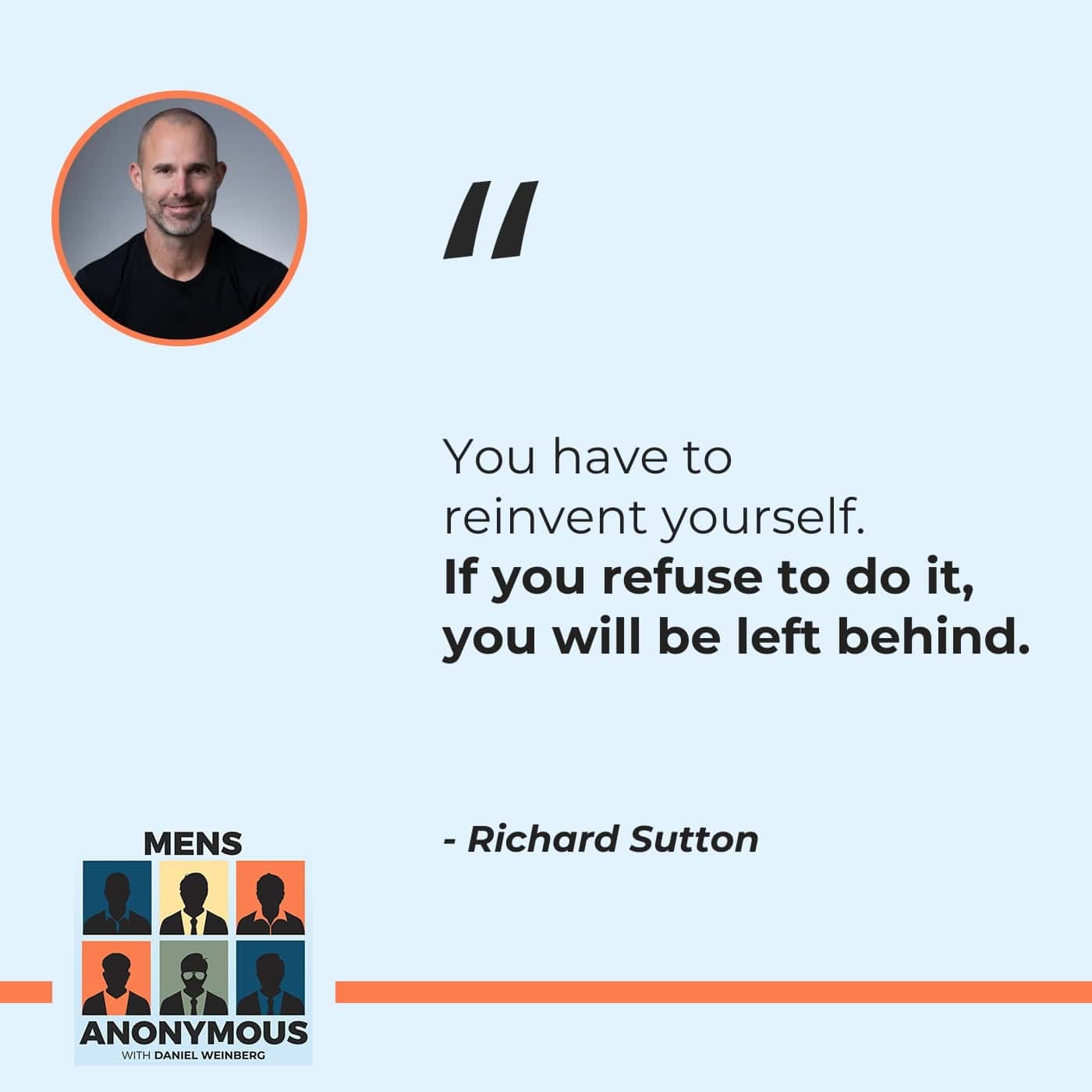
You can do it. That’s the thing that Taylor Swift showed us. You’re going to have to reinvent yourself. You have to. You don’t have a choice. Life is not going to allow you not to. The biggest challenge you’re going to have is not doing it and being left behind. That’s what one should fear, not what’s on the other side of change.
When did you receive kindness while needing it most and expecting it least?
There were many kind events when I was a child, teachers who just let it be. They saw what I was going through, and they were very nurturing. They were kind to me. There were two or three moments in my career where I was moving up, specifically in the world of tennis. I’d moved from national players. I wanted to move into the international domain. I was at Wimbledon for the first time. I was introduced to Martina Navratilova, who became one of my clients.
The coach or the player I was with was incredible. He was singing my praises. I don’t believe I was at the skill level to work at that echelon of the game, yet he backed me. He believed in me. He made me believe in myself, which helped me transcend. It happened on a second occasion. Another coach believed. I was working with players who were ten or fifteen in the world. He believed I should be working with number ones. He backed me when I wasn’t backing myself.
He said, “I believe in you. You’re going to do it.” I didn’t want to let him down. There were two coaches who said, “You’ve got it. I’m backing you.” They were very credible individuals. With my first book, as I explained, I needed to understand this. I invested years of my life into unpacking thousands of studies, into unpacking this stress piece. It was written technically, scientifically, and heavily. I couldn’t get a voice out there. All the publishers said, “No one is going to read it. No one is going to want it.”
Ironically, one of the world’s best publishers, Pan Macmillan, said, “Let’s work with it a little bit, but there’s something here.” They backed me. I was unknown, unpublished, in a topic most people thought no one’s interested in, and it became a profound bestseller, with countless reprints and distributions. I’m grateful to them and grateful to many people. We are because of others, no question. My wife as well, actually. She has been remarkable in my journey.
Shout out to my wife.
She really has. She’s probably the biggest.
What did your mother or father teach you that you frequently remind yourself of? Given that you’ve had, as you described, a very challenging childhood, there must be a lesson in there that you took away.
There is. It came from my grandmother, who took both roles. Throughout my life, she was always in the wings. She was always there. It was a bit of a safety net, the smallest of safety nets, but one nevertheless. She passed away in 2025 at 102. It was very impactful. It was a hard experience. What she taught me, and I see myself doing it today, is that she was always encouraging. Whenever you did something, whenever you demonstrated something, you re-showed it. When I was a kid, when I was an adult, she would be like, “That’s the best. You’re the best. This is amazing. Show me again.” It could have been terrible. “I need to see it more times.” She would always tell me that I’m her favorite. She had a thousand favorites, but she’d always tell you. I do that with my kids. When I’m alone with them, I’ll tell them, “You’re my favorite.”
Is that what you do? You tell each of them privately?
Yes, each of them privately. “Don’t tell your siblings, but you are my absolute favorite.” I’ll go to the other one. “You are my favorite.”
Do they tell each other?
No, they don’t tell each other. They’re the favorite. They must not tell anyone. In a very sweet way, they all know that they’re equally loved. It’s encouragement. If they’re showing me something, I’ll be fully engaged in whatever they’re showing me.
The final question. What is Richard Sutton’s superpower?
It’s a funny thing because if you go back to earlier phases of your life, what are you going to tell yourself? “No, you don’t have a superpower.” With a little bit of success, you can get lost in it. Sitting on the other side of both of those experiences, the thing that I feel has made a tremendous difference in my life is never giving up and being able to change, and being committed to change.
This journey of transformation, this is the journey, reinvention. Two years ago, time to reinvent, not because I’m bored. No, it’s because if I don’t reinvent, I’m not going to be relevant. Time to reinvent. Wherever you are, on top, at the bottom, in the middle, wherever it is, time to reinvent. Why? It’s because that’s what life demands of us. It is never giving up and the ability to change.
Richard Sutton, thank you so much for your time and all those nuggets. I’m sure the audience is going to have a lot to take away from it. I thoroughly enjoyed our discussion. I am looking forward to chatting again soon.
Thank you for having me. Amazing experience. Thank you.
Important Links
About Richard Sutton

Richard Sutton is an international advisor on leadership, resilience, and human performance. Founder of The Performance Code and Director of SuttonHealth, he works with listed companies, executive teams, and entrepreneurs to build resilience and performance in demanding environments.
He has led performance strategy for a winning Olympic team, advised former world No. 1 tennis players, Olympic champions, and Springbok rugby captains, and lectured in postgraduate health sciences for 15 years.
A best-selling author of Stressproof, The Stress Code, Thrive, and Shift Happens (Oct 2025), Richard also pioneered the world’s first genetic panel for sustainable performance and created The Stress Code app to measure resilience in business.Richard Sutton is an international advisor on leadership, resilience, and human performance. Founder of The Performance Code and Director of SuttonHealth, he works with listed companies, executive teams, and entrepreneurs to build resilience and performance in demanding environments. He has led performance strategy for a winning Olympic team, advised former world No. 1 tennis players, Olympic champions, and Springbok rugby captains, and lectured in postgraduate health sciences for 15 years. A best-selling author of Stressproof, The Stress Code, Thrive, and Shift Happens (Oct 2025), Richard also pioneered the world’s first genetic panel for sustainable performance and created The Stress Code app to measure resilience in business.