
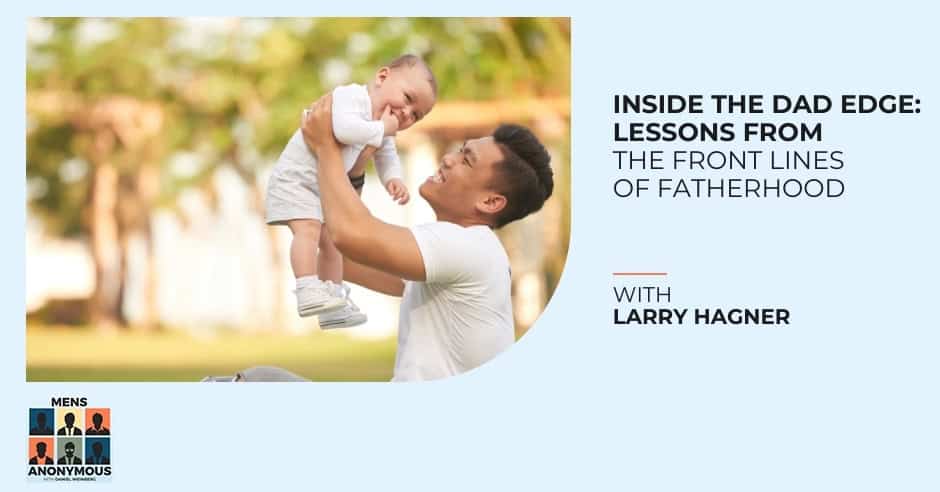
Why settle on becoming an average father if you can always do better and get to the next level? Daniel Weinberg is joined by Larry Hagner, bestselling author of The Dad Edge and The Spirit of Fatherhood, to discuss what it takes to become a legendary father. He shares how to create a space of psychological safety for your children, prioritize marriage as the foundation of the family, and be open to embracing a humble and vulnerable self. Larry also reflects on his traumatic childhood, revealing how it inspired him to shape men into responsible husbands, fathers, and leaders through his organization, The Dad Edge.
—
Watch the episode here
Listen to the podcast here
Inside The Dad Edge: Lessons From The Front Lines Of Fatherhood With Larry Hagner
On this week’s show, we have Larry Hagner, the author of The Pursuit of Legendary Fatherhood.
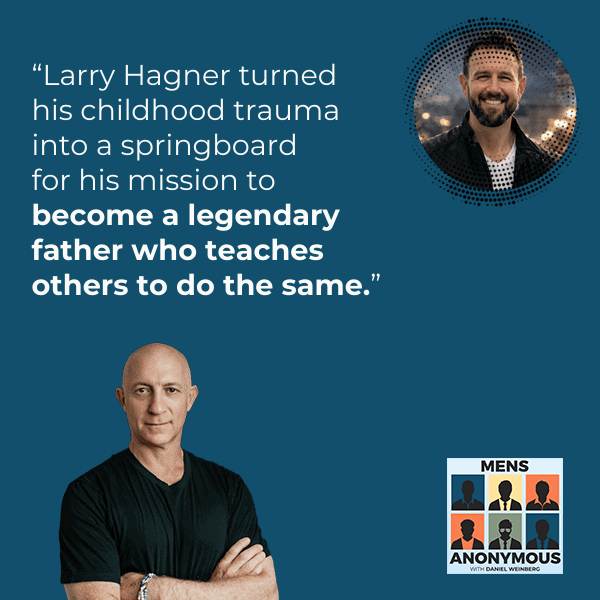
Larry, great to have you on the show.
Great to be here, man. Thank you so much for having me, Daniel.
I have been trying to get you for a little while now. What I really want to talk to you and what really caught my eye was this book that you have written, which is The Pursuit of Legendary Fatherhood. The tagline is, Break old patterns and create an epic legacy as a father and a husband. That is a big caption. You have obviously been on some journey yourself to get to that. Your current status is that you have been married for how many years? How long have you been in this relationship?
I have known my wife for 30 years, and we have been married for 23.
We talked about this is like unicorn status in today’s world. You are the father of four boys?
Yes, sir.
Looking Back To Larry’s Traumatic Childhood
To become a legendary father and husband takes a lot of work, a lot of experience, and wisdom gained. Why don’t you start with how you found yourself in a role of being that man who felt like he needed to write a book on what it means to be a legendary father and husband? That is like climbing Everest to hit those out of the park. How did you get to making that your life mission, focus, career, etc.?
It did not really happen on purpose. I can tell you that right now. Just going back to the book and the title, how does one become a legendary father? That is why it is called The Pursuit of Legendary Fatherhood. It is a funny story. When I first wrote this book, I was going through a publisher, and he heard me speak at an event. He heard me talk about the process of writing this book. He pulled me aside and said, “I really liked what you said. Tell me about this book.”
I told him I was planning on launching it on this day, and it is going to be called The Pursuit of Legendary Fatherhood. He just smiled and said, “The Pursuit of Legendary Fatherhood? That seems long. Why not just call it Legendary Fatherhood?” I just looked at him and smiled and said, “You are not a dad, are you?” He goes, “How did you know?” It’s because he was in his mid-forties. I said, “If you were, you would probably know that there is actually no such thing.”
There is no such thing as legendary fatherhood. There is only the journey to try and get there. Share on XThere is only the journey to try to get there. There is only growth. I am reading this book right now called Inner Excellence by Jim Murphy. He starts out the very first chapter with this one quote, and it really nailed it. It said, “We do not climb mountains to get to the peak. We climb mountains because of who we become to get there.”
I am getting the chills even saying that. I was like, “What is more true?” If you read that book and you look at the peak, that gives us a goal to shoot for. It gives us a target. It is not so much getting up there because once you get up there, you’re like, “It’s beautiful. It’s awesome. This is incredible. I did it.” You just want to go right back down again. I have hiked up a few mountains, and that is what you want to do.
You’re looking for the next big one. Setting yourself a big ego.
I did not have this figured out. I am still figuring it out. It is always going to be a journey. This really started for me when I was a kid.
Did you have a great fatherhood experience as a son?
Not at all, which is part of the reason why. I’ll take you to the time I was twelve years old, and then I will work my way back. I remember I had just gotten off the phone with my biological father, and we hung up. At that point in my life, we had decided we were parting ways.
What did he tell you? What does that make?
I’ll get there. I remember we were parting ways. I hung up the phone. I’ll get to the story here in a second. I remember sitting there at twelve years old and thinking, “When I’m a dad, I’m going to do this different and I’m going to be a good dad.” I literally remember saying that to myself. “I’m going to be a good dad. This won’t happen to my kids.” Something along those lines. Here is what happened. My mom and biological father got married in 1971. They had me in 1975.
It took four years to get pregnant with me. Once I was born, they got divorced within a year. Really disastrous relationship, bad divorce. My dad completely left. I had no recollection of my dad. In fact, when I was four or five years old, I remember being in kindergarten. I remember my friends’ dads would come pick them up from school. I knew some dads wore suits and some dads wore jeans. I did not have a dad. I was okay with that. I thought moms go out and find dads.
That was literally how I interpreted the world. My mom has not found her dad yet. No big deal. My mom tells me one day, literally right around the same time I was five, she says, “I want to let you know I’m having a friend over for dinner tonight. He’s a really special friend. I work with him, and I really want you to meet him.” That was her way of telling me she had been dating somebody she works with. It was time for you to awkwardly meet him.
I remember thinking to myself, “She found him. She found the dad. This is the dad.” This guy comes walking into my house this evening. Literally, he is wearing a trench coat, a three-piece suit, a double Windsor tie, and feathered hair. It is 1979. He is a data software engineer for Citicorp. I remember this guy literally stepping into my house. I shook his hand. The first thing that I asked him, just beaming up at this guy, was, “Are you going to be my dad?”
I thought, “Yeah, I know.” I heard my mom gasp, and he awkwardly laughed. They did get married, and they stayed married until I was ten. For five or six years, they stayed married, and it was horrible. My mom, I think, had the best of intentions because she really wanted to have a father figure for me, but I do not think she truly loved him. They were very abusive to each other, very abusive to me. Lots of alcohol. Tons of alcohol. Lots of late-night domestic stuff.
Cops called to my house, breaking up my parents. It was bad. When I was ten, he left, and I have never seen him since. I started asking a lot of questions at that point. I knew this guy came into my life at four or five years old. I am like, “Wait a second, where’d I come from?” My mom and I had not had this conversation yet. That is when she told me, “I was actually married before. You have a dad out there you’ve never met.” I was like, “What?”
She said, “You’ve met him. You just don’t remember him.” Two years passed by. I am twelve years old. Who do I serendipitously run into one day? My father. The short of it is I was twelve years old, and I went up to our local rec center. We were on Christmas break, and I went to play basketball with one of my good friends. We walked up there, got a basketball, and I knew my dad’s name. That was it. I knew what he looked like. As I got my basketball, the person behind the desk looked over my shoulder. He saw somebody coming in and said, “Here comes Mrs. Boyd with the hockey payment.”
My dad’s last name is Boyd. My dad played hockey up there. I had no idea. I look at the clerk and ask, “Did you say the name Boyd?” He said, “Yeah.” I go, “You said her husband plays hockey up here?” He is like, “Yeah.” Daniel, I do not know what it is that was in me, but I am like, “Do you know his name?” He said, “Of course I do. He’s up here all the time playing hockey. His name is Larry.” I am like, “That’s my dad’s name.”
That’s your name?
Larry Hagner is my name. I was adopted by my stepdad legally at four. That is why my last name is different.
You have the same first name.
Same first name. I was named after him. Anyway, this woman walks in. I told my friend, “I think this lady is my dad’s wife, my real dad’s wife.” She pays the thing, and as she is walking out, I go up, and I tap her on the shoulder. I am twelve. “Excuse me.” She is like, “Yeah, can I help you?” I go, “Are you married to a guy named Larry by chance?” She goes, “Yeah. Why?” Looking at me, totally confused. Who is this random twelve-year-old talking to me? I said, “I think you might be married to my dad.”
She just looks at me. She goes, “Are you Larry?” She knew who I was. I said, “I am.” She is like, “Yeah, I’m married to your dad. Would you like to talk to him?” I was like, “I would love to talk to him. How do we do that?” She took me around the corner and put a quarter on the payphone. She said, “I’m up here at the Recplex. I just made the hockey payment. I ran into your twelve-year-old son. He’d like to talk to you.”
That is crazy.
She did it in a very compassionate way. She is a wonderful woman. They are still married to this day. I talked to him, and I do not remember what we said, but it was this really humble voice over the phone. He is shaking. I was, too. We decided I would go home that day and said, “Mom, this is what happened. I want to meet them.” She was not happy about it, but she did it.
Did he still live in the same city as you still?
Three miles from us. I had no idea.
That is wild.
I had no idea. We hung out for six months, and I spent every week with him. I saw him at least once a week. Spent time with his wife.
Did he have kids from his second relationship?
Two-year-old half-brother at the time. She was pregnant with my other half-brother at the time.
Ten years plus a bit.
We met, and I spent tons of time with him. I think it was probably that we spent six months together, and the last month, I could tell something was off. I just could not tell what it was. I remember calling him one day and asking, “Is everything okay? I just feel like something’s not right with us. Are we okay?” I do not remember even what we said, but I just remember that was the end of it. I think it was like, “It’s complicated. I don’t know if I can do this right now.” I hung up, and I remember sitting on that bed thinking, “Did I just lose my father again?” I lost him once.
That is devastation.
It is crazy.
It might be difficult to recall. What do you recall feeling at that time? What is your recollection of that experience? That is a very unique experience to have, finding and then losing again. That is something that would mold you forever into the person you are today. It would carry a lot of deep emotion.
I was one of those kids growing up. I was overweight. I was non-athletic. I was not the greatest student either. I was a really big target for bullies. I do not say that for pity. It made me who I am. I remember the first thought is, “What’s wrong with me? Why did people keep leaving me?” or, “What did I do wrong?” That was my twelve-year-old brain at the time.
It is abandonment.
I fell into a pretty bad place emotionally. The next year, I was in eighth grade, and I failed eighth grade. I literally got all F’s. It was not because I could not do the work. It is because I was just like, “I’m done.” Checked grade twice. Best thing that ever happened to me, I did just fine the second time around and got into a college prep all-boys high school on a grant, which was awesome. I went on to college and got my degree. In between those times, my mom got married a total of three times and dated several really toxic, horrible men that were all the same, big drinkers, abusers, and narcissists. He was awful, man.
How was your relationship with your mom during that whole period?
It’s very tumultuous. My mom is a big drinker as well. It was really rocky. I moved out at seventeen, and I have never moved back since. I went on to college and met my college sweetheart. Here is where the story really takes a turn. I got my degree, got a really great job, and a career in medical device sales. Great career, great wife. Everything is going good. 30 years old. This is from 2005. I am sitting in a coffee shop for a business meeting. Who came walking in for his morning coffee?
Larry Boyd.
Yes, sir. Came walking in for his morning coffee. I looked over.
The last time you saw him was around twelve and a half. It had been eighteen years. Do you still recognize him?
I knew exactly who he was in a second.
Before that moment came, had you completely forgotten about him? Was it written off in your mind and within you, or was it, “I’m going to bump into him one day. This is what I’m going to say”? Did you have those thoughts? Where was he in your operating system in terms of whether he still played on your mind or had evaporated?
I have never been asked that question. He did play in my mind a lot.
Did you ever try to reach out to him again? Like, “Give it a couple of years, call him again and say, Can we meet up again?” Did you ever attempt to meet?
I am leaving one thing out to answer your question, yes, he had real estate in my head for those eighteen years. You’re always curious about your dad. It was not front and center, it was just a hum in the background. The one thing I did leave out, not that it really changes the story, is that I worked at a restaurant when I was seventeen years old, and he came in for dinner with his wife.
I hadn’t seen him in five years. He knew that I was there because I went up to the table and said, “How are you?” It was really awkward, horribly awkward. I just did not go back to the table after that. I actually was not his server, but he was in the restaurant for an hour and a half. That is awkward as hell. There was a guy who worked there who was dating my mom. I told him, “You’ll never guess who’s here.”
I told him. I did not tell this guy to do this, but on my dad’s way out, this guy said, “Come here.” My dad came over. “I know who you are. Do not you ever come in here again.” Literally told him that. I make my dad sound like a bum. He is actually a very successful entrepreneur, and he is a good man. Just made bad choices. He did have real estate in my mind, no doubt about it.
Pass forward to the 30-year-old having a coffee. He walks in. What do you say?
I had a sales team at that time. I am with a couple of people. One of the people on my team and I were very close. We were friends. We spent time together outside of work. She, her husband, and I would go out on double dates all the time. She knew this story. Anyway, she sees me look over. I guess I probably was like, “Whoa.” I did not want to make a thing of it. She asked, “What? You look like you’ve just seen a ghost. What’s wrong?” I was like, “I did.” I just looked at her because she knew the story. The other people with us did not.
I was like, “You’re not going to believe this.” She asked what. I said, “You remember the whole story, my dad at twelve and all that?” She’s like, “Yeah.” “He is right there.” She was like, “What?” She looked over. “You kind of look like him.” I am like, “Yeah.” She asked, “What are you going to do? What are you going to say?” I said, “Nothing.” She asked, “I’m sorry, what? You are not going to go up and talk to him?” I said, “No, I’m not going to go up and talk to him.” I had no interest, no interest whatsoever.
Really? Have you had kids by this stage?
No, but we were pregnant with our first. Here is what I will say. Was I curious? Yes. I was so curious. There was a part of me who was like, “I want nothing to do with you. You didn’t leave me once. You left me twice, man.” That was my attitude. Anyway, she just got up, sat at his table, and started talking to him. I am watching this. She did not say a word to me about what she was doing.
I am thinking, “What is she doing?” All of a sudden, I see my dad. He just looks over at me, and we make eye contact. I am thinking, “My God, what is about to happen?” My dad just stood up, took a big, deep breath, walked over, and extended his hand. He said, “It’s so good to see you. How have you been?”
I am like, “Fine. How are you?” I just kind of shook his hand. There is a part of me just shaking his hand. Another part of me is asking, “What do you want now?” He saw my wedding band and asked, “Are you married? Are you guys married?” He asked my friend and me. I said, “No, we’re good friends. I’ve been married for a few years. Actually, we’re pregnant with our first son. We work together.”
We exchanged pleasantries for a few minutes, and he said, “We should get together sometime.” At the time, there were business cards but no smartphones yet. I handed him my card and said, “If you want to get together, you can contact me. I will not contact you.” I was a little spiteful. I thought, “He will not call.” Sure enough, three days later, I get an email. This email is crazy long.
An email?
Yeah. He emailed me, and he was just filled with humility and regret. Basically, the theme was, “If you had a relationship with me again, I’d really welcome it.” I thought about that. I was like, “All right, we’ll go out to breakfast.” That was 21 years ago, and we still have a relationship, and it is good.
Give me a 1 to 10 score.
I would say a seven.
That is really good. You are just never going to let him in ever again. You will let him into a certain circle, but you will not let him in fully because you are not willing to ever let him get you ever again.
I am trying. There have been tons of forgiveness, and we have had conversations about the past. We have put it behind us. The remaining three points, what does not make it a 10, is there is really no blueprint for what our relationship should look like. He is my dad, but I do not call him dad. I call him Larry.
Has he met his grandchildren?
All four of my boys know nothing different. They have known him their whole life.
As what?
Papa. Grandpa.
How often would they see him?
We see them once a month or once every other month.
What about your half-siblings? What do you have to do with them?
That is a funny question only because it is really odd. I kind of look like my dad a little bit, but I do not. My dad is only 5 feet 8. I am 6 feet 1. My dad is like your typical, this is his words, not mine, short little round Jewish man. That is how he describes himself. He looks the part. I have a middle half-brother who looks exactly like him. I have got this tall, skinny youngest brother, twelve years younger than me. We look exactly alike and have the exact same personality, and we were not even raised together. Here is the crazy thing.
How is your relationship with him?
The best. I get chills talking about it. We are so close, and we are so much alike. My brother has shed tears, saying, “I wish we could have grown up together, man.” He is like, “This was the brother that I’ve always kind of wanted.” He is tight with my middle brother, but we definitely have a super deep connection.
Given that he knows your story and what you experienced, which is such a huge contrast to what he most likely got to experience, is he disappointed in his father?
I probably cannot speak to that, but I know he is disappointed in how the situation happened. I do know he is very close to my dad. I have even told my brother, “Listen, it was the past. Let’s not hold any grudges anymore. We’re good.” There is a part of him that we are so close to now. I think that there is a part of him that I was like, “I really could have,” because I met him when he was seventeen, and we have been tight ever since.
You actually met him, you told me when he was two and a half.
No, that was my middle brother. My middle brother is two and a half years older than him. The only thing my brother will say is, “I wish we could have grown up together.” Part of the disappointment is, “I wish I had known you in my younger years.”
What It Takes To Be A Legendary Father
Larry Hagner grew up with an unlegendary father. I would say it is more on the extreme end of the traumatic spectrum there. Yet this drove you for your mission to understand what it means to be a legendary father and to be that legendary father and to pass on the tools and the wisdom of what it takes to become a legendary father.
How did you go from having a sales role in a medical devices business, very different from what you’re doing now? How did you shift gears and jump on this path you clearly have a lot of passion for and experience in? What one should not do? You have been on the receiving end of it and you understand what having missed it, you really crave and what you needed. Those who have a normal family life with a father, whether they are very present or not present, are around. When you are somewhere in the middle, you are really appreciating or understanding what it is like to not have it.
Therefore, you do not realize how special it is to have it. Through your experience, you have come to understand clearly how important it is to be a legendary father, from having missed out on it. Why don’t you tell us what you think it takes to be a legendary father? Firstly, what are the characteristics of a legendary father? How does a legendary father behave? We will go into the tools and how you can become a better father.
I can tell you that for the first six years of my being a dad, I was far from legendary, and I still have days when I am not. I did not start The Dad Edge until my oldest son was six. It was because I was not the most present father. I was not the most patient father. I was not a good husband. I was terrible at communication. Literally, I did not know how to connect with my wife. I did not know how to connect with my kids, but I wanted to. I had that desire.
How did you know you did not know?
I think you just know. My wife and I were not getting along.
She called it out.
So did I. We both did. I was not really patient with the kids. I would yell at the kids a lot. My temper would flare. I made myself a promise that I would never hit my kids out of anger because I was hit a lot growing up. The night I started this whole organization, my son, who is eighteen now, was four at the time.
He stepped out of line, and I reacted, and I spanked him. Unfortunately, I spanked him so hard that he tripped and fell. It gets worse. As soon as I did it, I thought, “What the hell did I just do?” He fell, and luckily, he was okay. He rolled over to get up, and he saw me coming at him. I asked, “Are you okay?” He saw me like this. He literally shuddered and closed his eyes like, “Please, don’t hurt me again.” That was it, man.
That is the heartbreaking thing.
I was horrible. It was that night. The reason I am telling you that story is that night I changed my perception of this whole thing. The perception was that I should be a natural. If I am a dad, that should come naturally. I should know how to do this. I should know how to be married. I started really thinking about things. I am thinking, “Wait a second, what am I good at? Am I good at anything?” I was good at sales, but why am I good at sales?
I have been through so many sales trainings, and I have read so many books. I was also doing martial arts at the time. Why am I decent at martial arts? I have an instructor, I have a curriculum, I have a community, I go to learn. I was just like, “What have I done for fatherhood? Have I learned anything? I have never even picked up a book. I have never watched a video. I have never taken a class on marriage.” Nothing.
That is extremely common, right? You could say 95% of all men have never done a class, instruction, or guidance on fatherhood or on being a great husband.
That’s the thing, and to answer your question again, what does it take to be a better father is changing your perception of it because many men are like, “I should know how to do this. I should be better at it.” We take steaming piles of should all over ourselves. “I should be better. I should know how to be married. Everybody is married. I should know how to do this.”
No, we’re never taught this. In my opinion, Daniel, society really sets us up for this because men have this narrative of, “If you need help being a dad, dude, you’re weak.” “Are you serious? You don’t know how to do this? You’re way less than. Don’t know how to be a husband either? You’re weak.” Here is the other thing, too. If you start to ask for help, the perception and the narrative are, “If I say that I need help with this, then I don’t even want to say that out loud. I’ve found out.”
Look at anything that you’re good at. Your job, whatever it is, you have been trained for. You have a four-year degree in something, probably, but if you do not know how to be a husband and you do not know how to be a dad, it is probably not your fault because of this perception. Here is the little bit of tough love that I give, it is your fault if you do not do anything about it. We all have that responsibility.
Creating A Safe Space For Your Children
What can you do about it? Let’s split them up. Obviously, there are different skill sets that have similar tools. What can you do to be either a better father or a better husband in terms of how you learn that?
I’ll start with the easiest one. You stake a flag in the ground, and you surrender the freaking ego. That is the hardest thing to do, man. It is the hardest thing for me to do, which is saying, “I think I’m going to go learn how to do this. I think I’m going to be a student. I don’t think I’m the person who has all the knowledge with this.” In fact, I probably do not have hardly any.
A father should stake a flag in the ground and surrender their ego. Share on XAll I am doing is going off of probably what my parents did, and I am making it up as I go. When we decide, “I am not going to do that anymore. I am not going to live my life this way anymore. What I’m going to do now is learn. I am going to be a student of this. I am going to gobble up as much information as I can. I am going to implement, execute, and be better every single day.”
That’s the first thing. Globally, I think if men have more emotional IQ, and that is what I am talking about, relationship dynamics, relationship skills, connection, communication, how to raise a strong young man, how to raise a strong young woman, creating environments of psychological safety where your kids will tell you anything and everything.
Really connecting with them with deep questions, not just, “How was your day?” or “How was school?” Really getting into their lives and really understanding them. The thing is, we are not taught this stuff. We teach all kinds of dedicated skills when it comes to this. If you want your kids to tell you everything, Daniel, I’ll give you a perfect example. My eighteen-year-old got in a car accident.
He is okay. A girl rear-ended him at school. The phone rang. It is my son. “Dad, I need to tell you something.” “What’s up, man? What do you have?” He said, “I got into a car accident.” “Are you okay?” That is the first thing I want to know. “Is the other person okay? Is everybody okay?” “Yes.” “Tell me what happened.” He was going on and on. “I came to a stop. This girl hit me.” I asked, “Did you call the police?”
He said, “I didn’t.” He said there was no damage, so he did not. I said, “Okay.” I had to have a conversation with him about that. He said, “I’m sorry.” I said, “Mason, I’m the person you call with this stuff, man. Like me.” The funny thing is, I asked him right before this episode, “Why did you call me?” He said, “Who else would I call?” I asked, “Why not mom?” He said, “I don’t know. I knew you’d have the answer.” I have done so many reps with him.
Pack leader. You’re showing leadership direction, obviously very clear in how you operate, not being emotional about it, not blaming, etc., just very calm, composed. They know when they come to you, that is what they’re going to get.
That is a skill that we have created in this house, and it is a skill that we teach our guys, which is called creating an environment of psychological safety where your kids feel free. Creating an environment of psychological safety is a person can tell you something and they are free of blame, shame, guilt, and pain. There are conversations and consequences, but the way that you meet them in that space is super important because kids are going to make a decision. “This just happened.” Either “My dad can never find out,” or “He’s the first person I’m going to call.” To do that, I’ll explain that one of the things we teach is ask your kids what they fail at. Here is how you respond.
Ask your kids what they fail at?
Parents should ask their kids what and where they fail. Share on XEvery day. “Where did you fail? What challenged you today? How did you get through it? What was the low point today? What was it like?” By the way, your kids do not like to tell you that stuff unless they feel safe.
You said you check in with your kids every day? You’ll ask them, “What did you fail at today?” “What did you find difficult today?” Is that one of your check-ins?
It is one of three.
Give us the three.
What was the best part of your day? I start with that. What was a high point moment? What is something you’re proud of? What is something that made you laugh? “What are you proud of today?” Or “What are you grateful for?” Anything like that that gets them to storytell. “How was your day? Will get you.” “Fine. Good.” They’ll get out of the car.
If you ask what was your highlight of the day?
You will get a story.
Highlight of the day. Next one?
Next one is what did you fail at today? How did you get through it? What did you learn? There is a process that you follow with that one. I’ll give you an inside look at what my brain is actually doing when I hear my kids’ responses and probably what other dads are thinking, too. When I hear my kids say, “I got an F on that science test today,” I immediately think, “Dude, I knew you weren’t studying. What the heck, man? You’re watching YouTube in your room again. You’ve got to get your shit together.” That is what I am thinking.
You are not saying that.
I am not saying that. Here is what I do. I praise them for being courageous. I am like, “Ooh, man. Dude, that took some guts to tell dad. I never wanted to tell my mom when I got an F on a test. I got to give you some props, and I’ll give you some fruit telling me. That’s good.”
He is a big up for telling me how much you failed today. Good one. That is tough.
We have a quote that we live by in this house. The quote is, “Your ownership is celebrated and not punished.” If you own your mistakes and say, “This is what I did, I have no excuse,” good job. My next question is, “Let’s have a conversation about it.” I am very playful about it. I am lighthearted. I am not stern. I am not direct. I say, “Let’s be honest.” This is a learning thing. I always tell my kids, “This is a learning thing. You’re not going to be punished for this, but let’s talk about it.” I asked, “How long did you take to prep for the test?”
Ownership of your mistakes should be celebrated and not punished. Share on XWhat did you do better?
That is the next question. “We know where the gaps are. What would you have done totally different now that you know?” Dude, they will go, “Here’s what I would have done. I would have studied on Monday, Tuesday, Wednesday, and Thursday. I probably would have gotten up early and just reviewed a couple of things, then taken the test.” I will be like, “Dude, that’s a solid plan. When is your next test?” They’re like, “I got one on Friday.” I say, “It’s Monday. Sounds like you’ve got a solid strategy based on what you just told me. What’s stopping you from doing that?”
They’re like, “Nothing.” I ask, “Why don’t you just execute that?” They come home on Friday. It is so funny. This has happened so many times. They walk through the door like, “Dude, you’ve got something you want to tell me. What is it?” They’re like, “I got an A.” I am like, “Dude, of course you did. You problem solved. You learned, you adapted, you pivoted. Look what you did. Heck yeah, man.” They’ll say, “Thank you so much.”
I am like, “I didn’t do anything. I didn’t do a thing. This was your plan. Good job.” When you empower your kids like that, they can tell you something really scary, but then you guide them through a plan of what they’re learning, versus punching them in the face with a lecture or actually hitting them if you really want to. Just slapping them upside the head with a lecture on what they should have done and guilt. I am not saying that it is not quite justified, but it is not effective either.
The age group of your boys?
19, 18, 12, 9.
Are you having the same conversation with the nine-year-old that you’re having with the eighteen-year-old in terms of the same line of questioning?
Same line of questions.
Conversation response is different, obviously, but the same approach.
The third question is what has got you most excited about tomorrow or this week, or what’s coming up for you that you’re looking forward to? What I like to do with that is I like to get just a tiny bit of something that I can grab onto for the next conversation. If they tell me, “Dude, track tryouts are tomorrow, and I’m going to try out,” when they come home, I’m like, “Dude, track tryouts, how’d it go?” An interested dad is interesting. That is excellent.
Recap, it is basically asking him, what was the highlight of the day? What is something you find difficult or failed at, and how did you get through that conversation? What are they excited about? What are they looking forward to? Very good. That is easy. Just keep that consistent so they start thinking like that.
They do. In fact, it is really funny because they’re like little Jedis. Especially if I am having a really off day, if I am in my head.
“What’s challenging you today, Dad?”
They do not do that, but here is what my twelve-year-old will always do. If I am quiet and he knows there is something heavy on my mind, he will be like, “Dad, what was the best part of your day?” “You little Jedi. Look at you.”
Characteristics A Legendary Father Must Possess
Nice one. Nice distraction. That is a great tool. Describe the characteristics of a legendary dad. What does the legendary dad look like, or how does the legendary dad behave around them?
A legendary dad is a humble dad. He is imperfect. He is a dad who makes mistakes. He is a dad who is very human and even vulnerable. He is also the type of dad who will tell you, “I don’t have the answer to that, but let’s go find out together.” When the kid asks, “Can you show me how to change a tire, change oil, or fix this?” “I don’t know how to do that, but let’s watch some YouTube videos. We’ll figure it out together, and we’ll go do it together.”
I’ve always told all my boys, because of how I was raised, “There’s not a whole lot of handy things that I can do. Whatever you ask, what I can promise you is I’ll go learn it with you.” A legendary dad is also a legendary husband and loves their mom very well. Shows their sons and daughters what it looks like to love their mom. That is what sets the standard of relationships.
A legendary dad is in for the marathon and not the sprint. When I say the marathon, I know this sounds crazy, but every conversation and every interaction I ever have with my kids, I want to leave it knowing that I’m going to be the 3:00 AM call. When all hell breaks loose, I’m the guy they call because they feel safe enough to do so. It was just proven again this morning.
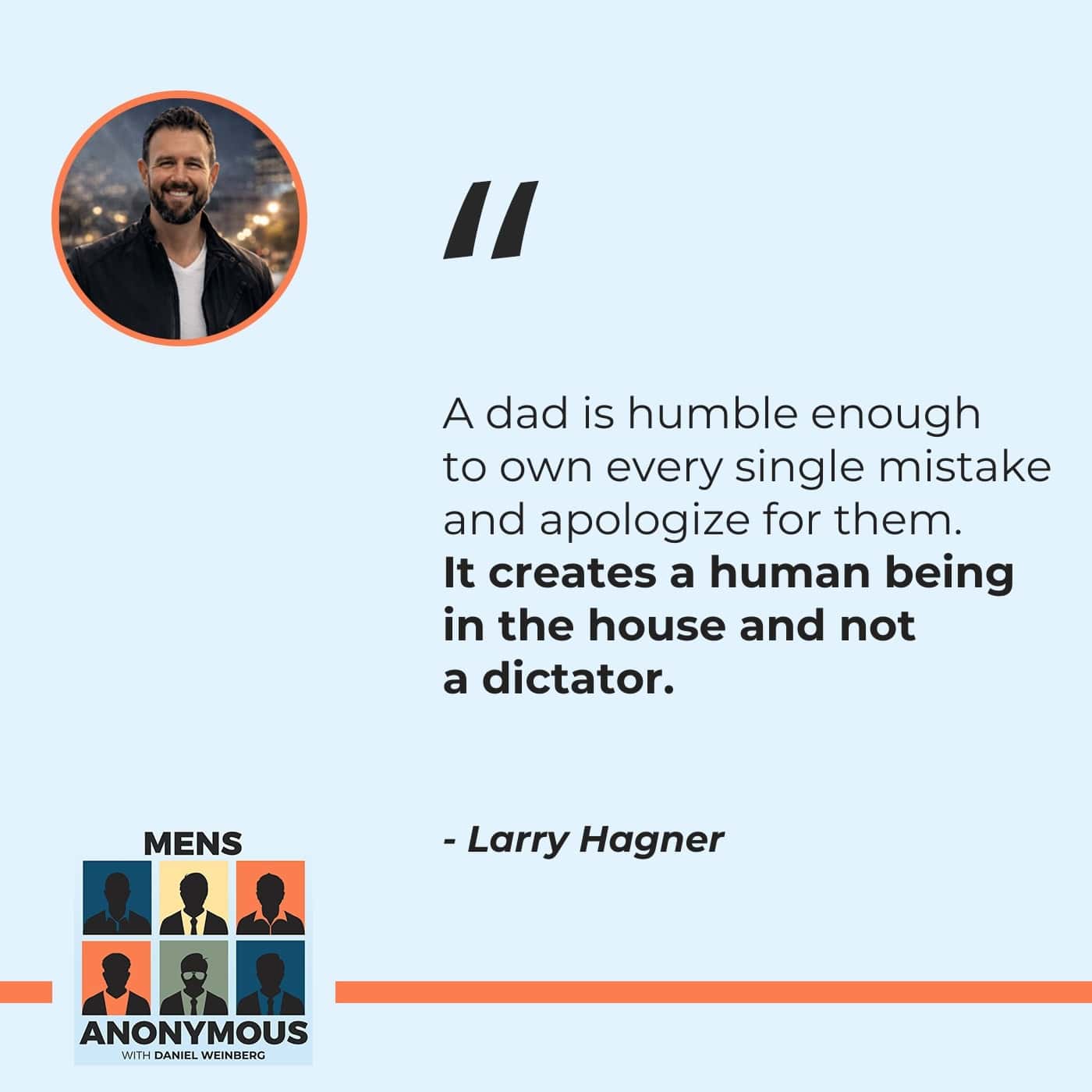
I have had to get up in the middle of the night and get my car and go pick up a kid because they called me and they needed me. That is really all okay. The last thing I’ll say to a dad is humble enough to own every single mistake and apologize for them because I think that creates a human being in the house and not a dictator.
Can you give me an example of a big mistake that you made that you apologized to your kids for or to the household, to your wife, and your kids?
There are so many. Perfect example, I went downstairs, and we have had lots of snow. My kids were in and out. There was a big wet towel on the carpet. It was soaked, and the carpet was soaked. There is one thing that pisses me off. “Please don’t leave your wet clothes on the carpet. It grows mold, and it’s nasty.” I came upstairs, and I asked, “Who left this downstairs in front of the door?” My wife was there, and I was like, “I don’t know how many times I need to tell you guys, but you guys cannot do this. You guys have to pick up after yourselves.”
You could tell my kids were like, “God.” The thing was, there were a few bad things that happened before that. Thirty minutes later, I went back out there and said, “That was a terrible way to talk to you guys. That was a terrible way to handle that. I am really sorry. I should not have spoken to you like that. It does not make you leave the wet stuff on the ground, right, but it also does not make my reaction right. I apologize for what I said, but can we please be better about not putting those things on the ground?” They’re like, “Yeah, sorry. We’re sorry too.” You just own it, and you can literally feel the tension and the pressure just go right out of the room. You do that.
I am a father of five kids. What I would say, and you have alluded to it throughout this whole conversation, is that being a father or great husband, legendary father or legendary husband, is not linear. You are going to get better and better at it as you go along, but you are still going to deliver a message as you did with the example you just gave. You’re still going to drop the ball sometimes and forget about doing it the legendary way.
You’re going to do it the asshole way, which you can sometimes slip into, and that is okay too, as long as you do own it and say, “That was not right.” I have been there so many times where you are trying to behave in the legendary protocol. You are doing a good job and are composed. Sometimes you just pass a point for whatever reason. Some other things are going on. It has just irritated you.
That is how you relay the conversation or convey a message, just in a complete asshole way. It is so ineffective. You think you’re trying to command respect by doing that. In effect, what you’re doing is you are shutting them down on the other pathway of “Who am I going to call first? Who is my 3:00 AM call?” Is it going to be the guy who loses his shit when I do something wrong? Is it the guy who is, in general, super composed, calm, always has the answers, and does not react?
How To Become A Legendary Husband
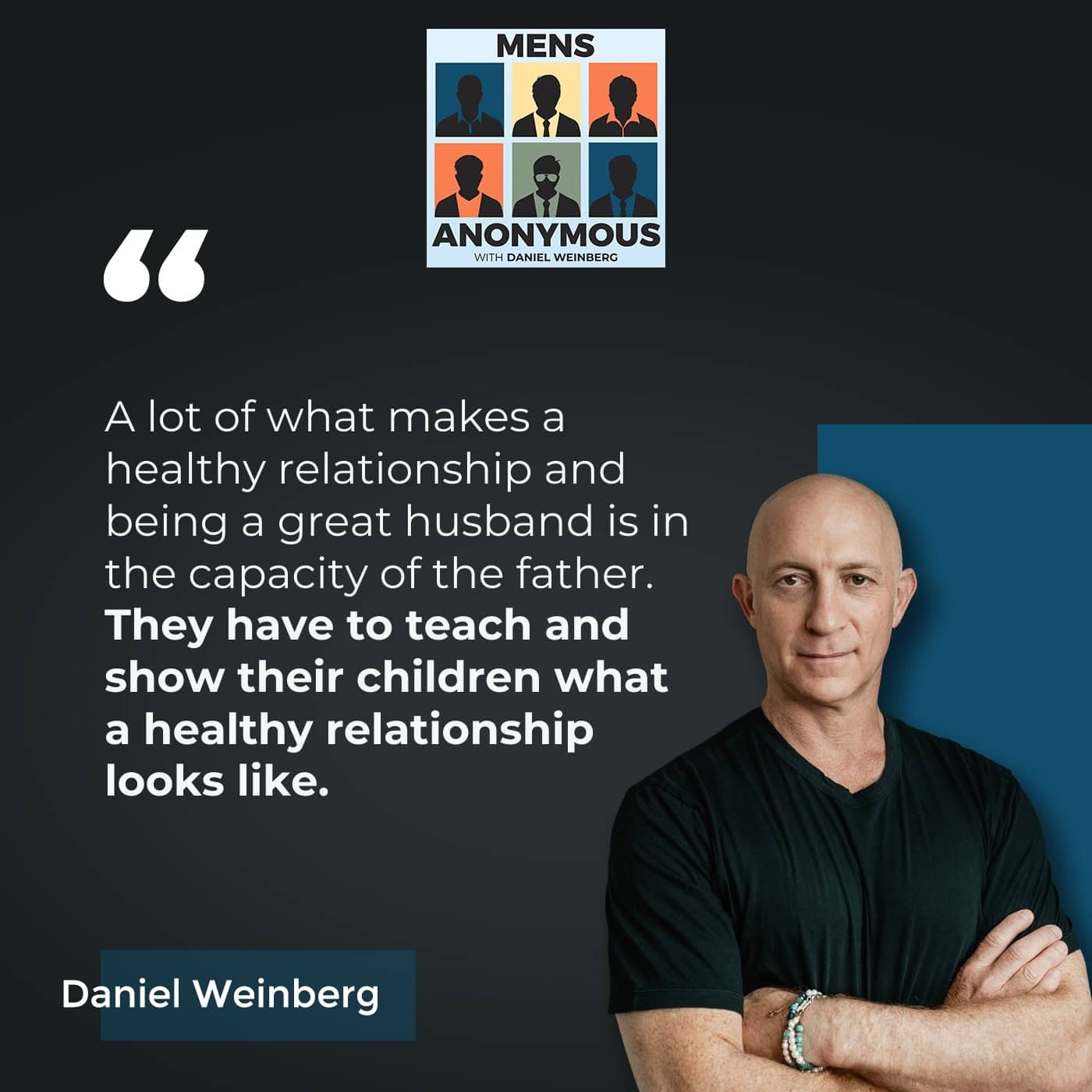
Even the legends themselves fall into the trap of making mistakes or slipping up on how they should behave. You were just segueing as well there into the husband, about love, having to show their wife or show the children’s mother how to love. I agree with a lot of what makes a healthy relationship. Being a great husband is also in the capacity as a father to teach and show through actions to your children what a healthy, loving relationship looks like, and set them up so they observe what healthy relationships look like.
What you observed as a child was a lot of unhealthy relationships. There was substance abuse, and there were some domestic issues. There was a lot of stuff that I am sure that you saw played out in front of you. Part of being a great husband is also showing your children what it means to be a legendary husband. On that note, I want to understand from you what you have told us about the characteristics of a legendary father. Tell me the characteristics of a legendary husband.
They are pretty similar, actually. When it comes to being a husband, my wife and I prioritize our marriage over parenting. We come first. Kids come after that.
Do you convey that to them? Do they know that?
They do. They know that their mom is the most important person in their lives. I tell the boys, “My mom is the foundation of this family. Without the foundation, it crumbles.” I always tell my boys, “We’ve got to be good. Otherwise, it’s not going to be great for you. It’s going to be actually horrible for you. You’re probably not going to like living here because if we’re not getting along.” I tell the boys out of love, “I prioritize your mom because I love you guys so much, and I want you guys to be here.”
Exactly what you said, Daniel, which is I want my kids to have a fighting chance at a functional, healthy relationship. If they do not see that from example, they are not going to eyeball that when they’re out in the world. Luckily, my oldest boys are in the dating world, and man, they are dating these wonderful young women. Both of these young women are a lot like my wife, meaning they’re just humble and no drama and just real and just amazing.
I look at these relationships and think, “I can’t believe you guys are 18 or 19 years old. These relationships are so well balanced.” They are not filled with insecurity and smothering each other. They each have their own time with their friends and their family. They have time together. It is so balanced. I think, “My God, you guys have so much more figured out than what we did.” Showing them a good marriage is not only healthy for our marriage, but it is healthy for them, too.
The needs of our spouses are exactly the same as those of our children. They both need to feel seen, heard, and cared for. Share on XReliable Resources About Legendary Fatherhood
You told me it was around six years into your relationship that you said it was not going well in the earlier days. You were struggling, and you decided to change and learn. I understand the path you went down to what it was going to take to be a better father, and learning and going down that rabbit hole. Who did you reach out to, or what were your resources when it came to being the legendary husband vertical? Who is the go-to to understand what it means to be a great husband? What is the resource? How did you go about working that out? Where did you get your data points?
Over the past eleven years, I have interviewed 1,450 people. Many of them are in marriage. Many of them have written books on marriage. I have read all the books by any podcast guest who comes on, I’m going to read their book. I would say John Gottman is the guy.
John Gottman and the book is called what?
I do not know what his book is, but it is called the Gottman Institute. His entire platform is marriage. He has studied married couples for almost 50 years. That guy knows marriage. He is a psychologist. He knows marriage better than anybody, and just the dynamics of it. I follow him. I love his stuff. I also followed Lance and Brandy Salazar. They came from a platform called Legendary Marriages, and they wrote a book on it as well. I have interviewed, and there have to be out of 1,400 episodes. I would say at least a third of them are on marriage and relationship dynamics. A lot. I cannot even name them all. There are so many.
That is a deep dive. That is definitely the rabbit hole.
I would say for anybody out there, start with Dr. John Gottman and the Gottman Institute. You just Google that, and you will see a plethora of resources.
How Larry Guides Other Men To Become Legendary Fathers
Where to now for you? Along the path of this mission pursuit, how are you helping others? You have written the book, but you have also got your own platform. You are dealing with men directly who are experiencing challenges in their lives in the fatherhood and husband roles. Tell me what you’re doing there and how you’re working with other men and how effective that has been.
We have been doing this for almost nine years now. We have got two different platforms. One is called The Dad Edge Alliance. That is our platform for career guys. Think of it as skills training and group coaching. We teach our guys all this stuff. We teach on topics of marriage, parenting, leadership, finance, and health. Those are the categories that we teach within. Every single month, we pick one of those topics, and we break it into four parts, and we send out our skills drills and our PDFs. Our team captains, our coaches, and I teach all of our guys, and we have interactive coaching sessions on this stuff. I have another platform called The Dad Edge Business Boardroom.
That is for business owners only. They can find all that at TheDadEdge.com/mastermind. You can find the application process for those two platforms. For guys like me back in 2012, it was just, “Where do I go to learn this stuff?” There was nothing around yet. Now, you can go get trained in this and have fun with it, too. We have a lot of fun in there learning this stuff. We have a lot of banter. It is a bunch of dudes. We have a blast talking about this stuff.
The type of memes that are coming to you, can you describe the type of memes that are coming to you, and at what stage are they coming to you? Are they coming to you when everything is a complete disaster, and they’re like, “Larry, I’m in massive trouble here. I’m nowhere?” Are they coming to you when they’re a little bit wet behind the ears and going, “Look, I’m really new to this, and I want to try and make a good shot of this?” What are the type of guys are coming to you?
Both guys will come to the table. Unfortunately, most of the guys come to me in crisis. The message I always give men is, please do not wait to fix your marriage when your wife rolls over one day and says, “I don’t know if I want to be married to you anymore,” or, “I love you, but I’m not in love with you anymore.” That is one we always hear, or “I want a separation.” The reason I say that is that there are symptoms that are usually apparent. If your wife says it out loud, studies have shown that over time, she has been thinking about telling you that for two years.
When she finally tells you, it is usually too late. I always tell guys, “Never wait for a crisis. You do not do that with the oil changes in your car. You do that preventatively. You go get your teeth cleaned. You go to the doctor once a year for your checkups. Man, get your relationships under your own roof on point before they go into crisis.” I love the guys that come to our table when they are like, “I just want to learn. Things are pretty good, but I want to learn more.” When a guy is like, “My house is on fire. It’s a five-alarm fire. I need help immediately.” We can help those guys still, but it is hard to learn when you are in a fight or flight panic. Be proactive.
I know you have to go. I really appreciate your time. That was a great session. Looking forward to catching up again. Wishing you all the best, brother.
Thank you so much for having me, Daniel. I appreciate it.
Thank you.
Important Links
- Larry Hagner on LinkedIn
- The Pursuit of Legendary Fatherhood
- Inner Excellence
- The Dad Edge
- Gottman Institute
- The Dad Edge Mastermind
About Larry Hagner
 Larry Hagner is the founder of The Dad Edge—an organization dedicated to equipping men with the tools and community they need to thrive as husbands, fathers, and leaders – and the host of the globally recognized Dad Edge Podcast, which has surpassed 40 million downloads.
With over 1,000 interviews to date, Larry has welcomed an impressive range of guests including Matthew McConaughey, Jon Bernthal, Kirk Cameron, Mike Rowe, Chris Daughtry, Sean Patrick Flanery, Greg Olsen, Bear Rinehart, Nikki Sixx, and many more.
He is the bestselling author of The Dad Edge and The Spirit of Fatherhood, which released in 2024. His new book, The Pursuit of Legendary Fatherhood, which was released mid September, 2025. Larry is also the author of two children’s books—Screentime: The Good, the Bad, and the Ugly and Daddy Will Always Love You and Protect You—and co-authored a third, Never Give Up No Matter What, with his now 17-year-old son.
Larry lives in St. Louis with his incredible wife Jessica and their four sons: Ethan, Mason, Lawson, and Colton.