Men do not have to be rigid, brutal, and controlling just to be called “masculine.” In fact, healthy masculinity is all about facing your most vulnerable moments with an open and understanding heart. Daniel Weinberg sits down with Morgan Rich, Founder of The Beyonders, a modern sanctuary for people who refuse to let culture define their inner life. They discuss why men wait for a crisis, or the so-called “threshold moments,” before seeking guidance on managing their emotions and learning the right skills. Morgan also offers essential insights and practical advice on how young men can navigate today’s messy world that often lacks positive male role models. Learn how to deal with the inevitable challenges of life while embracing the true strength of being a man.
—
Watch the episode here
Listen to the podcast here
Reclaiming Healthy Masculinity In The Modern World With Morgan Rich
In this episode, we have Morgan Rich, where we talk about threshold moments.
Morgan, great to have you on the show.
It’s nice to be here, my friend. Thanks for having me.
Where are you right now? You look like you’re in the mountains somewhere or something like that.
I am. I’m in Portland, Oregon. On one window, I got Mount Hood, on another window, I’ve got Mount Saint Helens. I just find this to be a beautiful place in the world. It’s a good place to be.
How Life Can Be Transformed By Threshold Moments
Unreal. Okay, so we’re going to dig in. I’m going to go straight for the throat. You work with men at what you call threshold moments, breakups, mid-life crises, career collapses, identity shifts. Why do so many men wait until they’re in crisis before they ask for help?
It’s a really interesting question of what it is that we wait until that moment of things really going sideways to dive in? I think a lot of it is because of a couple of different reasons. One is because it’s uncomfortable. Our relationship with being uncomfortable has, I would say, deteriorated over the years. Maybe it’s fear of death, maybe it’s fear of discomfort. When those moments come, it asks us to really look at ourselves. It brings life right up close, of who am I in the world, how am I being in the world, and is there a connection in those places?
My experience when my dad died when I was eighteen, it thrust me into this territory right into the darkness. I can’t say that I was ready for it, but it also was incredibly opening and awakening. I think if we can get ourselves ready to go in there, it really helps it. We learn how to be with that discomfort. We learn how to be in those moments.
It’s challenging because it asks the biggest questions. It asks the questions of am I in integrity with myself? Do I love myself? Do I appreciate and honor how I am and how I be in the world? I think for a lot of people, that’s a hard place to go because the answer is less convenient than we want it to be and less comfortable than we want it to be.
What have your threshold moments been? If you were to highlight the key ones, I guess the one you just mentioned now with your father passing at eighteen would be the first of one of those threshold moments. You’ve lived some life, I’m sure you’ve had some more. There are always key ones, I would say, in a man’s journey. If you could give us a little bit of who Morgan Rich is, what was your threshold moment?
I would say that there were a couple before my dad died. One was that I went away to boarding school when I was a sophomore in high school to pursue my dream to play professional ice hockey, fueled by the Olympics happening. It was fueled by the 1980 US Olympic team beating Russia, the miracle on ice, I was like, “I’m going to go be an Olympian, I’m going to go play in professional hockey.” Almost as soon as I got on campus, the dream just became really clear that I was not as good of an athlete, not as capable.
You mean you got on the ice and your peers were of a far superior skillset than you.
Exactly. It actually happened even before we got on the ice. We were in the weight room, in the gym, just running and lifting weights, and there was something about it that became really clear really fast. That was a huge loss of a dream. It was like, “Now what do I do?” I might even go back further and just saying puberty and all those places were also meaningful times, but we’ll leave those.
I think there are all these different thresholds that we don’t pay attention to in the West, in our culture, that make it so that, coming back to your first question, why don’t we go towards these uncomfortable places, is because we aren’t used to, I would say, little d deaths. The easiest way to say it is like, you and I are never going to be in eighth grade again. We’re never going to be in high school again. I’m not going to have kids who are 3 and 4 and 5 years old again. That time of my life has passed. It’s a little d death. It’s not the big d death, but it’s a little death.
You describe them as deaths, I describe them as little chapters in the book that are like they’re done. The chapter’s closed. You’ve read that chapter.
Part of the threshold stuff that we talk about is honoring those, is having some rite of passage, some ceremony, some just honoring that allows us to honor those moments to say, “This is past, here’s what’s coming.”
When I hear threshold moments, I’m hearing it’s a negative experience, it’s a challenging experience. Yes, you can have positive outcomes that come out of it after, but like you’re describing, these are things that are really uncomfortable. They’re not fun experiences. I don’t think you’re often choosing them as well. It’s almost like the path is getting chosen for you and how you’re going to respond to it, which I guess is what you focus on, which is training for the unknown. That’s your space, correct?
That is my space. It is training for the unknown.
How do we train for the unknown?
Part of the deal here is that sometimes life just says, “Here you go, your dad died at eighteen,” which plunged me into darkness.
When that happened, what did you experience? How long were you grieving for? How did that obviously change your life, especially for a young man who hasn’t got to share a significant part of their life? That’s a gift, for a parent to see you grow up. My father’s turning 80, and he’s still seeing me grow up.
There’s a missing, and you have an adult man in your life who you can turn to. There’s the loss of that. What happened was a couple of different things. Actually, in the hockey case also, of the disappearing of the dream, a friend of mine going like, “Let’s get high. Let’s go down the road of numbness,” because it was painful. I just was like, “I’m not doing that.”
The same happened when my dad died. I made a commitment to myself to not use alcohol, not use drugs, not use other addictive, numbing kinds of things, and I was able to just hang in the darkness. I had just, of course, gone to college, so I’m at college. I’m in that transition of life, out into the world. Although I was coming from boarding school, so I’d already done some of that, and this male figure in my life collapses. My soul, I would say, something in me woke up and said, “We’re just going to be right here in this experience.” It was not fun. It was really dark. It was challenging. It was asking the biggest questions.
Who did you turn to at that time? If you were to recall who were your go-to people in your life who held space for you, who were just there for you, who helped you get through that, who would you say those people were?
How I wish I could answer your question with this person and this person. What happened was that really my true friends were the natural world, were the lake near my college. It was the wind coming off the lake, the water, the moon. Really turning to the natural world because sadly, in my case, I couldn’t find people and people couldn’t find me to help in those times. It was really a deep existential exploration of what is it to be alive right now. What is death?
I want to be able to go back. I want to go back and grab my dad and say I want him to be 80. He would be 100 this year. I want him here. I couldn’t. It was this reckoning of hanging in that discomfort. I would rage and throw things and break things and scream and just ask God and be mad at God. Through that, it wasn’t fun, but it was deeply meaningful.
Something else was emerging in there, which was a connection with all that’s beautiful about life. When I say the natural world, I don’t say it lightly watching the seasons pass, watching the leaves turn in the fall and die, and come back in the spring. Watching the evolution of what birds are here in this time of year and then they go and then they come back. Death, birth.
That’s so interesting when you talk about that. What it brings up for me is that when I went through my crisis period, in my head, when I was in it, my go-to place of what I thought would help me heal was nature. I wanted to disappear to where there was just nature around and quiet. I just wanted to hear the bird, or like you just said, listen to the wind or the water going on the beach with no one around. I didn’t want people around. Isn’t that trying to escape by not facing it as well? Isn’t there an element of that?
It didn’t feel like it to me. What it felt like was coming into a place of relationship with the natural world and that we are part of nature. We are not separate from the natural world. The cycles that happen out there happen right in here. To me, it’s about going towards, not away from. It’s going towards the feelings, it’s going towards the difficulty, starting to understand what is my death and birth here. One of the challenges I had was the people who did, I went to therapists and I talked to my professors and I tried to find friends and tried to find people.
Your tribe.
I was trying and I felt like I needed to be seen. I was really hurting and crying and this thing was emerging. No one was there to really help me understand it, make sense of it. What they were trying to do was get me, they were trying to say just conform. “Can you just do what everyone else is doing and get in line with what we’re supposed to be, like what everyone else is doing, because it’ll be great?”
Were you okay to show your true self? You had no problem, there was no shame in that? That usually is one of the things that holds men back from going through what you’re going through and just not wanting to show it at the same time. You want to be seen without being seen.
That’s why a lot of the numbing happens, to try to escape those feelings. Being seen is something that’s really beautiful. What I like to say is when men cry, there’s a lot of messages in the culture about that’s weakness, that’s not good. Men often, when they cry, and women too, apologize for crying. I’m like, “No. This is me being vulnerable and being seen.
Numbing happens when we try to escape our negative feelings. Share on XWhat I would say is real male strength is actually being able to be seen, is to be able to say, “Here I am in my emotion. Here I am strong enough. I actually don’t care if you see me in this place because what I know is that this is an expression that’s real and true, and if I can bring this to the world, that’s real strength.”
Not pretending that this isn’t there, not side-stepping it, not stepping away from it, but actually being right in relationship with the hard things. Going towards them and then again, for me what emerged out of this was this beautiful connection with the world. This side of seeing humanity, seeing my own heart, seeing this beautiful caring man that I am, and a strength in myself that I don’t need the external validators of the world. I don’t need to play the game of the culture to say here’s what success looks like, big house, nice car, a lot of money, right shirt. I don’t need all that stuff because I’m right here. I don’t need the validation of you or anyone else because I know that I can be in life’s moments no matter what happens.
How did you get there?
Right through this stuff. It was just a fight of continuing to stay home with my integrity. Continuing to stay home with I know the way that I want to treat people in the world. I know that there is a way forward. As we always say, where the wound is, the gift is. There I am in this darkness, there I am fighting through this. I get to know life and death, little d death, little L life, the transition, the transformations. I get to know them intimately because I’m right in them.
I get to know loneliness. I get to know what it is to search and try to find community, try to find my tribe, and what that means when I don’t compromise. That then of course turns to finding, grabbing men who I know and respect. Took me a long time actually, until I was about 40. Marriage, kids, lots of things in there, but really finding my tribe, finding my people.
Started to happen when I went out and started to find men’s groups, when I started to find what I like to call the language of the soul. Someone who’s talking, speaking, and helping me understand myself in a way that I hadn’t quite figured out yet. I knew it was in there, but I hadn’t figured out how to express and bring forth.
Why Young Men Are Seeking Role Models
What are you doing right now? You’re focusing on men’s groups of men in their young adulthood, like the 18- to 26-year-old group, that’s one of your focuses. I think that’s a real interesting topic to dig into because if I think about all the guests and men that I’m exposed to on the regular, it’s usually around men from the 45-plus mark. They’ve had their threshold moments, many of them, they’ve got to the point where they really know themselves.
When you’re talking about the 18 to 26 year old crowd, I was actually having a discussion with my girlfriend around if I knew all the things I know now, if I knew them but hadn’t experienced them yet at that bucket of that 18 to 26, would I have made different decisions or chosen different paths? What I grapple with is that often, you can know these things. I think along my journey because I’m very curious, I read a lot, I was well versed in a lot of these things. What I’ve concluded is that I knew these things intellectually, but I didn’t really know them or feel them in my soul within me. I’ve got two young sons.
How old are they?
They’re seven. I’m thinking, and I’ve got nephews who are in the bracket you’re talking about, when you think about that cohort, that 18 to 26 young males, what guidance do you give them? What tools do you give them in training for the unknown, as you said? There are going to be threshold moments, and you can tell them, but they just really not going to get it until they have those moments.
What do you do with men in that group? I’d love to hear from you the mindset of men in today’s world given everything that we didn’t grow up in this digital world. They’ve grown up in pretty much a digital only world. They’ve never known the analog world. I’d love to hear what worries them or what’s top of mind for them as men in today’s society at that 18- to 26-year-old mark given all the things that are going on.
They’re hurting. I think it’s evident. I’m not a statistical guy and don’t know all the statistics.
No, it’s more about statistics. You’ve had a lot of personal individual experience. I more want to hear themes because there are themes. Just what are the themes that that are these are top of the list and how you what you do?
They’re hurting, we know that. It goes back to what you just said.
When you say they’re hurting, what does that mean? What are they hurting about?
They’re in their basement, they’re playing video games. It goes back to that thing that you talked about. You said if I had been seen, if I had known, like I had this thing going on inside of me that is me, and I didn’t see it and I couldn’t find it and I didn’t know it. Young guys have that in them.
What do they have in them?
They have some sense of who they want to be, of a sense of what I would say is a way of being human in the world, a way of connecting to the natural world, a way of taking care of people, a way of feeling alive. What happens is that they look out into this world and they don’t see adult men, and they don’t see the matching of that energy that is out there. The world isn’t a fun place to look at. If you’re a young person now and you’re looking out at the world, it’s pretty daunting.
What do they see? You’re saying the men that they see in our age group, when they look to them, what do they see? Do they see positive or negative role models?
They see men striving for external validation. They see men caught in the model of success that isn’t working. If you look out at the world now, for the most part, it’s not working very well. There aren’t a lot of thriving, happy, grounded men. We have a lot of men doing things in the world where they aren’t taking responsibility, they’re blaming other people, they’re doing harm to others, Epstein-file stuff, which is across all demographics. That is not the way.
The generation they’re looking up to, they see what they’re chasing and the way they’re treating others etc., as not role models.
Correct. There I am, my dad dies, I’m sitting there feeling this other energy coming forth in my life, and all I see around me is guys going to the bars and drinking, having inappropriate relationships with women. I ran for student body president when I was in college and there were a number of integrity outs and violations. The men weren’t being responsible, they were just doing it to put it on their resume and not actually following through on here’s why we actually have a student government, here’s what we’re supposed to be doing. I’m not a rule follower, but this was really egregious.
Everyone’s saying like, “Just ignore all that stuff.” I’m going, “Wait, there’s something alive in me that I can’t ignore.” Where were the voices that were saying like, “I see you, my friend. I see that sensitive, caring, beautiful thing that’s coming alive in you. Let’s go explore that.” I was a Philosophy major, so I go to class and it’s all about this stuff, but it was all conceptual and not real.
There I am, this guy wanting to come alive. There you were, a young guy wanting, like there was something in you that you may or may not have known that wants to come alive. There’s no one there to meet you. There’s no one there to say to take your hand and say, “Here you go.” That creates a really challenging place inside of ourselves. That creates a place of like, “Wait, am I okay? Am I broken? Is there something is there something wrong with me?”
That’s what’s happening to our young guys. They can see that we’re being sold a bill of goods of saying like just go get good grades, go to a good school, graduate, get a job with a lot of money, do this, and everything will be great. Guess what? That doesn’t work. There’s some stuff in there but that’s about external validation. It’s not about actually coming home. The young guys are going like, “Wait a second, you’re all telling me to do this thing but it doesn’t look right. It doesn’t feel right. Fuck you all,” and then they disappear into the darkness.
What do they do? What are their behaviors?
Right now, a lot of them are going dark, playing video games. It’s so easy to disappear into the phones. One of the things that we talk about in the groups is just to say like, “Have a healthy relationship with your phone. If you need to put it away, put it away. Just flat out. Those things are not helping our resilience, our toughness.”
Build a healthy relationship with your phone. If you need to put it away, do not hesitate to do so. Share on XDo they see that?
Yes and no. It depends. Some really do and some really don’t, but I think they’re starting to learn and to know that it’s troublesome. It’s a tool that we can use but we’ve got to be really careful. I also think about your sons. What happens and what’s happened from this is happening from a young age. When my kids were young, my kids are now 22 and 24, but we would say, “Why don’t you go out and play in the yard?” People would go, “Wait a second, what if a stranger comes? What if they get abducted? What if they get into the street?”
We start to create this like the world out there is scary. The world out there is scary and I’m not safe in the world and people are scary. When you feel like the world is scary and you don’t know how to navigate that, the difference would be saying to your kid, “We’re going to go outside and if something happens, here’s the way you navigate it.”
I used to take my kids to the store and say, “If you get lost, which stranger will you go talk to?” Instead of don’t talk to strangers because they’re dangerous. It’s like how do you develop the skill of knowing how to navigate those moments? We would talk about that person is safe, why do you think that person is safe? That person doesn’t seem safe, why is that? I don’t want my kids being afraid of the world. I don’t want them thinking that I can’t navigate myself out when adversity happens.
It’s just a reframing. You’re just reframing the situation.
Correct. I’m giving them the resource the belief and the knowing that the world is dynamic. Going back to your original question, why do we avoid it? It’s because we haven’t, in many cases, learned the skills of how do you actually use those moments. How do you actually use adversity to deepen, to get into the places that really matter. Those are skills that we can be training our young people on and that is training for the unknown.
It’s about training for how do I handle myself when life inevitably goes up and down. When the death happens, when the job loss happens, when I have to make a decision, when my partner breaks up with me, when COVID goes down. I know how to handle this because I’ve been practicing, I’ve been training for the unknown, for being present, for extracting all the beautiful lessons that exist in these places. It’s not about a bad thing happened, it’s just life happened.
How do you respond to it? Those things are going to happen. It’s all about how you’re going to respond.
We are not going to escape death. We are not going to escape challenging things. That is what life is. When my kids were young, one of my favorite things was reading them bedtime stories and making up stories with them and laying in bed and falling asleep. I would lay there with them and I just remember so often being like, ‘I love this person so much. It’s unbelievable how much I love this moment.” I would leave the room and I would just think there’s going to be a day when I don’t have this. I don’t actually know what’s going to happen today. Something could happen to them, something could happen to me. Life is wildly unpredictable.
I would think if something were to happen to one of them, it would be devastating. I think I would be okay if I appreciate right now. If I live this moment and realize that what I have right now is these two beautiful kids, that I have the opportunity to be with them, to make food for them in the morning, to fall asleep with them, that I can be right here. If something happens I’ll be devastated but I’ll get through it. It’ll be okay. I’ve been through a lot of hard things so I know how to navigate those things. I’ll have a harder time forgiving myself if I’m not appreciating what I have when I have it because I know that something could happen like that and it does.
Thankfully, that didn’t happen to my kids. However, that moment of I’m going to appreciate the present moment and again here this is training for the unknown is we can’t predict what’s going to happen in the future but what we can do is we can consistently turn towards life not away from it. Turn towards the uncomfortable moments of at the age of seven of your kids, of your nephews and all those young guys of my young guys my 18- to 25-year-olds.
What we do is we start to build the resilience so that we can navigate these difficult places. We turn towards the uncomfortable things of having a crush on a girl and going and asking her out. Going and talking to her, learning how to hold her hand, walking through that stuff is the stuff we do in the groups, which is beautiful work.
How Young Men Can Find Guidance In Men’s Groups
Social skills. How to interact, how to build the confidence to do those things. If you were to assess in all the men that you’re taking into this men’s group, at that age, what are the key reasons these guys come to? I would never even have known about these things or even had the vision to even go and do something like this, which would be just so helpful regardless. Why do they what are the main reasons these guys come? Are they desperate? Where are they at?
One is like I develop relationships with them in different kinds of ways. Some of them, their parents send them. Their parents send them and just say like, “This kid is off track and needs help.” It’s a little bit like, “Here we go. Here’s what I offer.” I just say to them like, “I’m not about getting people on track. If you’re thinking I’m going to champion the whatever this is.”
What I do is really deep listening. What you needed was someone to see you. What I needed was someone to see me and sit with me and say. “Here’s what’s going on inside of you. There’s something beautiful inside of you that’s wanting to come alive. Let’s stand right there with that and learn how to bring that out into the world.” Some of the young guys that come to the groups, they have a sense of it. They have that and for whatever reason, they’re like, “I’m going to show up here and do this. Some of them, I have a relationship with, so they trust me to say like, “You’re doing something that’s different.”
They’re also doing it in front of other men, which I think is also one of the key factors. The one-on-one is like therapy. Let’s call it like that. A bit of coaching, therapy. When you expose yourself in front of others, even though they might be strangers, but they’re your peers effectively, when you’re able to do that, I have I think there’s a lot of power and big impact on that exercise in itself in like standing in the circle and just literally dropping your pants. You’ve just got to show it all because that’s where everyone’s going. I think the ability to do that is big.
It’s huge. Some of these guys, the guys that are showing up are guys who just like they are able to break through the noise. They’re just like, “I’m not going to get stopped by my phone, I’m not going to get stopped by the craziness of the culture, I’m not going to get stopped by all these different things. There’s something that’s wanting to come alive and I’m going to go fight it.” There’s not a lot of guys like that. I always say I want to bottle that and like spread it across.
I would assume that most of these men are struggling who are coming and they want they want to do something about it.
Yes and they’re also tenacious. They’re just saying like, “I don’t know my way through yet but I’m going to keep fighting it. Here’s a group of guys who I can be with and work into that place where I can feel supported in my passion.” One of the things that happens is subtly and not so subtly in the culture, there’s all this little teasing. You have a crush, you have a crush on someone. You’re like ah I have a crush on someone. The reaction of peers and friends is like, “You like her, huh,” or like, “What do you want to do, just have sex?” There’s like little jokey comments.
Banter.
That’s like teasing and so it creates this place of like it’s just a little bit of that and that is what keeps guys from engaging. It’s just that little like, “I can’t have that feeling or I can’t say that thing or I can’t do that,” and that is huge.
Even more in today’s world, there is also the public capture of any mistake that’s made will be recorded and you’ll be reminded forever.
It’s not about avoiding these things. I’ve got me is one of the precepts of training for the unknown. If something comes out and it says like, “Here’s all the teasing, here’s the public,” whatever it is. You just be like, “Great. I know that I’m loved because I love me. I’ve got this. I’m surrounded by people who see me, care about me and I can and I can withstand that place.” What we do is training for discomfort. One training to really be present and then is training for discomfort. Learning the resilience of being in uncomfortable moments. One of the ways that that we do it is with just cold water.
Cold water is one. Breath retention is another. There’s all kinds of different ways to yoga. You can go to just go to a yoga class and that will put your body in in discomfort where you’re going to have to confront not being as flexible as the person next to you, where you don’t feel like, “I’m really good at this.” You’re like, “I suck at this and this is really hard. My hamstrings are super tight and I’m not as strong as I thought I was.”
Right there is this wrestling with okay so how do you just hang out and work through that? The cold water thing, for me, there’s this whole thing in the men’s work and biohacking and all this stuff about like stay in cold water. It’s good and it is. There’s all kinds of really important good things about it. I think there’s a confusion in there where it becomes that same I stayed for 7 minutes and 59 seconds and the water was 34 degrees. There are benefits to that. Here’s how I use it and here’s what I think is really important.
I got in cold water because in the Pacific Northwest, there’s waterfalls then I love being in the water in the waterfalls and the water is cold. It’s snow melt. In order to be in the waterfalls and like lay down and let the water rush over me. I had to get good at being in the cold water. I get in the water and at first I’m just like, “Whoa.” I get out and I was like, “That’s not very helpful. My whole system is jacked. If that’s the way that this is going to be, it’s not going to go well.”
I realized again I’ve had these moments of epiphanies that just come from wherever they come from. Calm. Have a moment of calm. I get in the water the next day and I say, “It doesn’t matter how long I stay. I’m going to get in and I’m going to have a moment of calm.” I relax my butt and I relax the tongue and I calm my eyes down and I just relax my body and I feel the sensation of being in the water.
I do that and I’m like, “Here I am. I’m not dying. Everything is okay. There’s a huge amount of stimulation and things going that are interesting and curious.” Just to note, here’s a place where it’d be like this is bad is one way I can think of this. This is sensation. This is just an experience of being in this particular moment is another way to frame it. There’s our frame from problem to presence. This is bad to this is life.
Something’s wrong to here I am in adversity. Training right into that moment. What happens in that is that it doesn’t matter how long you stay in that scenario. What matters is that you’re able to be in there and have that moment of being present with all the sensation, with all the stimulation, with all the feelings and stay and keep your system settled.
For me, what happened was that it was three seconds the first day. I get out and it’d be easy to be down on myself but instead I was like, “That was awesome. That was really different than yesterday when I freaked out. Today, I was able to be in there.” The 3 seconds became 7, the 7 seconds became 30, whatever. It’s not a pissing contest. It’s about it’s about learning and training into that moment of here I am.
One day I’m in Bend, Oregon and I was on a run. It was raining, it was beautiful, it was cold. I’m standing on a bridge having a beautiful moment with a great blue heron. A dude walks starts walking across the bridge. He’s got his pants on, he’s dripping wet, he’s all red. Clear he had been in the river. He’s walking across the bridge and I go, “You got in the water. That was amazing.” He’s like, “Yeah, I did. I only stayed for two minutes.”
I was like, “You got off your couch, you came down here to the river, you took your clothes off, you put your feet in the water, you felt how cold it was. You proceeded to get in and you stayed for two minutes in the middle of the winter, in the rain, and you’re now giving yourself a hard time?”
“How about celebrating that moment of saying, ‘Great, this was amazing. A lot of dudes are sitting on their couch. Here I am doing this, pushing my system, feeling the amazing part of this committing to getting better at something. Am I as good as I want to be? Not yet, but like how amazing that today I got in and then I’m right here.’” that telling your story part again is part of training for the unknown. That is to say that if we give ourselves credit for the things that we’re doing when we step in there it really makes a difference. It’s so easy for us again that teasing little thing that we talked about a moment ago.
Give credit to yourself for the things you are doing. When you step in, it makes a huge difference. Share on XYou’re talking about the self-critic. The self-critic is what that little guy is telling you like you’re just not good enough.
You suck at this. You only stayed for two minutes. It’s like, yeah, you stayed for 2 minutes which is 2 minutes more than you could have. Why not give yourself credit for that instead of having the self-critic. Part of it and again going back to I mean all of this is noticing that self-critic and it’s so easy I think for men to say when you pull your pants down in the middle of the group like, “They’re going to see me and I don’t even like myself. How in the world am I going to expose myself to these other guys? They’re going to think I’m too fat, my penis isn’t big enough or this that and the other thing.”
It’s like here I am exposed and they’re all going to laugh at me and I don’t feel good about it. That’s why people don’t go there. One of the things we do in the groups which is I think amazing is not only is there not the teasing part. That’s great. The absence of the teasing. What actually happens is this dude brings his crush. We say like, “That is beautiful. How exciting is that that you have these feelings. What are you going to say to her? What if she says this? What if this happens? Maybe you could frame it this way.”
Now we’re talking into this place of helping him, supporting him, helping him feel encouraged and beautiful that he’s got these feelings of desire and attraction and wanting to be a sexual being in the world and we’re celebrating him like that young guy that you want. Celebrate that dude. It becomes easier to step into those places.
What does healthy masculinity look like for a twenty-year-old?
It’s some of this stuff. It’s being able and willing to be vulnerable. It’s being able and willing to be flexible. What we’re aiming for is emotional resilience and emotional availability. What I would say is our partners, the women in our life, they care less about the external stuff and more about the internal stuff. If we’re trying to dominate, manipulate, change stories and gaslight and do all those kinds of stuff, that’s that unhealthy version of what’s going on. The ability to be in these moments, to step towards life, not away from life is where relationships, meaning, depth of intimacy really show up.
Be willing to be vulnerable and flexible. Share on XThat’s the healthy masculinity. It’s not about being perfect. It’s not about staying in a cold plunge for eleven minutes. It’s about being in the game of here I want to be better at this. I want to be able to be vulnerable because the vulnerability is strength, not weakness. It’s starting to learn this version of life is going to happen and I can be right there with you so that when your person comes to you and is like, “I had a really hard day,” that you’re able to be right there with them listening, not worried about whether they still love you. Not worried whether they’re mad at you. Not worried at whatever that might be. You’re able to be in life’s interesting, important moments when there is upset.
Five Questions About Life And Love
At the end of my show, I usually ask the guest five questions. I want you to respond with whatever comes to you first.
Beautiful.
Who would you like to say sorry to, given the chance?
One level is my younger guy, as that guy that was sitting on the bench just to say, “I really see you and love you. In any ways that I abandoned you or wasn’t there for you, I really honor your journey because the journey was really significant and meaningful and you did a damn good job. I think it could have been a lot easier had I been there, someone been there to take your hand and walk you through that.”
Do you share this with your sons?
I have 1 son, 1 daughter. I think every relationship is interesting and dynamic and so being seen. I share as much as they’re ready for, my whole way of relating is that intimacy and love is about going towards these conversations. It’s about when there’s something that wants to be said, to share it. To be willing to look bad, be willing to pull my pants down and then say, “I made a mistake. It’s my responsibility. Here’s my piece of it. I’m not going to blame you and point fingers and do all that stuff.” healthy masculinity is about taking responsibility. It’s about coming home. It’s about being willing to make mistakes.
What are you proud of being or doing in your life?
Being the man I know myself to be. I’ve lived my life with a lot of integrity and a lot of connection to the way I want men to be in the world and the way I want people to be in the world, which is treating myself, my people, the more than human world with a lot of dignity and respect and aiming towards being in right relationship with. With. People and there’s a lot of things that want to pull off that track and there’s been some compromises of like the metrics of success of high achievement and money and prestige and stuff like that that I’ve really sacrificed. I’ve been willing to say, “I’m going to define success differently,” which is health and wellness and relationship and intimacy. I’m proud of that.
Learn how to build bridges to the life you want to be. Share on XWhen did you receive kindness when you needed it most but expected it least?
My current partner and just love of my life, Hadley, we’re just building businesses together and building work together and building life together, she sees me in a way that I often don’t see myself. It’s beautiful. My relationship with my mom has been challenging over the years and so there’s things that I’ve seen and sensed in the relationship there that having to hold by myself. Hadley comes along and sees me in that struggle, in that place and just walks right in and holds my heart. It was amazing for me because I’ve had to hold my heart and hold myself. I’ve got me all the stuff we’ve been talking about. I’ve had to hold it on my own for so long and I’m really good at it. I’ve got it. I worked a lot, training, still learning, still growing.
I’m going to steal that line.
Yeah. Please do. It’s like she came and held my heart with me. Right now, I can just even feel my whole system. Calm. I don’t have to do it alone. Here I am, that wanting to be seen part, that little guy you talked about. Finally, it’s like, “This is what it feels like.” Love.
What did your mother or father teach you that you frequently remind yourself of?
My mom is a fighter. She got herself out of really challenging circumstances. She never remembers being touched as a kid. Never received that love. She got herself out of that. Just amazing how challenging that is.
When you say that, you mean like broke the cycle? Is that what you mean by that?
Yes. Broke the cycle and got herself out of really hard situation and got herself into her own life. That she went from small town girl all by herself out into the big world of Chicago and met my dad and he was a was a big player in Chicago, founded the Chicago Bulls. She went from just little town to big time and again, it’s that integrity part. She really stayed home. There’s a beautiful story of her. One of the reasons she connected with my dad was there’s just a moment where she had a chance to take someone’s job who was a friend of hers.
She was like, “No, I can’t. That’s not the right move. Just because she’s sick and I showed up that you’re going to give me this job instead of her.” that was the owner of the Golden State Warriors in who the job was. By doing so, by holding her integrity and honoring that, he then introduced her to my dad. Integrity is what I learned from my mom and staying home. Isn’t that a fun story?
Yeah, it’s a great story. The final question is, what is your superpower?
My superpower is listening. With these young guys, I’m able to see past all the nonsense and really see and feel their heart and see and feel that part of them that wants to come alive. That beautiful part that’s there and just wanting to be seen, again, like we’ve talked about.
I can just see in there and then I stand and hold that for them and shine light on it and help build the bridges. It doesn’t matter if I see it. They’ve got to see it. It’s helping build the bridges into, how do you build the life? How do you build the structure around it, the training for the unknown so that you can come and be this man you know yourself to be?
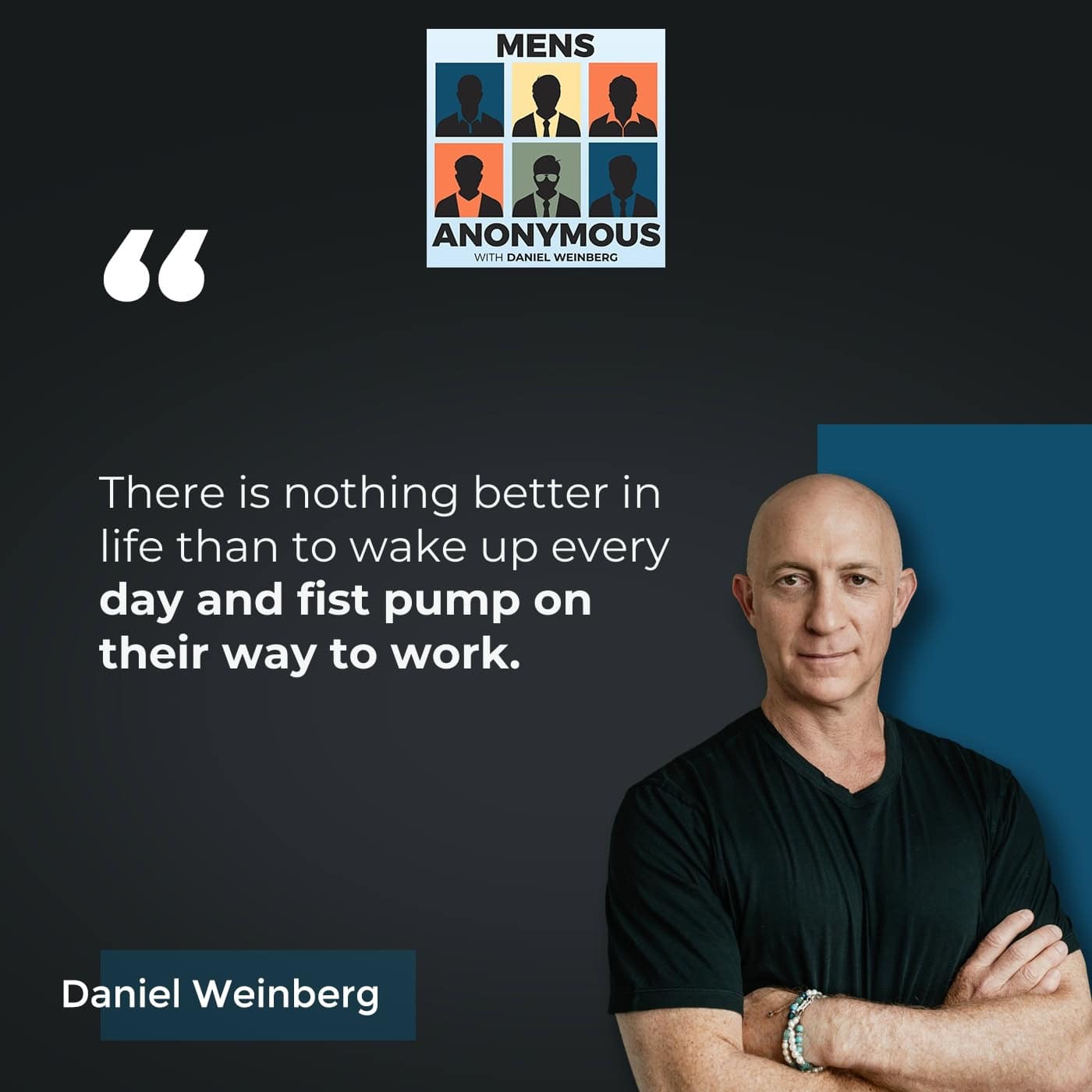
You’re clearly doing something you’re very passionate about. There’s nothing better in life for anyone, especially a man, that can wake up every day and just want to fist pump their way on their way to work every day. Just like, “Give it to me.” that’s the sense that I get from you that the work that you’re doing is just like, “This is your game.”
This is it. Yes. The beautiful thing is it’s like I work it. I’m in it too. I train and I have to keep reminding myself and wake up every day and do my meditation, part of training for the unknown, to really connect in like, “Okay, remember that guy.” I can get lost. I can forget that. Thank you for reflecting that because I feel really honored.
Thank you. I feel really honored that I had you on the show. Always great. Morgan, thank you. Sending lots of love. Really appreciate you coming on.
Thanks for all the work that you put into the world, my friend. It’s good stuff and important for men to be in these conversations.
Thank you, brother.
Important Links
About Morgan Rich
 Morgan Rich is the Founder of The Beyond, a modern sanctuary for people who refuse to let culture define their inner life. He is the author of The Invitation Beyond and a guide for men, young people, and families seeking steadiness in an unsteady world.
The Beyond is a place of refuge and training — where safety and challenge coexist, where people are deeply seen and strengthened. Men come to reclaim integrity and aliveness. Young people come to cross the threshold into meaningful adulthood. Women and families come for depth, support, and emotional health that lasts.
Morgan’s work centers on presence, daily practice, and emotional maturity — what he calls Training for the unkNOWn: building the inner capacity to remain steady, relational, and courageous in uncertain times.
This is sanctuary in the ancient sense — belonging, initiation, and the courage to live awake.