Why do so many men struggle to find and maintain deep, fulfilling love? The truth is often uncomfortable, yet essential for real growth. In this exclusive interview, relationship expert Todd Malloy cuts through the noise to reveal the surprising reason *why men fail at love* and what keeps them stuck in cycles of disconnection.
Todd identifies the single most challenging truth men don’t want to face: a fundamental unwillingness to be emotionally vulnerable. But this isn’t just about feelings. We dive into how outdated definitions of “manhood” lead to disastrous communication gaps, from misreading a partner’s “nagging” as simple complaining to getting completely wrong about what true intimacy means.
Discover the 9 core emotional needs in a relationship, the “hack” for men to achieve communication clarity (especially when a partner says “Okay”!), and the powerful technique Todd uses with couples to fix intimacy issues. If you want to transform your relationships and become the high-functioning man you aspire to be—present, honest, and sincere—this conversation is mandatory reading.
—
Watch the episode here
Listen to the podcast here
Why Men Fail At Love — And How To Fix It With Todd Malloy
On this episode, we got Todd Malloy, where we talk about why men fail at love and how to fix it.
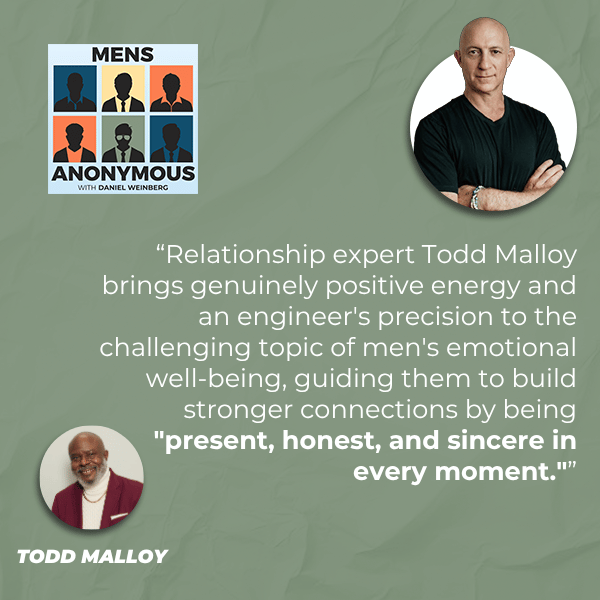
Todd, so great to have you on the show.
Daniel, it’s a pleasure being here.
Welcome. I was very excited when we first spoke just because of your energy that I connected with. It’s a lot of good, juicy positive energy is what I felt. Given the subject we’re talking about, which is everything with regards to men and relationships in particular, I think it’s good to have someone coming from such a positive stance.
Let’s kick it off. What do you see as the most uncomfortable truth that most men don’t want to hear about themselves in relationships? You get a lot of couples coming to you and you get a lot of men coming to you in particular who are looking for your guidance in relationships. What is the one thing when you put the mirror in front of them that they find it challenging to listen to see?
Men Are Not Willing To Be Vulnerable
That they’re not emotional, that they don’t share their emotions, they don’t want to emotionally connect, that men are not willing to be vulnerable. That’s one of the biggest ones.
Why is that?
Men in general are taught that way. Remember, guys are rough and tough and you can’t have emotions and you suffer in silence. What is it? Guys are rough and tough, girls are sugar and spice and everything nice. Men are told not to cry. Therefore, men are supposed to know all the answers to everything. For example, when a car breaks, when your car shuts down, the woman sitting next to you looks at you and says, “Okay, fix it.” You got to sit there and pretend that you know how, and basically, I know how to pop the hood, reach in my wallet and say, “Pay somebody to fix it.” That’s about that’s where I go.
That’s me. That’s who I am.
However, but too often I’ve been in situations, I mean, literally, I’ve been in situations where my car didn’t shut, didn’t, they say, “What’s the problem? Just go fix it.” Sometimes women come with these expectations initially right out the gate that match their father or men that they have been with or men that they grew up with in their lives. They put that level of expectation on the man and because they see women see manhood through however their father taught it, their uncle taught it. However, the men that they’re with were not raised in those houses, so they may exemplify it differently. Unless we level set that, how will we be on the same page?
That’s a really solid point there what you’re talking about. For a woman, it’s a learned behavior from what they experienced themselves as a daughter and saw how their father operated, etc. I would’ve experienced that, I have to say, like that there would’ve been a dissonance between the way I understood to operate and what my ex-partner understood what it meant. How does a man then reset that balance so that the woman can understand that it’s not necessarily that way?
In this immediate moment, I would answer it this way. There’s a rapper in the US called Big Daddy Kane. In the rap song he said in the ‘90s, he said, “Some women like it rough, rugged, and rude. I’m subtle and smooth. You won’t disapprove, but you have to give me an opportunity to demonstrate that I can take you where you need to go.” Even though I display manhood differently than what you’re expecting, allow me to demonstrate how I can still please you because the key point for a woman is wanting to be happy, to feel seen, to feel heard, to feel emotionally protected and safe.
You’re used to people giving it to you on, protecting you from their right hand, I happen to be left-handed. I can do the same thing, however, but adjust to me as opposed to having me sit in an experience that I was never a part of. Watch how I demonstrate it and see if I can create the same feeling of emotional safety and security for you. Did that make sense?
It makes sense. I think it’s a challenging process because it means change, change for both, you know what I mean?
Right. This is the point I’m making. When men and women or when people come together in a relationship, you already come with a prefixed mindset of what manhood, womanhood and relationships should look like. The other person comes to the relationship with the same, with same similar definitions or with their own definition. None of them have been level set because neither one of us were a part of our history. The mere fact that we’re just meeting up, meeting up brand new means we should blow up whatever we’ve learned in the past and be open to a new experience.
The Bible term, you don’t put old wine in new wineskin because when you put new wine in old wineskin, the wineskin can’t express and it’ll bust because there was no room ever made in the original box for what’s coming in it now. What it is that as opposed to you fixing me to a mindset and I fix you to a mindset, why don’t we both understand what our hell yeses are and our hell nos are and create an environment where we can both thrive?
When you do that with a couple, because you obviously do this exercise with a couple. Before they walk into your room, how does one do that without having to go see a like a therapist to create that framework in which you can create what does that us framework look like?
Remember, it starts off with this. What is most important to you? What are your emotional wants, needs and desires? We all have core needs. Most of the time they’re about nine core needs. I’ll list them in a moment. There are 9 core needs, but most part we only need 3. To feel emotionally safe, to feel emotionally secure, to feel wanted, desired, seen, heard, valued and respected. Those are the nine core needs.
Can you slow that down literally one by one because they’re really interesting.
The Nine Core Emotional Needs And Desires
Okay, great. Number one, emotional safety, emotional security. They want emotional connection. They want to feel wanted, seen, heard, valued, respected and desired.
That’s in no particular order.
They’re in no particular order. Now for me, me being seen and heard and valued is what I once I know that I’m seen, heard and valued then for me I feel loved.
You’re saying they’re the 9 core and usually most individuals need 3 of those. Let’s call it their love language in a way.
Exactly. As as you have those three primaries met, therefore we’re fine because what happens is anytime there’s an argument, there’s a root cause of one of those primary needs not being met, one of the primary needs, no matter what the argument is about, we can whittle it down to one of those primary needs.
It all relates to one of those things. For instance, you didn’t hear what I said. I’ve been trying to tell you and you’re not listening, so I’m not being heard.
Correct. Basically what it is that one’s perception is never the other person’s truth. It’s like that’s what you’re thinking but I really need you to hear my voice and this is what’s important and significant to me. Once we learn what’s important and significant to me as long as we have that ingredient in there, for example, if my core needs are being wanted, seen and heard, no matter what’s being said, I got to be able to hear those three things in what’s being said. When I hear, “I love you”, I got to hear that you’re seen, you’re valued and you’re heard. No matter how you say it, no matter how you pitch it, those three ingredients have to be a part of the demonstrations, the expression.
One person’s perception is never the other person’s truth. Share on XIt’s very interesting. It’s so true. Really, the exercise up front is communicating each, the individuals communicating what are their top three that really that are important to them?
Remember, we should be looking at each other as students. What tickles you? What surprises you? What makes you feel wanted, valued, seen and heard? Ask those questions, take the position of inquiry. What’s important to you, what’s significant? As opposed to telling me how to do it, tell me how you want to feel about it and that might help me get there because if you give me the demonstration, “I need $1 million, I need 5 feet of this and that,” I may not get there. If you create an experience that you’re looking to have, I can create it in a multitude of ways.
If you want to be happy, there’s more than one way to make a person happy. Now let’s explore the field of possibilities. It’s like this, no matter what’s going on in life, like let’s say the cold, every year the cold shows up with a different coat on so the body doesn’t know what to do with it. However, what it really boils down to, cold can only show up if the immune system is weak. If I focus less on the symptomology and more on the core needs, I’ll always be prepared for whatever and we can stay connected because the core is the emotional want, the need, the desire, the feeling of expression, wanted and loved is what we all want.
However, unless we’re actually clear about investigating and having the conversations about it, taking the inquiry, “What’s important, emotionally how do you want to feel? What does it take for you to feel emotionally safe and secure with me? How do you see love, how do you know that you’re valued and wanted?” If you can teach me how to love you, I can demonstrate that I do value you by showing you I’m a good student. If we’re not putting each other in a position to learn and study one another, we’re setting ourselves up to stay disconnected.
If I was to generalize now with regards to men, okay, and with reference to what you just described as these nine core values, where do men systematically misread their partner? I’m generalizing a little bit, there’s a lot of different men, which of the ones which they completely misread?
That women are complaining, that they nag.
They’re misreading it. What are they misreading that as? What are they getting wrong with that?
First of all, a couple of things. Number one, men typically come to a relationship with preconceived notions. We’ve heard from our fathers, from our uncles, when you grow up in a house you hear your mother and father going back and forth, you hear your father saying that your mother’s a nag, she’s just nagging, she’s alright she’s just nagging, it’ll go away. However, women are nagging because they don’t feel heard. For example, a woman will say, “Can you take the trash out?” A man’s watching a soccer game and right now Pelé, I know Pelé is not living right now.
It’s the Champions League final.
Right, exactly. In the midst of it she’s saying, “Take the trash out.” You’ll say, “Okay.” You’re going to wait for a commercial, you’re going to wait for halftime or something. However, in her mind she’s really saying, “Right now the trash is bothering me and I want you to get it right now.” She never says right now. She just says, “Come get the trash,” but she never highlights a priority. As far as the man is concerned, he can continue to watch the game. Now she’s watching the game, she comes in and she’s a tirade. He’s saying, “Why are you doing this? You just said take the trash out.” “Yes, I did say take the trash out.”
“I’m going to take it out after the game.” “I want you to do it now.” He’s saying, “You never told me right now.” When women are talking at times, they don’t always highlight the priority of the significance of what they’re saying. As opposed to asking a question of clarity, “Do you want me to take it out right now or I’m in the middle of watching the game, can it wait a few minutes?” What it is the disconnect between the communication and not asking for clarity.
Misreading Communication And The Need For Clarity
You could also say both sides are not being explicit.
Correct. However, for example, I always say somebody has to be an adult. In this case, if the man’s choosing and should choose to be the adult, then he says, “I hear you, but help me understand right now this is what I’m doing, I can get to it in a few minutes, does that work?” When you’re asked for a task and I get this a lot, a woman will say, “Can you take the ladder out?” And she says, “It took him a year to do it!” He said, “Yeah, you didn’t put any priority to it.” She said, “But you didn’t ask.”
I’ll give you a perfect example. I bought my wife at the time some flowers. I’d been buying them for years, ever since we got together. She says, “Why are you buying me flowers?” I said, “I thought you said you like flowers.” She says, “I did at one time but I don’t now. When you buy them to me, I’m just watching something die.” I said, “Why didn’t you tell me?” She said, “Why did you never ask?”
I didn’t know many women don’t like flowers.
Yeah, I’ve heard that more than once. It’s that type of communication and the disconnect at times and not asking for the clarity. What it is when we listen, we’re perceiving what’s being asked as opposed to looking for clarity. When women are saying, “Honey, can we talk?” They’re not saying, “You’ve done something wrong, we’re pointing at you,” because a lot of times in situations men feel women are being attacking.
A lot of disconnect comes from not asking for clarity. Instead of truly listening, we often react based on what we think is being said. When a woman says, ‘Honey, can we talk?’ she’s usually not attacking you—but many men immediately perceive it that… Share on XNo, when women don’t feel heard and they feel as though you hear it and it hits the ground, they’ll keep repeating themselves. As opposed to, “What is it that you’re actually hearing me, what are you actually saying? I am hearing the words that are coming out of your mouth, but obviously I’m missing something, so slow down for me for a moment so I can really connect to what you’re saying.”
Whenever you have a confusion or whenever you’re not completely clear, for example, when a woman says, “Okay,” you should be nervous. Why? Okay has 100 meanings. It could be “Okay, you’re fine.” “Okay, I’m pissed off and I’m just going to get you later.” It could be a number of things. What does that mean? No different than when a woman say, “I love you” and we’ll say if she doesn’t have the purest of motive and intent. A woman will say I love you but you should always ask what does that mean. Don’t put your definition on her word.
As a quick one, as a little hack for men, when you do get the “Okay”, in order to not leave it to the thousand different interpretations or meanings of “Okay”, how do you actually really know what that “Okay” was? Give us a little hack.
What I say, I just say, “What does that mean? What does ‘Okay’ mean? ‘Okay’ means okay? ‘Okay’ means we’re fine, ‘Okay’ you’re in agreement, ‘Okay’ means you disagree, what does it mean? And pick one of those to put me in the ballpark.”
Makes sense. Okay.
No, it’s just about clarity. Never be convinced your perception is the other person’s truth.
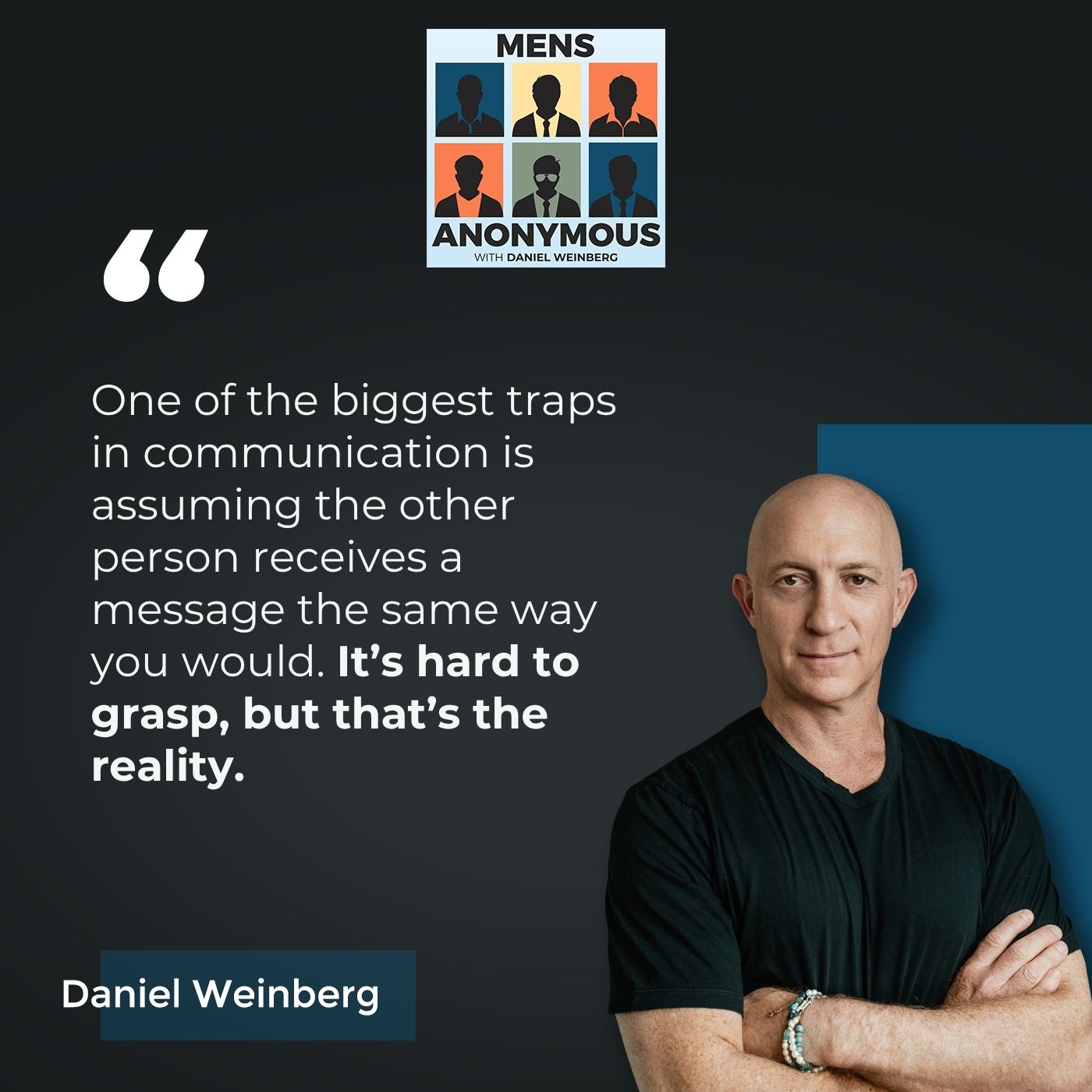
I think that’s one of the biggest traps is that people in general assume that the way that the other is receiving the message is the way that you would receive the message. It’s very hard to get your head around that but that is a reality.
Correct. What it is first and foremost, a lot of times, men misunderstand women because women are emotional and we see a lot of expression. Depending on how we see their expression, we will tie an emotion to it. No matter we’ll see a facial expression and then he says, “What did I do wrong?” Immediately you already have a defensive nature. When you speak to her with a defensive nature, she says, “If this is what we’re doing, this is what we’re going to do.” What I teach people and I teach a lot of men this is to be present, honest, sincere in every moment. No matter where you are, what you do, whether with a stranger or our most intimate partner, we know how we want to feel.
That’s another good one. Present, honest, and sincere in every moment.
Being Present Honest And Sincere In Every Moment
What it is that no matter whether we’re with a stranger or our most intimate partner, we know how we want to feel. Basic neurological brain science says that we respond to feelings more than words and environment. If I’m feeling good, I don’t have to ask any questions of clarity. However, the moment I feel some type of adverse feeling, some “gotcha” feeling or this doesn’t feel safe feeling, I should say, “I hear you talking to me, but I’m not sure if you’re talking to me or I’m under attack. Which one am I, are you attacking me or are you talking to me?”
Anytime we have an adverse feeling, we should, number one, check am I dealing with myself or am I dealing with the other person? Ask a question of clarity as opposed to accepting the emotion and accepting it as gospel. I should question, “I don’t feel with you right now the way I want to feel. Let’s adjust whatever we need to adjust so I can feel better because I’m not sure if you’re attacking me or talking to me.”
Now when it’s simple, you don’t have to work when it’s simple, “Who spilled the milk?” Or whatever, that’s a simple conversation. When it comes to heartfelt conversations where you’re starting to have a negative feeling, you should start with a question of clarity as opposed to allowing the emotion to determine what’s the next best move. Does that make sense?
Absolutely. That’s a really good one because you can sometimes misinterpret that as well, I guess.
Exactly. What it is that so ask for clarity. “Can you say that a different way?” For example, sometimes being a guy, I can be direct. I’m an ex-former athlete so you’re in the locker room and sometimes you forget. My honey would say, “Should I bring my purse?” “I don’t give a Hades, do what you want to do.” Now, to me, I’m being sarcastic because she’s asking me a question that she already knows the answer to. I come from a sarcastic family, so we give sarcastic answers. She doesn’t appreciate sarcastic answers and that triggers her. In turn what I say is, “I apologize for that but can you say it differently? Why?” Part of a man’s responsibility is teach a woman how to talk to him because you know your triggers, you know what makes you upset.
Both ways.
Correct. Right. When you know your triggers as a man, you can say, “The best way to say to me to correct my language or correct if I say something offensive, for me I say I cheer for them to say, ‘Will you say that differently, please?’” if you yell at me, I come from a household of yellers. I come from an environment of violence in the house and outside the house. You yell at me, you might meet somebody you don’t want to meet.
As opposed to putting her in a situation to experience that type of energy, what I say is anytime I say something out of pocket or you find adverse, “Can you say it differently?” As opposed to giving me the energy and the scratching my eyes out and all of those things. If we can take the time to teach each other how to do that, we have less of what you’re talking about.
Let’s give it some context here because I’d say when relationships are in a fresher state, that’s maybe an easier exercise to do. When couples are years into their relationship and they’ve veered off the track and they’ve come to see you, and you’re trying to reset it, there’s a lot of work that needs to be done there, but both sides need to be on the program to want to do what you’re talking about.
They both have to be on the program and a basic explanation to get everybody on the same page is that the person you initially started the relationship with no longer exists. Every day we’re changing. I didn’t start off with gray hair. What it is that there are always new normals. Nobody wants missionary sex all the time.
That’s a really good segue, because I wanted to get involved here on the sex and intimacy here because that is a big subject that you focus on with the men and the couples that you work with. If we’re going to get into that now.What do you think men and we’re generalizing again and you can give me some anecdotal stuff as well but what do you think men in general get completely wrong about sex in long-term relationships?
In long-term relationships, it starts from what you learned in the locker room from your friends. All of it is wrong. We fail to recognize there’s no woman in a locker room when we’re having a conversation. In order to really have the conversation you need to have it with the woman you’re with because no woman has the same erogenous zones, no man has the same penis, nobody has the same anything. Anytime you start with a new partner, you’re starting from a clean sheet of paper and you need to have a conversation.
Do you find that a lot of the couples you work with don’t do that? In my experience, there are some women out there who are just not comfortable having the conversation. There might be some men out there who are just not comfortable having the conversation. That’s an issue.
Think about this, sex is taboo. It’s a taboo subject in a lot of places. It’s something that we all want but we never want to talk about. Here it is everybody we’re taught that our private parts are supposed to be private but they’re not supposed to be private to us unless we understand them how do we teach people how to care for it?
If we’re not having the conversations we’re choosing to be mishandled. All we’re doing is throwing pieces and parts at each other and diminishing the conversation even though we ejaculate and all of these things, true intimacy and sex is when there’s a strong emotional connection where I feel valued, wanted and desired. If we’re not talking and we’re not willing to have those conversations, we’re shortchanging the quality of our life.
If we’re not talking and not willing to have those conversations, we’re shortchanging the quality of our lives. Share on XSex In Long-Term Relationships And Performance Focus
Coming back to men, what do they tend to get wrong?
For example, what they get wrong is that a woman has to have an orgasm in order to feel pleasurable sexually. According to research, that is not a requirement. When men are focused on making sure she has an orgasm, they’re focused on performance which reduces the quality of the intimacy because now we base it on performance. You can have premature ejaculation and a number of other things because now it’s about the action, not about the experience and you just being caught up in the energy.
You’re saying, just so I want to clarify with you, that men get caught up more in their head than letting go and being deeply connected with themselves and the woman they’re with because they’re too in their head. So on point. Yeah, that was big learnings for me. I definitely went through a long stage of being in my head.
Intimacy starts neck up, not waist down. If I free my mind, my body will take care of itself. As long as I’m thinking of math equations and looking at her face and is she having a good time and I’m listening for her sound, I’m desensitizing the nerves in my body to be stimulated by the experience of the touch I want to have.
The Sensate Focus Technique For Intimacy
How do you teach couples to move beyond being up here and being in here?
What I do is I teach Sensate Focus. Sensate Focus is actually just slowing down. It feels sexual. Sensate Focus is basically giving full body massages on the front and back of the body. However, when you’re doing the massage, it’s different. What it is one person would massage the front and back of their partner and they’ll switch turns. In the process of just not just rubbing and feeling, the person that’s being massaged is focused on the temperature, pressure and speed of how they’re being touched on the part of the body. As I’m moving my hand, as one partner is being massaged, he or she would put their hand over the other person’s hand and see the speed slow down because so they can teach them the right speed for that part of their body and the right pressure.
It’s a very interactive experience.
Back and forth as they’re going, they’re communicating nonverbally. Nonverbally how to touch each part of the body because where skin is thin wants to be touched one way, where skin is thick wants to be touched another way. What we do is we have them for 4 weeks about 3 times a week do full body massages, understanding first you focus on temperature, then you focus on pressure and speed on every part of the body. You’re collecting data on how your partner wants to be touched. For four weeks, we ask you not to have sex.
That’s a long time.
Now, however, if they have to, they have to wait four hours after they do the activity to have sex because you don’t want the activity to be about sex because this is about building an emotional connection. Now that I have a toolbox of your body and I understand how you want to be touched anywhere, now I have a field of possibilities to play with and explore. I don’t have to ask any questions. I have emotional safety and security, I don’t have to be in my head and we’re free to do whatever we want to do.
Okay, so your experience in teaching this technique, the effectiveness of it, what’s the feedback you’ve had from couples that you’ve worked with that? What were the big changes for them?
Outstanding.
Why? What were the big changes for them?
The changes were in the communication. They learned how to communicate each other’s wants and needs through the process because even after the conversation, it’s not what you don’t want, what did you appreciate most and what do you want more of? Now after the exercise, we’re having these conversations. That’s opening the door up for now to build broader conversations and we’re having intimate conversations and that’ll have a rippling effect throughout all the other layers of life because that’s just one more medium to see through who the people are and where their challenges in the relationship are to remove them so they can have a freer life. It’s an additional piece to a puzzle.
Now some of the negatives in relationships which is infidelity and breakdowns. Why in your opinion, given the amount of exposure you’ve had with clients slash patients, why do you think men cheat? Is it really just about the sex or is it something deeper?
I think it’s deeper. For example, I had a client who had been married for twenty years. However, before he got married porn was a coping mechanism. He never felt a lot of control when he was younger.
What was a control mechanism you said?
He was addicted or what was said to be addicted to porn. Basically, porn became a coping mechanism for when he felt powerless as a kid. He was a soccer player. When he played soccer and he was an All-American. Even if he missed a goal, the father would say, “You know, you could be better.” No matter every time no matter what he achieved, the father said, “You could be better.” His father was doing this to motivate him.
Never good enough.
Infidelity And The Deeper Reasons Why Men Cheat
Right, exactly. When he felt like a failure, he felt stressed, he would have porn. Now that porn, he never told his wife about it. She knew he watched it but she didn’t know the significance. All of a sudden, it mutated into him going to strip clubs and then getting lap dances and then it progressed. What it is that he was not willing to be vulnerable and transparent and share, “Honey, when I feel stressed, I need sex, I need to feel wanted and desired, I need to use that to calm myself down.”
He’s not talking to his wife about it, she doesn’t know. He feels shame about it and that opened the door to confusion. Often times, women fail to recognize that men are emotional. I explain to women that men want to feel wanted and desired just like women. However, we can’t tell you. We can’t tell you because if we tell you you’ll think lesser of us because of the way particularly manhood, because manhood in the US definitely is you have to be rough, you have to be tough, you can’t be soft. You can’t be too emotional. You have to be the pillar of strength all the time. That’s the perception.
Oftentimes, women fail to recognize that men are emotional too. I explain to women that men want to feel wanted and desired just as much as women do. Share on XYou say in America. Would you say it across all subcultures within America whether it’s Hispanic, African-American, Asian, whatever? It’s the same.
Yeah, no doubt, the machismo. It’s just that level of manhood’s strength. You’re the leader. Men are to lead. When we think of leader, we think of strength. If I show up anything less than strength you won’t value me or respect me because men are big on feeling respected. Therefore, if I perceive to do something that you don’t reflect you can’t respect me, I will not do it.
If I’m too emotional or if I’m too those things, but meanwhile, if I’m not expressing my emotions and sharing what I want from you and what I need from you, then I suffer in silence. In my suffering in silence, it’s eroding my character. If I can’t feel like I can be a man at my house, I’m going to be a man somewhere. The cycle begins. For example, when men are getting older you get over 40 and now your erections aren’t doing what you want them to do.
All of a sudden, you are pulling away from your wife because even though she wants to be intimate, you’re too ashamed to have the conversation. She doesn’t think you’re attracted to her anymore. She begins to assume you’re having an affair and then depending on her energy and how often she does it because you’re not letting her off the hook telling you you’re not feeling secure about yourself, then all of a sudden, I had a man do this, “I had to go check my penis somewhere else to see if it worked.”
He became to be insecure with his wife and then with the nagging and the whole nine yards, he stepped outside of the relationship as opposed to just having the conversation because too often times I’ve heard a man, “If I’m going to be accused of having an affair, I might as well have one because I’m getting punished anyway.”
On the affair situation and = again in your experience, can a relationship really come back stronger after betrayal?
Most definitely because now we’re dealing with the elephant in the room. Now we’re dealing with the elephant in the room and now we’re having real conversation, now we can be transparent.
Do you think this is both ways? I’ve always had the position that if a man betrays a woman, yes, you can get there, but if a woman betrays a man, I see it as more challenging.
It’s not impossible, it’s more challenging. The research already shows that women are more forgiving than men. It can be repaired either way. It is more challenging for men because once you understand the why, obviously the affair itself, the breach is a terrible thing. For when you love someone, you feel like everything inside of you is just ripped apart.
Betrayal.
Exactly, the betrayal is terrible. However, then when we start to peel the layers of the onion and understand the why and how it manifested, it creates empathy because recognizing that nobody’s innocent, everybody’s guilty.
That must be hard for the victim, let’s say.
Yeah, but let me ask you a question, what’s not hard in life? Life comes with being an adult, having the framework of reference and exposure. You and I talk, since this is a man conversation, sometimes you just need to grow up and suck it up. Here and get past yourself. Get past your shame, your doubt, your guilt. If you really say you want what you want, if your actions and behaviors don’t match what you say you want, you really don’t want it or you got to change your mind about what you want.
On that note what do you think a high-functioning man in a relationship looks like? If you were to describe someone who is delivering on what you see as the optimal state, what are you telling the men who walk into your room what they should be aspiring to in terms of being in their true masculinity?
In being in their true masculinity, I got two ways of saying it. First way I say is that he should be like Abraham. I don’t mean to offend anybody but what I’m going to say is true. It’s just true. Abraham was an upright man of God, the father of Christianity. He had a wife. He actually gave his wife to a king because he basically pimped his wife.
However, the God let the king know that that was Abraham’s wife so nothing inappropriate happened. However, no matter what he did, Sarah still called him Lord. I said, “I’ve never had a woman call me Lord but I’m going to figure out how,” because even in his imperfection, she still loved him. Now, with all that being said, it’s about a man that’s secure in who he is and know what he offers. He knows his strengths, his weaknesses, his frailties and he’s okay with them because one piece of him does not create the whole definition of who he is. It’s a subtotal of who he is, not one piece or part.
Number two is the willingness to communicate that information to your environment because this man wants to be free within himself and in his environment. In order to be free at any level, the two precursors are that you have to be willing to be honest with yourself and honest with your environment. In addition to that, being attentive. If you really want to pursue someone and someone is truly your heart, study them like a student. Where is your intention? How do your actions and behaviors and how you treat that person show up to demonstrate your truth on how you feel?
That is the listening, hearing, being seen, seeing them. When you’re saying treat them like if you’re really into this person, then pay attention to all those things because you said you’re really into that person.
Right, check this out. I need you to be intentional just like you are at work to get that check. It’s the same energy. If you really want that job, you want that promotion, you use an enthusiasm. You show that you’re there, you’re listening and you’re insightful. You figure out what your boss needs before and you figure out how to put a little special bell and whistle on it.
Why are you not that intentional in your personal life to accomplish what you want intimately, personally, sexually? Use the same level of intention. Remember, when it comes to life, nobody teaches us how to live. We’re taught to be students, professional law enforcement, military personnel, after that, you got parts, I got parts. We throw them together hope for the best.
That’s an accident waiting to happen. It’s about putting intention. Be intentional about who you are, who you want to be, what you want to experience. How are you being intentional about creating an environment for that to happen? If you don’t lead it, nobody’s coming to save you, so you’re here to save yourself.
If you look at the younger men nowadays, let’s call them the 18 to 35-year-olds, do you see men more lost now than ever before?
Very much so. To be honest with you, I have quite a few men coming in here saying my wife sent me here because she says I’m insecure.
What does that mean?
They don’t feel that they meet up to the man’s standard. I always have to blow it up and say, “Where’d you get your definition of manhood?” “My father said this, my grandfather said this.” I said, “Do you recognize those men took their definitions from generations that you were never a part of. Technology and this society is totally different than the society that they were a part of.”
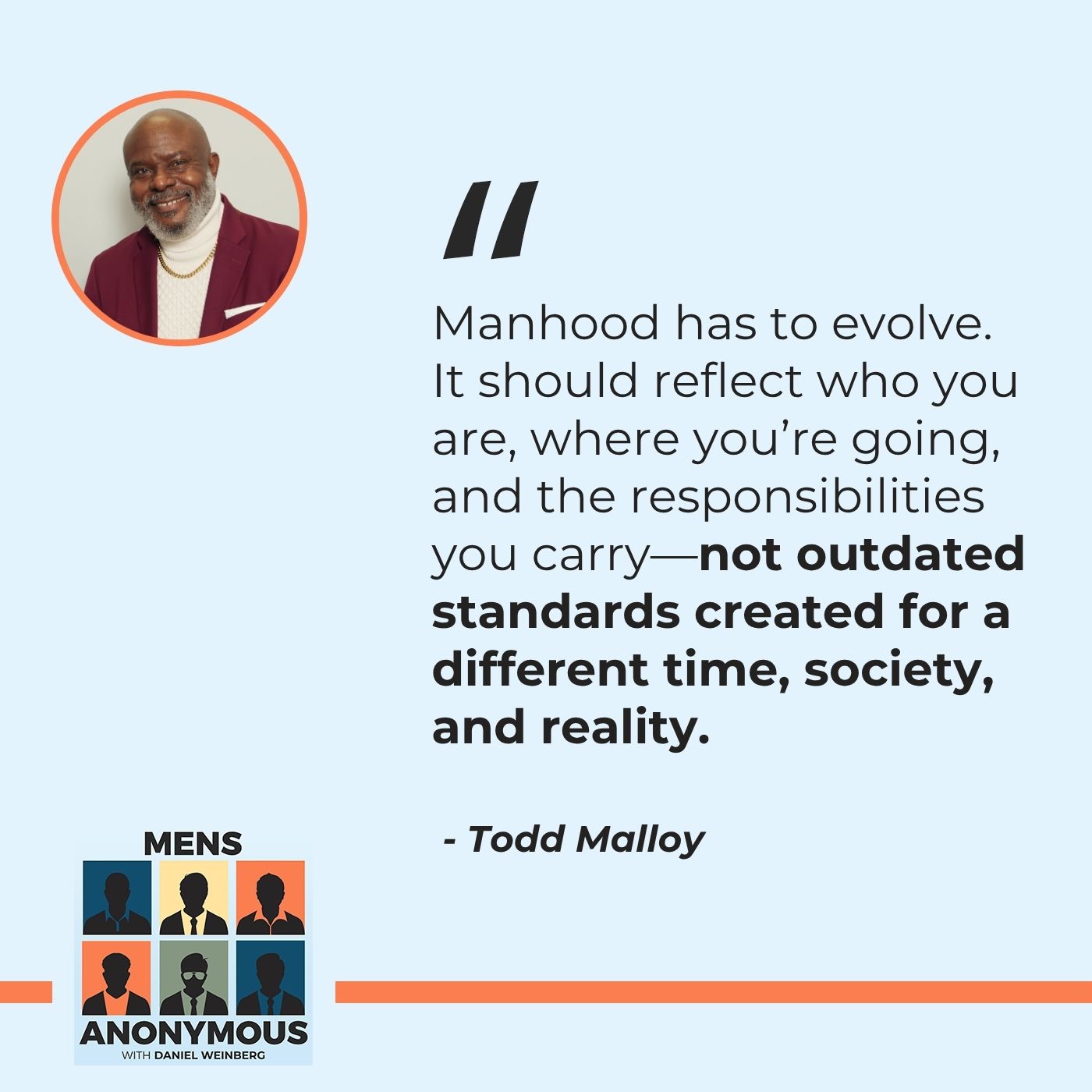
I grew up with John Wayne, the spaghetti westerns where you knock out horses, throw women over your shoulder, run upstairs and fix your belt when you come down. If you do that nowadays, you’ll catch a case. You’ll be in prison. Manhood has to change. What it is it has to be relevant to who you are and where you’re going, not a standard that’s no longer relevant. Your definition of manhood should be based on what your responsibilities and duties are in your area of life, not according to some typical standard that was created long before we were born and never took into account the changes of life, society and the nuances of people. Did that make sense?
Absolutely. Are you dealing with that younger cohort?
No, but what it is, I have younger guys out of college getting married and one of the things younger men are doing, they’re exploring sexually more so than being definitive. For example, I’ve come across that particular age group like the eighteen and the college where number of young men have been with men and women at the same time. They’re bisexual.
As they’re maturing through life, they’re asking about how they want to define their manhood, their masculinity. With them getting married and they disclose that they’ve been with men to their wives, there’s a lot of conversation that has to happen for the woman to feel secure. When you break up the demographics, they’re changing in regards to sexual fluidity. Again, it’s not a judgment, it’s just how life is changing. There are new layers to this. That’s why sometimes there is not just one fixed answer because there are variables in life.
It’s changing. For the better or for worse?
Yeah, it’s changing. We’ll find out. The longitudinal studies you got to wait twenty years to figure it out.
What’s one truth every man reading needs to hear even if it hurts them?
You’re responsible for your emotional well-being, no one else is. Basically, the one who controls your emotions controls you. If you do not control your emotions, you are out of control. It has nothing to do with anybody else. If you are truly a man, why are you a pawn in somebody else’s game?
Very deep and insightful conversation. I think there’s a lot of nuggets there for the readers to take away. I certainly have learned a few things. I really appreciate and I’m sure we could go on and on about this subject. I think the key comes down to really healthy communication. We need to hear from our partner and our partner needs to hear from us, all the things that what’s important to us, what sits well with us, what doesn’t sit well with us.
Defining A High-Functioning Man And Self-Acceptance
The one important piece before we can get there to do that is to be okay with yourself, to accept yourself because it’s hard to have a conversation when you haven’t with someone that’s transparent and vulnerable when you’re not comfortable with your own truth. Number one is that we have to be settled with who we are and how we define ourselves and our success. Define our success based on the reality of who we are, not some standard that doesn’t take into account who we are.
I guess that the acceptance of self then allowing you to be vulnerable to the other and showing what you’re up to with self.
The funny thing is men are often times looking for acceptance. When you’re looking for acceptance through other people, you may or may not get it. If you accept yourself, you’ll find out the people around you will accept you.
Once you accept yourself, it doesn’t really matter.
It doesn’t matter because when they recognize it doesn’t matter how they feel about you, therefore there is no judgment. You are accepted because they know who you are. You show up the same way every day. It doesn’t matter. The key point is you have to find acceptance within yourself.
You said before, you show up present, sincere.
Present, honest, sincere in every moment.
I ask all my guests five quick questions at the end of the show. I want you to show up present, honest, and sincere with the answer. Every moment, okay?
You got it.
Who would you like to say sorry to given the chance?
The one jumping out of my mind is my mother.
There you go. What are you proud of being or doing in your life?
I am doing exactly what I want to do with my life. My vocation is exactly what I want to do. I chose my profession, it chose me. I surrendered to it but I’m doing exactly what I want to do.
How long have you been doing this for?
I gave myself permission at 42, so about 21 years.
Before that?
Before that, I was a mechanical engineer, unhappy mechanical engineer.
You’re a smart fellow.
I’m a nerd, yes.
You’re a smart fellow. When did you receive kindness while needing it most and expecting it least?
That would be from my bishop. One day in the ‘90s, I was lost mentally. I walked up to the altar and I’m 6’5, 240 pounds. A man was standing up front and just said, “Come up front if you’re feeling down and you’re feeling depressed.” I walked up and I cried like the snot running down your nose, the ugly cry. I allowed another man to hold me and tell me it was going to be okay. He guided me for the next twelve years in mentorship. It was a dark period in my life and I needed help. I reached out and he was there. Unbelievable because one of the things is that I’m very self-reliant. I grew up not depending on people. To ask for help and support but I needed it. I recognized if I didn’t, life wouldn’t be the same.
What did your mother or father teach you that you frequently remind yourself of?
Integrity matters.
Amen. What’s your superpower? Final question, what is your superpower?
My surrenderance to God.
You just let go.
I let go.
I think that’s the answer to everything.
The way I understand it, the one who tries to save his life loses it. The one who loses his life will be the one saved. I’m limited in my ability. Therefore, I have to listen for guidance and direction for when I come short, I always have a resource. I’ll always be whole even when I’m not.
Excellent. Thank you.
Thank you, sir, for the opportunity. I appreciate it.
That was a great experience. I really appreciate it.
No, it’s an honor. Thank you. I’ve enjoyed. You good energy and good people. We can go have a smoke a cigar sometime.
Likewise.
Important Links
About Todd Malloy
 Todd Malloy is a psychotherapist, Licensed Marriage and Family Therapist, and Certified Sex Therapist who helps people move from self survival to self reclamation. Raised in a low-income New England housing project by a single mother, Todd learned early what it meant to grow up fast, carry responsibility, and push through life on instinct. Like many high-functioning adults, he chose the “safe” path first, building a successful career in engineering and corporate project management while quietly knowing it wasn’t his truth.
That inner conflict eventually became impossible to ignore. Todd made the decision to leave certainty behind and pursue the work he was always drawn to: helping people understand themselves, their emotions, and the stories that shaped them. Today, he blends lived experience, clinical insight, and straight talk to help clients build emotional fitness, deepen intimacy, and stop outsourcing their lives to expectations they never chose. He is a Huffington Post contributor, and a weekly guest expert on V101.9 Radio and NBC Radio. His work centers on one belief: life is fragile, and surviving it is not enough.