Daniel Weinberg sits down with award-winning filmmaker, author, and former rapper Fredi Nwaka to unpack what happens when survival mode stops serving you. True masculinity starts when you drop the armor and begin your real Journey To Belonging. Fredi shares his raw path from being fostered in a small coastal town to surviving South London’s gang warfare and losing forty-five friends along the way. He opens up about confronting decades of hidden childhood abuse, repairing his relationship with his parents, and letting fatherhood rewrite his identity. You’ll hear why real strength comes from radical honesty rather than fear and posturing. This conversation gives every man a blueprint to stop running from past pain and step into unconditional love.
—
Watch the episode here
Listen to the podcast here
Boy. Man. Father: The Journey To Belonging With Fredi Nwaka
On this week’s show, we have the famous Fredi Nwaka, where we talk about boy, man, father, and the journey to belonging. Just a reminder, the book Men’s Anonymous that I wrote is out. You can buy it on any good online bookstore, such as Amazon. Go get your copy, Men’s Anonymous.
We are on Fredi. Finally, we made it happen. This is like a tennis match between you and me. It was like fifteen love, back to you, fifteen all. We finally got you on the show, and I’m very excited for this conversation. You’re a hell of an interesting man. Your story, there’s a lot to learn from your story as a man. Accomplished so much in such a short period of time. Welcome.
Thank you, man. Thank you for having me. I’ve been looking forward to it as well.
Let’s do it. If I strip away the filmmaker, Fredi the filmmaker, the actor, the author, the father, all the labels that we could attach to you, if I were to strip all that away and ask you, Who are you today? How would you describe Fredi Nwaka?
That’s one of their questions. You know that when most people ask you, you always define yourself by the things you’ve done, right? You just took away everything.
I just took away all of it.
Everything went.
Who’s Fredi?
I’m definitely a survivor. Someone who wants better for other people. I’m just a man on a mission to create a legacy. I’m on a mission to create a legacy.
A legacy for your children.
For my children. I want to create a legacy so that when I’m not here, I feel that, at some point, you will be remembered. I want my children to remember me as that man and that father. I’m out to create a legacy for them.
How different is the Fredi from the fifteen-year-old Fredi? How different is that man today, that you’re telling me you’re on a mission, you’re a survivor? How is that different from Fredi at fifteen?
Escaping The Trap Of False Identity
Fredi, at fifteen, was a menace. I was a menace. I come from Kent, so I was fostered by a White family in Kent, a place called Deal, right by the coast.
Were you born in the UK?
I was born in the UK and then I do not know the full ins and outs, but I was born in the UK and I was fostered from the age of three months until I was about nine.
For three months, you were fostered?
Yes.
Until the age of nine?
About 9, or 10.
How many families did you go through?
Just one. I was the only Black kid in the village or the town at that time. I thought I was the only Black person in the world. I did not see another Black person. The only representation I saw of Black people was on jam jars, like golliwogs.
We had that in Australia, golliwogs. We had biscuits or cookies that were golliwogs.
We had the jam jars and used to have the little golliwogs there. That was the closest thing that I saw to someone who looked like that. As for me, I guess that was that. When I came to London, it was a bit of a mad transition. Black people did not really connect with me because I was, I guess, White. I was putting Brillo Creamy in my hair. I was listening to Ultravox, Duran Duran, and Adam Ant.
I did not know what reggae was. I did not know what. Not only black food. At the same time, White people did not like me either because I was Black. I was caught up in this place of just being stuck. Around the age of fifteen, I was still trying to find myself. I joined one of London’s gangs and got involved in a lot of gang activity, and was just searching.
I saw, because I’ve read up a lot about you. You were, as I said, a hell of an interesting guy. Fascinating because I feel like you’ve lived multiple lives already, given where you’re at in life. You once described yourself as a kid as thinking you were basically a White person with a tan. You were quoted as saying that. There’s something incredibly innocent and incredibly sad about that. When did you first realize that the world saw you differently?
You can't build a real identity on other people's expectations. Drop the masks and own your roots. Share on XYou’re describing how you’re like, there were no other Black people. When did you realize what you were just talking about then, which is like, Black people, you did not connect with Black people, and White people did not see you as White, clearly because of your aesthetic? When did you realize that the world saw you completely differently than the way you saw yourself?
When I did come to London, to be fair, I think when I was in Thiel, young people did not see color. You’ll find that children, they either like you or they do not, good or bad. It’s very Black or White. As a kid, my best friend was White, and I just did not see my own color, if that makes sense. When I came to London, I started to be treated differently.
How old were you when you came to London?
Around nine.
Why did you come to London? What happened with that post-foster family situation?
I do not even actually know why I had to come back, to be fair. All I remember is one day playing in the garden, and a car pulled up with my mum and dad in it, and they were like, “You’ve got to go.” I did not even remember having a chance to say any goodbyes or anything. I just remember a car pulling up, and I just had to leave. The funny thing about memories is that they might have gone slightly differently. That’s what I remember.
That’s how you experienced it.
I do not remember there being a conversation or any preparation like “Fredi, you have to go back.” I just remember being in the garden. I did not take any toys or clothes. I just remember coming out and getting into this long car. That was it. When I came to London, that’s when I started to realize the differences. People looked at you differently, even my own family.
Who were you living with when you came to London?
My biological family, my actual family.
Your actual family took you back from the foster family at nine? Like mum and dad, the original family, siblings?
Yes. My mum and dad. Everybody. I came back to live with my brothers, my whole family.
Explain to me what you remember about that reunion of all of a sudden, “This is my real family.” Do you remember what that was feeling like?
It was a bit of, again, I remember waking up and being surrounded by siblings that I did not know that I had, but I spent no real amount of time with them, if that makes sense, and it was a bit of a shock. It was a bit like, “This is me now.” It was a bit of excitement in the sense that now I’ve got real brothers and sisters and stuff, but also there was a lot of “Why am I here?” I’ve just left what I knew was home. Do you know what I mean?
Yes.
That was my home. I’ve been there since I was three months old. That was my foster mum. Not even my foster mum. That was my mum. That was my dad. I did not know what fostering was. That’s mum, dad, and family. Now I’m here with these people whom I do not really love or know. They’re strangers. Bunch of strangers. Why am I here? That took some getting used to.
How was your relationship with your biological mum and dad?
What, now?
Then?
When I came back, I hated my mum for years. It’s common knowledge, man. I hated my mum for many years.
Why? Giving you up originally?
Yes, some of that. Sometimes I was getting in trouble all the time for things that I did not know. My parents were Nigerian, and they were very cultural Nigerians and very staunch Nigerians.
You’ve got to explain that to me.
You have Nigerians who are English-born, which might be a bit Europeanized in the sense of how they do things. You have Nigerians who are hard, what we would call hardback Nigerians.
Describe the Nigerian family construct and the culture.
It’s things like, for example, if they offer you something and you take food with your left hand instead of your right hand, I’ve seen it as a sign of disrespect, and you could get in trouble for that. Whereas me growing up, I’d take it in any hand, whichever hand was free. I remember my dad offering me some food, and I went to take it in my left hand, and I got a slap in my face because I took it with the wrong hand. Do you know what I mean? Things like that. Those were some of the kinds of things that I wouldn’t have known because I did not grow up in a Nigerian home, if that made sense.
For many years, my mum and I were just at loggerheads. I was always getting in trouble for things. Thank God, when I got to ten, I’d say, before she passed away, we managed to sort things out, and then we became like best friends. My mum and I became best friends, and she was my cheerleader, waving the flag like, “Go, son.” For everything that I lost, not with her as a child, she made up for it in the last ten years before she passed away. We managed to rectify that, which was really an amazing thing.
How was the relationship with your father in those, let’s say, young, pre-teen, teenage years, etc?
You know the other thing, Daniel? The craziest thing is when I think back on my dad. I’ve got little snapshots. I do not really remember him. I know he was there in different places, but I do not really remember him being present like my mum. Now, he’s 97. I do not remember him having any real presence because I know at one point he was in Nigeria a lot. He came back to London. He had various jobs. I do not remember having any real bond, any real closeness, not like how I have with my children.
I do not really remember much, to be fair. Whenever I asked my siblings, they all had a different recollection of their relationship with him, whereas I do not really remember any of that. I did not get what you got. It’s almost the same with my mum. I remember there was a time when I came to my house, and you’d have family pictures, and I’m not in the pictures because I wasn’t around from the age of three months old. In all the group pictures and the family pictures, I’m not in a lot of them. I’m only in some, but not many of them.
What were your earliest memories of racism when you came to London? When did you start feeling the effects of racism?
The maddest thing is that it was always happening, even when I was in Deal, but I did not know it was racism. I’ll give you an example. I was walking along the seafront. My brothers, they used to come down. I was walking along the seafront. My brothers, they used to come down towards the end and spend the holidays there, like Easter holidays or summer holidays. One time we were walking along the seafront and we saw a bunch of skinheads on the other side of the road, and they were doing the Nazi thing.
I thought they were saying hello, so I was just waving back. They’re doing that, and I’m waving at them. They’re looking at me. I’m looking at them. I just thought they were being friendly. It wasn’t until I came to London many years later that I realized that they weren’t actually saying hello. It was always happening, but I did not realize that.
When did you start realizing that you’re going to be discriminated against?
When I came to London, that’s when I started experiencing more racism. It’s weird. When I was younger, I did not experience as much in Deal. I had the odd thing. There were a few things that happened to me when I was in Kent. I did not get tied to some trees by some boys and stuff like that in Kent as well, stuff like that. When I came to London, it was more blatant racism. Things like the police. Even with the police, I got put in the back of a van by the police.
I’m like, “What does that mean? They were hitting me in the back of the van.” I’m like, “I did not know what I’d done. I hadn’t done anything, to be fair.” One of the officers said to me, “That’s for all the old White people.” Your lot got mugged and beaten up. I’m like, “What?” I started to see blatant bits of racism. There were times where they’ve had to run, and friends of mine. You just started to see a lot of stuff that I just hadn’t experienced as a child in London. It was like, even though London’s cosmopolitan, there was a lot going on in the ‘80s.
Did you understand why they were treating you like that, or did you have no idea?
I understood as time went on because I’ve got siblings and I’ve got friends, and eventually you get to realize it has to do with your skin color. For me, because I’ve come from a place of racism, it doesn’t make any sense to me. My parents were White. I find it confusing. Up till now, when I have these conversations with people, I cannot get it. I do not understand it. Some of the people who have shown me the most love in my life were White. It’s like, I just do not. Back then, I did not get it. Even now, I do not get into those debates because it’s like, you’ll never make me see or feel any different about somebody because of their skin color. It makes no sense to me.
You’re willing to talk about it because I think you do write about it in your book. You also had some abuse as a child as well. Did you understand at the time what was actually happening to you? Did you talk to anyone about it? Explain to me how you experienced all that.
Releasing Secrets That Poison Your Soul
The abuse thing, again, I did not know it was abuse. I just thought it was normal. I did not realize.
When was this?
This was from the age of around, again, getting back in memory, I would say from the age of around four, when I was being fostered with my foster carers. Again, it’s very hard for me to remember how long it happened, but definitely from the ages of around 4 or 5, those ages. I just thought it was part of living and life. I did not realize what was happening to me and what was going on. That’s all I knew. Again, once I left Deal and came to London, many years had passed, many years had passed. I started to find out more about grooming and abuse, and those things. That was when I realized, “That happened to me.” I blocked it out. It did not exist in my world.
You never talked to anyone about it?
I did not talk to anybody about it. It was my own little thing until I was about, I want to say, close to 40. It’s something that I just lived with and held in myself, in my core. I was doing a project called Some Things About Child Abuse in the Black Community. It’s very taboo. Black people do not like to talk about those kinds of things. I thought, “I’m going to do a film about it.” At that point, my sister is really close. I told her about it, and she was shocked. She was crying, and I did not know that had happened to you, that kind of thing. Then she’s like, “If you’re going to do a film about that, you have to let people know about what happened to you to make it.
Bantic and real.
I made the film, and I screened it at BAFTA. When I came out at the BAFTAs, I just told the whole audience. That was my telling everybody, my coming out. “Look, this is what happened to me.” There were people crying.
Demanding respect through fear only keeps you lonely. Real strength shows up in how you protect and connect. Share on XTell me how you experienced that. How did you feel to finally release a 40-year-old secret out of your system?
It was so relieving. It was almost like it was so relieving. You know what was even more powerful? The fact that many people came up to me and thanked me because they’d been through it as well. I think looking at my past and looking at the guy I’ve been over the years, they were like, “Fredi, that happened to me when I was younger.” My mum, my sister, my brother, like, people were coming to me crying. Thank you. I’m like, “Why are you crying? It happened to me.” I’m the one who’s supposed to be crying. It turned around to the fact that I was talking about loads of people coming to me, thanking me, hugging me, saying, “Look, thank you.”
You made them feel like they’re not alone. They’re not abnormal. It’s actually more common than they realized. Actually, it gave them a sense of relief.
Exactly that. For me, it was twofold. It was one. I do not have this on me anymore, very freeing and liberating. Two, I realized I could help so many people just by talking about something. The hardest thing about it is not the abuse, because it happened many years ago. As a man, as an adult, the actual physicality of what happened is gone.
It’s long forgotten.
The biggest thing about it is the head f*** that goes with it. It’s not even a shame. I’ll tell you what it is, Daniel.
Tell me. I’d really like to know. What’s actually tripping in your head?
The confusing part is when someone does something that is horrific to you or makes you feel. You’re supposed to hate them. You’re supposed to have this thing against them. What happens is that when you’ve been through certain things like that, and you’ve been groomed in a certain way, you still love the person. That is the problem. The problem, where it f***d your head up, is that you still love the person. On paper, it’s this person who doesn’t listen to you. You’re meant to hate them, but you do not actually hate them. You still have that feeling of love. That’s what confuses you more. You want to be able to feel like you hate this person.
I’ve also been told that. I interviewed a gentleman a couple of weeks ago, and he was abused by a cousin who was a couple of years older than him. Another boy, when he was like, I think he was like five, similar to what you’re talking about, and his cousin, who was like 6 or 7, was doing it to him. He lived his life for many years before he came out with it, not knowing whether he was. He did not know what he was. He questioned his own sexuality. It confused him. Am I gay or not gay? Those things as well were a complete head fuck.
For me, because mine were women that did it to me, it was a bit. It was just a weird space. As I said, when I got older. Even now, like the other day, when I was doing research for my book, I reached out to some of the surviving family members on their side. I got to find out all these other things that I did not know. For example, one of the women was a prostitute back in the day. She got her throat cut and slit and things. All this stuff I was finding. It started to make me realize that they say hurt people. I started to think to myself, what did she go through that made her want to? Do you know what I’m saying?
Absolutely. You’re trying to have some compassion and empathy as well and trying to understand the situation rather than think, “This person’s just evil.” How is it?
There’s something in there that makes that person, because no one really wakes up in the morning and something makes someone go a certain way. To be honest with you, if people have said to me, “Fredi, would you change?” Even if I could go back, I wouldn’t change anything.
It’s because of all those experiences.
I wouldn’t even, like I said, the act has long gone. The physicality of it is long gone. What’s left now is this person I am today. I wouldn’t change the things I’ve been through to make me who I am today. I’m at peace, and I’m happy where I am, if that makes sense. There are a few things, but for the most part, I’m good.
There was something that you really said that just stopped me in my tracks when we spoke. You talked about seeing horrific violence, friends dying, people’s bodies being terribly injured, and then essentially said, “It did not bother me.” It’s like you got used to it. This extreme behavior became normalized. Was that a strength, or was that numbness? Had you totally turned off your emotions at that stage?
It’s a mixture of both. I do not think I’ve done it on purpose. Do you know what I mean?
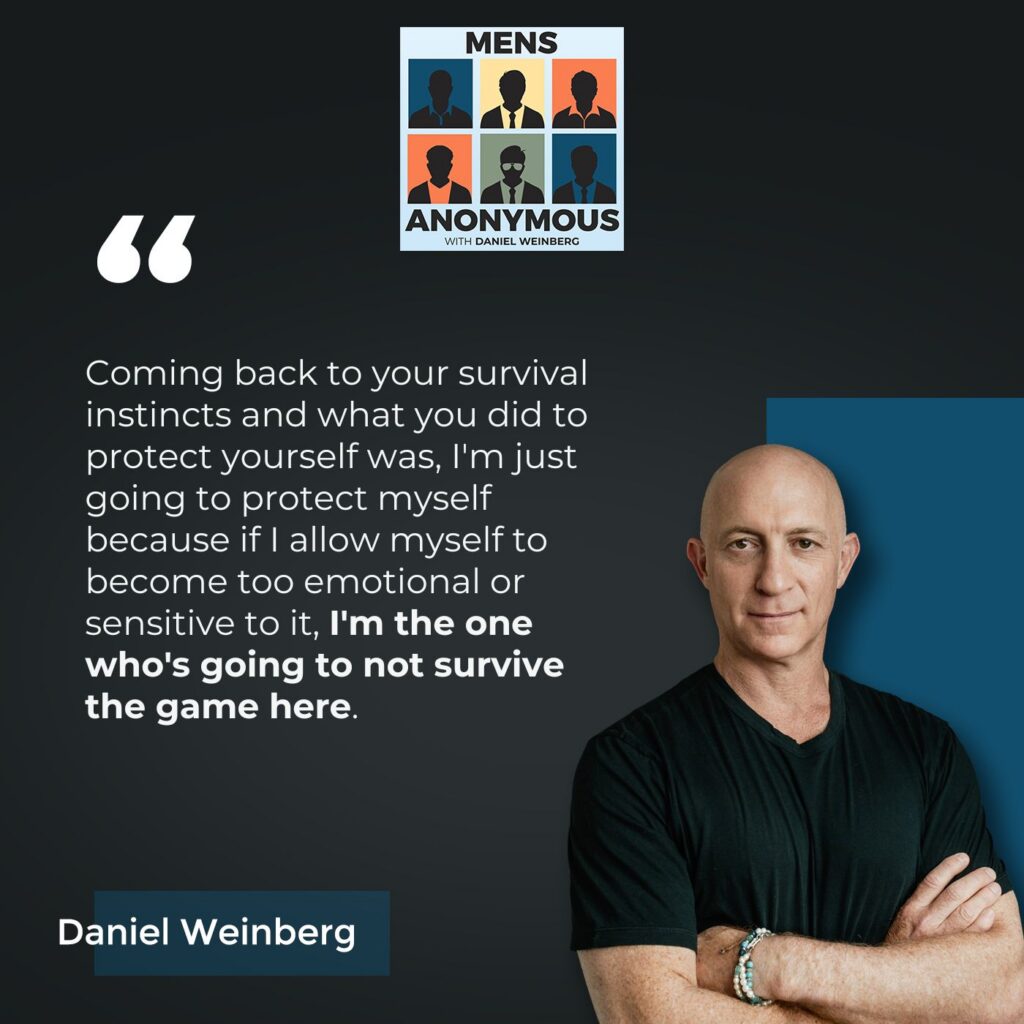
No, I’m not saying it on purpose. I would say it’s more of a defensive mechanism. It was. Coming back to your survival instincts, what you did to protect yourself was, “I’m just going to fucking cut off emotion here.” I’m just going to, like you say, man up, but it’s not man up. It’s more, I’m just going to protect myself because if I allow myself to become too emotional or sensitive to it, I’m the one who’s not going to survive the game here.
See, and that’s the bit I’m talking about where it’s like, it wasn’t a thing where a conscious decision thing.
Why do not we describe to the audience and give some examples of the life that you found, like the life experiences that you found yourself in as you became a teenager.
Trading Fear For Authentic Connection
When I got to my teens, I found myself in a situation where I felt alone. When you’re alone, you crave love. We crave family, per se. I ended up in one of London’s biggest gangs, South London’s biggest gang, called the Untouchables. As a result of that, I experienced that over 45 of my friends have been killed over the years.
That’s more than some people who have experienced the military. It’s where they lost some of the people in their brigade or platoon. You lost 45 mates. People you’ve hung out with and spent time with. How does one find themselves immersed in, how did you get into the gang lifestyle? How did you get in? How did you get accepted? What did you actually do while being within the gang? How did it all go? How did it become so out of control?
I was trying to be accepted. I’d say, part of something. When I was in school, I remember the last part of school. My foster mother, I think it was my mother, and my father passed away. I got the news the night before, went to school, got into an argument with this guy, and beat him up really badly. After that, people started looking at me differently. I realized that being nice. I did not always get your friends. It was really like being the nice little boy who did not get me anywhere. After I had that fight and that incident happened, all of a sudden, people were drawn to me like, “He fights Fredi.” As a result of that, I jumped on that whole persona and started doing it.
You felt like people respected you.
You got the respect.
Paid you more attention, but it was coming from a fear-based place. They’re like, “Fredi, you do not want to fuck with Fredi.” It was more of that than “Cute Fredi” or “He’s such a nice guy.”
Definitely, at the time.
You picked up on that. You were like, “Look at this. I’m a little bit popular here.”
I picked up on any attention better than none. I’m getting some attention in some shape or form. As a result of that, I started doing a lot of security stuff. I was walking around with knives, guns, and doing drugs on my own, just me and a dog, just doing everything that went in the realm of being so-called bad.
As a bad boy, tough guy.
Anything to do with that. I’d get phone calls to go and collect people’s money. I’d go and get money, a bit of debt-collection type stuff. I’d do doors on my own. I became a bouncer. I started doing clubs, and I started doing CP, close protection work. All this stuff was all new.
What’s that, sorry? What’s close protection?
Like that bodyguarding.
Bodyguarding and, like, tough guys, other tough guys.
Looking after musicians, looking after artists, looking after anyone who needed some security. I was doing stuff like that.
You’re a big fella. I’ve seen your films. You’re a pretty tough guy.
I was. I think as you get older, but yeah.
Even now, I’ve seen some of your more recent films. You’re a big fella. You’re intimidating.
I’ve still got size, and I can fight. It was a lot of that going on, and then I found myself in just lots of situations. I had a guy who wanted to stay with me one night. We were clubbing one night, partying. One of the guys was like, “Fredi, can I stay with you? I know if I stay with you, we’re going to be all right.” I’m cool. We stayed with us. We stayed the night, partied the night. At the end of the night, we went outside. He walked off. A few seconds later, he came running back, holding his stomach.
I’m looking at him, and the girls that I was talking to are like, “Ugh.” As he’s bent down, his stomach’s falling out, and he’s caught his stomach in his hands. I had to push him on the floor. I’m holding his stomach for him, and I push the stomach back, and he’s like, “Fredi, am I all right?” I’m like, “Man, you’re fine.” This time I’ve got his intestines in my hands, and I’m ringing the ambulance at the same time.
There were things like that. I had a guy get shot again, and I took my top off, had him in my arms, and I tried to stem the blood. I went straight into overdrive, and he passed away. I’ve been to clubs. Literally, it started to get to a point where my friends were calling me an omen because everywhere I was going, someone was dying. It’s not me. It was happening all the time. Everywhere I was going, someone was dying. It’s crazy.
What was the wake-up call? What was the turning point for you then?
When my son was born.
Were you still involved in the gang lifestyle when your son was born?
Yes. I was still, because it is you get out, but you do not get out. It’s a weird one.
You’re still doing little jobs. They’re like, “This is called Fredi.” You’re like, “I’ll get paid. It’s fine. Give me a thousand pounds. Fine, I’ll do that. That’s no problem. That’s easy.”
It was easy money. The thing is, along the way, you’ve developed a certain level of friends, people, and family. Even your habits, like even to this day, I do not sit with my back to the door. When I walk into a room, I scan. Even if we go on holiday and my kids are like, “Dad, you’re in Jamaica, you’re on the beach.” I’m like, “Yeah, but still.”
You’re just hyper-aware of what can go wrong.
Hyper-vigilant. I see drama before it happens. If I sense something, I’m like, “We need to leave.” Sometimes I’ll leave, and I’ll get a phone call, “Saturday we were out? Someone got shot in there, man.” See, I knew it. I felt it. When my son was born, that was for me the bit where I was like, when he was born, I realized that if my life did not change. I wouldn’t get to see him grow up. I just wouldn’t.
Literally, it was like, “What am I doing?”
It was just one of those ones where I’m like, “This is mad.” Again, around the same time, a lot of the people that I was having beef with, they were going to prison, or they were dying. Natural selection, like some of the things. I did not have to do things anymore because they were having arguments with other people and getting killed for nothing to do with other people. Eventually, it just kind of fizzled. I was doing more music stuff, rapping. It just faded away. Everyone grew up, had children, and stopped doing what they were doing. Those who weren’t, they were in prison.
We got connected because our publishing groups have, you’ve put out a book, as well as the first of what I’m going to say is going to be a trilogy. The first book you put out was called BOY: When you find the boy you will discover the man. It’s talking about effectively everything we’ve talked about up to now, pre-father. The next book is going to be Father. Talking about your father.
Next one’s man.
Next one’s man.
Unpacking The Roots Of Your Defenses
Man and then Father. With regard to Boy, if I were to ask you, did writing Boy heal you or introduce you to yourself? In doing that work, did you finally understand who Fredi was?
It did two things. Definitely helped heal. It allowed me to forgive parts of myself. I remember there are times I look in the mirror and hate who I was as a man and think to myself, like, I hate me for some of the things I’ve been able to do and my behaviours. I was able to trace it back to the things I went through. Even just to give you an example, the whole correlation with violence and blood, and not caring about what I’ve done to people. I talk about it in my book. When I was younger, my foster father had haemophilia.
At the age of like three, he used to have nosebleeds and fill buckets up with blood. Buckets full of blood. Here I was as a little three-year-old holding the bucket under his nose and then taking this blood and pouring it down the toilet and then coming back. If I’m seeing all this blood and coughing up all this stuff at the age of 2, 3, 4, obviously, when I’m older now, I’ve seen it all. It did not faze me.
I couldn’t understand until I went back as the boy and realized, so that’s the reason why blood and that stuff don’t faze me, because I’ve been seeing it since I was 2 or 3 years old. I did not know that in my subconscious until I started writing Boy. In answer to your question, it helped me to heal and forgive myself for a lot of things and behaviours that I had, but it also allowed me to understand my behaviours, why I was so violent, why I’ve had this relationship with women over the years, and did not look at them in a certain way.
Why was I able to be on Zoom? When I lock off things and protect myself, I find it very easy to shut people down. If I do not like something, zoom, like you just do not exist. I can be in the same space as you, but you’re not there. I’d say heal, and it was a lot of healing and definitely an introduction to who I’m and who I was.
Going back to that gang lifestyle and the direction you went in, do you think if somebody had embraced thirteen-year-old Fredi and gave him a healthy tribe, gave him a healthy connection with a group of, let’s say, friends or let’s say you played football or whatever it is and you got that healthy positive experience, do you think your life would have gone in a completely different direction or it’s not you needed to go through this extreme experience to get to the place where you needed to be.
Definitely would have made a massive difference. Some of the work that I do now. I have a company called H.E.A.L, which stands for How Emotions Affect Life. I work with young people. I work in an SCN school called RISE, where I’m their ambassador. I’m always working and championing conversations with young people and early intervention. I had that intervention, like you said, playing football, going to the park.
Healthy relationships. Being part of a community. A sports club or an interest, or a good group of friends.
Definitely. I was part of a community, but mine was the wrong community.
That’s what it was. It was a brotherhood, effectively. It gave you that sense of feeling like I’m part of this tribe. We look after each other and say, “That’s my boy.”
The thing is, they give you a sense of importance. When you feel like you count, because everyone wants to be, ultimately speaking, everyone wants to be seen, everyone wants to be heard, and everyone wants to be understood. When you remove some of those factors, you crave, you crave, and you look for it anywhere. As a child, I wasn’t seen. I was that little Black boy in the corner that no one really cared about. I wasn’t heard. When you’re younger, you’re seen and not heard. Do say nothing, just sit there. I wasn’t understood. When I was acting out in a certain way, no one could understand why.
No, but not just that. You were, as we said in the beginning, you were a very confused kid, mate. You thought you were the White guy with the tan. When you’re with your Nigerian folks, they do not see you as one of them, and the Whites see you as something different. You weren’t understood by anyone.
It got even worse. To be honest with you, then at that point, the culture that really embraced me was Caribbean culture. The maddest thing is that, so then you’ve got White people not really embracing me. I’ve got my own African culture not embracing me. The culture that embraced me at the time was the Caribbean culture.
Why was the Caribbean? Was that from the gangs?
I do not think it was the gangs. It was more to do with the music because the sound system era at that point was booming. The sound systems, emceeing. I remember being at a park event and seeing this emcee, and he was doing his music thing. I was like, “That guy.” Everyone was screaming. I’m like, “He’s got friends.” I was like, “I’ve got to teach myself how to do that.” I started learning. I was emceeing, and everyone was like, “Huh? This guy can emcee.”
Emceeing that style.
Reggae. I was chatting with sound systems. Now I’m wearing reggae clothes. I’m hanging around with Jamaicans. That’s why, again, they started calling me a Jafaican because I wasn’t Jamaican. That’s why I made the film with Peter Andre that came out later, called Jafaican. It was all based on me because I was called a Jafaican for loving and embracing Caribbean culture. As much as I looked like one and I sounded like one, I just wasn’t one.
Once again, you weren’t completely accepted as one of them. They would see you as a friendly member. Not really it, an affiliate, but not hardcore, not the real deal.
That’s the thing that my whole life has been like. My whole life has been just the littlest hobo, that little dog that just, it’s like that, just wandering, not really accepting anywhere. I’ve never really been accepted anywhere fully. It’s only now that I’m older and I’m doing so much good work in the community that people are claiming me. I’m getting claimed now.
Who’s claiming it now?
You aren't broken, you just built survival habits that you've outgrown. Forgive your younger self. Share on XI feel like the Nigerians are like, they’re happy to have me now, because I’m doing a lot of stuff. Black people in general, I do a lot for the Black community. I’m winning awards. I’ve put on two award shows. I’m cool now. I’m all right. Back then, I wasn’t, and to be fair, I got it. I even looked at myself. When I looked at the old me, I thought to myself, “Fredi, man, you were a bit like over there.”
Freddie’s cool, but he’s chaos, man. He’s a troublemaker, that guy.
Over there, cool.
That’s so funny. Your teacher apparently thought you might be dead by 21. Instead, you built a career. This is wild. I find this stuff wild. You built a career across music and acting. You started going for acting roles. When you weren’t getting enough of the acting roles, you were like, “Fuck that. I’m gonna write my own roles, not only going to write my own roles.
I’m going to start producing my own roles. Forget about producing. I’m going to direct my own movies.” Which is all of those things I’ve mentioned. Each one in itself I would consider to be just huge achievements, especially given your background, like to become, again, in the music industry, to become an actor and do films, and any writer film. All those things are, like, they’re big lifts, having been exposed to all this at some point.
How much of your ambition came from wanting to prove the world wrong, to prove everyone wrong and say, “You all think I’m this, but I’m actually really smart, talented, creative, and I’m really good at this stuff”? How much of it came from proving them wrong, or just, what would you say, because you’ve done so much of this? If I look at your portfolio of work and I’m like, “How have you created all this stuff?” What would you say to the audience was the thing that really drove you inside? Where did that burning fire come from?
Kicking Down Doors When Nobody Lets You In
I’ve always had it in me, to be fair, from a young age. I do like no’s. Do not tell me no. I remember when we used to go out, and I was part of the gang, and we’d go to a club, and a dancer said, “You cannot come in.” I’m like, “What do you mean I cannot come in?” It’s like, “You’re not getting in because you’ve got trainers on or something.” I’d be like, “I’m coming in.” We’d just rush the door and beat up bouncers and go in like, do not tell me no. You’re better off saying to me, “Look, can you go and put some trainers on?”
Put some nice kicks on, come back. You can come in, no problem. Not no. See you later.
Do not say no. Not tonight. I did like no’s. I do not mind conversations and reasons. Let’s reason it, but do not say no. I think it was the authority of someone telling me you cannot. Do not tell me I cannot, because if you tell me I cannot, I will. As I got older and started doing things in the act and all the rest of it in my head, I was always like, see it, believe it, and achieve it. If I want to do something, I’m going to do it. I’d go to someone and say, “Look, I want to write a film.” They say to me, “You cannot.” “What do you mean I cannot?” Do not just say I cannot do something. Give me a reason why you think that I cannot. When they told me that I cannot, now I’m going to do it to show you that I can. A lot of it came from, like you said, proving to people that wrong.
I loved how, when we chatted, you said to me, I decided to start being an actor. I was a good-looking guy, big, buff guy, whatever, and I started getting some roles. You were going to auditions. It is with all auditions, for all actors, no matter how great they are. There’s rejection there. Along the way. You started getting typecast into particular roles because you’re a Black actor and whatever. They wanted you to be okay. He’s going to play the rough guy or whatever.
After all, you’re like, you start getting rejected. There are a lot of other people going for those roles or whatever. You’re like, “I need to create more optionality here. I’ve got to create some opportunities. The only way I’m going to do that is if I write my own. I’ll write my own films with myself in mind for those roles. Not only am I going to write, but I’m going to ensure that I’m going to have more acting roles. It just went from there.”
A million percent. It also meant that I saw a lot of little me’s coming up, and I realized that was it. I saw a lot of young guys.
Competition.
I’m not even in competition, but also just young people that I can see had the heart, and they really wanted this. I could see the trajectory, like you’re going to get stuck where I was stuck, where you go for an audition, and there are a thousand of us all trying to get this one little role. I also know I’m in a position where I can help. By setting up my own company, I’m now the guy who can say yes. I can give opportunities.
Not just for yourself, but you can actually open up doors for other people.
That’s the beautiful thing. As I said, when I was coming up, no one was opening doors for me. I’m kicking off doors. I’m doing stuff.
Literally.
Yes.
“Fredi, open the door.”
Let me tell you something that is really funny.
“Open the door, or I’ll kick it in.”
I had an audition for this film, the film with 50 Cent called Dead Man Running. This is my first proper acting gig. I’ve gone to the cast in the audition. I’m surrounded by all these actors. I’m looking at all these guys thinking, “I’m not going to get this role because I’m not an actor.” The character I was playing was 50 Cent’s character. It was a guy called Mr. Figo. He was like a gangster. They wanted someone to play his henchman and his bodyguard. I’m looking around at all these guys, thinking.
I’m not an actor, man. I’m not going to get this. When they called me into the room, there was the casting team and me. They were like, “Mr. Nwaka, why should we give you the role?” I just thought to myself, “I’ve got to think outside the box.” I grabbed the casting guy, and I put him in a headlock, and I had him in a headlock. I was like, “Why would you pay those guys to do what I’ve been doing for a living?” Everyone looked at each other like she wasn’t expecting that. I got the role.
Which movie is that?
It’s called Dead Man Running. Dead Man Running’s got 50 Cent in it. Brenda Bleffin, Tama Hussain, Danny Dyer, Ashley Walters, I think it’s in that as well. I’m not sure. That film was my first film ever. A proper film where I was alongside some big stars. That’s how I got it. I was just like outside the box.
It is literally just in the blood. It came in that you were just like, this is what I’m going to do.
After that, I was like, and it was, “You got hooked.” Before I was rapping. Again, as a rapper, I’m the only British rapper ever signed to Wu-Tang. I’m the only artist from the UK who’s ever been signed to the Wu-Tang Clan. As a rapper, it was like, I remember every year I used to say to my son, “Who’s your favorite rapper, son?” “Your dad.”
Every year, “Who’s your favorite rapper?” “Your dad.” One day I was like, “Who’s your favorite rapper?” He was like, “Dizzy Rascal.” I’m like, “What?” That’s when I realized that now I’ve got to find another way of telling stories. That’s where I went into the film thing. I thank my son for that. Otherwise, I do not know what I’d be doing because I’ve got to the point where I’m getting too old to run around on stages.
Would you say filmmaking is another way of processing your own life?
Definitely. It’s a way of processing. It’s a way of, because as a writer, I write from experiences. If you look at all the films I’ve made, Jafaican was about identity. I have a film called On the Other Foot about a racist White man. He goes to sleep White and wakes up Black, and he’s stuck in the Black body for 72 hours. He gets to realize what it’s like to actually be a Black person. That’s called On the Other Foot. I’ve got a film called She’s the One, which is about the ugly duckling syndrome.
Where people look at the outside and not the inside. I’ve got a serial killer film called Forgive Me, Father, which is about abuse. All the things that I’ve written about in all my films, they draw on experiences that I’ve been through. Hence why I do not write about lollipops and candy floss, because that’s not what I know about. I write about things that I’ve experienced and things I’ve been through.
This is another line that you have, and I thought you had quite a few good lines there. You said it’s strange that something beautiful can come from something so ugly. I got this already from you, but I just want to clarify here. Are you grateful for the adversity because of the man it produced, or would you give it all that growth back for a happy childhood? Would you have rather had a happy childhood?
I love where I am. You know what? My childhood was amazing. There were just bits of it that were ugly. I loved my foster parents dearly. I wouldn’t change them. Which, again, adds to the head fuck. I had everything I wanted, apart from the little bits that were bad with some of the members. It’s made me this person. I could come and hang out with you, and you could go to the pub.
Have drinks and then put on an ABBA song, and I might jump on the table and start dancing. My mates will never do that. I’ll be out there doing things like, “Come on, Arlene.” I’ll be doing that. They won’t do that. I got a call from one of my other friends who’s in Kingston. He’d be like, “Fredi, come and go to Kingston. I’m raving at one of the hardcore, Kingstonian clubs and I’m at home,” or “I’ll go to LA in Compton and be out there with the Bloods and Crips, and I’m at home.”
As long as your heart's still beating, you've got another round. Stop complaining and keep moving. Share on XMy upbringing has allowed me to go anywhere and be almost like a chameleon. I can blend in anywhere and feel at home. That came from what happened to me as a child. It’s allowed me to almost blend in. I know when to. I wouldn’t change it. I love where I’m, and I’m still a work in progress. There are still things about me that I’d like to change, but where I’m now, I know that I would definitely not be the man I’m if it weren’t for the things I went through as a boy.
You talk a lot about the change that happened after becoming a father. What does being a good father mean to you? What does it mean? I can see you really think very hard about the role model, the role that you play as a guide, as a coach. You really think about the multifaceted role of the father. I can see the way it’s where your energy goes. What does it mean to be a good father?
I’m looking for something to show you quickly because I think it’s really important. Give me one second. I really want you to see this because I think it will answer your question. Two things I’m going to show you. For example, with my son, I’m going to show you two things quickly. One of my sons, on his bedroom wall, was like, “Dad, he doesn’t want any pictures of superheroes.” He said, “Dad, you’re my superhero.”
He’s got a picture of me. That’s one of my sons. He’s like, “Dad, that’s just one of my sons.” The other one, I’m going to read you something quickly. I was driving my car one day. My phone started beeping. I get a special alarm when my kids call me. The alarm went off pulled my car over and thought, “What does this boy want?” I’m going to read you this message that my son said.
Yes, please do.
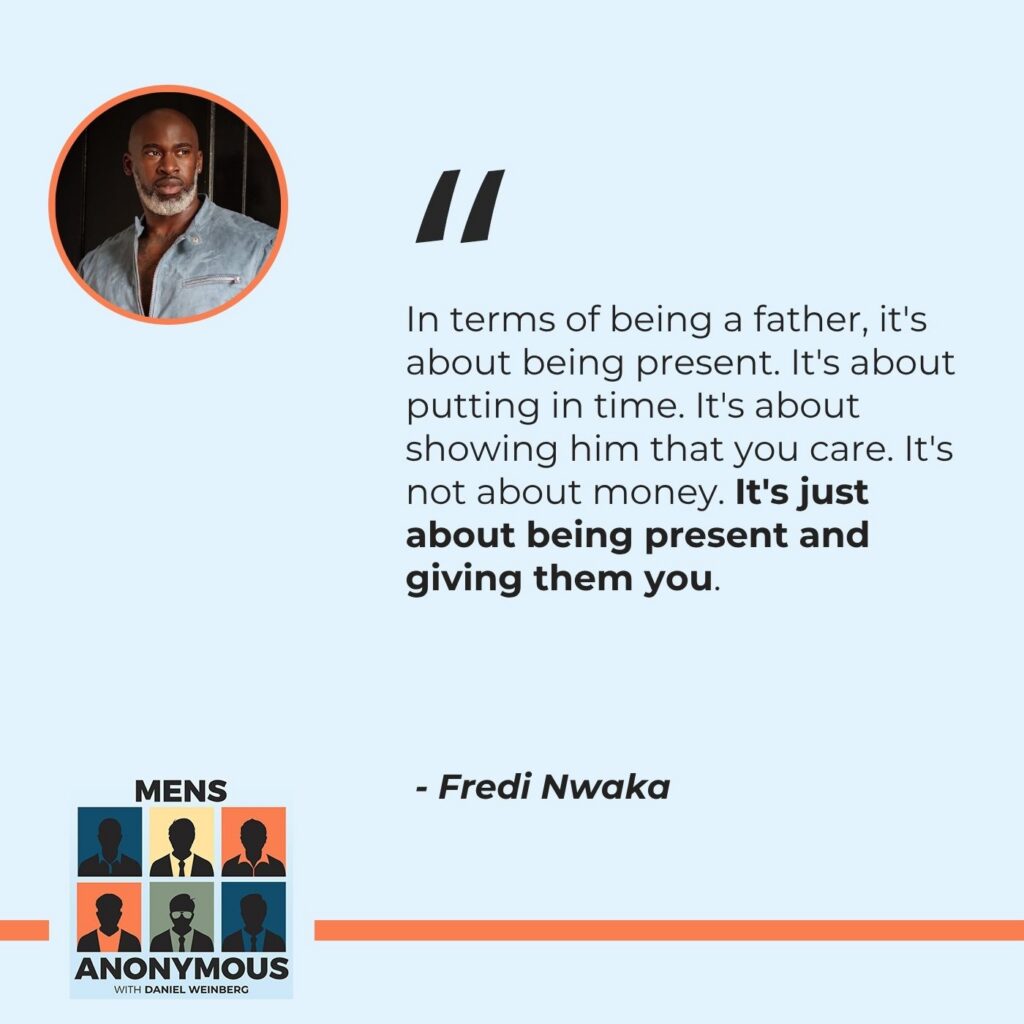
“Good morning, Dad. Have a blessed day today. I really hope our souls are together in the afterlife, you and me. There’s not enough time here on earth. My heaven has to involve our relationship and friendship, and that was from my other son. I say that to say, in terms of being a father, it’s about being present. It’s about putting in time. It’s about showing him that you care. It’s not about money. It’s just about being present and just showing, giving them you, like giving them access to you as a man and as a provider.
It’s not about how much money you spend, what you’ve got, but it’s about how much of yourself you give them. My son’s not me. They know me. I’ve given them. They know the walks, or they know about everything I’ve been through. They know the stuff I’ve done, good, bad, and ugly. They will come to me and say, “Dad, guess what happened?” “What happened?” “This happened with that girl.” I’m like, “Come on, and we’ll talk about it.” I got into it. We talked about everything. They are, my sons, they’re like my best friends. My kids are my best friends. We talk about everything. Nothing’s off limits. As they’re getting older.
How old are the kids now?
My youngest is fifteen, and my oldest is 28.
Have they read your book?.
The youngest one hasn’t, but the ones in between have read bits of it. A lot of it they already know because of the years. Sure, you tripled all the stories. My oldest one was like, “Dad, it makes sense now because he used to go out to certain places.” Everywhere he went, people would say to him, “You’re Krueger’s son. No, come, let me give you something, or let me give you free food.” If he’s in a club, he’s like, “No, you’re good, man. You’re safe, you’re protected, man.” He calls himself a young Krueger because I was Freddy Krueger. He calls himself Young Krueger.
Were you Freddy Krueger on the streets?
In London, they called me Freddy Krueger because I used to walk around with machetes and knives and guns and stuff. I was Freddy Krueger. He’s Young Krueger. I’ve got another one. He’s called Little Krueger. The youngest one calls himself Krueger Jr. It is funny. I have to laugh, man. When I think about it. The name that I was given and the connotations of it. It makes me laugh. I’ll give it to you. I was in Batman.
I’ve done a bit of The Dark Knight. My agent wrote a check for me to get paid. On the check, they put Freddy Krueger. When the check came, I couldn’t cash it. I waited like six months to get my check. When it finally came, I was like, yes, I got paid. When I looked at it, it was like, now I have to send it back and get a new one. It’s like, when I think about those kinds of things, it makes me laugh.
That’s crazy. Before we jump into my final questions, why Boy, Man, Father? Why are these the three chapters of your identity? If BOY is about survival, what is man really about? Ultimately, what is Father about? Why do you see your life as a boy, a man, and father?
Boy was about survival, like you said. Man is about understanding. What I’ve got from surviving and then turning those things that I went through into actually living. There’s a difference between surviving and living. If you survive something, you’ve just overcome something. It doesn’t mean you enjoyed it, doesn’t mean it was beautiful, doesn’t mean it was happy. That part of my life was just surviving. Man is about, so I’ve survived all the shit that I’ve been through. Now, what am I doing? What have I learned from childhood?
How am I taking the things that I went through in childhood as a man? What am I doing with those things, and identifying the mistakes? Just because you survive something doesn’t mean that you’re going to do better. Some people survive cancer, and they still smoke cigarettes, or they still do some of the stuff that really may have caused them to get the illness in the first place. It’s a bit like that. Man looks okay, so you were a part of this gang, you stopped being a member of the gang, but what did it teach you? What did you learn? Music. What did you do with your music?
Letting Fatherhood Rewrite Your Trajectory
What was your career like? Some of the stories in Man are quite funny, like sexual, like adventures, good, bad, indifferent. It’s just that stuff. It’s more about looking at it from the point of view as a man. Father is like, my first son was born when I was 28. As I said, when Malachi, that one I told you, was born, my whole life changed. I had to do the transition of no longer being, getting the phone call saying, “Fredi, we’ve got a problem. Let’s go and ride.” Me having to say, “I do not really want to do it, but I want to do it because if I do not do it, doing it was what gave me my name.”
It was such a head fuck. I do not want to go on it, but if I do not go, they start looking at you funny. You get demoted, but I do not. It takes me so long to get here. It’s that whole trying to work it out in your head, like, “Do I go, do I not go? If I do go, and if it happens to me, my son’s out here on his own.” It was a lot of that game and moving pieces around to get to where I am, but I think, fortunately, faith, life, and choices. I do a lot of work in prisons now.
I go into prisons and schools and give a lot of talks. As I say to all of them, we’re a decision away. You made that decision, and that’s why you’re there. Everyone’s a decision away. You could have made a decision, and you wouldn’t be where you are, and that decision that took you ten seconds to make has now cost you 20, 30 years.
If you went back and played it back, you could have been taking a deep breath and said to yourself, “I’ve got a good decision. You’d be out here with me,” but you did not do that. These are the things that I try to teach a lot of young people. Sometimes just take a deep breath, man. Take a deep breath and actually think about what you’re going to do before you do it. That deep breath that took you 10 or 15 seconds might just save you 20 or 30 years.
Unbelievable. There’s a lot.
I feel like we could talk forever.
We’re going to. We’re just not going to record it. At the end of my interviews, I asked five rapid-fire questions. I actually intended to share them with you, and you correctly responded with, I’m not going to read those questions, so I deleted them. You said, I just want to respond quickly to you from the heart. I want to come across as authentic as I possibly can. That’s what sums up who Fredi Nwaka is. You are so authentic. You’re so open-hearted. You’re like you are just willing to share wisdom, pass on knowledge, talk about everything from the wins, the trials and tribulations, the big mistakes, the bad decisions, the good decisions, the learnings.
It’s like there’s just so much to take from just speaking to you and hanging out with you. We’ve had a lot of bouncing messages back and forth, a couple of chats, and you just have so much to give. Not only do you have so much to give, but you just have so much of a willingness to give and share, and involve, and let people into the tent. It’s extremely admirable and just a pleasure for the time that we’ve known each other so far, just to have such a positive experience with you and just such great energy.
Thank you, man. I must say, really recognize the real. Energy goes both ways. For me to be the way that I am, it means that I must be getting the same from you. It’s not one-sided. I’m just letting you know that. I appreciate you.
You started calling me king.
There you go.
You said, like, all you want to do is be seen and heard and validated. You start calling me king. I’m like Fredi. Fredi’s cool. I’m going to ask you these questions, and I’m very much looking forward to your responses. Who would you like to say sorry to, given the chance?
You mean someone that I haven’t said sorry to?
Who would you like to say sorry to, given the chance? You may have said sorry to them already, but you may want to reinforce that. I do not know.
There are a couple. Can I say more than one? One is my mum. I hated my mum for many years. As I said, she died in 2019 from dementia. Ten years before that, we turned things around, and we became best friends. I do not think I gave her enough credit for what she was doing, in the sense that she was, at one point, a single mum looking after six children, and she did the best that she could do with the tools that she had, bearing in mind that she had her first child when she was really young.
I gave her a hard time, not necessarily in person, but mentally, in my head and in my heart. Emotionally, I was like, “I hate this woman.” I did not really understand that she was an amazing woman, man. She’d done so much for all of us selflessly. I feel like once I realized that, I’m like, right, I need to win now so I can give this woman everything. I want to be able to give her, get her on the red carpet with me. I want to buy her a house and take her on a holiday.
We started taking them every year. We would take my mum and dad away every single year, but I caught up so late that I only got to do a few holidays with her. I’d love to say, “Mum, I’m sorry. You can hear me. When you watch the podcast back, Mum, you can hear the show. I’m just saying sorry now, but you can hear it wherever you are.
Mum, I’m sorry that I did not afford you the respect and the love that I should have given, for everything you’ve done for me. Sorry to my mum.” I want to say sorry to myself. As well, because I’ve been beating myself up for a long time for some of the behaviours and some of the things that I’ve done, not knowing that I’m not an evil guy. I went through shit that made me the way that I was, and I couldn’t understand it.
Now that I’ve got more knowledge about childhood trauma and that stuff. I’m sorry that I beat myself up and put myself through unnecessary pain and stuff. I’m sorry, Fredi. Basically, anyone out there that I’ve hurt, man, over the years. I mean, those that know better do better, so just sorry to anyone I’ve hurt indirectly or directly, whether it be through violence or gang stuff. I’m just sorry to everybody.
What are you proud of being or doing in your life?
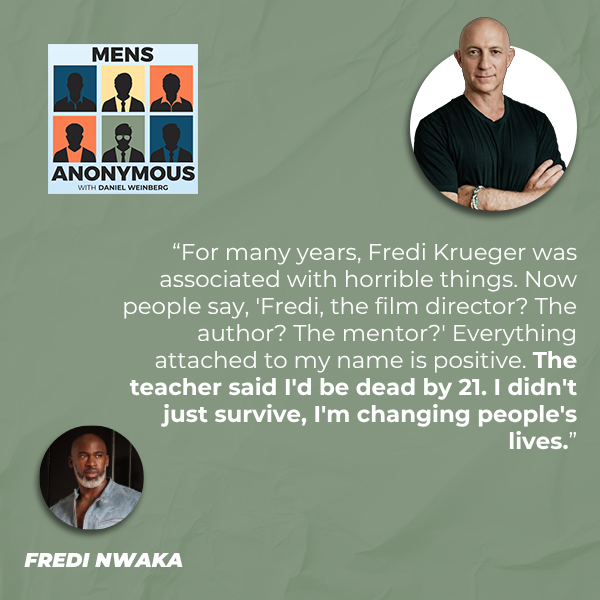
I’m proud of changing. I’m proud of changing, man. I’m proud. There was a time when people would say, “Freddy Krueger.” “What? No, man, do not fuck with Fredi, man. Fredi and those guys. Now, when people say, Fredi, what, the film director? The writer? The one that does the award show? I’m him now. For many years, Freddy Krueger was associated with horrible things, man.
What I mean is, now, if you walk around the circles and you ask Freddy Krueger, Fredi Nwaka, they will say, “He’s the film director.” Or “He’s the film producer.” Or “He’s the actor.” Or “He does the award show.” Or “He’s the mentor.” Everything that’s attached to my name is positive. I’m proud of the change that I’ve made. The teacher said I’d be dead by 21. Can I say this? Fuck you, man. I’m here. You know what I’m saying? Not only have I changed, but I’m changing people’s lives as well. I’m proud of the change in me, man.
When did you receive kindness while needing it most and expecting it least?
This is crazy. When I used to rap, this was mad. I used to rap. I went to America, and I met this lady. I was introduced to some Jehovah’s Witness lady out there, just randomly talking, having a conversation with this woman. I did pay no mind. It was just part of a conversation. The guy that I was staying with at the time, I was following Islam, doing a lot of stuff around Islam. I was reading my Quran and all that kind of stuff. I remember an incident that happened at his house, and his parents were born-again Christians. They did not like me from the beginning anyway, but because I was his friend, they tolerated it. Long story short, something happened that wasn’t my fault, and they threw me out.
I was a young guy in America, in New Jersey, and they threw me out onto the streets of New York with my luggage and nowhere to go. That same Jehovah’s Witness woman that I’d met previously took me into her home and let me stay with her. We became friends. From that point onwards, whenever I went to America, I used to stay with her. That was an act of kindness that I was like, “Wow.” Could you imagine being thrown out with your passport at about $100 to my name, and I couldn’t pay for a flight to get home, and yet I had nowhere else to go. I’m like, “Where am I staying?” She took me in, so that was an act of kindness that I did not expect.
That’s wild. What did your mother or father teach you that you frequently remind yourself of? Besides the left-hand food situation.
Grounding Your Life In Positive Gratitude
We do not do that anymore. Two things. My dad’s 97. If you ask my dad, he’s blind. He’s bedridden now. That started happening when my mum passed away. If you say to my dad now, how are you doing, Dad? He’ll say to you, “The heart is still beating. At 97, if you can still have that amount of love, my heart’s still beating.
Positive gratitude.
He’s taught me positive gratitude. I damaged my knee a little while ago. I was training, and I tore two tears in my meniscus. People used to be like, “Are you all right? I would never complain because I was walking around on crutches, and there’s somebody in a wheelchair who wishes they were on crutches. There’s someone in the hospital bed who wishes they were in a wheelchair.
Positive gratitude, my dad taught me that. The heart is still beating. As long as my heart’s still beating. My heart is still beating. My dad’s taught me that. My mum has taught me that unconditional love is, it’s the way that I love my kids, the way that my mum loved me. I did not see it before. Now that I see it, I cannot unsee it. It’s like, “I cannot unsee it.” She taught me that. She taught me how to see it. Unreal.
Final question. Fredi, what’s your superpower?
My superpower is that I’m greasy. I’ve got more than one, man.
Reel them off. Give me your superpowers.
Superpowers are understanding. If you’re going through something like yourself, I can understand, and I can be you. That’s that superpower. In the film, Rogue from the X-Men can touch you and take your powers. I can do that with emotions. I can find myself in your body to understand what you’re going through, to be able to empathize, and show empathy. I’m very non-judgmental. I’ve spent my whole life being judged. If I’m your friend or a person in your life and you tell me something, I’m never going to be like that, “Duh, duh, duh,” because I was that guy.
I know what it feels like to be judged all the time. I’m not a judgmental person. It just is what it is. I think my other superpower is the juggernaut. Juggernaut, once he starts going, you cannot stop him. He has that power to boom, boom. I have that power. Once I start, you’re not stopping me. Nothing is stopping me from achieving what I want to achieve. I’m a juggernaut in terms of friendships, emotions, and getting stuff done. Daniel, if you say, “Fredi, let’s work on a project,” we are going to do it. It’s never going to be an if. It’s just going to be a how and when. I do not do ifs.
We are. We are going to be working on a project.
We do hows and whens. I do not do ifs. I’m not sure if this is the case. I do not do ifs. I just figured out how we’re going to do it, and we’ll decide when. That’s my last power. Once I start, it gets done.
I appreciate the time. I know you’ve got a very busy schedule, and a lot of big projects you’re working on right now. I appreciate you giving me the time. Absolute pleasure. I know we’re going to stay in touch. I’m very excited for you. I’m very excited for your next books that are coming out and films. Just looking forward to spending more time with each other in the future.
Definitely, man. I appreciate what you do. In terms of the platform, men need to talk. I’ve always said it, man. We need to talk more. We need to have conversations more, and it’s podcasts and platforms like this that let the world know that men do talk. We do not just sit in front of a computer screen playing Call of Duty all day long. We do have conversations. We do speak about meaningful things. It’s conversations like these that allow other men to understand that it’s okay to talk. It’s okay to have conversations.
Not only that, I think having someone like you on the show who’s just been through so much and can show through real action and reality real decisions that regardless of the challenges that one can face in life and I would say you would hold the title for going through quite challenging experiences and to be able to go through that and yet ascend out of that and become like a true role model, a professional high achiever in each of those different areas that you’ve gone on to achieve in and be a phenomenal father where literally your son has the image of you in his room as his superhero. You have certainly proven that no matter what comes your way, there’s always the opportunity and the chance to become a much better person and to learn from those experiences.
As you said, no matter what adversity you’ve been through, you wouldn’t want to change it because you’re so proud and so content with the man who stands before you. That is just a phenomenal message to give those out there that are struggling and then have had their challenges and realize that there are other men out there who’ve had equal, if not greater challenges and yet have proven that doesn’t stop you from becoming a good human, a good father, a good friend, a good partner, a good son, and all those, roles that we play. For that, I wanted to say a really big, hearty thank you, and super grateful for having you on.
Thank you for having me, man. I appreciate you.
Important Links
- Fredi Nwaka
- Fredi Nwaka on LinkedIn
- Fredi Nwaka on Facebook
- Fredi Nwaka on Instagram
- Men’s Anonymous
- BOY: When you find the boy, you will discover the man
About Fredi Nwaka
 Fredi Nwaka is an award-winning film director, producer and actor, best selling published author, motivational speaker, keynote speaker and entrepreneur, recognised for his powerful storytelling, resilience and commitment to creating positive social impact.
He is also an ex rapper and is the ONLY UK rapper to have ever been signed or affiliated to the US powerhouse Wu-Tang and has opened up shows for artists like DMX and H-Town.
With a career spanning entertainment, publishing, business and community empowerment, Fredi has built a reputation as an influential voice who inspires individuals and organisations to challenge limitations, embrace purpose and create meaningful change.
He is the CEO of The Power Awards, an platform dedicated to recognising and celebrating outstanding individuals whose achievements, leadership and contributions are transforming communities and inspiring future generations.
Fredi is also the CEO of H.E.A.L Daily CIC, a social-impact organisation focused on empowerment, mentorship, education and positive community intervention and the Ambassador of RISE Education, a SEN school in London.
As a bestselling published author and sought-after motivational and keynote speaker, Fredi draws on his remarkable life journey and professional experience to deliver authentic, thought-provoking and transformational messages.
His mission is simple: to inspire people to discover their power, fulfil their potential and leave a lasting legacy.