True healing begins when we step out from behind our masks and face the past with honesty. In this episode, guest Mike Curry shares his powerful story of overcoming addiction, confronting childhood trauma, and finding lasting personal transformation. After years of struggle, loss of parental rights, and homelessness, Mike achieved nearly eight years of sobriety and completely turned his life around. He opens up about the emotional moment of reuniting with his 17-year-old daughter, rebuilding broken trust across his family, and discovering a higher purpose in life. Tune in as Mike discusses how embracing vulnerability, self-reflection, and faith allowed him to heal his past and dedicate his life to coaching and guiding other men through their own recovery journeys.
—
Watch the episode here
Listen to the podcast here
What Trauma Took From Me — And What I Got Back With Mike Curry
Reconnecting With Family And Creating Core Memories
On this week’s show, we talked to Mike Curry, who tells us about what trauma can take from you and what it can give back to you. Men’s Anonymous.
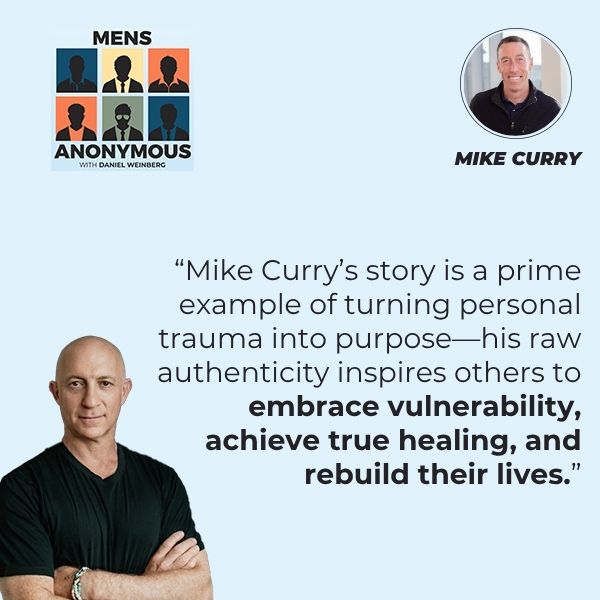
Mike.
Yes, sir.
It’s good to have you on the show.
Thank you.
This is going to be quite the conversation. The reason I say that is that for the audience’s benefit, Mike and I had a conversation, actually quite a timely conversation because you were visiting family at a family reunion, you were visiting family, and you were there with your seventeen-year-old daughter, I believe. For just the audience’s benefit, the day I spoke to Mike was one of the first days that Mike was able to have unrestricted access to his seventeen-year-old daughter. That immediately piqued my interest as a father.
I’m a father of five children, and I do not have as extreme a situation as you did. I, too, do not have full-time access to my kids just because of geography and dynamics that happened in my life. I know that for me, my kids are my number one priority, and I move mountains to see them as much as I can. I often tell people I feel like I’m in the logistics business. I’m either working out how I’m going to go see my kids and that whole situation, or how I’m getting my kids to come visit me, and how I get all my kids together, particularly with me and my parents.
That is always just the peak experience per year when those situations happen. When you told me that you had first-time unrestricted access to your seventeen-year-old daughter, I was floored. I want to start there. What did that moment mean to you as a father, having her for the first time, taking her to a family reunion? Talk me through the emotions that you got to experience, how that reunion with her, how that all played out, and how you both experienced that.
First and foremost, thank you for having me on. I appreciate your willingness to allow me to share a bit of my story and to see how that relates to your story and then a bunch of other men throughout the world, because I feel like there’s a lot of relatable topics here. This has been a long time coming. My daughter, when she was one and a half years old, my rights were severed as a parent because of my addiction, and I was directly responsible for everything. What I’ve come to realize at that moment, of course, I played the victim role and all that. I’ve been sober for coming up on eight years.
One of the mistakes in early recovery was, “Don’t you guys see what I’m doing? I should get access. I should get this and that and the other.” She’ll be 18 on January 9th of this year, 2027. It’s right around the corner, where she can choose what she wants to do, but it’s still super meaningful and impactful for me because Grandma put her trust in me. She wrote me a letter giving me full rights to take her to the hospital if there was an injury, if something happened on the trip. Obviously, she let her go on the trip.
This time last year, my aunt passed away, who was the only member of my family to see me get sober, like my parents, my aunts, my uncles, things like that. It was a blessing because I was able to be with her during her cancer battle, to really go over and clean the house weekly, take the trash out, and watch over her. We went out last year to Michigan. Her remains were put at Notre Dame University. That was her request. Two of my uncles went to Notre Dame. It’s right on the border of Michigan and Indiana. Uncle lives on the other side in Michigan.
We actually asked if she could come with us last year. It turned into this fiasco where initially it was yes, but then it was a no. Of course, my feelings were hurt, and it created some tension in the relationship. We stopped talking for a while. The grandmother denied me access to talking with my daughter, which I had actually gotten her cell phone about last year, about this time, maybe slightly before, for the first time, too. The communication has grown over the last year, but this time around, when they invited us to come out is like a yearly thing that we’ve started.
I said, “What the heck? I’ll ask again. What does it hurt to ask?” Great, like as a salesman, the thing I did door-to-door sales in college. It’s like, “What does it hurt to ask the worst?” Somebody is going to say “No.” I thought, “I’ll ask.” It took him about 2 to 3 weeks, and they asked, “Is Melissa coming?” Melissa is my fiance who my daughter adores, and I said, “Yes.” About 2 or 3 weeks later, two months ago, in June, they said, “She’s going to go.” The emotion started right there. It was unbelievable. I was super emotional. I was in tears. In my recovery, I like to stay in the present moment. That’s a huge part of my daily practice. I’ll tell you what, it’s very difficult to stay present and stay grounded.
It's very difficult to stay present and stay grounded when you're getting an opportunity that you've never had before. Share on XWhen you’re like a kid in the candy store, a kid looking forward to Christmas, when you’re getting this opportunity that you’ve never had before. The last two months were great, but it was like, “Just calm down, just stay present today. Let’s work, let’s do the things we need to do on a daily basis, but also look forward to this experience.” It did not let me down. It tried not to have expectations, but it was wonderful. For 2 or 3 mornings in a row, I was able to rent an Airbnb. I was able to knock on her door in the morning and say, “Good morning, Kaylee Ann, get up. What would you like from Starbucks this morning? We’re going to go get some drinks.”
She’s rolling out of bed and saying, “Can you get me a, whatever, a pink energy drink and this and that?” It’s surreal, because looking back on those five days that we spent there, it was just a dream come true. It’s her senior year of high school. My brother is also a photographer. He’s an incredible photographer, and he took her senior pictures on Lake Michigan. He took her senior pictures in a big field of wildflowers at a home we were at. We have those memories. I really truly believe in core memories for young children growing up to have these experiences, to have these moments where, for the rest of their lives, no matter what happens, they’ll always be able to look fondly on these experiences they had as a younger person that are core memories.
I had those when I was a kid. Even though my presence in her life has been spotty over the last fifteen and a half years. Now, over the last 6, 7, or 8 years, it’s only gotten better. The emotions on the plane, right back. I glance over. We’re sitting in the same row and just glance over, and I just start bawling and crying into myself because it’s just so surreal. I never really thought that this moment could happen. When I was incarcerated one time, I read a book on the importance of fathers and their daughters’ lives. I just vowed to myself at that point, “If I ever get an opportunity to get sober, to clean myself up, I want to be in her life and whatever that means.”
Facing Lost Time And Navigating Family Dynamics
How do you think she experienced it? The question that comes to mind is, you cannot really make up for all the lost time. How do you catch up and reconnect with all that time that’s passed? How was the actual experience of the conversation there? Like, did you focus on what was, or were you really just talking about the present? Did you touch on the pain that she experienced with you being absent from her life? Where does all the conversation and the emotion and everything where does it go? It’s obviously not just superficial on the surface. “It’s so nice to be here.” It’s not really like that. There are some niceties to start with. At some point, it’s like an elephant in the room. How do we make the next seventeen years? A million times better than what was.
It’s a tough answer. My sobriety date is November 5th of 2018. I did get sober previously, and then I would relapse. I’ve actually been in her life, as far as maybe seeing her 2 to 3 times a year for the last 10 years, and she’s 17. Since she was seven, essentially, she’s seen me here and there. Now, there was a time frame from one and a half to seven where I was either incarcerated or living on the streets. My family, nobody wanted anything to do with me. Which was absolutely for the best. In fact, when my mother passed away, I was told the wrong time of the service because I think they were too embarrassed to have me there.
They did not want me to be around my daughter and things like that. It was heartbreaking. It was really heartbreaking. However, I created that mess. To answer your question, her family, the way they deal with things, and I’m not in agreement with this, but I respect what they’re doing and raising. They do not talk about these things. They do not talk about anything. They just move on with life. One of the points we were going to discuss was how I got to where I was. What happened to me as a child. Burying feelings and thoughts.
One of the biggest things I like to share with men is the feelings that we do not deal with today. They come out sideways later in life, and we do not get to choose when they come out, and they’re typically at the worst times. I’m a big proponent of talking things out in communication or trying to get on the same playing field and get in each other’s corners and be like, “This is what’s going on. This is maybe why this happened,” things of that nature. Just that inner reflection, the stuff that we’ve dealt with in our past.
The feelings that we don't deal with today, they come out sideways later in life and at the worst times. Share on XOut of respect for the way that they’re raising her, we do not really talk about those things. I think when she turns eighteen, that will be a different conversation. I do not want to hurt her any more than I already have. The reason my rights were severed, I’ll keep that to myself at this point, but maybe one day I will share those publicly if I get her permission. I just want to protect her because she’s a child. I do not necessarily agree, but I also do not have the right to say things that may hurt her or go against their wishes. That’s where we’re at with that.
We had a very private conversation when we first spoke, and I want to ask you for permission if we can open up and talk about it. We’ll go back to the beginning. What you experienced as a young boy and how that changed the path of your life forever. Why I want to talk about this is that when you told me this story, whenever I hear these stories, I go back to my kids and look at the trajectory of one’s life and how vulnerable children are, especially when they’re at a young age.
How an incident that can happen to them or they’re exposed to, where they are completely vulnerable. Obviously, something that happens to them, not of their choice, can lead them on a completely different path in life. It’s an important conversation. Have said it with your permission. Why do not you tell us what I see as the beginning of your journey on another path? Obviously, that is why this is a really interesting story to talk about your life journey. It also shows how no matter what traumas.
I’ve had a lot of guests on the show who have experienced different traumas, and they’re not all the same, but they are all forms of trauma, and we all understand that experiencing trauma can have quite a negative effect on the individual. I find it so interesting that in this one moment in time, that can change everything. I’m building this up, but please explain to the audience what happened to you as a young boy and how it affected you as a young boy and as you became a teenager and an adult male.
Understanding Childhood Trauma And Its Long-Term Impact
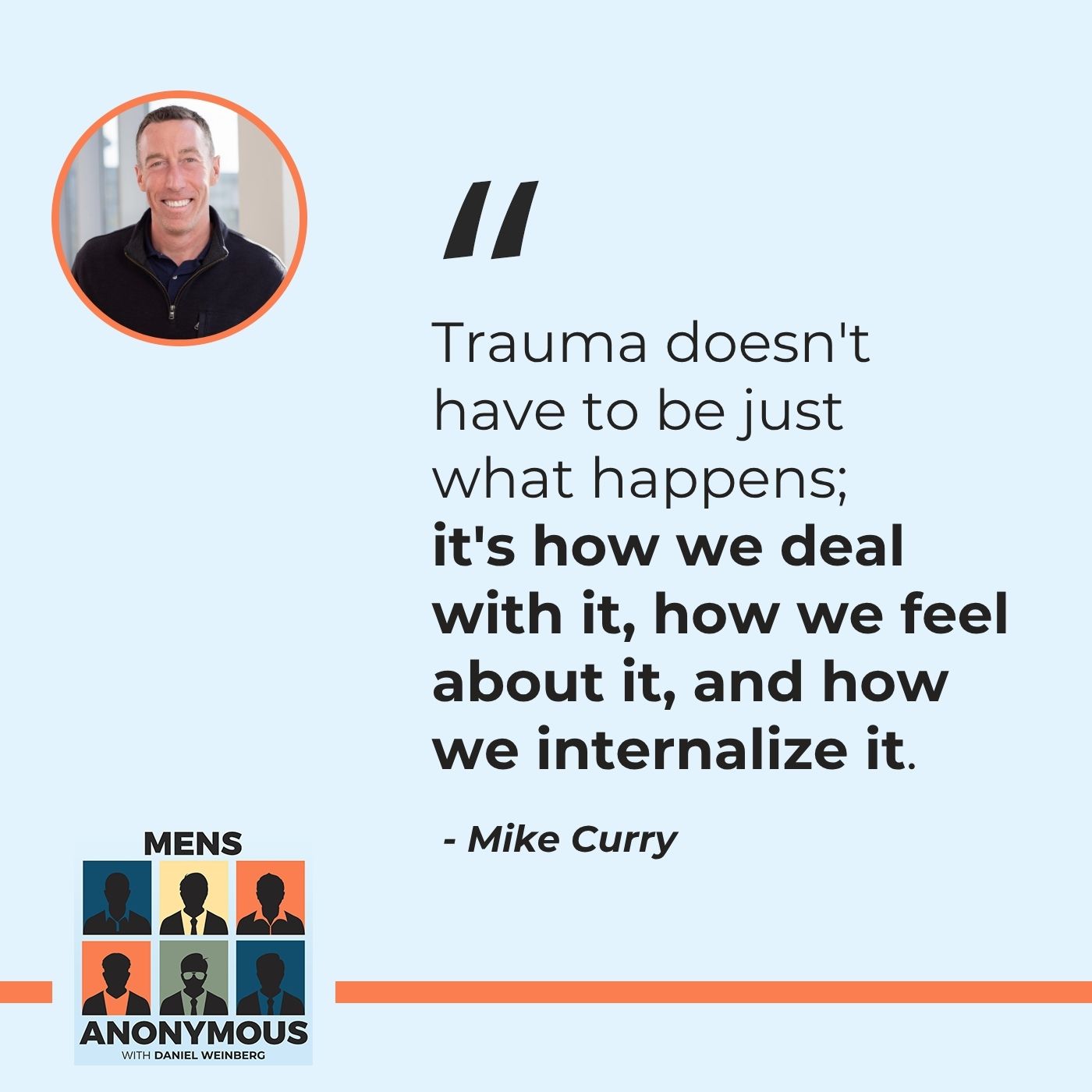
Two things to note with this particular subject. One being, I think we all experience trauma to a different degree. Trauma, it does not have to be what happens. It’s how we feel about it, how we deal with it or lack of dealing with it, how we internalize it. Give you an example. One of my mentors shares about an experience he had as a young man, when his dad was helping him with a school project. It was something they were building a platform with different pieces on it. His dad said, “No, son, this does not go over here. It has to go over here.”
To him, he heard, “I do not do things the right way.” Something just as simple as that. It’s how he took that in and perceived that experience. I just found this out on Saturday, and I told you I was not sure how this was going to play out, but I actually got to approach. My cousin sexually abused me when I was about 6 or 7. That’s the age that he said he was, 8 or 9. I was 6 or 7 because I’m two years younger. First and foremost, I did end up talking to him on Saturday after we spoke. I did approach him. I was not sure how it was going to go. In fact, I thought he would just deny everything.
He actually felt like he knew why I was talking to him immediately. He said, “Yes, I think I assaulted you.” Looking back on the conversation, of course it went away, but I almost should have said, “Did you or did you not?” It’s like he admitted to it, but it was in a roundabout way. It was not total accountability. I’ve done a twelve-step program, and I know how to make amends and make an apology, at least to the best of my ability. Not everybody has that. A lot of people find it hard to apologize. They’ll do it in a half-assed manner. They’ll do it in a way that slights you still.
The main thing was that I was validated in this incident that I felt happened, but maybe it did not happen because when I was in my 20s, I actually approached my parents and I told them, and they did not believe me. That was almost re-traumatizing to a certain degree. Basically, I had slept with a prostitute. I thought I had an STD. I came clean to my girlfriend at the time. She encouraged me to talk to my folks about it because I told her, not as an excuse, but, “I was sexualized at a young age because I think I was sexually abused as a very young person.” I know that part is true.
I started looking at women, teachers in junior high and elementary school, in a sexual manner, started watching pornography at a young age, all these different things that were very self-destructive. Obviously, sex is a normal part. That’s how the human race moves forward. I was using it as a crutch. I was using it like drugs as an escape, almost amongst other things. To go back to this incident, my cousins had come out with my dad’s sister, my aunt, to visit, and my cousin we had bunk beds in our room, and he created this makeshift half-tent with the bunk bed.
He pulled it off the top bunk. Looking back on it, it’s like, “Yes, he was trying to hide whatever was going on.” He knew it was wrong. Plain and simple. I remember whatever happened. I remember being undressed, and then my mind went blank. From everything that I know is that that’s our brain’s way of protecting ourselves. What I remember hearing, though, is my mom, as I look out my window here, speaking. I could hear my mom and his mom speaking. They were watering the grass or whatever they were doing outside my window.
That was almost traumatizing too, like having something happen to you that you do not necessarily want to have happen to you, and your helper, your protector, is 5 to 8 feet outside the house, and you can hear her talking. That changed me quite a bit. That changed me from a biochemistry standpoint, like just my entire being, because I’ll look at pictures and this is super important. I look at pictures before this happens and then after. It’s like, I’m such a happy and lucky kid. Afterwards, I have this deer-in-the-headlights look.
Did you tell anybody?
I did not, because what was modeled to me was that you just deal with things, you just go on with life, or I was too embarrassed. I do not know what it was. My parents never really talked about anything. They just moved forward with life. They never talked about really difficult things. I never really felt comfortable sharing anything tough with my parents. Two other instances. I was getting bullied at school, and I’m doing curls in the back of our van as we’re driving through Canada on a vacation.
I tell my dad, “I want to do karate.” That was my way of saying, “Dad, I’m getting picked on. I do not feel comfortable at school. Can you help me?” Does that make sense? I’m just like, “How would you do karate, Dad?” I couldn’t just directly tell him what the problem was. Let me think about this one. What was the other one? I slept with another prostitute. The first sexual experience that I had was with a prostitute. This is 1998.
How old were you?
I was 18. I was 16 or 17 years old. The movie Philadelphia had just come out. I do not know if you recall that movie with Tom Hanks. We saw that in sex ed class after I slept with this prostitute, and my brain told me, “You’re going to die. You have AIDS.” I literally, from 18 to 21, walked around like I had a death sentence, like I was just going to die. I would not tell anybody. I would not tell my parents, “This is what happened.” It was like a level of embarrassment. It was just maybe that I did not trust them, whatever it was. I still do not know. Those are two other instances where I just kept it to myself until I finally imploded, and I imploded in my 30s with losing custody of my daughter and becoming homeless. Sleeping on the streets.
Before we get there, I just want to hone in a little bit here on the experience yet. Did you blame yourself? What was going through your head? What were you feeling? Were you angry? Were you like, what did it do? Did you just shut down?
I shut down. I do not even recall that answer.
Did you blame yourself for allowing it to happen to you? Did you get angry at your cousin? Were you angry at your mother for not being there? What did you experience?
Anything that I felt about that experience was not until I started sleeping with prostitutes when I was 17, 18, 19 years old. That thought came back because I started to really think, “Why am I like this?” When the moment happened for the next 5 to 7 years, I would throw things in the back of my brain, and I would lock it. I would say, “I’m not even thinking about it. I’m not going there.”
Just push it right down.
Yes. That’s why I say the things we do not deal with, they will come out sideways. We do not get to choose when, and it’s typically a really bad time for it to come out.
Unresolved Pain And Destructive Relationship Patterns
What about romantic relationships? High school sweetheart, or like after you, after you finish high school, college, or whatever you went to, like relationships you had, how were you in relationships? How do you think it affected your earlier romantic relationships?
I did not have a girlfriend until I was 20 or 21 years old. I always loved women. I did question whether I was gay or not, to be honest with you, because of this happening to me. I was very shy. One night on the 4th of July, I met this cute Cambodian girl at a party, a high school party. She was just graduating. I was a year older than her. I had some beers in me, so I had that liquid courage going, and I approached her, and we hung out, and like, we made out in the desert. I’m here in Arizona, so it’s pretty rough in the desert.
I’m one of those people who’ll latch on to somebody immediately. I’ve seen that pattern over the years. I’ve had three relationships. Everything else was like one-night stands, things of that nature. I was with that girl for 6, 7, or 8 years, from 21 to 29, 28, 29, until basically she saw the writing on the wall. My life was on this trajectory. Her life was on this trajectory. Splitting up, and that was, it was terrible. I hopped into another relationship within a year. I had my daughter with that second.
When you say your life was going on a negative trajectory, what do you mean by that? What was going on?
She had graduated from the university. She was getting her master’s. I believe I was working here and there sporadically, and I was spending all my money on drugs, alcohol, and partying. I was not faithful to her. I took her for granted. She was a wonderful person. I was a burden on her financially and emotionally. It was my first ever relationship. I really did not know what I was doing. I was also in this destruction mode because these childhood events had come up by then, and then I had told my parents, and they walked away and said, “We do not believe you.” I was dealing with a lot of that.
You told your parents you built up the courage to go and tell them. They responded with, “We do not believe you.” They literally told you to your face, “We do not believe you.”
From what I remember, I sat him down on a swing in our backyard, and I do not remember if it was my mom or my dad. One of them walked away immediately, and they just shook their heads like, “No, that did not happen.” I’m not giving an excuse. I understand that because I’ve heard that from other people when they’ve told somebody they love them that something happened. Their instinct is to just shut down. It’s easier to say, “That did not happen,” and lie about it than it is to say, “Somebody hurt my son. That hurts me.” It was a relative of ours in my situation. That’s heavy. People do not want to feel heavy things. We would rather not.
You slowly turned, like most high school and college kids drinking. That’s a pretty normal part of one’s life journey. You get curious about drugs and alcohol. When did it become that you’re quite serious about drinking and other substances? When did that happen in your 20s?
I got it. I got my first DUI. I was almost killed in a T-bone accident by another drunk driver. I was 21 years old. I had a handgun sitting in the shotgun with me. I decided to drive my grandfather’s 63 Plymouth, which was a box of metal, by the way, because my dad was redoing the interior, so there was nothing inside, no seatbelt. That’s a miracle I survived. I was in the ICU for three weeks. They read me my last rites. I got addicted to oxys because of that, because they put me on morphine and oxys.
I loved it because not only does it reduce your physical pain, but it also reduces your emotional and spiritual pain. I realized that pretty quickly, and I got addicted to those five-milligram oxy. I was abusing those. I would search out doctors that I would start doctor shopping that would prescribe those to me, and I went through phases where I’d stop for a little while. Addiction is insidious. It creeps up on you, a younger person. You’re not just instantly addicted to the point of no return. It’s just that kind of innocent. You’re having fun. You’re doing this.
Addiction is insidious—it kind of creeps up on you when you're young. It starts out as having fun, but step by step, day by day, it gets a little worse. Share on XMaybe you’re taking it a little too far. Step by step, day by day, it gets a little worse and a little worse. Dabbling with coke, I was hanging out with the wrong people. As I said, the trajectories were different. I was hanging around with people who were going nowhere, who were not talking about ideas of how to better their lives. They were talking about how we can get more drugs. How can we fool people to make money? Those are just really negative environments.
It just got worse with the pills. I really love those. I really love the oxys. It took away my emotional pain. I wanted to numb out. I really did not have a direction in life. A lot of men are successful. To your point with your career, it’s like you can have all the financial things in the world, all the third-dimensional reality things, and still be very unhappy because you do not have fulfillment or purpose in your life. Oftentimes, people get into careers or make a bunch of money to make them think it’s going to make their dad happier, or they want to get a wife, or for reasons that are not really long-lasting good reasons.
I related to that a bit. I was very unhappy, not that I didn’t have the material things; I was very unhappy and discontented with life. I felt no purpose. I did not know what my purpose was. I remember one time my mom saying, “God does have a purpose for your life.” I thought, “God, I wish I knew what that was because this is just Groundhog Day over and over where I just want to get messed up.” Essentially, I do not think I am a grown man yet. I did not have responsibility. I tried to avoid responsibility like the plague. That’s really what it was.
Escaping Emotional Pain Through Substance Abuse
Connect the dots to me. How did that then accelerate to both homelessness and spending time in jail?
I ended up getting a second DUI and then a third DUI. Frankly, I probably could have had a dozen of them. Got away with quite a few, and I started getting arrested for fighting in public and going out drinking at the bars. It just became this pattern of normalcy. It’s like the street life was glorified in my head. The people that I hung out with, the music that I listened to, the culture, it was like, that’s who I was. That was my identity. Oftentimes, I’ll share this with men. If you do not have an identity in God, the world will give you an identity.
I say, “I’m a loving child. That is my identity.” At that time, I was a follower. I was not a leader, and I just followed the crowd, whatever I thought was cool. It led me down this path. We broke up with my first girlfriend because of the way our lives were separating and becoming different. It really was tough on me because I was a selfish person. It was like it was all about me and my feelings, and not thinking about her. Maybe she’s also struggling with it. How can I just better my life because I do not want this to be a pattern to repeat itself?
Within twelve months, I met a girl at a cocaine party who became my daughter’s mother. It became a very toxic relationship. Actually, it got physical. It was yelling all the time. I was actually stabbed on her front porch. You probably cannot see it, but I lost a third of my blood and almost died. I was stabbed with a kitchen knife multiple times after a fight in her apartment with these two guys. I started fighting with them, and I got pushed back out of the apartment, and I hopped onto her balcony on the third floor of this apartment complex.
I knew there was a samurai sword in the closet on the balcony. I opened the door, I pulled this sword out, and the door to the inside of the apartment had all these little window panes. I busted out the window pane closest to the doorknob. As I’m trying to unlock the door, they grab a kitchen knife, and they just start stabbing me and stuff. I share that because it just shows how insane I was.
It was just chaos.
Absolute chaos. Woke up in the hospital screaming. I was in terrible pain. Also, because I passed out on her porch, I did not know what was going on. They had numbed me up pretty good with some drugs, and so I ended up getting back together with her and having our daughter. Everything happens for a reason. My daughter is the most wonderful thing that’s ever happened, and that came out of that chaos. I’m not going to say I do not regret anything in my life. The reason that I do not regret it is that it’s made me the man I am today. It’s given me the ability to be able to speak to other men, help other men, and share my experience, and say, “If I can get through it, you can get through it.”
If I were to ask you, I would say eventually addiction sends you the bill. The addictions and the substance abuse, what would you say it costs you? You were talking before about eventually these things coming home to roost. What would you say it costs you?
It cost me my soul. Cost me my goal. Once I decided there was some hope and that I wanted to see what sobriety looked like, what recovery could look like, long-term recovery. My goal was like, “I want to be able to live life and have as much fun as I’m having getting high and drinking.” At that time, it was not fun at that later stage, but I want to have a party all the time as a sober person, if that makes sense. I want to live for life. I want to chase sunsets. I do not want to chase the drugs or the alcohol.
I want to chase moments. I truly believe that the things that hold us back and that prevent us from growth are the same things that propel our growth when we use them for good, when we do a 180 on those things. What it cost me was just my soul, my spirit, my health. I’m dealing with some health challenges. I’m okay with it. I’m okay where I’m at. I’m getting through one day at a time and doing what I need to do to take care of those health things because I feel like I’m on a mission. I’m on a mission to help. Men across this world understand, feel the feelings, deal with the things, and avoid the mistakes I made. If you’ve made those mistakes, it’s okay.
The things that hold us back and prevent us from growth are the same things that propel our growth when we use them for good. Share on XThere’s life after the mistakes. It cost me my relationships. When I share my story, and I talk in front of crowds, I start by saying, “I was asked to leave the hospital the night my mom passed away because I was smoking methamphetamines in the bathroom.” That really catches people’s attention right there. That’s purposeful. The reason I share that, not that you relate to that, the things that we do not deal with, they end up coming out sideways. That was like the culmination of holding everything in, not telling my parents anything that was going on, not having that trust, or not having a mentor or somebody that I could trust in.
Part of the 12-Step program that I did, as explained in the book and everything, is that you share with God and with another human being that you trust your life story, your life experiences. You share those 2 or 3 dark things that you’re never going to share with anybody. There’s a healing aspect to that. That’s when the healing starts. That’s what I found to be true.
Just to cut forward with the story a bit here, it went further south. With my daughter’s mom, my rights were severed as a parent when she was a year and a half old. My brother’s the one who called the authorities and had them come out and take my daughter from the home. Today, I can say he was on that trip with us last weekend. He was a part of that. He was taking pictures of my daughter for her senior pictures.
I have restored every close relationship in my life to the best of my ability. That’s probably my greatest accomplishment. Those relationships have all been restored. After that, I really went downhill. That’s when I started robbing pharmacies. I became homeless. I was injecting methamphetamine behind crack houses. Just doing all this stuff where it’s like, “I was too chicken shit to kill myself, but I was suicidal.” If that makes sense in every way, shape, and form.
The Turning Point: Breaking The Cycle Of Addiction
I want to know what finally made you stop. Can you give me a moment, because I’m sure you tried it a few times to get sober, as most people who have addictions do not get it right the first time. What made you finally stop? Was there someone who got you over the line? Obviously, it’s got to come from within. Would you remember the moment when you decided that enough is enough, I’m doing this for real?
It was actually two moments. The first moment was when I decided to attempt sobriety for the first time. I had walked into a convenience store to rob it, and I put a mask over my face, and something came over me and said, “Do not do it.” I walked out of that convenience store, and the next day I started knocking on doors and asking them if I could clean their yard for a little money. I’ll never forget this college kid.
He’s like, “I have like $8, and I’m late for class.” I said, “I’ll take it.” I grabbed the money. He was not even home. I probably could have just left. I cleaned the yard for about six hours, and I did just a stand-up job. I was so happy with myself internally. I went across the street to the store close to where I was attempting to rob the other store. I bought myself a sandwich because that’s all I was trying to do. I was not trying to rob the store for drugs at this point. I was so desperate for food.
You had no one in your life, not one mate, no one who gave up on you.
Correct. I was living with a girl whom I had met at a liquor store, who is now my fiance. She was in a bad situation too. We were both using. She actually had a roof over her head at that time for a while, and then she lost housing, and that’s a whole other story. Everybody else had completely said, in all fairness, it was the right thing to do.
Of course. The second you were saying there are two.
The second moment was when I had gotten about a year of sobriety, recovery, whatever you want to call it. I had done a little work on myself. I had not been entirely honest with myself or with other people. I mentioned earlier sharing your life story, all the trials and tribulations, with somebody else. Obviously, God’s listening too. There’s magic in that. I left out the part about the sexual abuse. I left out the part about how I had actually done that to other kids after that first incident because I thought that was normal. I was very embarrassed about all of that stuff.
I also did not want to share that with another man because I was afraid he would judge me and say, “What’s wrong with you?” I was still holding those things. I had done some healing. I had not totally healed. I was holding things back. After about a year in Albuquerque, New Mexico, I ended up going to a strip club and drinking while I was selling solar in Albuquerque. I was only there for a few months. I ended up relapsing there, and then I had a court date. I drove back to Arizona. Smoked meth for three nights in a hotel, went to court high.
My mentor met me at the courthouse, and I was so scared because I thought he would know. He did not know because he was more of an alcoholic. He never really did drugs. I just felt this shame and this guilt like never before because I was misaligned. I said I wanted recovery. I said I wanted peace in my heart. I said I wanted these things, but I was not getting that because my actions were still different. The big moment was also my guide, my mentor. He asked me, “What do you want to get out of this process of 12 steps?”
The first time, the first go-round, I said, “I want a BMW, and I want a big house.” That was like, for some reason, my mind told me that if I just get sober, everything else will work out and I’ll get the material things, and I’ll get all this. I relapsed in Albuquerque. I was fortunate enough that this man stayed in my life. He said, “We’re going to do this again, this process. What do you want to get out of it this time?” I said, “I just want peace in my heart.”
Peace in your heart.
That was the shift.
You found God along the way there as well. I can see because this is the way you’re speaking, and I can see the cross behind you, and obviously it’s very important to you. That came after, I’m assuming.
Finding Faith, Purpose, And Inner Peace
I grew up Catholic. I had this preconceived notion of who God was. I guess it was some guy in the sky with a robe and a big white beard. That was placed on me by the school, by my parents, by culture, by society. I do not remember ever opening a Bible, doing any spiritual seeking, or doing any real praying. Of course, we’ve all been there. When we’re throwing up in the toilet, we say, “Please God, help me. Help me get out of this mess.”
We’ve all done that. Just truly some prayers and some gratitude. I had never really used the word gratitude. That was like a new concept to me. Part of this process, the second go-round of wanting peace in my heart, I really started being a seeker of truth, a seeker of peace, a seeker of knowledge. I bought a bunch of books and watched YouTube videos. One of the big realizations that I had is that if you look at the 12 steps of Alcoholics Anonymous, which is worldwide, by the way, a lot of those principles are found in every spiritual teaching across the world.
That was a big moment for me. There’s something to this. I do not care what you believe in. What I believe is what’s in your heart. God knows what’s in our hearts because we all know those people who say stuff on the outside. Internally, they are a different person. That’s how I was. That’s how I was acting throughout my life, and that caused all this discontentment and all these other things. I had a mustard seed faith. I had an opportunity to have a start over and do over, if you will, and say, “Who is God to me?”
I remember a moment in Catholic school as a kid, standing in line about to go in front of a priest. I had to say some prayers. I did not memorize it because I was not a good student. I couldn’t care less. I was sitting there shaking in fear. I thought at that moment, “If this is what God’s about, I do want nothing to do with it.” This do-over, it’s like, “I want God to be a God of love. I want God to be somebody that is literally everywhere and everything and talks to me through people and shows up in my life when I need him the most and all these different things.”
Slowly but surely, I started to listen to little small prayers of “Please God help me.” I felt like I did not know how to pray right, which is laughable because “Help me, God” is a prayer. Anything’s a prayer, and God just wants us to come to him as we are. It does not have to be some fancy schmancy prayer, in my opinion. I actually developed this prayer that I’ve been saying every day over the last eight years. I asked God to direct my thinking and my actions.
I asked God to put people on my path whom I can serve. A big thing for me is wanting to give back and share not only my story, but the wisdom that I have about my experiences with other people. Give them just like a quick pep talk, whatever you want to call it, just in passing. I truly believe in the power of lifting somebody else up. For me, that was glancing at a magazine article, a People magazine article, seeing Steve Harvey on the cover.
It talked about how he was homeless, living in his car, and obviously the success that he’s had now. Believe it or not, that was enough for me to have some hope. Just seeing some random guy on a magazine cover that I did not even know personally. Imagine the power of you or me or any of your other guests sharing one-to-one, heart-to-heart with somebody about how they got through something tough and how powerful that can be for that other individual.
Real Masculinity, Vulnerability, And Helping Others Heal
I couldn’t agree with you more. I want to ask you one last question. This is really for you, the audience, which is if there’s another man tuning in out there who has either been sexually abused as a young child or has become a victim of alcohol or substance abuse that he’s hiding. What do you want them to hear from you? What’s the message you’d be giving them now, given your journey and everything you’ve experienced?
First of all, it does not make you less of a man to admit weakness. Actually admitting you have a problem with something or admitting something may have happened to you is a huge sign of strength. Some people look at it as a weakness because of society, because of culture, because of “how men are supposed to be masculine,” whatever you want to call it. I believe real masculinity is actually embracing the feminine part of all of the men, too. Embracing the feelings, embracing life as it is.
It doesn't make you less of a man to admit weakness or admit you have a problem. Admitting it is actually a sign of strength. Share on XI like to say raw dogging life, like actually feeling the feelings, the ups, the downs, and everything in between. What I see on the surface is a lot of men who want to act a certain way. They’re wearing a mask. What I can tell you from personal experience is that it is so exhausting to keep that mask on, and it slowly but surely eats away at your soul. You’ll know when you find that person. We cannot do this alone.
We’re meant to have other strong men in our lives to be able to walk side by side with and to deal with these challenges. If that were to happen with more men, if we can heal ourselves, heal our traumas, I think we’ll start to see more change in the world. It starts with us. It starts with us individually. Instead of pointing the finger at what’s wrong with this world, we should look inwards and figure out how we can fix ourselves first. We can go out there and make a big difference.
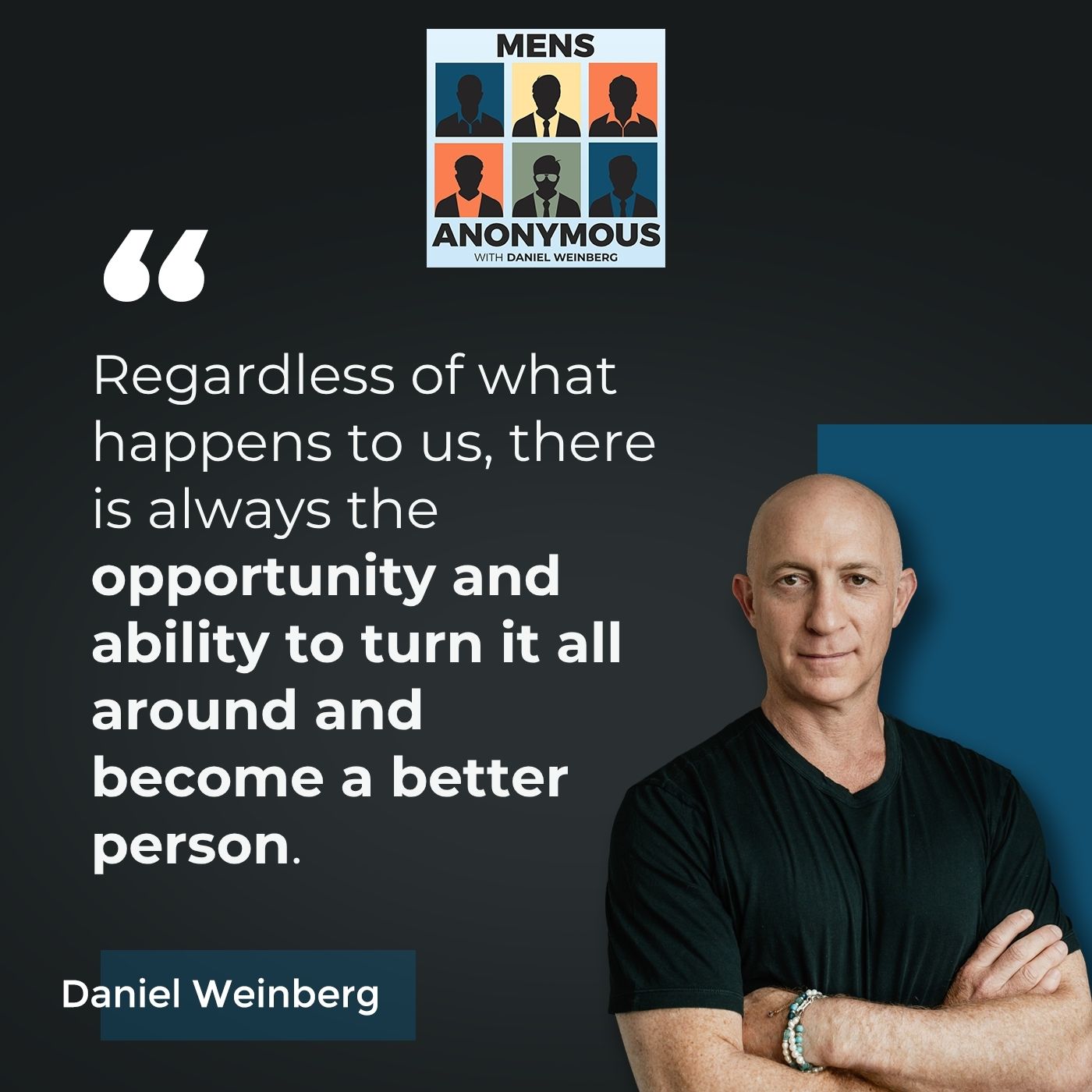
Firstly, I want to say a huge amount of appreciation and gratitude for you to share your story, not just with me, but with the audience. There’s so much to take away from what you’ve experienced. What I really love most about your story is that you are a prime example of how, no matter what you’ve experienced, so many obstacles and challenges in your life, regardless of whether they were self-inflicted or not, if your prime example of regardless of what happens to us as men, there’s always the opportunity and the ability to turn it all around.
Not just come good, become a better man for all of what was before, and have the opportunity to not only come really good, but the opportunity to give back and help others become really good themselves. That was your journey. That is your mission, and you’re certainly taking it by grabbing it by its throat and giving it a good go. For that, I want to say thank you. Keep doing what you’re doing because you’re certainly on the right path.
Thank you. I wanted to mention one last thing, and I was going to mention this earlier, but there’s a concept of soul contracts. There’s actually a book called Radical Forgiveness by Colin Tipping. I have not read the whole book. I’ve read a lot of it.
It’s Radical Forgiveness by Colin Tipping.
The premise of a soul contract is that we come to Earth already knowing what’s going to happen. We sign up for this experience and the traumas, the tribulations, the trials. Everything is for our best alignment for the awakening of our soul, for the awakening of why we’re here to fulfill our purpose, to really live just a present, grounded, grateful life where we impact other people.
The way I look at my previous experiences, and that’s why I mentioned I’m grateful for all of it, is because it’s made me the man I am today. It’s given me this incredible life perspective, this gift that I can hopefully keep passing on to other men. Also, my Instagram is @MikeCurryOfficial if anybody wants to stay connected through that. My website is Mike Curry Coaching. You can find me on Facebook, TikTok, and all the other platforms under Mike Curry as well.
Rapid-Fire Questions And Final Takeaways
Amazing. Before we go, I always ask my guests five rapid-fire questions.
Let’s do it.
Are you ready?
Yes.
These are going to be big just because of your journey. They’re the same questions I ask everyone. They just seem very appropriate. Who would you like to say sorry to, given the chance?
My mom and dad.
What are you proud of being or doing in your life?
I am proud of the father that I have become today through the work that I did.
When did you receive kindness while needing it most and expecting at least?
It’s been so many times. I do not want to elongate this answer. I had a guy try to tell me I was a hero and all this. I said, “I’m not the hero. All the people who have spoken life into me throughout the years in my recovery journey are the real heroes.” I’ve experienced so much kindness in my life. When we look for kindness, we get kindness. When we look for things that are the opposite of that, we get those things too. I’m sure you’ve heard this story. There’s a guy who wants to move somewhere, and he asked this guy, “What are people like here?” The guy says, “What are people like where you live?” He goes, “They’re all assholes.” He goes, “They’re all assholes here too.”
That’s pretty good. What did your mother or father teach you that you frequently remind yourself of?
Just the love and compassion they had for us as kids and how they wanted the best for us. I had this realization recently that they were kids too, raising us, because I just turned 49. I still feel like a kid. I look back on my parents at this age, and I have more grace for them now. They were doing the best they could. We’re all doing the best we can with the knowledge we have, I think. Most of us, I should say. They were just so kind. We’re always into physical fitness. Looks like you’re a guy who works out too. I cannot stress how important you are.
For everything you’ve been through, you look good.
I take my physical fitness seriously. My dad was a college tennis coach. They were always in the gym, always working out and running. To me, it’s just like brushing my teeth. It’s who I am. It’s part of my identity, and it’s just what I do. It helps my mental health so much. What I would say is if you’ve never done it, start with one push-up, start with walking a quarter mile. Start with what you have where you can and build on that, and watch the momentum build, watch the success build from that.
Final question, Mike Curry. Super coach. What is Mike Curry’s superpower?
It’s getting people to put their guard down around me. It’s like my smile and how I approach people and the genuineness that I have, and the authenticity that I carry.
Mike Curry, thank you.
Thank you. I appreciate it.
Important Links
About Mike Curry
 Mike Curry is based out of Tucson, Arizona. He’s a life coach and nearly eight years sober, and everything he does now is anchored in three things: his faith, his recovery, and the relationships that recovery gave him back.
Mike spent over twenty five years in sales, across multiple industries, always as a top performer. But it wasn’t sales training that made him consistent. It was what he learned getting sober and rebuilding his walk with God. Those lessons taught him how to show up the same way every single day, whether it was easy or hard, and that’s what made him one of the most reliable professionals in his industry.
Now Mike walks men through the toughest moments in their lives, helping them rebuild their faith, their sobriety, and their relationships instead of staying stuck in the version of themselves shaped by culture, society, and family.