Traditional recovery tells men that they’re permanently broken, but Daniel Weinberg sits down with Passages Malibu CEO Pax Prentiss to challenge that belief. Pax reveals how uncovering the real cause of addiction saved his life after a brutal ten-year battle with heroin. Instead of spending decades managing a lifelong disease, you can heal the unaddressed pain driving the behavior. Pax breaks down the four root triggers behind substance dependency, from unresolved trauma to chemical imbalances. He explains why high-performing men often mask their struggles until their bodies or careers collapse. You’ll discover how to draw a firm line between loving support and dangerous enabling for friends or family members. It’s time to stop hiding behind lifelong labels and reclaim your personal power.
—
Watch the episode here
Listen to the podcast here
You Are Not Powerless — The Real Cause Of Addiction With Pax Prentiss
In this episode, we have Pax Prentiss, CEO and Co-founder of Passages Malibu. You are not powerless. The real cause of addiction. Mens Anonymous.
Challenging The Disease Model
Most of us have been taught a familiar story about addiction. Once an addict, always an addict. You have a lifelong disease, you’re powerless over it. Recovery means managing it one day at a time for the rest of your life. For many people, that framework has been life-saving. For others, it’s meant years of meetings, treatment programs, relapse, without ever understanding why they needed the alcohol or drugs in the first place. In this episode, we’ve got Pax Prentiss with us who spent ten years addicted to heroin.
He tried repeatedly to stop, but nothing lasted until he stopped treating heroin as the problem and began asking a deeper question. What was the drug doing for him that he couldn’t do for himself? That question became the foundation of what is Passages Malibu, which Pax co-founded with his father in 2001. He says has helped more than 40,000 people thus far.
We’re going beneath the behavior. We want to go deep on the shame, trauma, anxiety, identity, physical pain, and the need to escape. We’ll also challenge some of Pax’s ideas and ask where personal responsibility belongs, why traditional recovery fails some people, and whether anyone can truly say they are cured. Pax, finally, we’ve got you on the show. Welcome. It’s going to be a big one.
That was a great summary. Thank you very much.
Big intro. I’m going to go deep straight off the bat here. I want you to take me back to who you were before the heroin entered into your life. What was happening inside that other people didn’t see?
Masking Insecurities With Substances
I was insecure. I had a feeling that I wasn’t going to be able to meet expectations. I was living a little bit in the shadow of my dad who was successful. Heroin was a good way of self-medicating underlying conditions that were causing me basically discomfort and suffering.
You jumped straight into heroin out of the gates?
I grew up in Venice, Southern California, and there were a lot of drugs and alcohol around. I started with marijuana and alcohol but it escalated pretty quickly to cocaine and heroin. I started dabbling with drugs when I was sixteen and I was addicted to heroin by the time I was eighteen.
You’re still at school when you were doing heroin.
I had dropped out of high school in the 10th grade. I ended up in a continuation school, which I graduated from. Heroin basically derailed pretty much everything that was going on in my life at that time.
Whenever one gets exposed to the heroin experience, I’ve had quite a few guests. I had one who had a similar type journey, the derailment at a young age, etc. When you watch the movies, it is always like whether it’s the train spotting or the requiem for a dream, where they’re showing you they’re trying to convey or represent that heroin experience. Can you take me back to the first time? Do you remember the first time you took it? Apparently, from what I understand, that’s the peak and you’re never going to get back to that peak again. The whole cycle is chasing the original peak that you experienced. Is it true?
To some extent but heroin does offer a very euphoric feeling. Every time you do it, it’s not that far away from what it was the very first time. You do build up tolerance just like you do with any drug, but heroin is strong. It does deliver a euphoric feeling, which if you’re struggling with any type of psychological ailment or physical ailment, it does a good job of masking that pain. In the beginning, it’s a solution because you’re suffering. This heroin becomes like a solution, but it slowly starts to take apart your life, then to the point where everything is in shambles.
Ten years of consistent usage of heroin. If you were to describe the frequency of usage, did you got up to a daily use here? How does it work?
All day.
How long is the experience when you take it? How long does it last? How long do you wait till the next? How does the whole program work?
Depending on how you’re taking it, heroin lasts for an hour or so. You need to continue with the usage throughout the day because you do start to go into withdrawal after about eight hours. You start to get sick, which is basically what happens. In the movies that you’ve seen, like what the withdrawal symptoms are like from heroin. It’s excruciating. It drives you back to the drug, which is why it’s also so difficult to quit because the highest is very euphoric, but the withdrawal symptoms are horrific.
You’re basically doing it to avoid the withdrawal symptoms.
You have to start right in the morning because when you wake up after sleeping, you’re going to wake up pretty much in withdrawal. You have to start in the morning.
When you’re on that cycle, that program you’re talking about, are you able to do other activities during the day? Are you able to socialize? Are you able to perform any work? Are you able to play sport or you don’t feel like doing all of the above?
You’re not going to be playing sports. You can, depending on the type of work or socialization. You can do that to a certain extent. There are functioning heroin users out there that are able to maintain a 9:00 to 5:00 job. The piece of it, though, is that you have to have enough heroin to get through the day. If you’re running out of money and you’re running out of heroin, you have to basically stop everything that you’re doing and figure out a way to get money and get heroin. Once you become sick, you’re totally dysfunctional.
I saw this in an old movie. It was a European film which showed a sixteen-year-old girl who got into cycling. It showed just that. There’s that point where you start getting sick, as you described, where you can’t do anything and the only thing that can get you out of it is a hit of heroin.
That’s true. That’s the only thing that will relieve the withdrawal symptoms.
Addiction isn't a life sentence of powerlessness. It's a signal that an underlying pain needs real attention. Share on XTen years is a long time. If you had to reflect on what it cost and I’m not just talking about material cost. How do you think it costs you in the journey of your life with relationships, with just your evolution as a man?
When you’re addicted to heroin, pretty much everything in your life takes a backseat to the drug. Getting the drug is the number one priority. Not getting sick, number one priority. As a result, your relationships, your work, eating, everything that should be important to you becomes secondary. You’re always seeking to avoid that feeling of withdrawal because the sickness is so terrible that you need to stay up on using the heroin to avoid going into withdrawal.
Where were your close friends? Where was your family? How did they respond or engage with you during this period? What happened?
A lot of my friends were addicted to heroin. When it came into our area, into our neighborhood, a lot of the kids became addicted. It wasn’t just me. In the beginning, we could hide it from our family but then it becomes increasingly more obvious that something’s going on. That’s when you start seeing trips to rehab, which is what happened for me and for a lot of my other friends. That was usually accompanied by a quick relapse after treatment. Back then, I was going to rehab in the ‘90s and all that was available was like traditional group meeting type facilities that was heavy on twelve steps and the disease concept of addiction.
It’s like you would go in like for a couple weeks, a month and they’d be like, “He’s come good. He’s passed through the sickness stage.” You’re talking and you’re doing all the programs or whatever they’re programming you. The efficacy of that was not very high because it wasn’t dealing with what the real problem was.
For me, yes. Some people were able to get sober with that model and have had long-term success with it. When I was in treatment, I would stay anywhere from 1 to 3 months. The methodology there was not resonating for me. I was very positive. I grew up around a father and a mother that were very positive. Even though I was using drugs and alcohol, I had an underlying positivity about life and myself and the things that I wanted to relate to.
Refusing The Lifelong Label
Some of the big issues I had with treatment centers was just identifying as an addict, identifying as powerless and identifying with the disease concept. It was teaching you more about how to manage being an addict and how to manage this disease. Where, for me, I didn’t want to identify with the behavior. The behavior that led me to rehab, I didn’t want to identify with it. I didn’t want it to define who I was currently or who I was going to be in the future.
I had a real difficult time identifying as an addict. I didn’t want to be an addict ultimately. Even though I was using and my behavior would say otherwise, deep down inside, my goal was to be more authentic. Who am I as an individual? What are my talents? I needed a program that was more about empowerment and healing the underlying conditions, the insecurity that was driving me to use. Rather than just identifying as an addict and learning to manage it.
It’s like in the movie Song Sung Blue that was out where the main actor says, “I’m an alcoholic, but I’ve been sober for twenty years.” It’s what you’re saying there, which is a lot of those programs, traditional programs like the Alcoholics Anonymous, the Narcotics Anonymous, they are basically are saying that you are an addict and even though you can be sober for long periods of time, they still consider you to be an addict and you just haven’t relapsed. What I’m hearing from you is you’re saying, “If I overcome this, I’m no longer the addict. I don’t want to be labeled the addict. I want to be labeled who Pax Prentiss is. Not a label of being an addict.”
Yes. Both paths lead to sobriety. The person that was twenty years sober and still identifies as an alcoholic, he is sober. It worked for him. I’m also sober and I don’t identify as an alcoholic or addict. That works for me. I feel certain folks want to identify still as it’s a reminder to them not to use. They remind themselves that they had an addiction. They know not to pick up again.
With me, I also know not to pick up heroin, alcohol, or any drug for that matter. I do it by not identifying as an alcoholic or addict. That’s just what feels better to me. The most important part of any program is that regardless of what philosophy you adopt, whatever makes you happy as an individual is ultimately the right path.
I want to ask you an interesting question because you co-founded this Passages with your dad. What my understanding is that your dad remained involved with you throughout your addiction. I want to ask an interesting question. I have a friend who became an addict, and I’m always curious about the role of the parents in these situations, the father-son. What’s the line between supporting, in this case, your dad supporting his son, enabling?
Drawing The Line On Enabling
It’s two different things completely, and it’s good to know the difference between the two. Enabling is when you provide housing, food, resources, while somebody is using. If they’re in the house and they’re doing heroin or coke or fentanyl or alcohol or what have you, and you’re providing the resources. Whether that be a home, car, food, to do that, then you’re enabling. Supporting is when you tell the person, “I love you. I want to help you but the only way I’m going to do that is by supporting you going into treatment.” Whether that’s financially or emotionally, the only type of support you should give somebody is one that leads them to treatment. You should not continue to support them in a sense if they’re using.
Is that what your dad did with you?
Very much so. I had multiple trips into treatment, but whenever he found out I was using, I was out of the house and I was into a treatment center very quickly. He wouldn’t just let me sit there and use drugs in the house.
You got a good father there. Once the heroin was no longer there, what did you have to face when you had to protect yourself from?
You have to go through what was driving you to use drugs or alcohol in the first place. Those underlying conditions are still present. Whether they’re fears or trauma from past memories or current conditions that are difficult to cope with. Whatever the issue is that’s been causing the discomfort, that has to be resolved. In some instances, that means doing therapy and processing. In other instances, it means going out, facing fears and doing things that you were afraid to do, in your past life, you should say.
It’s about going through. Drugs and alcohol is a way to sidestep. We sidestep what’s in front of us. When you remove the drugs and alcohol, what’s in front of us is still there. We do have to find a path through it and ultimately become stronger and more capable because of it. The underlying conditions that used to haunt me are no longer there anymore because I’ve gone through them. I’ve worked my way through them. Now I don’t need to use drugs and I feel great because I’ve worked through what was there.
You also talk about four primary causes of addiction. What are they? What are the four primary goals of addiction?
Healing The Four Underlying Triggers
Everyone who’s using drugs or alcohol is doing so because of some specific underlying condition. We group it into four categories. The first one would be events of the past that are causing discomfort and have not been healed. It’s some traumatic event or something that happened when they’re in their past life. The second one would be a current condition that they’re not able to cope with like stress. It could be a failing marriage.
You’re saying it’s escaping something that is bothering them in the current that they’re challenged.
The third is things you believe which are limiting or not true. If you have a poor self-image or you don’t believe in yourself or even that you believe that you’re an addict and you have a disease. These limiting belief patterns can drive somebody to use drugs or alcohol. The fourth one is a chemical imbalance. There are people out there that are dealing with mental health conditions, whether it’s depression or anxiety or insomnia that drive people to use drugs or alcohol for relief. The mental health piece is very common. I treat a lot of people for insomnia, anxiety and depression. Those three are big.
They use drugs to assist them to overcome that like insomnia. They may take something to bring them down, you’re saying.
If somebody can’t sleep at night, sometimes they’ll resort to alcohol to just knock themselves out. If somebody has a lot of anxiety or if they’re having panic attacks, it’s the same thing. They might use a benzodiazepine, which is a prescription medication like anti-anxiety medication. They get addicted to that and it starts having side effects. Chemical imbalance is quite common. They’re all very common. All of them come up frequently. Events of the past like trauma are common as well.
I can imagine.
The nice thing about philosophy is that once you identify the underlying conditions, then you can see a path forward for treating what was causing the addiction. If you get into the disease concept, it doesn’t give you a path forward. It gives you a disease, “I got to manage that.”
You’re basically breaking into, “Here are four categories.” If I understand which category we’re playing in here, I’m going to work on solving that case. There’s a different focused approach depending on what was the underlying cause rather than, “You have an addictive personality or you’re biologically an addict.”
What we’re saying is that addiction is not the problem. Addiction is a symptom of an underlying condition. When you look at addiction as a symptom, like that’s what the person is doing to deal with the problem.
As opposed to you’ve got a problem with addiction.
Choosing Individual Holistic Care
At Passages, we use an abundance of one-on-one therapy and holistic modalities to treat the underlying conditions. That’s why the program is successful and effective because you’re getting to the core issues rather than just dealing with the symptom, which is addiction.
Let’s say it’s a trauma from the past. You’ll then adapt a program that is going to go deeper on the therapy side, on whatever other treatments you’re doing that are going to focus on how we are going to heal that past trauma.
Exactly. Each client has a program that’s designed specifically for them around their underlying conditions. We use a big variety of different types of therapists to go in there and heal the trauma, which is common. A lot of people have childhood trauma or even young adult trauma. It’s driving them to drugs for relief because of the memory. That’s crazy.
Men are often rewarded for suppressing vulnerability. When they’re struggling with things, men typically push things down, but remain functional and have the mask on. Does it make male addiction harder to recognize than addiction with females?
I don’t think so. Are you saying it’s harder to recognize addiction with the male than it is with the female?
You don't have to let past behavior define who you are today. Choose to build a healthy identity instead. Share on XI’m saying men tend to hide their emotions a lot more because they don’t want to look weak, powerless, etc. They will put the mask up more than women. I’m saying in general, and because of that behavior, do you notice that it’s harder to recognize the addiction or what’s behind it in men versus women?
It can be. If you have somebody who wants to hide their feelings just because they’re not used to talking about them. That can be harder to identify but the addiction is not harder to identify. When somebody is addicted or dependent on a substance, whether it be alcohol or an illegal drug, it’s very apparent. It’s there.
You can see when somebody is having a hard time, but getting them into treatment can sometimes be more difficult. Sometimes people put it off for years and years, then they wait until it’s too late. By the time they get to treatment, they have cirrhosis of liver or other type of organ failure. Sometimes people wait till the very end to get help. You can still help them, but the road to health is a bit harder to achieve.
In the beginning, you referenced this idea that people are powerless to the drug. That the drug controls them. What is the danger in repeatedly telling someone they’re powerless or they have no power?
When you’re using, you certainly feel like you’re in a prison. It’s very hard to break free, but sometimes reaching out for help is an act of power. If you’re powerless, it means you cannot do anything. Reaching out for help and saying, “I need some support to get through this.” That’s not powerless. That’s taking a step. That’s action. That’s an action that requires your power. I do think that it’s good to align yourself with a power inside of you to overcome because it’s a survival skill that we all have.
If you identify with powerlessness, then it puts you in this weaker position where it can be harder to take action. I can say that even when I was using heroin, you do feel powerless at the time. It’s very difficult to break free of an addiction without help once you get to that point. I do encourage people, once they get into treatment, to identify with the power that’s in all of us to overcome and to survive.
The traditional recovery, like the twelve-step programs, is a fact that the twelve-step programs and programs alike have saved many lives. What do you think they do well despite you taking a different pathway? What do you recognize from that traditional pathway that they’ve done? As we said before, if that program gets you that end result and it’s the same end result, that’s great. What do you think they’ve done well?
First off, they were the first programs. They were revolutionary at the time when it was created in 1936 by the founders. One of the most amazing parts about the program is that it’s free. You can go to an Alcoholics Anonymous meeting, Narcotics Anonymous, or Cocaine Anonymous. It doesn’t cost you anything. You will find a room of like-minded people that want to help you to achieve sobriety. There’s very few places where that’s happening and no one is doing it on the scale that they’re doing it. That program has gotten more people sober than any other program in the world by far. Nothing even comes remotely close.
In saying that, when treatment centers started to pop up during like the ‘60s and ‘70s, you started to see treatment centers showing up. They all pretty much adopted the twelve-steps, which is a free program. My thoughts about treatment is that if you’re checking into a treatment center, you want to be working with professional clinicians, therapists and doctors who are experts at treating underlying conditions. It’s not to knock the twelve-steps, but you’re in a treatment center so that you can get professional help.
After you leave the treatment center, you can choose to work with therapists or you can choose to go to other support groups that are not twelve-step based, or you can choose to go to the twelve-steps. You just have to do what feels right to you. For me and my program at Passages, we don’t use any of the twelve-steps just because we’re more focused on clinical and holistic work here and treating underlying conditions. Getting people to become focused on becoming authentic, powerful and capable.
I get where you see how they fall short. What do you think they do well that they’re able to even achieve those results? What do you think is effective within that program that gets people over the line?
I’ve been, mind you, to hundreds, if not thousands of twelve-step meetings when I was going through my traditional type treatment. One of the things that helps is they team you up with what’s called a sponsor so that you have like a sober friend.
Someone who’s checking in with you.
That you can any time of the day or night that holds you accountable. That’s nice. Once you achieve sobriety and you go through the twelve-steps, then you can become a sponsor for somebody else. It’s structured in a way where they can support each other, which is nice. It’s a great program. The other thing is you can go to almost any city in the world and find a twelve-step meeting.
It has that going for it. I personally cannot go to a meeting and stand up and say, “Hi, my name is Pax and I’m an addict.” I’ve been sober for many years. I don’t use heroin. I don’t use anything. For me to identify with behavior that was going on in my 20s when I’m 52 is not where I want to be in life. I’m trying to identify with something totally different.
I get where you’re coming from. That is some of your critique of where they fall short in the program where you think that there’s a newer and better way to deal with this.
My way is different but it works for the clients that come here. It resonates with them and it’s positive. They love the program and they love working through whatever their underlying conditions are and healing themselves. It’s what works for my folks.
Do you call them patients or clients?
I call them clients. The reason I don’t call them patients is I’m trying to get them out of the mentality of being sick. I don’t want them to identify as addicts or alcoholics. I don’t want them to identify as sick. I try to get them into this mindset of healthy, capable, and moving forward with my life, positive.
You’re trying to rewire their mindset. Everything you’re doing is trying to work towards getting them to believe that they’ve got agency. That they should have a positive outlook in life. If they go with that mindset, if you commit to that and rewire over time, you will get there.
That’s why I choose to call them clients. We were first to do a lot of things differently. We were the first to do holistic treatment, individualized treatment. We were one of the first programs to not do twelve-steps. There were a couple of programs before me that didn’t do twelve-steps, but we were one of the earlier ones. Also, getting a person to not identify as sick. It’s important for healing. If we’re looking to heal, the first thing we have to do is believe that we’re well.
I want to ask you. If you were to look at a client who’d come through Passages. I’m not sure what point in time you draw a line, but at what point do you determine that the client has had a successful recovery? Is it a time, abstinence, a discharge, sobriety after a certain period of time? Are you looking at their quality of life at some point? When do you say, “Passages, we’ve done our job?”
They have to feel good. Not just feel good for a few days. They need to be feeling good, ideally.
At what point? When someone tells you they’re feeling good after a month or someone tells you they’re feeling great after 12 months or 24 months, it’s different. When you’re seeing it 24, you’re like, “They’re on track.” At what point knowing what you went through, and when you got to the point where you’re locked in, they’re on the path?
I feel good about 90 days. If somebody comes into Passages, most people, if they do 90 days, are going to be in a good place at that point. They will have received roughly 180 to 200 hours of one-on-one therapy in the program, which is in a lot of treatment. In saying that, clients will come in for shorter lengths of stay. They’ll come in for a month. They get to dictate their treatment as far as the length of stay. We’ll make recommendations. In most clients, I like to see three months just because I feel at 30 days, sometimes people are still getting clarity. They’re still gaining their strength, even though they feel good at Passages at 30 days.
I feel like there’s still usually in most cases more work that can be done. Remember, you’re setting them up for a lifetime of success, a lifetime of sobriety. That little bit of time has to carry them through the remainder of their life. It’s important that we get all of the things resolved that have been driving the dependency and that they’ve developed a sober routine that they can eat dinner without a drink. That they can socialize without a drug. That they can do their daily living habits without doing a substance. That takes a little getting used to in the beginning, when you’re used to doing those things with a drug or alcohol.
Which therapies or practices made the greatest difference for you? What was the ideal combination that it just got you?
For me, the biggest thing that helped me was identifying why I was using, which I hadn’t been in touch with until at the very end. That ten-year mark when I had been using drugs or alcohol starting at sixteen. My dad was encouraging me to find out why I was doing this. He said, “I believe there’s a reason.” He was the one that came up with the concept for underlying conditions. He was the guy. He encouraged me to look. When I was in a treatment center, I was in a twelve-step based facility.
I started doing my own research into what was driving me to use drugs and alcohol, like what was there. That’s when I started to get in touch with that I had been running from my fear of failure. Fear of who am I going to be, fear of I’m not going to meet expectations and I’m not going to be good enough. I had all these underlying conditions that I wasn’t in touch with, but that were there. Once I started to understand that, it became very obvious to me what was driving the addiction.
That by itself and that knowledge was helpful because I made a commitment to myself when I was in that treatment center that I would not run away from my problems anymore. I made that commitment. Making that commitment of going through what’s in front of you rather than sidestepping it was huge. It was big for me, man.
It’s unbelievable. A lot of what you describe is obviously from your own childhood experiences, but there are events that happened that made you feel that you’ve brought on yourself effectively, no?
I watched my dad. My dad was like this very charismatic, incredibly great speaker, and successful. An amazing individual who was very supportive of me, by the way, and always told me I could do it. He was always in my corner. It was daunting at a young age to grow up.
How am I going to meet up to that? How am I going to meet up to his level?
A hero figure like that, like Superman. It took me a long time to come into touch with who I am and what I’m capable of and starting to believe in myself. In order to do it, I needed more than just support from my dad. I needed to prove it to myself. Which is what helped me to be sober. It’s to say, “I’m going to find out who I am, what I can do and what my talents are. That changed the trajectory of my life.
Once I started getting in touch with this idea of treating underlying conditions, that’s when I asked my dad if he’d be interested in starting a treatment center with me. Passages started eleven months after I was sober. I wasn’t even a full year and we started Passages with this pioneered holistic one-on-one treatment center. Not twelve-step based in Malibu, California. I’ve been doing it here now for 25 years.
Substance dependency is a symptom, not the root problem. Resolve the core pain and the cravings lose their grip Share on XUnbelievable. It’s insane. I want to ask for your personal experience. How were you able to rebuild trust after a decade of lying, disappearing and betraying you? It sounds like your father was always there for you, but I can only imagine that most people around you would have dropped off. I’m like, “I got to ride this guy off. I can’t, seriously.” How do you get from so far in the deficit of that trust account with people? How did you get that back?
Only by demonstration. You have to earn it. You have to be able to demonstrate to people that you’re trustworthy, you have integrity, and you’re honorable. You’re not going to be able to do it just by telling them you’re because they’ve heard that all before for ten years.
At what age were you woke up and you felt like, “I have passed all that mess, that trail of destruction I have redeemed and I feel like people are looking at me and engaging with me like the way I deserve?”
I personally felt like I was past it when I started working on the idea of creating a treatment center. I went chasing drugs to, “I’m going to help other people get sober now.” That shift was a change in my thinking because drug addiction is a bit of a selfish journey because you’re just focused on relieving your own pain.
Now, I’m going to focus on relieving other people’s pain through a program of healing. That’s when things started to shift for me. The people around me saw what I was working on. He’s working on starting a treatment center, even though at that point, it almost looked comical because I was just a few months sober. Over time, especially after Passages opened and we started helping people. That shift of, “He used to be a drug dependent heroin user to now he’s running a treatment center with his father,” is a big shift.
It is at the same time. I can only imagine that given that the founder has gone through the personal journey of that. The people who are coming there are going, “He’s going to understand what we’ve been through and he’s going to know how to get over it because he was one of us.”
Even after this episode, I’m going to be sitting with clients. I go from here speaking with you. I’m at Passages and I’m going to go meet with clients who are on my schedule and to offer them encouragement and guidance and support, which is my favorite part of doing Passages.
How does that work? Tell me how that experience went.
I usually sit with clients for about an hour. I try and do that several times a week. I listen to where they are, whether they’re dealing with depression, anxiety, stress, trauma, withdrawal symptoms, like whatever’s going on with them. It’s about supporting them in a way giving them a vision of what the future is going to be and how to achieve it.
Also, focusing them on what their job is here at Passages, which is to work with these therapists one-on-one to treat those underlying conditions so that we can move through it. Sometimes, even listening to them, just letting them talk it out. It’s about them knowing that I used to be where they were. Now, I’ve come out on the other side and I want to show them how to get there.
It’s good on the other side.
The other side is way better. Drugs and alcohol are terrible. It’s suffering. I do even recommend for people that use alcohol just recreational, to stop drinking.
I went out. I had dinner. I don’t drink a lot. We had a few glasses of wine and I felt like crap the next day.
It doesn’t have any benefits. I know there’s studies it reduces maybe calcification on the arteries or cholesterol goes down. The reality is, there’s other ways to achieve that. Alcohol is like a net loss in anybody’s life, regardless of if they just drink a little bit or a lot. If you don’t drink, you wake up sharp, clear, energy is stable, you feel good, and your mind is sharp. Even a little bit of alcohol will disrupt REM sleep. It’s sugar. It’s calories. I don’t know of any benefit of drinking even once in a while. When you get not drinking, it becomes very easy because staying sober is a natural part of life. It feels great.
Especially as you get older. It feels good.
Very much better.
One last message before we wrap this up. For the readers, we all have potentially had a situation where we have a friend, a son or daughter, a parent that is struggling with an addiction. It could be something that you don’t necessarily realize because it’s a bit more normalized, for example, like alcohol. You notice that they drink every night, for example. After work, they have a couple of glasses of wine. You notice that you have a friend that uses sleeping pills every night to sleep. They’re addictions that we are exposed to all the time.
Don't sit on the sidelines while a friend destroys himself. Speak up and offer clear help right now. Share on XIt’s not just the normal heroin or cocaine. Although, they are also addictions that some of us know people who have succumbed to and they mask it. What would your message be to any father or friend or partner out there? how should they show up or how should they be the best parent, partner, or father they can when they have someone so dear to them who is succumbed to an addiction?
Breaking Silence Through Direct Action
You have to talk to them, 100%. You have to speak your truth. You can’t sit on the sidelines and hope that things are going to get better. You have to take action. Those roles take on a different color depending on if you’re a partner.
It sounds like your father did a terrific job. As a father, what would you advise to the father of one of your clients in how they should behave with their child?
If the child is still using, you have to get out of the enabler position. Which is you need to step into, “I will support you. I love you, and I want to help you, but that means you getting help. I’m not going to sit by and let you follow this trajectory with your life that’s clearly self-destruction and very dangerous.” Especially with the drugs that are out there. Even the lighter drugs and even alcohol. You need to take action. You have to put yourself in the supporting position. Not the enabler position.
What about as a partner?
The same thing. I have husbands and wives that bring their significant other in and they call me. Not the person who’s using, but they’ll call the person who’s like the significant other will call me. You have to be firm about saying, “I want to continue with you, but I can only do that if you’re healthy. If you’re not going to get help, I can’t continue with you.” I can’t sit by and let you kill yourself and be a participant in that. You have to be firm about what the options are, which is very black and white. You either get help and we go through this journey together or you’re not going to get help. If that’s the case, then I’m not going to continue to participate.
What about a friend?
That one’s a bit difficult because you don’t have as much leverage there. You can just voice your concerns. The idea is to find the friend support group who’s an enabler in that position and get them on board. We stage what’s called an intervention, which is to get all the friends and all the family in a room together to basically perform an intervention. Which everybody tells that person what they’re seeing, what they feel and what they will do.
I’ve participated in one of those.
Great.
Unfortunately, to no avail.
You have to get everyone together as a collective force. That way, there isn’t any room to wiggle, they can’t get out.
They are well aware of that everyone’s aware. There’s no pretending and putting, doing the theater anymore because we are all aware and we all are communicating with each other that we’re all aware. You should know that we’re all aware.
Interventions if done right can be incredibly effective. If you feel like you need support, there’s interventionists that can be hired to support you through that process. You need to get out of the enabler position. You have to be very firm about it because oftentimes a person who’s using doesn’t want to stop. They will try and manipulate the situation. You have to make sure that you don’t let that happen.
Pax, an absolute pleasure talking to you. What an incredible journey. What incredible work you’re doing. You have certainly come a very long way. You’ve caused a little bit of damage for yourself for a decade there, but you’ve helped over 40,000 people recover and get to a much better life. Huge respect. I wanted to say what a great job you’re doing. I’m looking forward to following your journey further. Thank you.
Thank you for having me on your show. You did a great job with understanding the content, for not being in it the way I am all day, every day. You did a great job.
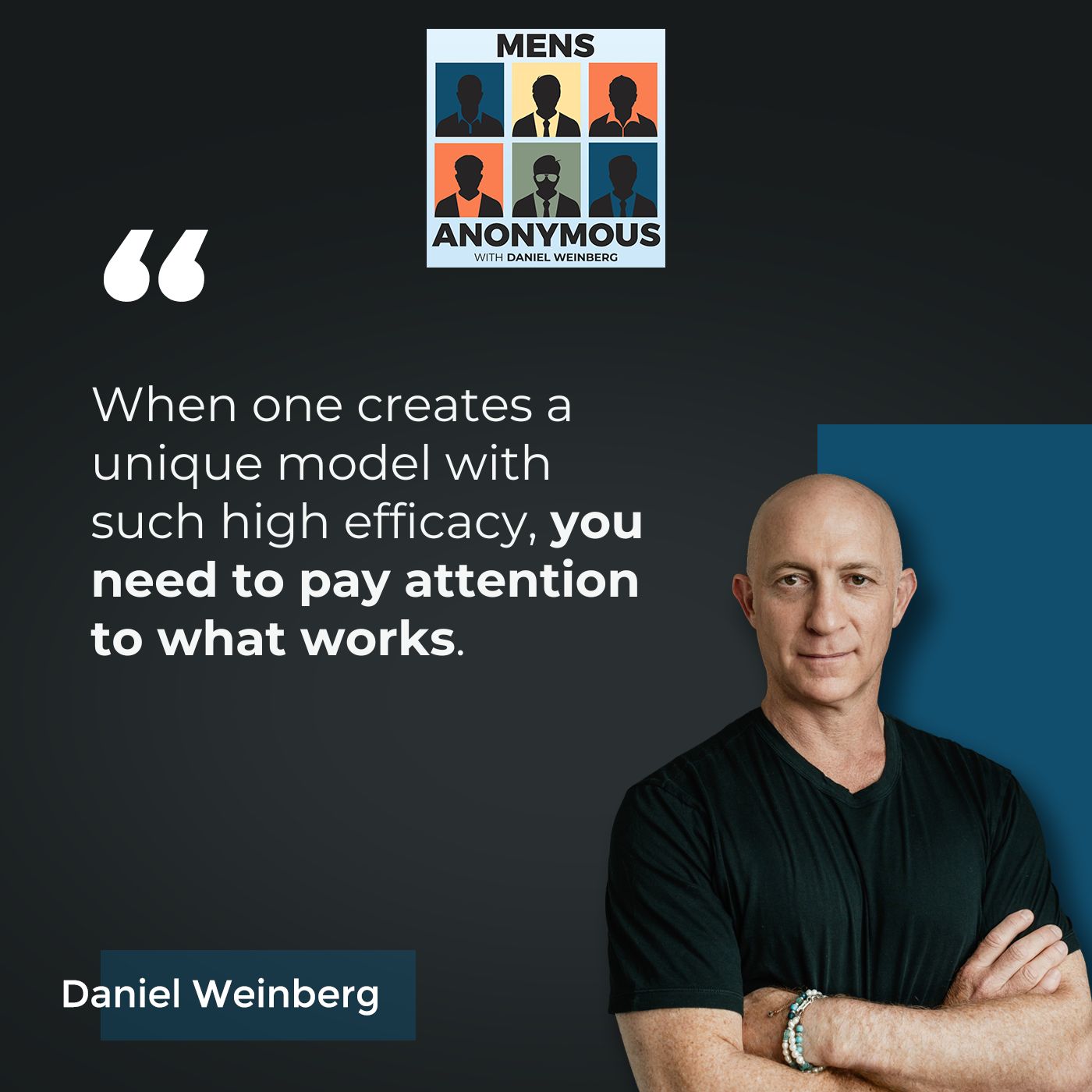
My pleasure. I try to do enough research where I feel like I understand what you’re doing because it’s super interesting. Especially given that you’ve created your own unique model in a sense. When one does that and it has such high efficacy, you need to pay attention to what’s going on, so that’s great. Before we go, I always ask my guests five questions and these are quite pertinent. I’m curious to hear your responses. Who would you like to say sorry to given the chance?
I’ve reconciled my relationships. Sometimes saying sorry is good, but showing people through actions can be even better. I put my dad through a lot. I apologize to him, obviously, but I also turned the corner and together we created something beautiful. That’s even more powerful than apologizing. It’s to show somebody to reconcile through effort because saying sorry is good, but that’s very easy to do, to say, “I’m sorry.” It’s harder to show people, “I want to help you now because I caused so much trouble in the past. Now I want to do something to make your load easier and to show you that I can support and be a healthy member of the clan.”
What are you proud of being or doing in your life?
Helping people. I love to help people. Regardless of what I do in the future, it has to be designed around helping people. I want to reduce suffering.
When did you receive kindness while needing it most but expecting it least?
My dad. When I was doing drugs, I stole from him. I stole money and credit cards. I pawned the possessions in his house. I lied. I was hurting him at a time when it was very difficult for him as well, because he was going through some financial difficulties at that time. I was spending money like it was water just on heroin but he never gave up on me. Even though I gave him every reason to do. At the very end of my addiction, I’m trying to sell my shoes for $10 to get heroin. I was at rock bottom, but he refused to give up and would not give up. He sacrificed everything that he had to save my life.
Unbelievable. What did your mother or father teach you that you frequently remind yourself of?
My dad taught me that everything that happens to us is for our benefit. He used his mind to envision a brighter outcome that regardless of the event that’s unfolding, that something good will come of this. He didn’t believe that events just happened. He didn’t believe in chaos or that things are just happening. He believed that our lives are unfolding for us in a way that is to benefit us. He was always looking at the positive and everything. Always. Even the addiction. He used to always tell me that something good will come of this. It was true because we started Passages. My dad was the happiest person I ever met. Always happy and always up regardless of how tough life has been at times.
Unreal. The final question I have for you is, what is your superpower?
I’m good at helping people, especially with the clients at Passages. I’m not trained. I don’t have like a formal education. I’m not a licensed therapist or doctor. Oftentimes, I can sit with a client and bring about a tremendous change in them. At times, something that maybe a therapist may be having trouble doing, but I can relate to people in a way that maybe a therapist couldn’t. I have an ability to help people.
Unbelievable. Pax Prentiss, doing great things. Thank you so much. We’ll talk soon.
Thanks. I appreciate it.
Important Links
- Pax Prentiss
- Pax Prentiss on LinkedIn
- Pax Prentiss on Facebook
- Pax Prentiss on X
- Passages Malibu
- Alcoholics Anonymous
- Narcotics Anonymous
About Pax Prentiss
 Pax Prentiss co-founded Passages Malibu in 2001 alongside his father, Chris Prentiss, pioneering a revolutionary approach to addiction treatment. Together, they introduced a holistic, one-on-one treatment program that transformed how the world views and treats addiction. Instead of labeling addiction as a disease, Chris and Pax recognized it as a symptom of a deeper underlying issue which can be treated through holistic, clinical and medical treatment modalities.
Under Pax’s leadership, Passages Malibu has become a global leader in luxury addiction treatment, serving thousands of clients from North America, Europe, and the Middle East. Passages has drawn some of the world’s most influential individuals, including business leaders, artists, and public figures, as well as high net worth individuals, who seek privacy, compassion, and top-level treatment.
As CEO, Pax oversees all aspects of operations and program development. Drawing on his personal journey of overcoming a ten-year heroin addiction, Pax remains deeply involved in client care and program innovation, ensuring every client receives the same transformative experience that saved his own life. His authenticity, empathy, and relentless commitment to excellence have made him a trusted treatment professional among clients, physicians and therapists.
In addition to his clinical and operational oversight, Pax has been the driving force behind Passages’ global brand presence. He has led all the marketing initiatives across major media platforms, establishing Passages as one of the most recognized and respected names in addiction recovery worldwide. His media presence and co-authorship of The Alcoholism & Addiction Cure have further solidified his reputation as a leading voice in modern addiction treatment.