Transformation starts with truth. In this episode, Chris Kyle, Executive Coach and longtime leader in men’s work, shares his powerful journey from corporate life to personal awakening. Speaking with host Daniel Weinberg, Chris opens up about the pivotal moment that changed everything—his initiation into the ManKind Project—and how it reshaped his purpose. From confronting personal shadows to building spaces for transformation, he explains the power of authentic brotherhood, the impact of deep men’s work, and how he’s bringing the movement forward with the Big Tent Summit. If you’re ready to break free from limiting beliefs and step into a life of deeper purpose, this episode is for you.
—
Watch the episode here
Listen to the podcast here
Chris Kyle
We have Chris Kyle, who walks us through the experience of the ManKind Project and takes us on the journey of what it means to be a warrior in the truest sense.
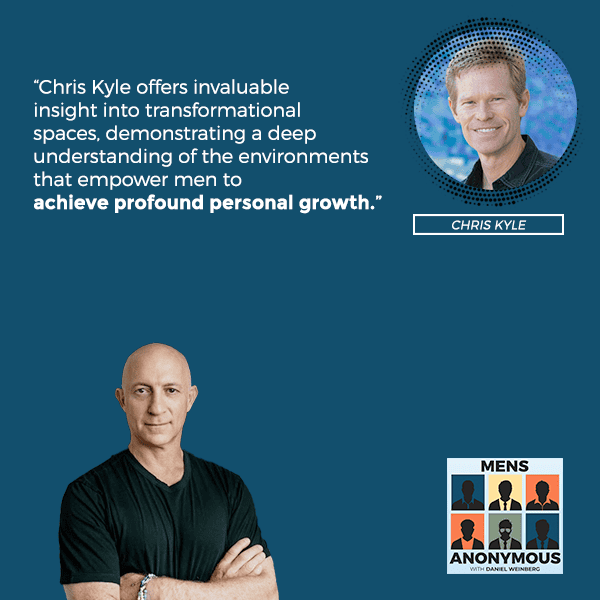
Chris, welcome to the show. How are you?
Good. I’m doing well, Daniel. Thanks for having me. I appreciate it.
You are in Pura Vida land. Where are you exactly?
I live in Costa Rica full-time and moved from the San Francisco Bay Area to here.
Whereabouts in Costa?
In Santa Teresa on the Pacific side.
I love Santa Teresa. We’re going to dig in here. Where did you grow up?
Grew up in the San Francisco Bay Area, the hardest Silicon Valley.
Did you go on the tick route? What was your story?
Chris Kyle’s Journey: From Tech & Pharma To Men’s Work
I went to Palo Alto High School, right across the street from Stanford. I grew up when Silicon Valley was mostly orange grove. There was a handful of handful of companies there that were in the tech world then it exploded. Ironically, a lot of my friends that grew up there, stayed in the tech world, but I wound up going back East for college and coming back into the Bear area later. I wasn’t pulled to the tech world. It wasn’t my thing.
What was your thing?
For me, first of all, it was about getting out of the Bay Area. It was hard for me to imagine I join a tech company down the street in Sunnyvale or Mountain View or literally my stomping grounds for my entire life. I wanted to get out of the Bay Area. When I was leaving college, the tech world was the Bay Area. It wasn’t Austin or Seattle. Microsoft was in Seattle.
I went to Southern California. I wanted to work inside a company, a business. I was thinking like healthcare. I was attracted to that. My very first gig out of college was working at a pharmaceutical company in Southern California and now a Fortune 100 company. It was a big pharma and I thought I was going to do this big business route. Lo and behold, after a few years I realized that was not my path at all.
I gave it a shot about five years in the pharmaceutical world then I got the entrepreneurial bug. I was saying like, “I don’t want to work for somebody else. I don’t want to be in a big corporation.” I completely shifted gears and wound up starting an ecotourism company with my first wife. That sent me on the entrepreneurial path from there.
For the audience’s knowledge, from entrepreneur, how did you become one of the OGs in this men’s space? You’ve done so much in this space for so long, I want to go into the journey here. How did you pivot when you started engaging or getting yourself involved? How would you just describe that journey?
Maybe some men reading and women can relate that I was in the mode and focused on what I call the default life. I was caught in the default life. I’m an entrepreneur. I got my busyness, grow that and make money. I’m building something. All at the cost of checking in with who I am, what do I want, and what’s important in my life. I was married at the time and didn’t have any kids as I was doing this entrepreneurial journey. In my early 30s, my whole life started to melt down, literally. I met my then wife in college, and we I left college, moved in together, and got married. I was married young.
College sweetheart.
Thankfully because we did divorce, we didn’t have kids because we were young. We were like, “We got time.” The marriage was falling apart. My business had been already running it for five years and I was burned out. The travel industry is tough. It’s just a tough brutal business. It’s taking a lot out of me, and we were living in Tucson at the time. I was already looking at a gig in Northern California and flying back and forth. I was between two homes. My health was suffering. Everything that’s in somebody’s life was but relationship, health, and business. It was all melting down.
Was there a culmination of event that happened?
The culmination event was the business. I was getting close to selling it, but I was feeling like it was burning down and then the relationship. The two culminating events were then my father had wound up two years earlier doing an intense initiation weekend with the ManKind Project called the New Warrior Training Adventure. He’d done that two years before. We’re talking in 1998 now. He did it in ‘96, and he just gently invited me to the weekend like three times.
The ManKind Project is a global nonprofit organization that supports men in their authentic expression and sacred power to live their missions of service in the world. Share on XDid you had a close relationship with your father?
Very much so. I can tell you more about dad. I feel very blessed because I’ve been around thousands of men and done deep dive work with hundreds of men whose 90% of the time their fathers wounded them in some way. My father wounded me in his own way, but we have a very close relationship. He’s hippy-dippy and always at the leading edge of trends.
The ManKind Project & The Transformative Warrior Training
He heard about it and invited me to do it. At 32 years old, I went to the Northwest and did this weekend. He was on staff of this weekend. I went through it, which was awesome. As an initiatory experience, there he is with the uncles, the elders, and my dad being witness to my own journey, my own deep dive initiatory experience. I did that weekend at this time in my life and it freaking changed my life. That was the event.
I’ve done quite a bit of reading on this. I haven’t participated myself. I want you to explain to everyone what the ManKind Project is and the reach that it has now. I want you talk about the warrior training like the whole experience and what it is it gives you, plus what the program is. Let’s go there because there’s a lot there.
There’s a lot to unpack there. Let’s just say this, at the top, I do see Chris Kyle before that weekend and Chris Kyle after that weekend to completely like that’s a split because there was just nothing like it for me in my life at that time. For a lot of men that have experienced an intense weekend with just men, it can be phenomenal and transformative experience.
The ManKind Project is a global non-profit organization that supports men into their authentic expression, their sacred power, and living their missions of service in the world. There are weekends that they do and the main weekend is the new warrior training adventure. There’s follow on weekends and leader trainings and things like that.
They’re only on the weekends. It’s not like one month or one-week retreat. They’re weakened focused.
Some are longer, but the first one, the new warrior training adventure is the flagship training of the ManKind Project. Let me say this, too. The ManKind Project is global. It’s in Canada, the US, Mexico, Australia, New Zealand, the UK, France, Germany, Spain, and on and on. It’s starting to move into Latin America. I’ve started a group in Costa Rica and I’m connecting with the men from Mexico.
I was looking because I saw that number of countries. It’s like 27 plus countries, a thousand plus men’s group, and over 70,000 plus warriors that have done the training.
Thank you for those stats. I didn’t have those handy. It was founded in 1985 by three men in the Mid-West. In 2025, it’s our 40th anniversary. We’re having a big 40th anniversary gathering in the fall. Other than maybe the Justin Sterling men’s weekend, which Justin Sterling was a right-hand man of Werner Erhard and Est, which became the forum.
He did a training way back in the early ‘80s, but other than that, which is not active anymore. As the MKP is pretty much the oldest men’s personal development organization on the planet. It’s a non-profit organization, so it’s not based on a personality or a strong Tony Robbins type. It’s an organization. There’s no central figure and it’s gone through imagination. It’s still here and it’s still vibrant. It’s been a journey from me of not only supporting the organization as a certified leader and on their boards but to also see it evolve and change in grow.
Watching as men say, “We need to shift this or evolve this or meet our times.” The organizations is amazing. Now, it’s one of many organizations. Some of those organizations you might know men from MKP founded them. Men from the ManKind Project founded Sacred Sons and Everyman. The founders in All Kings are MKP folks. There’s a lot of crossover and cross pollination where maybe men have done the new warrior training adventure then gone off and created their own thing. That’s awesome. It’s like rising tide.
What happened over the weekend? What would you say is one version of Chris Kyle and there’s the post-warrior training version, which is completely different version? What were you expecting when dad said, “Son, this will impact,” in a good way. Where you cynical about it?
No, I was open to it. I grew up in a very hippy-dippy household in the San Francisco Bay area. We were marching in any war demonstrations in the Haight Ashbury and hanging out at King Kinsey’s house of these big parties up in the Hills. My father was a professor at the time, so there’s a lot going on and college campuses. I went the other way. I rebelled by being responsible and straight A student. I needed boundaries, rather than flowy stuff.
I’ve always had the element of getting new things, curiosity, and spirituality. It was embedded in our family. Even some of my first Seminole drug experiences are with my dad and mom. My very first ecstasy experience was with them in a set and setting of a ritual space. My first psilocybin journey was with my dad and a bunch of other men. All of this, just to say that my upbringing was very eclectic and interesting and I was leaning into stuff. Remember, then I got on the train of the default life.
I didn’t go and become a writer or a filmmaker. I just said, “I’m going to be the responsible business guy.” Remember, all of that, in addition to what was happening in my life, I was living in that default life that wasn’t me at the core. I was trying to make it me. Here we are. My father invites me to it, and there were no expectations. I was open to it. I was just busy. I was like, “Dad it’s just not a good time. Thanks for reminding.” Finally, on the third invitation, what was squeezing me in my life was strong enough that I heard the third one like, “Tell me a little more. When would be the next one? Would you be on it?” We had the more serious conversation and I said yes.
Do father and sons typically do this as an experience together or is it more like for the individual?
Lots of fathers and sons and even more commonly, lots of brothers do it together. We see fathers and sons and brothers doing it, and different generations uncles. It’s very common on a weekend that there’s relatives going through together at some level, which is powerful. I like that my father was on staff, so he was holding the container of it while I was going through. I can imagine I have a friend of mine in the Bay Area. He and his father went through together and it was a bonding experience for them, and very powerful.
He invited me and I said yes. I didn’t have any resistance. I was willing to go and excited about it. I was nervous of the mystery of it. One of the things that we hold with an NWTA, the meta story of it is two things. One is it’s following the process of initiation. It’s an initiatory experience, and we can talk about that in a moment. Maybe more directly, some people know this more, it’s also based on the hero’s journey, so Joseph Campbell’s work of the Hero’s Journey.
Those are two meta themes that have the arc from Friday to Sunday of this very intense weekend. What I will say, it’s the un-workshop. This is not a workshop. This is an intense men’s training and initiatory experience that the moment you step on the site, it’s like nothing you’ve ever experienced because it’s not trying to be, “Welcome, sit down. Find a seat.” It’s not that. One of the things I will say this, I’ll give you a little arc of it. I don’t like to share too much of the experience or the processes. I don’t want to give it away like telling somebody the end of a great movie.
Our shadows are those parts of ourselves that we hide, repress, and deny. Share on XMaybe give me the arc.
The Initiation Process: A Deep Dive Into Masculinity
The arc is, if we’re following it, the arc of the weekend, the experience as an initiatory experience. What I mean that, its meaning you. If you were to go and do that weekend, that opportunity for you to see stepping fully into your sacred masculine. You’re adults like, “I’m grounded. I’m here, present,” then challenging yourself to look at what are the beliefs, patterns, and shadows that might get in the way of you living and even more amazing mission filled powerful life.
Men are wherever they are on their journey, but it’s this arc of finding more of you and your capacity opening to that and being held in a container of men as like you’ve gone through an intensive initiation experience. The arc is that an initiation. This is a bit simplified, but the first part of initiation is separation. This is very common when the uncles would come for the young boys. They separate him from mom, the girl and the rest of the community.
They take them somewhere else, so they’re going out into the forest or into the planes or wherever. Separation is important. Men are coming to this weekend to this, usually a camp. A camp in nature, and the separation is happening then it’s the descent. You move from separation to descent. That simply means, “I don’t know where we’re going. I’m on this journey down deep into the cave, where the dragons may live, but I’m on some descent. I’m out of the normal everyday life. This is different. This feels different. Where are we going?”
It’s the ordeal, and that’s what we talk about in. This is both the hero’s journey, but it’s also overlap with the initiatory experience that the ordeal is facing. In this case, it’s facing your inner demons, Daniel. It’s facing the wounds, the challenges, the beliefs, those inner demons, the shadow beliefs, and the traumas. Those are demons and dragons in our own heart and our own minds that we’re going to look at.
That’s the ordeal. It’s facing me, facing the darkest parts of me. The parts that I don’t want to look at. We talked about shadow which is a Jungian concept. It’s not something we made up, but when we look at our shadows, our shadows are those parts of ourselves that we hide, repress, and deny that we don’t want others to see. They’re in shadow that works us that creates behaviors that are not necessarily healthy or what we want.
Can you describe what some of those behaviors might be for example? The people you typically suppress or men typically suppress.
Understanding Shadow Work & How It Affects Men
It’s common. I’ll start with the shadow and then the behaviors can be different from that. Think of the shadows as like a negative belief or a story I tell myself that maybe I’m not fully aware of. I have to drop into it. A very common one is a simple shadow like, “I’m not good enough or I’ll never be good enough if it’s stronger than that, or I’m not lovable or there’s a shadow that I have as I’m not wanted.” It’s a variation of not being loved, but I’m floating out there. Nobody’s tracking me. My hippie parents are gone. The belief is that story, the message that I tell myself that is if it’s truly in shadow, I’m not aware of it until I start doing the work to excavate it or to bring light to it, is a better way to say it.
Tapping yourself critic.
It is a variation. There could be different ways of expressing the shadow, but the easiest way for people to rock is, it’s your gremlin. It’s your negative belief and in some ways, it’s the core negative beliefs, like you’re going deep underneath the, “You suck or you did a terrible job there,” going all the way more to what I call original wounding.
That’s probably very early in life or with parents or with other loved ones, where there’s some original wounding. Out of that is these shadow beliefs or the ways of thinking of self negative beliefs. It’s the behaviors that happen on top of that. We all have different flavors like that. My behavior of, I’m not wanted, not loved or lovable, then my behavior shifts into being the good boy, the performer, the stud that says, “Look how great I am. Now, do you love me or now do you want me?” We compensate it.
I resonate with this. This is so obvious.
Breaking Free From Performative Masculinity
We perform as men and this is one track. Others might go into a depressive mode or withdraw. Maybe they’re more introverted, so the not having the love or not being wanted, then there’s a withdrawing. I know a lot of men that didn’t just withdraw into their own cave, if you will. There’s a lot of men like me that perform, that go and show you. “I want to show you how awesome I am. I’ll prove you wrong. I will be so good and do all these cool things and please you even so that then I am fully justified that you love me. Not for who I am. You want me not for who I am but for what I’m doing.”
I know, and so many men have this. I’m not saying there’s all the full variety of full rainbow of responses, but I know a lot of men that have the default life idea that money, power, and position is going to get me success in life and I will be happy. In some ways, all of that success will mean, I will get the adulation, the kudos, and the love.
The irony is, that doesn’t give you that. In some ways, the more performer you are, the more inauthentic to yourself you are, the less you get what you want. I get the deep core of wanting love, connection, and people to acknowledge you in some ways than people feel like you’re not real, you’re fake, too busy, and just driving. All of sudden, you’re not getting what you think in shadow. If I do all this stuff, I will get this love and attention.
Most men who turn up who go through the process for their very first time, are unconscious or unaware of any of these things exist or do they know that they’re doing it and they’re conscious about, “I don’t want to deal with this. I’m aware of it. I’m going to push it very deep down so it never comes up again. I’m just going to be either perform or introverted?” Are they aware?
It’s a great question, because the way to answer that is our culture, our way of being, and our understanding of our lives and ourselves is constantly evolving, Daniel. In 1985 or even in 1998 when I went through, I would say no. Categorically, almost every man on that weekend was like, “What’s this? What’s the shadow thing? I know that I’m struggling or I’m sad or I’m depressed or I’m angry, but I don’t know where’s that coming from.”
The difference in 2025 is more and more men, younger men, even older Millennials. That whole group has become much more emotionally aware. Their emotional intelligence is up. What’s happening is more men are coming with senses of that or gone into therapy or have sad in a circle but the weekend is still powerful to get underneath, even if you’ve taken a shallow dive and you understand the concepts. There’s nothing like 100 men together challenging energy, supportive energy, and loving energy to help you get underneath wherever you’re at.
What’s happening now is more men are more aware of their internal landscape, but the impact is similar. It’s still coming at the end of the weekend. It’s like, “I didn’t know that, or I worked on this piece that I’d never looked at before, even in my therapy and with my coach and all that.” There’s something about that the weekend takes you on a deeper dive.
Way back when, it’s more blowing your mind off top of your head. Now, it might be a little bit more like, “I get it. I get this, and now I’m going deeper with what I need to work on.” That’s how I’ve been experiencing as a leader of these weekends. It’s seeing how men are more emotionally intelligent and clearer. They know what maybe the challenges are, but they haven’t necessarily got to the root or how do I shift this or I’ve been doing it on my own, not in a community or a brotherhood or in a circle.” That’s the gist.

I’ll finish the things. The ordeal is a big part of Saturday of the weekend. It’s mostly moving through the ordeal and the process. It’s deep dive process work on Saturday. It’s super powerful. In a way, it’s a unique gift from the ManKind Project that now lots of other people are using programs and things like that. Sunday is what we call the return and a bit of integration.
Leaving the weekend and going back, home is the coming home, but there is a return or what we call the ascent because it was the descent, the ordeal, and then a bit of a ascend. That’s where you begin to integrate and look at what’s happened and doing other things that ground me in my body that thing. That’s the arc of the weekend. There’s lots of little processes and it’s like a symphony of we move through this and this movement happens here, then this. You’re moving through this journey where it’s an intense constant process of exploration, looking, and being challenged and also opening yourself up to possibility of, “I didn’t know that about myself.”
I want to know what happened to you.
The Transformation: How The Weekend Changed My Life
I got clear on the weekend that I was lying to myself. I was dishonest with myself and I was bending things. Lying to myself like, “It’s okay. You should do this. You’re in a marriage. You should just stay in the marriage.” I was in all this place of not looking unvarnished at my life and being brutally honest with myself of where I’m at and what I want regardless of what others would think of me. That’s a part of my wounding. I’m crafting my image. I’m a performer crafting his image so that I look good and got it all together.
You’ll alter ego or not the real Chris.
This is the Chris that is the public facing Chris. The public facing Chris is one that’s like, “He’s an entrepreneur. He’s got this business and he’s got a partner, his wife and they’re doing great.” This is the nether aspect of opening to truth, it’s being vulnerable with self and with others. I was like not wanting to show the cracks or the vulnerability out into the world and with my friends.
Partner and friends.
A little more to my partner. I had a lot more emotional intelligence skills from my family and growing up in a very progressive household and very emotionally dynamic household. With my partner, we were digging into it a little bit more. What I wasn’t doing was taking a look for me, is this the relationship I want? If it’s not, how do I create a different one with her?
I wasn’t I was trying to fix it. We were just in fix it mode. Not asking the bigger picture, do I want to double down here? Do I want to go deeper and go through the process with my partner to find the relationship that would work for both of us? On the weekend, I got clear that in a way has been dead for a while.
You’re saying it was dead for a while and you weren’t aware of how dead it was.
No, because I was stuck in the default in my business and making things happen. We were almost like roommates. I even went more further back, Daniel. I didn’t ask the harder questions as we were coming up to getting married. Is this a woman that I want to spend the rest of your life? We always say that and we move through relationships, but there was that quality.
Do I really deeply loved this woman? The answer then if I had my knowledge now and my experience now would be no that it wasn’t. We could have separated and not moved in together. Seeing if it could hold through that and we probably wouldn’t have got married if I was a little more honest and direct with myself. Is this is the relationship I want? Is this the person that I want to be married to?
All of that came crashing in is what I’m saying. There’s no shame or blame. Part of me was shaming myself a little bit, and then the coming back and realizing that I wanted to be out. I wanted to divorce. There was a little layer of shame on that of the Scarlet D of divorce. Again, that was image, but worried about, “I’m now a failure at my relationship, too, and burned out in my business.”
Did you have that revelation while you’re on the weekend?
Yes, some of it came on the weekend, but then it’s all that integration coming off the weekend and journaling and sitting with it. I got more clear in those days coming off the weekend because it was more of like an explosion on the weekend of who I am, who I thought I was, and my identity then needing to sit with that. I did know that things needed to change and I was at the center of needing to make different choices.
I could feel that. I could feel that I was ready to make different choices in my life that I might have been afraid to make, or didn’t feel like it or didn’t feel like I could. That clamped in of, I can’t do that. I shouldn’t. The shoulds and can’ts. It became what’s here, then I got clear that I had not been living the life that was more on mission or more purposeful life. There was that awareness that I’d been doing what was expected in the culture that said success and that showed success. I wasn’t living from the place of, what do I want to create? What do I want to do? What I want to bring? That’s what shifted me into a whole different world and of different way of working and being. I sold the travel company, and I got divorced.
Give me the, “Here’s the impact.” How did you change?
I want to preface this by doing the weekend, it doesn’t mean that every man is going to radically change.
I know, but what I’m saying is, let’s say when you got to a place of clarity of, “I haven’t been doing what is me and what me is X, Y, and Z.” Tell me how did that change. What did you do? What did you change that direction?
Why? It was so powerful for my life. I want to say one more thing before I jump into that is that. I had a visceral experience on that weekend that I’d never felt in my life. That was the power of 40-some odd men on staff and another 30 or so participants going through with me. Here’s the beauty of it. Every man other than four men on a weekend, volunteer for this and pay a staff fee for the honor to be on the weekend. It’s usually more than a one-to-one ratio because the staff has all little pieces and on this process. These five guys are on this process. It’s beautiful.
Our culture, way of being, and understanding of our lives and ourselves is constantly evolving. Share on XIt’s a symphony or dance. I had never, and this is what a lot of men tell me, has never felt the power of a group of powerful loving men guiding us, as participants, through a journey of initiatory experience journey and holding everything that can be brought everything. I have worked with therapists for many years. I’ve talked a lot. This is a place where you can bring everything. Your greatest rage, if you’ve never let that out, it’s a place to bring it. Your deepest sadness, bring it.
I never had that experience of a container holding everything as a man that I might be sitting with and holding it and helping to transform whatever that is in those blocks, barriers, the rage, the deep sadness, and the wounding is to transform it into gold. I’d never experienced both the love and the challenge in the room together.
It sounds like it’s super powerful.
The Role Of Men’s Circles & Brotherhood In Growth
It was just transformative, and for so many it is. What’s kept MKP so current and so vibrant for so many years is that the focus was on the circle’s coming out of the weekend. Men were encouraged to go into what we call, I-groups, which are integration groups, which are like men circles.
It’s like little mini forums basically.
No, men circle is like you know now. It’s 6 to 8 guys or 10 guys coming into circle, checking in, continuing to do some of their work. You don’t pay anybody. They’re all free. This is the beauty of a non-profit organization. You pay for the weekend and it’s inexpensive. You come off the weekend, you find a circle. You either create a new one or find an existing one and it’s free. It’s self-led. The circle’s runs itself, and there’s training, guides, and manuals to help circles be healthy and successful.
You don’t pay anything to MKP for those circles. That’s why you were saying, there’s over a thousand circles globally men anywhere from 8 to 20 men sitting in circle together. That’s where the rubber meets the road, Daniel. I came off my weekend, I went back to Tucson and there was several circles in Tucson. I found a circle. I sat in it with some amazing men. I stayed in that Circle for several years until I moved to another city and in that City, there was another circle. I moved back to California, and there was circles there.
How do you meet with your circle?
For a long time, it was weekly and now most of the circles I’ve been in over the last bunch of years have been every other week, so twice a month.
How long will you meet for when you meet in a circle?
Two to three hours, depending on the circle. The circle gets to make it all up. If I join a circle, we just say, “Do you guys want to do three hours or two hours or two and a half?” Circles make up their own agreements like what do you agree to like confidentiality, showing up on time, and a sober meeting. Don’t show up high. Lots of things, but what’s beautiful about is its organic, Daniel. There is no, “You got to do it this way.”
There’s a loose structure that we teach around the four archetypes of the king, lover, warrior, and magician and integrating those sacred masculine archetypes. Not only into the circle, but continuing to look at those archetypes as a way of doing more intentional personal growth on myself with the lens of archetypes. It’s just one lens. Not the only lens.
For me is, then when I came off with all these amazing men, this mind-blowing experience but then dropping right into a men’s circle. I started to then share with these men vulnerably what I learned on the weekend and then supporting and giving me reflection and feedback and say, “It sounds like you’re in a question around your relationship. Dig in. What do you want?”
They won’t give you advice. They’re more like holding space for you.
If I ask for advice, it’s like a King’s council thing. It’s like, “I just shared. What do you guys have for me?” “Here’s something that’s worked for me in my life, Chris. Here’s what I suggest.” It’s asked for. It’s not where there’s no like unasked for feedback. We’re not throwing stuff at guys. We’re trying to hold space for them to grow.
I’ve started the process. I went into therapy with my ex-wife, the wife of the time. I started that. I said, “Let’s at least try that.” I could tell that was not changing anything, and after a few months, I asked for divorce. I was like, “This is not working for me.” I went through the divorce and then about nine months after the weekend, I found a buyer from my business. I sold my business. That’s how we got out, and then I hatched a plan.
I stayed in Tucson a little longer, then I hatched a plan to help a friend of mine with his business in Ithaca, New York, and I moved out at Tucson. I let go of the stuff that I was doing in California. I know that was me, still trying to hang on to the default life, find a business and another thing. I needed to find more of me and that’s a lot of what I was able to do in Upstate New York, and began to move out of the travel industry completely because I knew that wasn’t where I was going to give my gift.
I wanted to directly be part of transforming people’s lives. The natural step for me was coaching, executive coaching, working with businesses and startups because I had all that experience behind me, but it was transformational coaching, too. I was able to then create a business where I was working directly with cool people like founders, executives, and business owners into helping them grow and succeed with their business.
That shifted me, and that became a big part of my world over many years. From that meltdown to into the ashes was the Phoenix rising from the ashes. What rose was more authenticity, clarity, sense of being, connected to what I’m feeling, what I want, watching the pleaser part of me, and being able to watch the performer that needs to come online and yet, not throwing that out because there’s a lot of capacity that I build. It’s not throwing the capacity out. It’s just directing that in a more focused way.
Being aware of it that I’m doing this now for business purposes, but this is not me. This is me the performer.
We keep thinking that going down underneath is an answer. It's actually not—it's a rabbit hole. The answer is going down enough to see and recognize it and then going up into awareness and presence. Share on XAlso, being much more continually checking in with my men’s circles and doing my work in-circle around the shadow pieces and the negative beliefs that were surface more clearly on the weekend and continuing to work with that. Working on what we call the mother wound and the father wound. How are we wounded around our mothers? How are we originally wounded around our fathers? The look there is powerful. The caveat and the caution always is in men’s work.
It can be pretty exciting and enamoring to go into all of that. The challenge is not to stay in what we call wound worship, where we keep trying to go deeper under the wound and worshiping the wound like, “There’s another piece. Mom back when I was twelve did this, and this thing.” There’s a good excavation and this is what I encouraged men is to say, you’ve got to look at the wound. You got to know where it comes from, but be careful not to just keep digging down because it can feel exciting. It can feel enlivening and I’m getting to something.
You’re discovering the answer to everything.
We keep thinking that going down underneath is an answer and it’s not. It’s a rabbit hole that the answer is going down enough to see it, recognized it, and it’s literally going up into awareness and presence. When it comes up, I’m aware, present, I breathe and release it, then I make a new choice in the moment. That’s a big part of men’s work, I would say, over the years, there had been a lot of energy toward that naval gazing and going in. It’s exciting to excavate all that.
A lot of men get stuck there and they’re not back on that sense of clarity of purpose and bringing their gift more fully into the world and living a mission of service in the world. A lot of MKP over these last bunch of years has been about helping men truly step into their mission of service in the world. When you’re doing that, then the stuff that comes up, you just got to work with it.
Rather than staying and spending all the time just wallowing in the womb. That doesn’t serve. You’re not in your power. You’ve got to come out and bring who you are out into the world with your gift and whatever. All genders have gifts to bring to the world. You just have to tap into yours, understand what that is and bring it. It can change over time and all that.
Is the wound worshiping come from not wanting to let go and trying to just like pester in there and almost a sign blame and like, “Now I know why I’m like that. It’s because of all that,” but not wanting to let go of it?
Not wanting to let go over like there’s something else for me to get underneath it. Having that endorphin rush of an awareness like, “When mom was doing that when I was eight, I can see how that impressed on me. I got shamed around that. My creativity got shamed.” I had an experience at five being creative. I remember not thinking anything devilishly at all. I took the garden hose, open the gas can in the car and put the hose because I’d seen that happen. I put the water hose and turned it on in the car.
I was thinking I was helping the family and I’m clever. My mom came rushing out screaming at me like, “What have you done?” This is the word that’s going to make me tear up. She said, “You could have killed us all.” I remember that. It’s like a deep wounding in a moment in my life. My mother is normally more dramatic and she didn’t know. It’s not like it’s going to blow up the car, but she didn’t know that. She’s thinking, “This is going to blow up the car and you could have killed us all.”
In some ways for me, that’s a wounding moment. It’s not what I consider my original wounding. I know there’s some original wounding at birth with me, but it’s a close parallel to some of the other wounding that impacted my creativity and my authenticity because then it was like, “I’m not step out of the box. I’m going to be good kid that can perform and do well within the box.”
That’s where I learned, if I got creative and out of the box and did something that I thought, “That was pretty clever at five years old.” I’m going to get smacked and yelled at or I could kill somebody. For me, that was a moment and I’ve still worked with that. The thing is, if I’m wound worshiping, I could try to go under that. What was mom thinking then? That year before, what’s she doing? Where was dad in this? Let’s take a look at dad.
There is some benefit to excavation and looking at, but when you keep trying to dig for other pieces for more answers, they’re not there. There’s no more. It’s just our own hubris of feeling like, “I’ve excavated this. It feels very enemy and releasing. Maybe there’s more here down.” I’m saying there’s enough and you get the wounding enough, then you work with it as you come back up and bring, how does that impact your life? What are the thoughts and patterns that you have based on that? How can you begin to shift those
Out of curiosity, is that part of the process, going back to mom and dad and talking to them about those things?
Yes. There’s a lot. We can a lot of tools and many of them from the psychological realm, but also others just a little bit more flowy, and more spiritual in nature. You can let yourself fall back into time and find those moments. A lot of men have not allowed themselves to simply close their eyes and find a moment back in time that was hurtful for you, or there was abuse or verbal abuse, or even sexual, or physical abuse. That’s something. Again, I’m telling you, everything is welcome on the new warrior training adventure and most men’s weekends that do deep dive stuff.
It’s like we’re holding a container for if the abuse was there, we know how to handle that as a team and do it with trauma-informed approached and all that. You’re going back to look at these places. For some men, it’s dramatic, Daniel. It’s like they’ve been physically and sexually abused. That’s a thing that they carry. If they haven’t excavated it, it can be like a release of energy and unburdening. On the other side of that, that unburdening could continue to take him down the rabbit hole. Keep going down.
There’s some place where you see the wounding of mother. As I shared my experience and there was others around her. She wasn’t tracking me. She was more narcissistic and a little checked out. Dad was working and checked out. There was a father wound there too to look at. Where was my dad and the divorce of my parents? Seeing these moments in my life that I can then trace behavior and ways of being to, I can now start to unhook from them and pull the roots out.
Once the full root is out, I don’t necessarily need to go back and re-excavated. I know that if it arises, “There’s that shadow. I’m not feeling good enough right in this moment or I’m doing this all on my own. There’s that part of me that is on my own that’s not wanted and having to do it all on my own. How do I now ask for help and reach out?” You got to change the behavior. Otherwise, it’s just all mind thinking.
Where is it leading me to create a different path in my life or to bring more of who I am or be more authentic and bring more of my gifts? That’s the real work. That’s how do we serve out there and not, how do we continue to just do this because that can be a trap and a never ending whole of work. Daniel, as I move through life, my friends have babies, and they went through divorces, some new material comes up to look at because it’s a different stage of life. That’s the beauty of a men’s circle. You go back into your circle and work with it with the men that you trust to know. Share it, talk about it, and process it to help and bring it out in the light.
The Big Tent Summit: Bringing Together Leaders In Men’s Work
It’s been quite a long journey from that moment. It’s culminated into what’s happening, the Big Ten Summit. What did you do to pull this whole thing together now and create what’s called the Big Ten Summit, which is like bringing the who’s who of the men’s world or men’s space all together in one spot under one Big Tent?
I’ve always had my entrepreneurial track for all these years. I’ve always had a business and done different things. Always with it has been like somebody that’s always serving a non-profit or started something on the side. I was always doing men’s work on the side. I was on leadership track. I’m now certified leader in MKP. I served on the board, the national board, a local board, and on our leader body in Northern California.
The beauty of a men’s circle is you go back into your circle and work with it with the men that you trust and process it to help and bring it out in the light. Share on XIt always had its own little track because I was spinning a lot of time so with my businesses. I was also succeeding in business and using everything I learned to be a better leader, to build my businesses, and be a high integrity man out in the business world. What’s shifted for me in 2024, Daniel, as I look at the next 15 or 20 years of my life, I made the commitment to shift to a lineup what’s clearly been my purpose path, even the sense of destiny.
My destiny is to help men heal grow and evolve, like to help men wake up and live the life that they want and giving their gifts and being in mission of service in the world. I’ve now wanting to put that front and center that it’s also my work and can be my money-making side of things, my purpose and my destiny all lined up.
What came out of that, what was the first thing that had been bubbling in me after many years of doing men’s work and leading circles and even doing my own stuff? We won’t get it to now, but I created my own men’s retreats and doing things outside of MKP, which has been awesome. I decided, and I’ve been thinking about this a long time is to have a global gathering of leaders in the men’s work space to create essentially our industry conference. Nobody has done that yet. There was one attempt.
What do you think that? It’s super fragmented. There’s so many things going on and a lot of these groups are not aware of the other groups.
It’s just that. It’s why the timing is so ripe now, is for a long time, it’s been just a couple organizations. It as the ManKind Project and just some men’s coaches and a lot of therapists that focused on men’s work. Therapists had men circles. As I was watching all of this, there was the men that came out of sterling, so the East Bay Nation of Men and MDI Men’s Division International, if you’ve heard of those. They were cruising because they were coming out of the Justin Sterling work, the Sterling men’s weekend, and then MKP popped up and grew very quickly.
What’s changed in a few years is just an explosion of men’s work. All of a sudden, it became more mainstream, more acceptable, and less in the shadows. I remember back in the days almost sheepishly saying, “I do this men’s work stuff.” People are like, “What do you mean men’s work? What are you talking about? Is it like a boys club thing?” People just didn’t know. What’s now in the Zeitgeist and it just happens evolutionarily is that people are aware of it, know it, and support it. People are like, “You’re in an men’s circle? That’s cool.”
What’s happened now is there’s a visibility that people then are out there now building businesses and very successful big businesses with trainings and circles. Now it is a defined arena of business and work. It’s more mainstream than it’s ever been. All these men’s health articles in New York Times. You’ve probably over the years seen these articles and that’s in the last ten years maybe. Back in the late ‘90s and early 2000s, there wasn’t a lot out there. There wasn’t a lot being written about men’s work and all that.
There’s also what I perceive to be almost like a crisis for men as let’s say the role that men have played in society moving from a very patriarchal dominance, say to a more equal balance. It obviously means there’s been a re-waiting. Men have become less relevant. As the men have become less relevant, they’re a bit like, “Now what?”
There’s a lot of loneliness with me or feeling a little bit more ostracized maybe where they got carried by the weight of being, “I’m a man, so I have more influence.” There’s been that the native effects for them which is created a desire for men to now relooking someone or reassess or reset like, what does it mean to me a man? There’s this huge demand from me now wanting to know more about what does it mean to be a man?
This whole conversation of men and masculinity, both of them because there’s a quality of, what does it mean to be a man living in this society? What is masculinity? In some ways, that unhooks from the gender role into, if these roles are changing in society and if there’s more equitable, more equal, sharing of power, and different roles. I could be a stay-at-home dad. My wife’s making hundreds of thousands of dollars. Those roles have changed and they’ve only changed in the last 30 to 40 years.
It has meant that more and more men are trying to figure out their place. Where do I fit in the culture? What is masculinity? What is it mean to be a healthy man? The rise of tech and the rise of social media has created these bubbles where men are more isolated or more separated. They don’t have healthy relationships with men or others, even their families or their partners. There is both the rise of the crisis and the curiosity.
I talk about the two Cs. There is more pain and struggle potentially for men in our culture and there’s also more curiosity. It’s a building of curiosity. That’s a perfect storm to say, “It’s time to gather all these disparate elements, these leaders of organizations like Everyman, ManKind Project, Sacred sons, All Kings and ARKA. There’s a lot out there, large and small.
All the coaches, therapists, ad podcasters like you, Daniel, researchers, and authors. You got to add those in the mix. There’s so much happening in the men’s workspace. In the psychology world, they talk a lot about men and masculinity. There’s a ton of research happening. Women studies were big for 20 to 30 years and now this idea of men and masculinity and understanding that is also a big arena.
My vision is to bring the Big Tent literally as the big tent is to bring everybody together that’s doing work with boys or men. I want to add boys in here, too. There’s a lot of boys, the mentoring programs and boys to men. When I say men, it’s boys and men. There’s so much happening. It’s critical that we gather and we talk and share with each other. We share what’s going on and what we see finding ways to support each other, collaborate, strategic partnerships, and networking with each other. Leaving competition at the door because that’s certainly a stronger energy from men usually than women.
The Importance Of Collaboration In The Men’s Space
Collaboration but learning, too. Allowing great speakers at the Big Tent Summit to share what they’re up to and the big questions of, what do we do now in 2025 and beyond in supporting men in their journeys of growth? How do we market to men? Some of these simple questions, how do we do that in an authentic way? Lots of awesome conversations to have at this three-day event. It’s the live event. I’m super excited.
When is this?
It’s on May 29th to June 1st. It’s going to be in Loveland, Colorado at a beautiful meeting space. Its shoulder to shoulder and face to face. I’ve been in the eLearning space and helping people create courses and summits and all that. The last thing I wanted to do is to do as a virtual summit. I was passionate about let’s get us in the room. Maybe in 2026, we’ll stream it but for now, we want people to come. It’s open to men and women, Daniel. Women that are doing great work with men. There’s a lot of amazing women out there coaching men in relationship and even sacred sexuality or in family and all that.
There’s amazing women doing incredible stuff. This is why it’s the Big Tent. It’s like, “Let’s come together and talk about how we can evolve our work and support each other.” As you said, the rising tide lifts all boats. I believe that in this space because you named it. There’s so many little things and disparate elements. It would be so cool to come together and learn, share, grow, and to grow our own businesses all of the same time. You can go to the BigTentSummit.com.
I will just say this, too, Daniel. We want people there to curated group. If you’re interested, you need to be doing men’s work, even if it’s just a year or two. It doesn’t mean you’ve got to be doing it for 30 years, but that’s the caveat if you choose to sign up or reach out to us. That’s what we invite you. It’s to join that if you’re doing work with men and boys.
Getting To Know More Of Chris
Before we drop off, I like to ask my guests a short list of questions. We’re going to get off. The first one is, who would you like to say sorry to give in the chance?
I’m just going to borrow a page from what I shared. My birth mother has passed away a number of years ago. I would forgive her and say sorry for how I treated her a lot of those years partly because of our own history and our wounding that I don’t know if I got to say that. I would just say sorry, but it would almost be a sorry with a forgiveness release. I’m so sorry that in some ways I didn’t support you or stay connected to you, I withdrew, and I pulled myself away energetically and sometimes my love. I’m sorry for that.
What do you proud of being or doing in your life?
I am proud of being two things that I’m most proud of, how I am in partnership with my partner, Charmaine. I’m so proud of the years that we’ve been together and how we navigate life together and have a very conscious relationship. I’m super proud of the time and energy I put into that. Also, I am proud that I’ve been doing men’s work for many years and what I’ve brought, learned, and the gifts that I brought there.
When did you receive kindness while needing it most and expecting at least?
I would say it’s in that transformative space when I came off the weekend and I got into my men’s group. The men’s group was new to me and there was one guy in the group named John Maddox. I didn’t know what to expect in the men’s circle. He just reached out. He was, in the circle and after the circle, “How are you doing? I know things are super challenging and you want to talk.” There was so much care and kindness from another man that up to that point, I had a lot of bros, hanging out and do the game. This was loving support that was about my life and wanting to serve and support me. That was unexpected kind and it was right when I needed it, Daniel. I needed that nurturing and care from men at that time.
That’s beautiful. What did your mother or father teach you that you frequently remind yourself of? They both sound like they had a very big impact on you, I have to say.
They did, and this is me trying to filter out that’s bubbling up. Both of them in their own ways taught me to be open and curious and to lean into what’s out there and what’s possible. This idea of that in a way anything is possible and not be narrowly focused on, “This is the way you should be your life should be.” They were very much open and see what’s out there. Be curious. I learned that from both of them in their own ways, in their different ways.
The final question is, what’s your superpower?
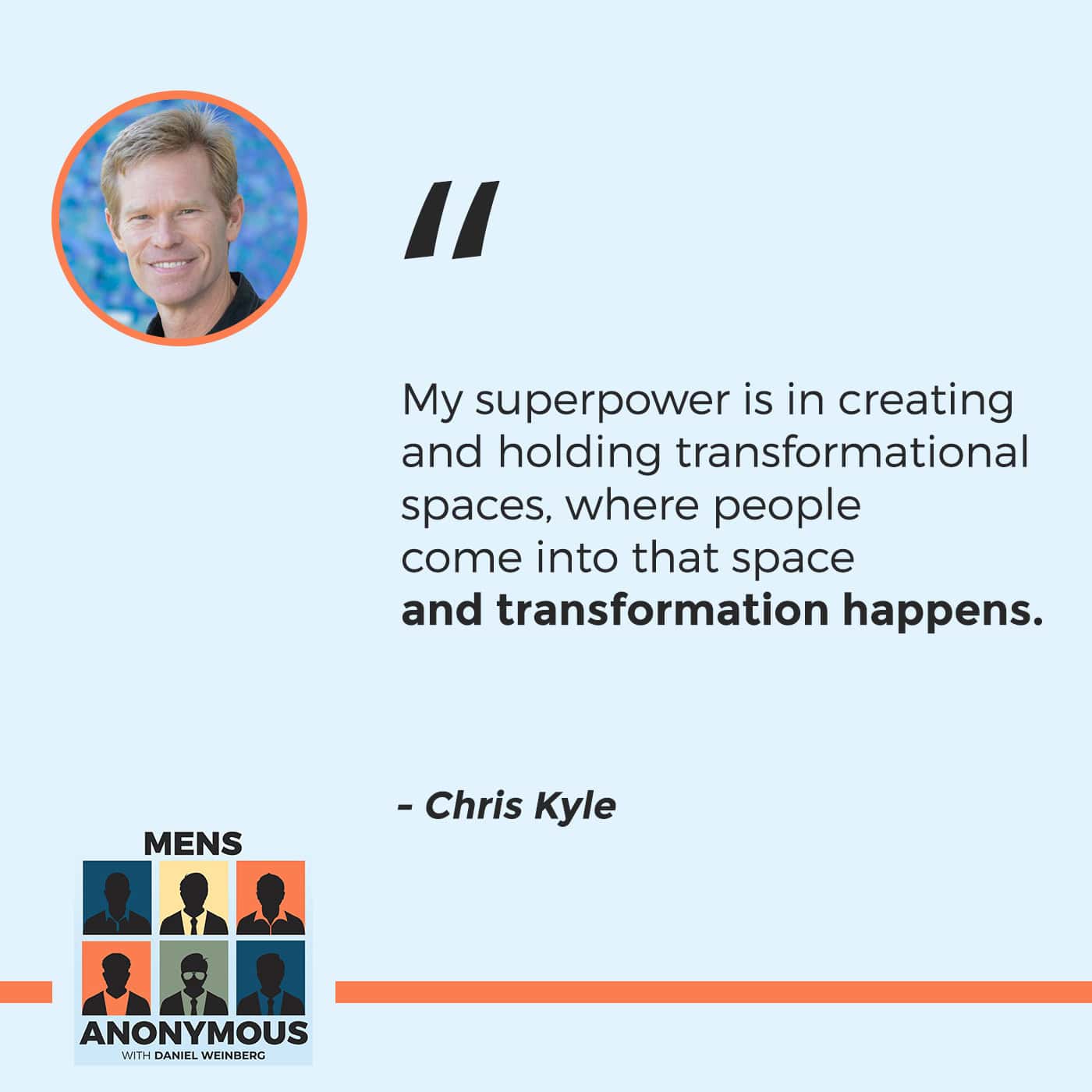
It’s great. I want to see if there’s something fresh here for me. My superpower is in creating and holding transformational space, meaning creating a space where people come into that space and things and transformation happens. A magic in that space in both thinking through the creation of it, and the facilitation in it and what happens coming out of it. That’s my superpower.
I want to join one of your spaces.
Come. I’m going to put you on the spot here on the show. Come to the Big Tent Summit if you can make it, Daniel.
I will do my best. Chris, it’s a pleasure. We could have literally spoke in four hours. There’s so much we can keep talking about, but I want to say I’m very grateful for all the work that you’re doing. I can see that like just a few conversations that we’ve had that is having so much impact and such important work giving what men are experiencing and going through. Thank you.
Thank you, Daniel. It was been great being in conversation with you. Thanks for your great questions. I appreciate it and appreciate you.
Important Links
- Chris Kyle
- Chris Kyle on LinkedIn
- Chris Kyle on Instagram
- ManKind Project
- Sacred Sons
- Everyman
- All Kings
- Hero’s Journey
- East Bay Nation of Men
- ARKA
- Big Tent Summit
About Chris Kyle
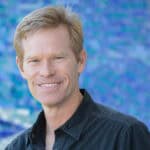 CHRIS KYLE is a teacher, coach, facilitator and entrepreneur who has spent the last 30 years helping individuals and organizations discover their purpose and scale their impact in the world.
He is the founder of Launch Academy, a training program and community that supports changemakers in bringing their message to a global audience through online courses. He is also the creator of the Power of Purpose Global Summit, the Man on Purpose Online Course, and co-creator of the Conscious Men Summit with Dr. John Gray.
Chris has been facilitating men’s trainings and men’s circles for 25 years all across the world. He is a certified Co-Leader of The ManKind Project’s flagship men’s training. Earlier in his career, Chris worked for Fortune 500 companies, ran his own eco-adventure travel company, and coached start-up executives. He has a master’s degree in Nature-Based Leadership.