What if the mental blocks holding you back from your best performance are simpler to overcome than you think? This week, we’re unlocking the secrets of performing under pressure with Dr. Dana Sinclair, a world-renowned psychologist and author of Dialed In. Having worked as a mental performance coach for top-tier franchises and athletes across the NBA, MLB, and the Olympics, Dr. Sinclair reveals the practical, repeatable system she uses with the elite to manage overwhelming tension and immediately regain focus. Discover how to flip the switch on self-doubt and anxious thoughts by replacing them with precise, powerful behavioral strategies. Dr. Sinclair introduces her simple framework, including the number one immediate skill to regain composure and the vital art of pre-planning your ‘cues’ to ensure flawless execution when the stakes are highest. Learn how these mind-management techniques, developed in the high-pressure worlds of professional sports, are the key to excelling in every area of your own life.
—
Watch the episode here
Listen to the podcast here
Dialed In Under Pressure: Performing When It Matters Most With Dr. Dana Sinclair
On this show, we’ve got Dr. Dana Sinclair, a psychologist who worked with some of the best sports teams and athletes in the world.

Hi, Dr. Sinclair. It’s so great to have you on the show.
I’m excited to speak with you, Daniel. Please call me Dana.
Applying Elite Sports Psychology To Life: The Mind Under Pressure
I’m going to call you Dana. I’m very excited to talk to you because you’ve dealt with some of the biggest sports franchises, athletes, performers at all levels, Olympics, tennis, baseball franchises, basketball, the whole spectrum. You’ve had quite some exposure to what it’s like to deal with those at the highest level of those sport categories and how they were able to overcome the challenges to become the best in their field.
This is what I would love to hear from you, and this is for the audience to be able to apply some of those things that you learn in the field or on the court, and how they can apply them in real life when you’re young, dealing with school exam mode. When you’re dealing with interviews, performance at work, etc., you can apply all these things to a lot of real-life examples.
I would love to understand when a Michael Jordan or whoever in their sport is facing one of those critical moments within a game, what is actually going through their mind, and what’s happening to their body in terms of the adrenaline, their ability to process in very small slices of time to make big, critical decisions? What’s happening, and how are they able to control that moment to be able to perform at the level that they do perform?
Most of it’s about having a certain skill level, but it is also about having practiced how to control their emotions. That was a big question, so I would like to explain my job a little bit because it is a little bit under the radar. One thing I have learned over all this time is that we all want results. We all want to be good at what we do, but it’s not always easy to get to our best, especially in our pressure moments, which we all have. I feel that in order to excel, we have to be able to manage or maximize our behavioral assets.
You’ve got to be able to use your head in the moment, which is why learning to perform under pressure is key to your productivity as an individual, first and foremost, and to those around you as well. It’s something that you can learn. You’re not going to change your personality with all of this stuff. That’s not what I want people to do, but I do want people to learn what they have to change in the situation or in the moment to excel, because we can all learn how to do that. Some people are better at it naturally, but we can all learn to do it.
Learning to perform under pressure is key to your productivity as an individual, first and foremost, and to those around you as well. Share on XWhat’s actually happening in that moment when you’re sitting down for that final exam? There’s a big deal that if you don’t get it over the line, everything falls to pieces.
It’s those deciding moments that we all have to deal with, whether the exam, the pitch, the negotiation, the interaction, the big game, whatever it is. We all have to perform. What’s happening? The biggest thing that is happening is that everybody gets tense. Most of the time, when you’re performing or you don’t feel any pressure, you’re fine. You’re able to stay calm and focus on the task. When you’re feeling pressure, your tension physically rises, and you can’t think. You tend to shift or drift over to what I call hotspots or distractions into how you feel. We all get caught up in how we feel in those pressure moments.
Did you say hotspots or distractions?
Yes. Hotspots or distractions are things that mess you up, bug you, frustrate you, and get in your way when you just want to be calm and focused. We drift over to how we feel, outcome, and results. How am I going to do? What are the expectations? What are people going to think? How will I be if I fail? I’m going to get so anxious. All of these things are psychological barriers to actually being able to think about what I’m doing in that moment. That’s all it is.
Hotspots or distractions are things that mess you up, bug you, frustrate you, and get in your way when you just want to be calm and focused. Share on XThe formula for performing under pressure for me is being able to get calm-ish and turn your focus onto what you’re actually doing. That will get you results and lead to satisfaction, better confidence, etc. People tend to think it’s the reverse. I can’t do it until I’m confident. Yes, you can. Flip it around, learn to get calm-ish, and get that tension down physically and mentally, so you can think.
That’s easier said than done. If I’m going to tell my daughter, “Calm down.”
Don’t do that.
That’s right. A good friend of mine said to me, “No one in the world ever calmed down by telling them to calm down.”
It’s true. You can do it nicely, but it’s the whole thing. “Just relax, would you?” That sends people right off the rails.
Skill One: How Conscious Breathing Lowers Anxiety In An Instant
You’ve just told me what not to do. Tell me, how do you get calm-ish? If I’m going to tell my daughter who’s about to sit an exam how to get calm-ish, what are some of the practices that you would advise or guide those who you work with to put into practice? It’s not on the day. I imagine, like anything, this takes a bit of practice and putting things into a plan.
It takes a bit of practice to do it well consistently, but you can use it immediately to your advantage. All the things that I teach and talk about, I have to be able to give someone and allow them to get results quickly. I’m on the sidelines of NFL games, in dugouts, and whatnot. If a guy needs help now and I can’t give it to him, I’m out. I’ve had to learn how to do this quickly over time.
You literally sit. You’re on the sideline with the coach or the manager. They’re saying, “This guy is freezing up. I don’t know what’s going on with him. Get into his ear right now and get him back in the game.” Is it literally like that?
It can be. I remember being on an NFL sideline. I heard some yelling behind me. I was wondering what was going on because I was watching this great game. All of a sudden, I get tapped on the shoulder. There’s this 300-pound guy with grass stains all over him, saying, “Dana, Coach wants you.” I go back thinking, “Man, what is going on?” The coach had been yelling and screaming, “Where’s Dana? I want Dana.” It was all because he needed to vent and tell me, “See what that guy just did. I’ve been telling him not to do that. You’ve got to get over there and tell him what he’s got to do to settle down and get it right.”
What do you do?
I’ll break this down to make it simple.
You’re going to break it down, but I’m curious how you’re delivering this message to a 300-pound monster in the middle of a high-pressure game.
They’re very nice. They just lose their focus, and they get too tense. It’s getting right down to getting them to calm down. You know what the easiest way is?
Tell me.
Getting them to breathe. It sounds so goofy, but breathing is the number one skill for all of us when it comes to performing properly and well.
When you say breathing, doing a breathing exercise, or literally just breathing?
You can do an exercise, but I’ve usually got five seconds to get somebody’s attention and get them to slow down and exhale fully. They all worry about taking a big, deep breath. No, just blow it out and keep blowing it out longer than you normally would. Slow, out, shoulders down. Try that a few times. You can immediately make a difference just by doing that.
You’re saying you’re just normal breathing. Slow it down.
Exhale. Blow it out. Try to bring it in through your nose. Use your nose. If you’re going to breathe out through your mouth, through a straw. That will automatically slow you down. Your breath is connected to your emotions. If you are fired up emotionally and angry, what do you think your breathing is going to be like? It’s going to be shallow. It’s going to be rapid. You’re not going to be able to think. You’re going to react. You’re going to say things you probably shouldn’t say. You’ve got to be able to use those first five seconds before you respond to anybody, in many cases, to slow it down, so you don’t say things you can’t take back.
What does that do when you’re slowing down the breathing? What is it actually doing from a biological perspective? What’s happening?
You’re dealing with your autonomic nervous system, your vagus nerve, and all of that. The important part, though, is that it helps you to calm your nervous system and reconnect with what you’re trying to do. It calms your thinking so that you don’t just react. Many people in my line of work, anyway, get defensive. They react. They can’t manage their emotions properly when the pressure is on.
Real-World Application: Emotional Management Lessons From Prison And Interviews
What happens? Give me some examples of what happens.
They yell and scream. They say bad things. This is what they do. They no longer have any control over the task at hand. Even if it’s an interview situation, when you are too tense and too anxious, say on a scale of 1 to 10 from low to high, you’re an 8, 9, or 10 out of 10. You’re not listening to the question. You’re jiggling in your seat. You might be getting a little aggressive because you’re feeling defensive. You’re not slowing down enough to be able to look somebody in the eye, listen to what they’re actually asking you. Take a moment to consider, and then respond. That’s what we want. I’ll give you another example. As I say, no matter who you are and what you do, we all have to perform. The same skills that work for these high performers work for all of us. I did find myself in prison. I was doing a book club.
What prison are you talking about?
It’s a medium-high.
Are you doing a book club for inmates?
Yes, book club for inmates. Very interesting. They’re around a big board table with twenty inmates. They were great. They had read the book because they had to be in the club. They couldn’t stop talking about their own experiences and how they were using these skills in prison on a daily basis. It is because, one, it’s not a fun place to be to talk about breathing, yoga, and whatnot, but also about how to stay out of confrontations.
One fellow talked about being off to a parole hearing. The guard was pushing him, trying to get him riled up. He was about to go and get into a mess with him, but he remembered, “No, what am I doing?” He took those few seconds, settled, did his breathing, reminded himself of what he was there for, and what he had to do for this meeting, settled, got out of the situation, and had a very successful hearing. All of us can use this. It is as simple as just slowing down by using your breathing. That is the number one skill for all of us. That gives you the platform to think.
You have the time to do that in a game when there are two seconds left on the shot clock. It’s the same advice you’re giving someone who’s in that time-constrained and the most high-pressure moment.
If you’ve got a second or two to remind yourself to settle, yes. There are additions to that, but that is the baseline. If you can’t do that, if you can’t get your attention down from a ten to say a 6, 5, or 4, you’re in trouble. You’re not going to execute as well as you could.
It makes sense. Next.
That’s skill number one. I did get a text from an NFL player last playoffs. We had been working on a few things, but all I got was this text. I knew I didn’t have to respond. It was, “Breathe, baby, breathe,” exclamations, and a smiley face. That was it. I’m like, “He knows. He’s good.” He did. He played great because doing that allowed him to get to his skill set, which is obviously key.
When you’re coaching these teams, are you coaching the team, or are you having one-on-ones?
One-on-ones. The best work gets done one-on-one because everybody is different. You can introduce this stuff generally. We’ll walk into an auditorium.
The best work gets done one-on-one because everybody is different. Share on XIt is like what we’re doing now.
Yes, exactly. You can introduce it. The good stuff is one-on-one because I want people to think about themselves. When I’m talking about this stuff, I want them to start applying it to themselves. Could that work for me? Do I actually do that? What gets in my way? Am I too perfectionistic? Do I worry about failing? Do I always rush and jump to the outcome before I’ve even finished the task? I want people to coach themselves with these skills.
It is self-regulation and maintenance.
Skill Two: Performance Cues—Shifting Focus From Feelings To Action
Breathe properly. Conscious breathing. Number two is you’ve got to figure out what your performance cues are. A performance cue is related to the task. What do I have to do in the moment to get the job done? It’s like in that interview example I was saying. I’d better settle, but I’d better look at that person in the eye, connect to what they are asking me, slow, and then I can consider a response. The performance cues are looking them in the eye, watching my behavior, actually listening, and connecting to what they’re saying. Those are cues.
What I’m hearing is you saying performance cues are to be very conscious in the moment, pay attention, think about it, and put it into place.
Another example, though, would be, if you are playing tennis, what are the performance cues there? If I’m serving, I know I have to serve the ball high to hit it properly. Toss it high. That’s a cue. Get to every ball, or accelerate through the ball. Those are cues. Those are specific to what I know that if I do, I’ll get some results. The point of a cue is to forget how you’re feeling, all those hotspots. You’ve got to shift over to what to do.
If you’re in a negotiation, maybe you have to remember to keep your tone of voice down instead of rising and starting to holler if you’re uptight. There is a fighter pilot that I was speaking to. They have kneeboards when they’re doing maneuvers so that they get a couple of the cues that are pertinent to that person. You might need to do something on the throttle here, but I’m automatic on that one. I need to take note of my positioning on this maneuver. It’s different for everybody, but you have to pre-plan them, so you can grab them in the moment.
It’s planning and performance cues.
You have to plan them out. It’s a very good idea to plan them out. There are many things that one might do, let’s say, playing golf, when they’re performing well. They’re hitting the ball. They’re finishing high. They’re not lifting. Whatever the cue is for them, like picking a tight target. I don’t want people to think about or worry about the things that they’re already good at. Forget those. Pick out the areas where you might have a bit of trouble so that you can stay focused on those in the moment.
Customizing The Mental Plan: From Quarterbacks To Fighter Pilots
How do you, as a doctor and psychologist, get into the specifics of the plan, depending on there being so many different domains and categories you’re dealing with? You mentioned golf. All the cues to have that swing on that chip, for example. Let’s say they’re blocking on their short game or their putt. How do you know what a 300-pound NFL player is doing, what a Tiger Woods needs to do, what a Billie Jean King needs to do, or what a Steph Curry needs to do? These are all very different categories. You talked about a fighter pilot. I’m sure you’ve done a race driver. How do you get into that? You’re helping them break down the cues in the planning. That’s what I’m hearing. They’re blocked in something. You’re going to go, “Let’s break down the cues.” How do you get into that?
I ask them. I’m thinking of an MLB pitcher. I was doing my regular trip out to the team. He came up to me and said, “I can’t catch a pop-up.”
What’s a pop-up?
When somebody hits it, and it pops up in the air, it takes a while to come down. You have to get it.
It is a highball.
It is not a pop fly, but a pop-up at the plate.
You’re the master of all sports here with all the lingo.
You learn all the nuances of the game, but performance is performance. Another example, if I’m working with an NFL quarterback, I’m not talking to him about how to throw the ball, although sometimes, we do because it’s fun. I’m helping him learn to settle and efficiently get through his progression, so he can make a good decision in 2.3 seconds or whatever it is.
His cues might be different than my pop-up catcher, but performance is performance. This catcher said, “I can’t catch these things. I’m dropping them all over the place.” The coaches are all over me in the dugouts. They’re laughing at me. He was distraught. I know in my mind, “He’s rushing. He’s getting tense. He’s panicking. He’s freaking out. He can’t keep his mind on what he’s supposed to be doing.”
It builds on itself. You’re getting it wrong once or twice. You’re getting even more frustrated. You’re losing confidence in yourself. You’re like, “I’m dropping the ball here.”
“I’m a failure. I’m done. I’ve got the yips. What’s going to happen?” In that situation, his tension shot way up. His mind has drifted over into those hotspots. He’s thinking about everything else, but how to catch the ball.
How do you get in? Tell me how you get that guy to refocus to get back to catching a ball.
I’ve got to calm down for a moment. Say, “Let’s talk about this. We can do this.” I start asking questions. “Teach me. How do I catch a pop-up?” “You do this, and you do that.” I would ask questions. “Wait a minute. You go right from that to that. How do I do this?” “You have to make sure you get under it. If it’s over here, you do this.” You realize, “I’ve got way more time than I’m giving myself credit for when I actually am trying to catch this thing.”
I ask questions. He worked through it himself as to how he did it on a good day and what was going wrong on a bad day. He connected the dots. It’s easy for me to point out. “Is this all you have to do?” When he’s under it waiting, “Take a breath. Here it comes. Focus on the ball. Done.” He finally did it. It took him a day, but he did it.
Is that something he can repeat if he gets blocked doing something else?
Absolutely. That’s what he did. He became one of the best catchers in MLB. It’s definitely repeatable. That is a good question because that’s the whole point of all the stuff that I teach. The process that I teach is generalizable to all. You have to customize it for yourself. It’s three steps and four skills. Pick which ones you want. Use them however you want. Have a little plan that should fit on a sticky note, no bigger, so that you’re ready for your next performance, whatever that may be. Whether you think you’re going into a conflict with a boss or a tough conversation with a partner, it is the same structure.
We’ve got breathing and performance cues.
Skill Three: Mastering Self-Talk With A ‘Facts List’ And ‘Smart Talk’
Those are the first two of four skills. Third one. You’ve got to watch yourself when talking. Your self-talk means your internal dialogue, your chit-chat.
It is the chatter in here, the itty-bitty shitty committee.
There you go. We’ve got to clean that up. There are two parts to it, in my view. The first part that’s important is facts. You’ve got to have a facts list. People forget their accomplishments, why they’re good, or what they’ve done to get where they are, whether it’s at work, whether it’s the money they’ve made, or whether it’s having a nice family. It could be their golf score. It doesn’t matter. They forget what they’ve done well because once they’ve accomplished it, they immediately go on to the next thing. “I’ve got to accomplish this.” They forget all the good things that have piled up behind them.
I’ve got a friend who’s having a midlife crisis. The self-critic that’s sitting on his shoulder has a very loud voice at the moment. No matter what he’s done in the past, and because he’s in a low mental state, you’re suggesting that you need to remember the facts of what you’ve actually done as opposed to, “I’m a failure.” When you’re in that down, dark place, where you’re only seeing negativity, how do you get back to being objective?
Pull out your list. It sounds simple, and it is, but people do tend to wallow. They do tend to complicate. They do tend to look for excuses and wiggle room. “I’m never going to be able to play well today. I’m no good.” I will say to them, “You won’t play well today if you keep going around like that. Let’s start talking about what you need to do to get in there and do a good job.” One has to be honest with oneself. I’m not suggesting people have a facts list. I’m telling them they need one.
Especially when you’re down in the dumps, you can’t often see anything good about yourself. Your tension’s too high, so sit down and breathe for a moment, settle down, and have a look at some of the things you’ve done over your life that are actually good or okay. Have them written down because when you look at that page, you might be able to think, “That doesn’t count, and that doesn’t count, but you know what? That’s not bad. I’m not that bad.”
You’re suggesting that everyone should have a list that they write down of things that they’ve achieved or done in their life. It covers all gamuts. You have that tucked away in your drawer. When you’re down, pull out the list and read about you.
Don’t wait until you’re down. Have a look at it a little bit more often and add to it, because people forget to add to it. I have one in particular who earned a medal at a World Championships due to having looked at her facts list all week to help stay grounded and calmer. I have a musician, a violinist, who credits her fact list for getting through some auditions and getting onto a world tour with a guy named Hozier, a pretty well-known musician. It works. It’s a good arrow to have in your quiver.
It’s got the same impact as journaling. We will write down and repeat. This is the writing down of the repeated facts, whether it be “I am a good person” or “I’m a good father.”
I want to know why you’re a good person. I want people to drill down. “I’m great.” Why? I want specifics. That’s more helpful than the broader categories, like saying, “Be aggressive out there.” What does that mean? That could lead to bad performance. Sure, journal it. Write it down, but I like a facts list because it’s quick, easy, and to the point. It’s all these pages and pages of stuff.
I get it because when you write it, read it, and go back to it, the repetition of that process has the impact or influence to rewire your mind. That’s why I like those practices. They start changing the way you see yourself. They have to be true.
That’s why I like evidence, results, and facts. They are easily accessible and right to the point.
When they talk about journaling, it’s more emotional. Be kind to yourself. Be compassionate to yourself. It’s more of that. You’re saying, “No, forget about that. Write down things that you’ve actually done, that you are.” You’re forehand at tennis, for a tennis example.
You won that tournament. You beat that guy. You improved that year. I’m not saying don’t do the journaling because the next part of self-talk is what I call smart talk, which might be, “Ease up on yourself.”
That’s more like, “Be kind to yourself.”
Even if you say things like, “Be kind to yourself,” it’s true, yes, but it becomes trite. How am I going to be kind to myself? What should I do? Maybe I should read my facts. Maybe I should not call myself an idiot when I’ve done nothing wrong. If I’ve done something wrong, maybe I can call myself an idiot. Maybe that’s fine. Let’s get to some truth here, not just wiggling and feeling bad about myself because it’s easier. No, come on. Look at your good stuff. Let’s build on that. Everybody’s got the good stuff.
That’s smart talk.
Smart talk is more about making sure you’re talking to yourself productively. I deal with pressure moments. I’m always telling people to talk their way through it. Direct yourself through a performance or an interaction. If I am driving an IndyCar, am I just driving and reacting, or am I telling myself, “Here it comes. Gear down. Brake here. Watch. This is coming.” You’re talking your way through what you’re trying to do in your head or out loud.
I’ll go back. I want to take it to the general public. You’re sitting in an exam. You’re talking yourself through in the exam moment.
You’re telling yourself, “Settle. I’m much better when I’m calm. I prepared well. I’m good to go. As long as I settle, read the whole question, take a moment to digest that first, then write, I’m going to be good. Remember, breathe. Settle. First question, take a moment and read it. I’m ready to go.” The next question, do the same thing. That’s what I mean by talking your way through it. When you’re having a potential conflict with someone, you want to react right away. You talk yourself down and say, “Hold on, settle. Don’t react yet. Come on now. Maybe they’re actually trying to help me. Keep your mouth shut. Hear what they’ve got to say.” That’s talking your way through it. I’ve had people who have had to do that.
Hold. Engage.
Watch your tone of voice. Leave the room, whatever you have to do. A lot of people actually do have trouble managing their emotions when they get fired up, based on my experience.
Especially in the sporting field.
You would think that, but it’s everywhere. Being able to manage our emotions and coach ourselves in the tough bits is what gets us better results. Calm down. I can think about what I have to do and what I have to say. Let’s say I’m making a presentation at a meeting, and somebody is asking me questions. I’m getting wound up because I’m too tense. I have to actually talk my way through calming down. “Listen to what they have to say. It’s okay. I can say I don’t know.” All these types of things and all these skills are meshed.
Being able to manage our emotions and coach ourselves in the tough bits is what gets us better results. Share on XIt’s smart talk.
Before we leave the smart talk, the important thing about this is that I don’t mind if you’re negative, if it’s true. I don’t mind if you’re positive. You don’t have to be a positive affirmation person. It’s more about being constructive and productive.
Are you saying that negative and positive mindsets don’t have an influence on performance outcomes?
No, they do. I’d rather you’d be positive, but it has to be real. It has to be true. Sometimes, negative talk, if it’s true, can give us information that we need to adjust. What I’m saying is I don’t go around saying, “It’s all going to be positive self-affirmations. I’m the greatest. I’m the best.” I’m not sure that that does anything. Be true to yourself. Be honest, but grab the good stuff. On that point, if you do find that you are being derailed because you’re always calling yourself down or saying something negative about yourself, have a look at it because most of the time, it’s junk. It’s made up. It’s stuff we say because we’re afraid. It keeps us from stepping up and trying to do something.
Is that the fear of failure? Is that what you’re referring to?
It is self-protection. We all do it. It’s good to call yourself on it when you’re doing it so that you can shut it down and move on to your cues, moving on to what to do in the moment instead of fussing and only putting out half a performance. That’s self-talk. I was going to give you another example. A lawyer came to me because when he got to difficult files, precedents, and whatnot, his tension would rise. He would get confused as to what he was supposed to be doing because there’s a lot of pressure. He came up with a little plan that when that was starting to happen, he would have to stop and ask himself, “Who’s the client?” It can get confusing. “What’s the task? Who am I working for?” He’d settle, and he’d say, “I got it.” Off he went. That’s good self-talk.
It’s like a reset moment. Calm things down, reset, clear, and move.
The moving helps if you’ve taken a moment to pre-plan what works for you. The easiest way to do that is to say, “When I’m good, what am I behaving like? What am I thinking? How am I acting? When I’m not happy with my performance, what am I doing? How am I behaving? What am I thinking?” That’s three of the four skills. Fourth one, I tell people to keep daydreaming. People daydream all the time. It’s pictures in their head of what they have done and what they want to do. It could be made up. It could be real.
People call it visualization or imagery. Same thing, but I like talking about daydream and encouraging that because that to me means short snippets, little clips, ten seconds here, five seconds there, or a minute there. You don’t have to sit and visualize what you want for an hour. That’s not very helpful. I would rather people do small clips more often.
Skill Four: Visualization & Imagery—Rehearsing Success And Learning From Failure
When you’re telling people to daydream, are you getting them to use their imagination to think about something? It could be unrealistic as well. Is your imagination your limitation? Are you asking them to think about anything? Let your mind go wild. What’s the motivation or the purpose of that exercise?
The purpose is to rehearse, to practice something that you want to be better at, or something that you want to revisit to make sure it’s still on speed dial that you can access quickly, or to create something new. I talk about five different types. The first one is chill. See myself being calm and composed in that moment, keeping my mouth shut, not yelling, not going ballistic, whatever, because a lot of people need that. Just being chill and calm and able to manage the situation. Maybe there’s a skill I would like to get better at. Practice that in my head. I can practice it in my head without doing it physically. It still fires off the same neural pathways, just at a much lower level. It still helps you physically.
Can you give an example of something like that?
A diver is trying to do a reverse triple twist. That’s pretty complicated. It’s good to be able to go through that in your mind and see where your hand should be, when you should pike, etc. You’re practicing that skill in your head. You’re calmer. The sequence is more set when you go to do it. Tons of research on this. I was doing research at the university here in the Department of Medicine. I’m still with UBC doing research. It was on surgical residents. We taught one group how to do imagery. I didn’t call it daydreaming with surgeons.
One group learned how to do the imagery and applied it to a new procedure. The other group learned the new procedure. It turned out very interesting that the group who practiced imagery not only had lower stress and had better stress outcomes, but they also had better results because they had taken the time to settle, practice, see it through, and know what was coming. Chill skill, highlight. That’s not something made up. Go back to your highlights. Review. It’s like a highlight reel. Have a look at what you did last time. It’s a lot easier to keep it in mind, keep it refreshed, and do it again. It’s fun. It’s calming. It’s good for your facts list as well. I like to fight back daydreaming.
Go over a moment that you did that didn’t work out and say, “This is what I would do. This is what I would have done next time.” Is that the fight back?
Yes, absolutely.
This is going back to an exam. “I missed that question last time. If I go back, this is what I’m going to do next. I’m going to be calmer. I’m going to pay a bit more attention. How do I get my performance better?”
“I’m not going to get out of my chair and get loud. I’m going to do it this way next time.” It’s always good to look at our failures, the things we did not do well. That’s how you get better, by not blowing by it and by thinking, “I did that right. That wasn’t so good. Next time, I’m doing this.” Be direct about it with yourself.
That’s a metaphor for life, isn’t it? We’re constantly making errors, learning from them, and doing better.
Right. It’s good to check in with yourself. A lot of people say no matter what they do, it’s great. Other people will walk away from something and never look at it again. They’re prone to make the same mistakes. There’s a little system there. I always get my clients to rate themselves. Rate their performance out of ten, from lousy to brilliant. A few bullet points of what they did well and a bullet point or two of what didn’t go so well, you’ve got your adjustment right then and there. It takes a minute to do, but we’ve got to do it.
That’s like fighter pilots. Every time they go and do a mission, they come back and review the mission.
It is whether they like it or not. That’s systematic for them. We should do it, too. It’s always nice to have some step-up imagery to do. Go big. Think big. Happy with where you are. You think you can do more. Start creating it in your head. What does it look like? What do you think you can do? Start practicing that in your head.
Is that still on that dream path, or is that, “No, think about it. You’ve got to be realistic?”
To me, it should be in the realm of realism if you’re trying to get somewhere, but go ahead and dream for sure, because daydreaming is underrated in terms of how it can pull you towards good outcomes. If I dream about being an astronaut, but I can’t do STEM, and my math is off, I’m not going to be it. Let’s get real. I’m more in the real zone, but push it, think big, and go.
Daydreaming is underrated in terms of how it can pull you towards good outcomes. Share on XIf you want to keep accelerating your performance, I find that if you operate within the envelope, you always need to be trying to operate beyond what your capacity is. You don’t always need to put yourself in that zone where it is a bit more challenging for you to accelerate and get there.
It is a great thing to do, but it’s very difficult for a lot of people. If you have a particular skill set and you’re always pushing your skill set, yes, you do want to push it. What gets in the way is the self-protection. I have many people that I deal with who have the skills. If they just executed those skills, if they did them, they would have a good result. So many people hold back because in the moment, if they actually try to do it and they don’t do a good job, then they’re going to say, “I failed. I’m no good. That’s terrible.” There’s always a buffer for many people.
For all of us, in certain situations, we leave a buffer, that psychological safety zone where I can say, “It wasn’t me. It was because this happened. I didn’t do that. Next time, he shouldn’t have done this.” I’m always trying to push people that buffer, that psychological barrier, and be able to get out of that drifting zone, those hotspots, to get over onto settling down enough so I can do what I know I need to do. You’ve got to do the do. That’s how you get better.
Do the do.
You’ve got to shift when you drift. You’ve got to be able to do the do.
Learning To “Do the Do” And “Shift When You Drift”
Walk me through the do the do and shift when you drift. It makes sense. Do the do and shift when you drift. The “do the do” sounds like stop talking about it and getting emotional about it. Do it and get it going. Dip your toe in the water. Make it happen.
Get away from your feelings. Get over to the do, but that’s why you like the cues. You have to plan those because in the moment when you’re stressed and you don’t have something to grab onto, like “Just finish high,” or “Keep your voice down,” if you don’t have that ready to go, you’re going to be hijacked by your feelings.
Get away from your feelings. Get over to the do. Share on XYou’re allowing the emotion to take over in the moment. That’s the beginning of the end.
You’re screwing up your execution. You cannot execute if you’re over here worried about making mistakes and whatnot. I need you here, thinking about the task, what to do. There are loads of sports analogies, but I had a major league coach walk up to me once after a talk and say, “I finally now realize how I made it. I never thought I was going to make it.” He was a hitting champion. He was a super slugger. He was small. He didn’t think he was ever going to make it, but when he stepped up to the plate, he was able to settle enough to focus on what he had to do to hit that fastball and put the barrel on the ball. That’s doing the do. He called it, “I could do the do.”
Is that where you got it from? I could do the do.
He did. I was talking about doing it. He put doing the do together.
Shifting your drift sounds like when things are not working out, you need to change tactics.
You’ve got to drift. Under pressure, you have to be ready for drifting into your feelings and not good emotions. That’s the whole process that I talk about. It’s the shift when you drift process.
You’re not a robot. Sometimes, you’re going to lose your grip. You’re not going to do what you’re supposed to do. Let’s recognize that you have lost control in this moment. Let’s come back to the reset. Breathe. Shift when you drift.

If you can’t do that quickly enough, you’re going to be mad afterwards because you know you can do it. We’ve got to get away from that self-protection and all those thoughts that can get in the way. People get so worried about, “I’m not confident. I can’t do this until I’m confident.” I’m like, “You might want to be confident, but you don’t have to be. It’s way overrated. Let’s go. Confidence is about how you feel. Performing is about what you do.” I’m always telling people, “I don’t care how you feel. I care what you do.” I do care how they feel, but you know what I mean. I am a nice psychologist. Don’t worry.
Confidence is about how you feel. Performing is about what you do. Share on XThe Mental Coach’s Superpower: Listening, Authority, And Client Response
You’ve clearly had a high impact on very high performers out there across different fields, sporting and non-sporting, at that high level. What do you think it is about you, Dr. Dana Sinclair, that they respond so well to? There’s something to say about the person who is also giving them this playbook. There must be something about believing the authority that’s telling me what I know. “This is the expert. She comes across in the way she delivers.” What do you think it is about you that they respond so well to? You, too, are performing at a high-performance level in what you’re doing.
There are lots of psychologists out there. They’re not all going to be able to get the same results as you do from the clients that you’re working with. It’s a particular type of client that they’re looking like. If a friend of mine wants to come to you for therapy, they’re not coming to you so they can try and win the NBA title this year. They’re coming to you because they’re trying to achieve something which, within their domain, is super elite. You have to be the best of the best to get that prize. That’s why there’s a lot of value in being able to take some of those skills from that world into normal life.
Imagine being able to do some of the things you’re doing at a much higher level. There’s not necessarily the title, the trophy, the prize, or the first-place medal. This is just being amazing in your life, whatever you’re doing. You can apply it to anything. I’m trying to understand. There is the textbook. There’s the program that you’ve developed, but there’s also something about the person who is delivering it, the way you deliver it. What do you think it is about you that they respond to?
Ultimately, I love to see people do well. I love to see them perform to their abilities. It’s so fun. I help people do that. It is probably being able to listen, ask questions about them, and keep the focus on them so they can walk through what makes them great anyway, and pick out the simple fix to get to what they know they’ve got. It’s listening and liking to hear about their performances.
At the end of the day, it sounds like you’re another super coach for them. You’re there. There’s the mental super coach, and there’s the physical super coach.
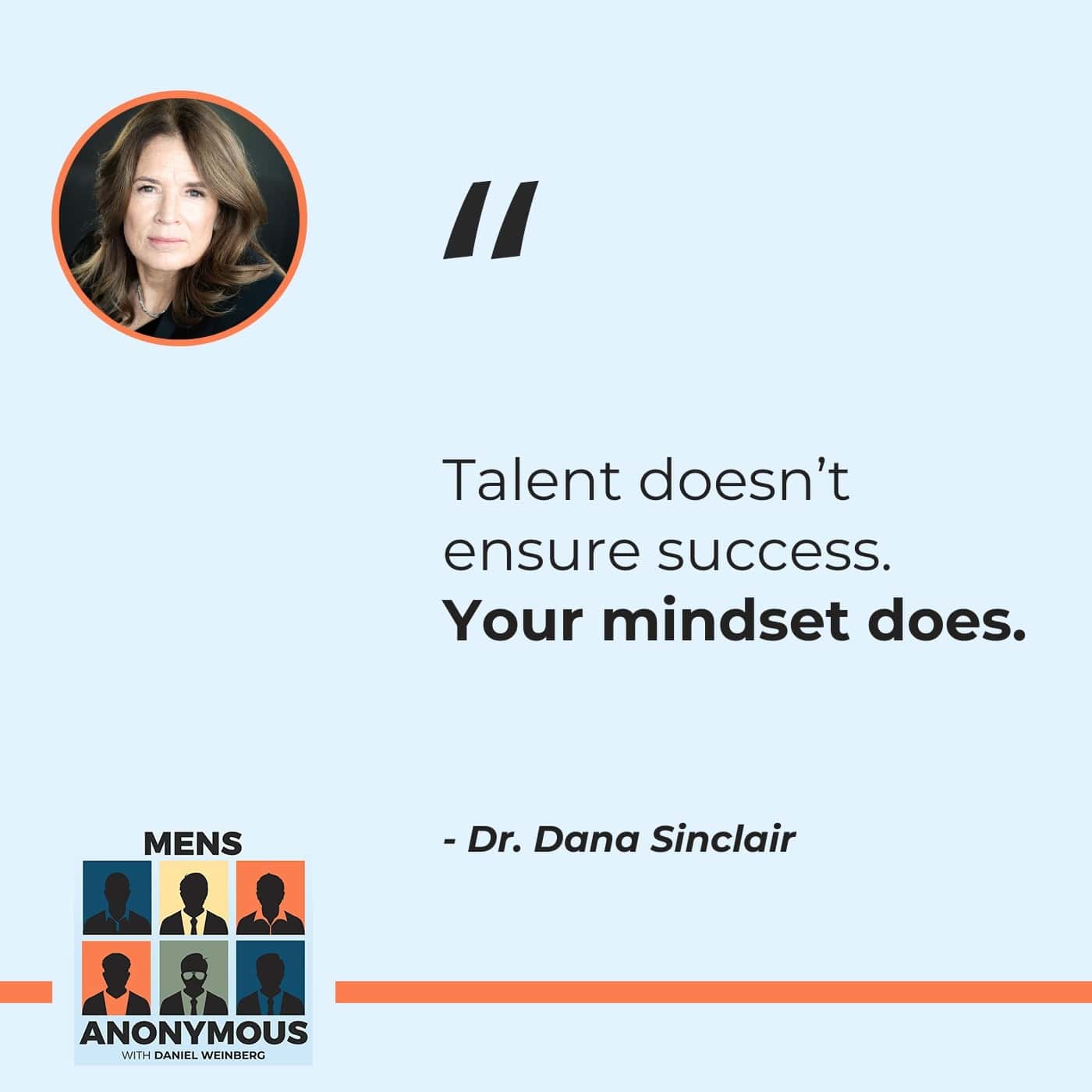
Talent doesn’t ensure success. Your mindset does.
The Confidence Myth: Is A Mental Coach A Minimum Requirement For Elite Performance?
Is this very common for all? Is this a well-accepted role that teams, players, and high-performing athletes are looking for? Is that a minimum standard? Is that a minimum requirement? You cannot get to that level unless you’ve got a psyche coach or a mind coach. Is that common?
It’s common in North America in the professional leagues. It’s much more common than it used to be when I first started, clearly.
How did you break into that?
I used to be a national team athlete.
What sport?
Field hockey.
Did you play hockey at a serious level?
Serious level, yes.
How far up the level?
National team, International World Cup, World Championships, and things like that.
Which country?
Canada.
You played for Canada. How did you go against Australia?
Are you kidding? They were the best.
India was good as well.
Yes, they were better in the men’s, but in the women’s, certainly, the Netherlands and Australia are always fun to play against.
You learned what it meant to understand that environment to start with at that level. What you’re doing would fall into that dream job category for a lot of people, in terms of, “I’m a psych. Imagine being able to be around all these high performers in there.” That’s thrilling to be around such talent. You’re talking about unique, one-off talent that you could be. I’m sure you’ve seen moments in history in those sports.
It has been very fun. The way I got there, to make a long story short, I did go off and get a PhD in Sports Psychology, but I realized that was a mistake. I didn’t want to be an academic. With that degree, you can’t call yourself a psychologist. You’re not a licensed psychologist. I went back and got another PhD. I went to Cambridge in England and got another PhD so that I could rectify that. I’m well-trained. I worked in hospitals after that with reproductive psychiatry. I decided that performance was a lot of fun. I went back to starting a consultancy with my husband. I started the sports side. It turned into the performance side because we all have to perform. I started with national teams, Olympic teams, and then it moved into professional teams. Performance is performance.
Are you still actively doing teams and players?
Private practice, yes.
There’s so much there. Your book is amazing. It’s got so many actual, practical key skills or tools that one can use in their life. I find it way more useful than a lot of the other literature that’s out there, which isn’t so pragmatic or easy to understand, easy to put into place, etc. That’s great. Dialed In.
Thank you.
You’ve had a very fascinating life and career, so it’s a rich experience.
The idea of writing the book was that I realized everybody needs to know how to do these things quickly. We complicate them. They’re not as hard as we think they are. We balk and push away from it because it’s scary. Kids should be learning this stuff.
Throughout our whole conversation, and I’ve got five kids, I’m thinking about the skills from the reacting, breathing. There are so many simple things, such as breathing and not reacting in the moment. I’m visualizing them sitting in an exam room or an interview because one is going for a job. Have the cues. What’s your game plan? It’s for everyone, from the quarterback, NFL level, to children, to young adults, in all aspects of life, in relationships, communication, and on the job as a lawyer, doctor, or whatever profession you’re in.
If it can help my inmate friends have a better day, that makes me happy.
The Juicy End: Final Questions On Life, Kindness, And Superpowers
There you go. Dana, we’re going to get the juicy end of the conversation. I’ve got five questions for you. I’m looking at a dream. Let your imagination run wild. Give me the answers that come to mind, your first reaction. You don’t need to overthink it. The first one is, who would you like to say sorry to, given the chance?
This might come off incorrectly. I say nobody because I think I’ve said all my sorries.
That’s fair. No incorrect. There are no wrong answers here. What are you proud of being or doing in your life?
I’m proud of being a well-trained psychologist. I am proud of being able to help so many people through tough moments.
I can imagine. When did you receive kindness while needing it most and expecting at least?
I get kindness all the time. I have learned over the years not to expect kindness or thank yous from clients and whatnot. There have been a few times when somebody will reach out to you and say, “You helped me.” We’re still friends. It’s great. I love those kinds of moments. It always gets me.
What did your mother or father teach you that you frequently remind yourself of? Either one.
To be myself and to stand in there. Don’t take any shit. To be blunt.
I love it. Finally, Dr. Sinclair, what is your superpower?
Being able to listen.
Dr. Sinclair, thank you so much for your time. I appreciate the conversation. I love what you’re doing. It would be good to have another conversation sometime in the future.
I would love to. It’s my pleasure. Thank you, Daniel.
Important Links
About Dr. Dana Sinclair
 Dr. Dana Sinclair is a registered psychologist and internationally recognised performance psychologist who helps people perform at their best when it matters most. She works with elite athletes and teams across the NFL, NBA, MLB, WNBA, NHL, MLS, the PGA, IndyCar, the WTA, and the Olympic Games, as well as with surgeons, executives, students, coaches, parents, and performance artists across theatre, music, and television.
Dr Sinclair holds doctorates from the University of Cambridge and the University of Ottawa, and is a Clinical Assistant Professor with the Faculty of Medicine at the University of British Columbia. She is also a specialist lecturer for the Royal Institute of British Architects.
Her work focuses on practical, evidence-based strategies for managing pressure, dismantling performance myths such as perfectionism, and shifting attention from confidence to process. She is the author of Dialed In: How To Perform Under Pressure, a 2024 bestseller offering a clear, applied framework for high performance across sport, work, and life.