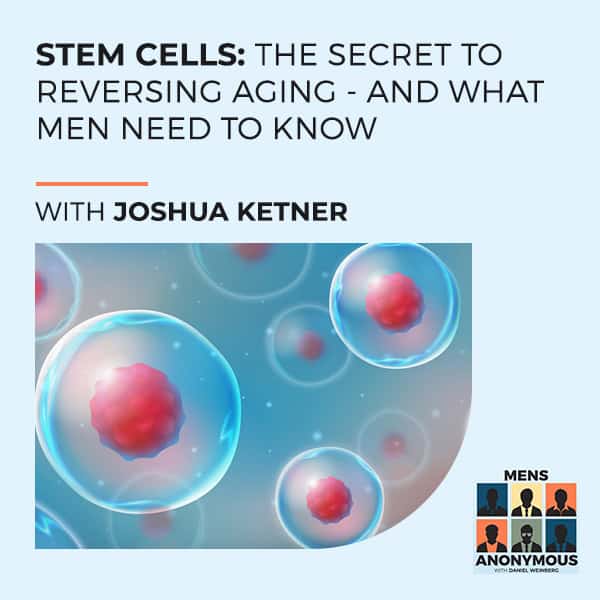
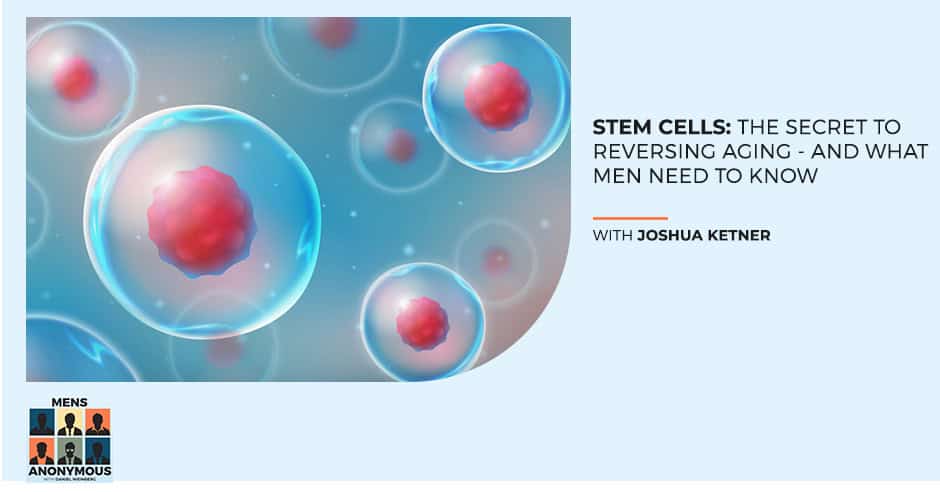
Stem cell therapy is changing and saving lives by offering innovative solutions where traditional medicine often falls short. Daniel Weinberg sits down with Josh Ketner, founder of Dream Body Clinic, to explore the science behind stem cell therapy and its role in achieving recovery from various injuries, chronic pain, and degenerative diseases. Josh also discusses why many patients seek treatment abroad, how to keep the high quality of stem cells, and what makes these therapies effective. If you are looking for alternative healing options for any health issues you are currently struggling with, this conversation is a must-listen.
—
Watch the episode here
Listen to the podcast here
Josh Ketner
On this week’s show, we have Josh Ketner from the Dream Body Clinic in Puerto Vallarta, Mexico. We talk about everything stem cell, stem cell therapy, the benefits of it, and what it can do for you. Josh, welcome to the show. It’s nice to have you.
Thanks for having me, Daniel.
Josh’s Life In Puerto Vallarta And His Journey
Where are you in the world right now?
I am in Puerto Vallarta, Mexico.
How long have you been in Puerto Vallarta?
I moved here in 2008. What’s that? It’s been seventeen years, and never going back. I came down from Seattle and had to get out of the rain, and I love it.
What made you go down there in particular?
That’s a bit of a story. How I ended up doing this stem cell clinic is that my dad got Lou Gehrig’s disease. That was about twenty years ago. He is a rocket scientist at this big aerospace company, super smart guy. When something like that happens, you realize real quick how messed up the American medical system can be. With his research at the time, because there’s no cure for ALS, and it’s a muscle-wasting disease, you get trapped in your own body. It’s horrible.
Can you explain Lou Gehrig’s?
They don’t know exactly what causes it, but it seems like this protein doesn’t bind properly, and your muscles start wasting. Imagine you’re this rocket scientist or smart person, and you’re stuck in your own body as it deteriorates until you finally waste away. It can happen quickly or slowly. They say Stephen Hawking had it, but he lived a long time, which isn’t normal. Usually, it gets you within a few years. He was looking into alternatives. He goes, “How do they treat other muscle-wasting diseases? If you got HIV, they give you muscle wasting drugs like testosterone, human growth hormone.”
They throw them at you like you’re a bodybuilder. It’s crazy, and it works. For ALS, they wouldn’t do that. Up in Seattle, that falls under the Anabolic Steroid Act is what they said. We’re like, “He’s 50 and dying. It’s not like he’s going to go play pro ball. Who cares?” They wouldn’t let him. It was frustrating. That got me down this path, care for him. I then started working for this caregiving company called A Place for Mom that helps people find senior housing. I read this article one day. It was like, “Man outsources parents to India.” I was like, “That’s genius.”
Outsource parents to India?
That was the headline of the article. I thought that was funny because I’m like, “That’s smart.” People pay a fortune for assisted living. That’s maybe $5,000 or $10,000 a month in the US. The big problem is that it’s overregulated. It’s usually not that great a care. The cost is ridiculous. All these things I go, “If you sent mom to India, it’d be great doctors. Low cost of care, not overregulated.” Who’s going to go visit Mom in India? We used to vacation in Mazatlan, Mexico, every summer.
I was like Mexico’s pretty similar. I wonder if that would work. I had a friend that had moved here to Puerto Vallarta, and I moved here. Had some big investment groups interested, but it never quite worked out. I met my wife and her sister who is a doctor and learned I could get certain medications like human growth hormone, testosterone, some of these other things that are great for that, and great for men’s health in general.
I started this program because I learned that you could seek medical treatment abroad and return home with 50 dose units of medication. I started specializing in medicines that were hard to get in the US, Canada, the UK, Australia, and all over the world. With that, they can come down, and we would get them a year’s worth of growth hormone, and they could fly back home legally.
In the US, is growth hormone not readily available?
Pretty much all of the world, yeah. The only ways you can get it are if you’re a little kid not growing tall enough or if you’re an HIV muscle-wasting patient, and they’re finally doing studies on it. The TRIM study came out, and they gave ten guys all over 50, two IU per day with metformin and DHEA. After a year of using DNA methylation tests, they found they were all a year and a half younger on the DNA methylation test epigenetic age-wise, which means two and a half years because they aged a year in the process.
The growth hormone is nearly impossible to get unless you are a little kid not growing tall enough or an HIV muscle-wasting patient. Share on XWe’re getting good things. Now, they’ve got a new study showing it regenerates the thymus, which is a little gland behind the sternum, and that produces your T regulatory cells, and it shrinks as you age. Some great celebrities have always known about this. There’s a real famous story of Sylvester Stallone’s private plane got raided in Australia when he had some growth hormone. Only Aussie customs were brave enough to raid Rambo’s private jets.
That’s how we got going. Nine years ago, I started hearing that they’re doing stem cells in Mexico. I knew a bit about it when my dad was sick. We looked into it and we tracked down a guy who did his PhD like eighteen years ago and started working with him and then got our own thing going. That’s what we’ve been doing for the past eight years. We’re helping people with mesenchymal stem cells. We still do the fly life.
I read a book a little while ago called Stem Cell Therapy: A Rising Tide: How Stem Cells Are Disrupting Medicine and Transforming Lives. It’s by a guy called Neil Riordan, which I’m sure you’re very familiar with. It came out in 2017. I also remember the story around Christopher Reeve. It was Superman in the ‘80s who was quadriplegic, I believe he was in a wheelchair for many years before he died, and he was not allowed to receive that treatment in the US.
He writes a lot about this and all the anecdotal evidence around the benefits of stem cell therapy and how it works. I’d love to maybe explain to the audience the concept behind stem cell therapy, firstly, why it’s so compelling, what the health benefits it has, what particular ailments or conditions it treats, and maybe go into a little bit around what I was always fascinated about the whole process of the harvesting of the stem cells itself and the difference in quality. When I read the book he wrote that I talked about, he spoke about the different places in the world where you can get the treatment.
He talked about two different categories, which were the actual quality of stem cells, number one, and the quality of practitioners who are administering the stem cells. He spoke about Panama being very high quality actual stem cells, but places like Switzerland have incredible practitioners that are treating, etc. Why don’t you give us your take and demystify what stem cell therapy is and all the benefits it has?
Let’s start with Dr. Riordan. You brought him up. He’s the man. He made this all so famous. There was an interview with him on Joe Rogan. It was like eight years ago or so where Mel Gibson brought him on. I don’t think Joe even knew he was going to bring him. The whole episode was about Dr. Riordan and stem cells and how they helped Mel Gibson. They helped his dad. His dad was like 92. Mayo Clinic told him he’s done.
Someone convinced him to go down to Panama, but Panama didn’t want to treat him at first. I could understand that you got this guy that the Mayo Clinic says done. It was like heart failure, kidney failure. It seemed like he was done. Dr. Riordan didn’t want to be the guy getting said, “Great, this famous guy’s dad comes to me and dies and it’s not my fault, but what do you think they’re going to blame?” Not the 92-year-old with organ failure. They’re going to blame the stem cells. Mel convinced him to do it. They did.
His dad lived another ten years. That store recovered. It was incredible. You cannot get a better testimonial than that because Mel didn’t have to do it. Now you have a lot of clinics that use celebrities, and they give them free treatment and stuff, and overhype it. It’s become quite a marketing game. There’s a lot of good, a lot of bad. What Riordan’s done is incredible. He did his PhD at Case Western University under a man named Dr. Arnold Caplan. Dr. Caplan is the godfather of Stem cells because he named them in the early ‘90s.
Is that what’s happening in the US?
Yeah, he was a professor at the Skeletal Muscle Institute at Case Western University in Ohio. Unfortunately, he passed away about a year ago, but before that, we also got to work with him. That’s how I know we do the same thing as they do in Panama. There’s one in Colombia that I know of who had indirectly advised through one of his advisors. There are three of us who all had that direct tie with Caplan doing it right because the quality does matter.
The quality of the actual stem cells you’re talking about.
Why Stem Cell Therapy Is Restricted In The U.S.
Yes. There are a lot of ways you could go with that. The big advantage here in Mexico, Colombia, and Panama, maybe the Cayman Islands and Costa Rica, is that we’re allowed to isolate the stem cells and then culture them. That means replicate them. In the United States, you’re not allowed to do that. You can do stem cell therapies with mesenchymal stem cells, but you cannot have pure isolated or cultured, meaning replicated, stem cells. It’s because of two dumb laws. You’ve got first, there’s a rule for minimal manipulation. Are you familiar with platelet-rich plasma, PRP?
I think you should explain it all. We are ten-year-olds.
PRP, platelet-rich plasma, is we take some blood, we put it in a centrifuge, we spin it, and you’re going to have this vial where the bottom half is red blood cells. The top part is this yellowish clear liquid, and that’s your plasma. You dip a needle in, you take out the plasma near the red blood cells, but you don’t get the red blood cells, and that’s called platelet-rich plasma. This is already in your bloodstream, but it’s loaded with growth factors like IGF-1, IGF-2, VEGF, there are eight cytokines, eight growth factors. These things help.
I’ve heard about IGF because they use it as peptides. Is that right?
Yeah. That’s growth hormone converts into IGF-1. It’s great for healing, but it cannot get past scar tissue, and what we’ll get to why that’s an issue in a little bit. PRP has been legal for a long time. You can do it, but it’s a minimal manipulation. Therefore, it’s not a medication, it’s a treatment. That’s where these gray areas start to show up.
With the stem cells in the US, they can do either a liposuction, and the patient is awake. It’s pretty brutal. They take out a bunch of fat, put it in a centrifuge, spin it, and then you’ve got this liquid. You can do the same thing with bone marrow. The problem with these two techniques is that less than 1% of that liquid you’re taking is mesenchymal stem cells. Dr. Caplan, it’s the stem cells that we use.
The stem cells have the most impact on the therapy.
Yeah, the mesenchymal stem cells, because you cannot fully isolate them. They’ll call it a stem cell therapy in the US, but it’s not. Dr. Caplan would get mad at these clinics. He’d be like, “That’s no different than Coca-Cola selling you an apple juice saying it’s all natural. You read the back label, and it’s 99% sugar and water.” It’s the same thing with these stem cell therapies in the US. They’re not allowed to fully isolate the cells like we can do here. They can use an umbilical cord like we can.
The reason they can use these tissues is, I guess, we have to go to what a mesenchymal stem cell is. It’s technically a pericyte. A pericyte is this little cell that lives on the outside. Let’s pretend my arm is like a capillary, they live on the outside of those tubes and they look like little octopuses hanging on and they squeeze, release, they control blood pressure. Also, if you’re injured, say my elbow hurt, they’re going to come off, they’re going to go to that area, and they’re going to start guiding the repair. In your body, they’re not a stem cell.
Dr. Caplan was playing with these cells in the lab, and he found that if he added certain things, he could turn them into other cell types. He could turn them into adipocytes. Those are the building blocks of fat, chondrocytes, the building blocks of cartilage. There’s like 4 or 5 others, but the building blocks of tissues. There are only 5 or 6 cells they can turn into, but in your body, they don’t do that. They stay like the manager and they work via these signals they send out. They get to the area that’s damaged, and they start sending signals to guide the repair process.
That’s great. When we hit bone maturity, which is age 18 for women or 21 for men, you lose 90% of your capillaries because you’re not growing taller. You don’t need all that extra blood flow. Now the problem is you lost 90% of your mesenchymal stem cells. If you get hurt, your white blood cells are going to rush in first, and they’re going to do a patch-up job with fibrosis. That’s a problem because once the fibrosis, the scar tissue, sets in, that blood, like the PRP that we were talking about, that plasma and all those growth factors, they cannot get past that scar tissue.
IGF 1 is awesome. PRP is awesome. If I hurt my elbow, if I got that in within a couple of days, it would heal right up because you got all the growth factors before the white blood cells rushed in. That almost never happens. It’s dumb. Everywhere in the world, they should have centrifuges and little PRP clinics all over to right when you get hurt, shoot it up.
One of my closest mates had a bike accident, got taken out, and his knee got completely destroyed. Full operation with eighteen-month recovery. Are you suggesting that if he had been treated within the first 48 hours with this therapy, the recovery would be completely different?
With PRP, yes. That would have been his own blood plasma in concentration there. There’s a very high chance he would have healed up fine. The problem is that your white blood cells get to work, and they patch it up. Now you’re stuck with that scar tissue. This is why the mesenchymal stem cells we use are so important. I dumped my dirt bike last year, 50% teramide tricep tendon. It was bad. I tried to let it heal up.
It was going okay, and it didn’t tear right away, but I kept working out, being an idiot, pushing it too far. I woke up in the middle of the night like a month later, and it felt like someone stabbed me, and it was bad. I had to go get the stem cells. I did that, and we’ve completely healed it with the stem cells, but I also didn’t take care of it right away, which I should have done.
Why didn’t you? You’re the expert. Why didn’t you do what you’re suggesting?
I don’t know. You should listen to your own advice, I guess, and you don’t always do that. I thought it was going to heal up. I didn’t think it was that big a deal. I’ve hurt myself before, but I continued to workout, and I made it worse, and I was stupid to push it too hard. You should always let it heal and rest, but I didn’t.
With stem cells in there, they can get rid of that scar tissue and then start guiding the repair of that tissue. That’s what they do. Think of them like the manager on the construction site, like Dr. Caplan wished you could rename them medicinal signaling cells. The mesenchymal stem cell name is stuck, and it doesn’t properly describe them.
A mesenchymal stem cell is like a manager at a construction site. It guides the repair process. It does not turn into other cells but directs healing instead. Share on XNow, people get confused because they start thinking of those embryonic stem cells that can turn into any cell, that were supposed to be like the magic fix for everything. It turns out those don’t work because they want to become a baby. They spent so much money, time, and effort researching that. They found it wanted to become a baby, typically became teratomas. Mesenchymal stem cells don’t do that. There’s no risk, and they’re a better option.
Can you explain the process of harvesting of stem cells? I’m going to come to you. That’s it before. I had a back operation five years ago, and I researched stem cell therapy. I was booked to go to Panama, but personal circumstances popped up and prevented me from going. My recovery is being good anyway, but what I wanted to ask you is if I come, let’s say I’ve got a problem like my back issue, the treatment itself, the stem cells that you’re going to be putting into let’s say my back area, where do they come from? Where do the original stem cells come from, and how do you assess or determine the quality of those stem cells when they speak about, “These are good quality stem cells.” What makes them high-quality stem cells?
First, what I always like to point out to people is that Dr. Caplan would start every conference with this phrase. He’d say, “An MFC is an MFC. Mesenchymal stem cell is an MFC, is an MFC.” What he meant by that is, like there’s this big marketing game that fat derived is better than umbilical cord or is better than bone marrow. They all work the same way. There are some minute differences, but they all work the same way. Now you’ve got to decide which tissue is best for what you’re doing. When we first got going, we already had the umbilical cord cells, but we also looked into doing the fat-derived.
With the umbilical cells, where are you getting these umbilicals from?
Perfect. I’ll jump into that then. We use umbilical cord because it’s the youngest, healthiest source. It’s only nine months old. It hasn’t had a long enough exposure to an immune system to develop any bad habits because these work well for immunomodulation. They can fix a lot of autoimmune diseases, and that’s because of how they interact with the immune system. You want from a young, healthy donor that doesn’t have any health issues.
We take them from women. We have very stringent criteria. They have to be between the ages of 18 and 25. They have to be first-time mothers. They have to be married. We ask them how many sexual partners because a mesenchymal stem cell cannot carry a virus. If the donor had a retrovirus, there’s a less than 5% chance that it could get passed over. Almost all retroviruses are sexually transmitted. We’re limiting that right there.
We even take it a step further, and there’s a federal database here of anyone that got the COVID vaccine. Anyone who had those, we ruled them out too, because a lot of our patients don’t want anything to do with that. We take it as far as we can. Younger women have healthier births. First-time mothers have the best births. It’s crazy, but if a woman has a birth after the age of 30, that’s technically a geriatric birth. It sounds horrible, but yeah. Young women heal faster and give better pregnancies.
We work with a team of gynecologists that only take from this select group, and we only need a new umbilical cord maybe every 2 or 3 months. We get a lot of cells from that because we stagger the culture. Every day we’ve got fresh stem cells coming out. We can take these from donors and not from the patient because of what’s called HLA. That’s Human Leukocyte Antigen. That’s a marker that all of your organs have, and most of your cells that tell you it’s yours.
If you needed a kidney and I’m a perfect match and I’m willing to give you a kidney, you’re going to have to take immunosuppressants the rest of your life to keep your body from rejecting that because your HLA and my HLA are different. Everyone’s are. That’s a unique marker. Mesenchymal stem cells are considered immune-privileged in the sense that they don’t exhibit HLA. Your body cannot tell that these are from someone else. They just get in there, and your body all of a sudden feels like it’s eighteen years old again because it’s got a bunch more MSCs like it did when you were young. It allows you to heal like you did when you were a kid.
We now take it a step further. We take that umbilical cord. It has to get to the lab within a couple of hours. We have to take them locally and get them right there, and we start processing. You’re dissecting it up. You’re putting into these big test tubes with what’s called collagenase, centrifuging to separate the cells from the tissue, and shaker tables. You get it to this see-through plastic flask, and you put it in there with what’s called a culturing medium. This is the food that these cells are going to eat while they replicate, and you put it in the incubator, which is like this specialized oven, keeps it at a perfect temperature, perfect oxygen levels, perfect CO2 levels.
We control the environment. It’s like the Garden of Eden for these cells. They got all the food they need, like we put them in a low oxygen environment. That stresses them a little, but it replicates the stress they’re going to be under in the human body. We want to keep that pretty level. These are the little things that matter on quality. You need a young, healthy donor. You need to make sure that your incubators have these right settings. You can replicate these. You have to have crazy air filtration. We’re iso rated. We’re one step above like aerospace.
Only aerospace goes higher or lower iso ratings than what we’re doing. You have to have a very clean, sterile environment. It costs millions to build a lab to do this. It’s a very good facility, but you can also do it in a very unsterile environment. Unfortunately, in places like Mexico and other countries, there are a lot of people who do that. The quality comes down to the lab, who you have doing it, and where you’re getting it. The quality control is the biggest thing. That’s why places like Dr. Riordan in Panama do such great work and why we do such great work.
Quality control is the biggest reason why the stem cell community is doing great work. Share on XThere are international organizations that can set these precedents, like the International Stem Cell Association, which has guidelines for what is a mesenchymal stem cell. You follow these standards, and you have to do it above. We even do like the women because we want to make sure they don’t have any issues. We test them for everything. We test the tissue, then we test the isolated stem cells, then we test the cultured stem cells, and then we give that to a third-party lab to analyze and give all of our patients that analysis from their batch. They know they’re getting perfect sterile clean, exactly what they’re asking for and all of that. That’s how we ensure.
I’ve got a lot of questions. One stem cell from one very healthy first-time mother will provide X amount of stem cells. How many people can be treated from one umbilical cord donation?
That’s tough to answer because how many treatments is the person doing?
You’re right. How many treatments can you do per umbilical cord extraction?
How Many Patients Can Be Treated Per Umbilical Cord?
The thing there too is that every treatment has different cell amounts, and all of that. We typically treat anywhere between 120 to 150 patients per month. It’s usually about every 2 to 3 months that we’re getting a new umbilical cord. You get a lot.
It’s at 400 to 450.
You get a lot of people.
What’s the motivation for the mother to give over the umbilical cord?
Nothing. This tissue gets thrown away otherwise. You cannot pay for it because then you’d be like buying and selling human tissue, very illegal. We ask, “Would you be willing to donate this? They get a bunch of extra free testing and different things and they know where hard gynecologists are going to take extra special care of them.” It’s beneficial for everyone, but it gets thrown away otherwise. Most of them are happy to help other people.
Tell me which treatments you have observed. You do an array of treatments. You’re treating, let’s say, different conditions. Can you maybe give us some anecdotal stories of, let’s say, specific cases, what was treated, how many treatments, and what was the end result? I remember reading in the book some science fiction stories, to be honest. Maybe tell us some of those.
I’ll tell you the stories, but if you go to my YouTube channel, you can see the patients themselves telling them. We have tons of testimonials. My favorite one is this guy comes in. I’m in this entrepreneur group I was in years ago, and this guy sends his buddy. The guy comes in. He’s like, “I’m Brian.” He sits down, he’s a heavyset guy.
He’s like, “Josh, what I do for a living.” “What do you do?” He goes, “I sue stem cell companies.” “Great.” This better work. He’s this big-time attorney up in the US. People worry about going to Mexico and other countries for quality and safety and all that. Pretty much every horror story, medicine-wise and with stem cells, it’s all happened in the United States. There have been some shady operations there that have hurt people.
This guy was the attorney that won all those cases, never lost a case, went after a lot of these. He had asthma or bronchitis. It was bronchitis since he was like a little kid, and he did our IV treatment. When you do an IV, it goes to your heart, then your lungs. We fixed something like 40 years. This guy had been dealing with bronchitis, and we cleared it up with a simple IV treatment. It’s my favorite testimonial because he starts it.
One treatment?
We did, I think, 300 million stem cells in the IV. It goes to the heart, then the lungs, and a lot of it dissipates into the lungs. It cleared everything up and got him doing great. That was a cool one. For heart failure, we’ve seen unreal results, like patients with their ejection fraction down to like 30%. We do treatment, go straight to the heart. There are so many effective studies up until 2014 that thought they were becoming heart cells. They’re not. They’re just guiding the repair, but we’re consistently fixing people with congestive heart failure, damage after heart attacks, and it’s getting their numbers back up to normal, which you’re not supposed to be able to do. We’re seeing, I’d say, knee treatments are our most common treatment. The lower back is number two.
For knee treatment, what does it do exactly?
We put it into the knee. Like me, I had multiple meniscus tears and a partially torn ACL. I was patient number one. I’ve done every treatment we offer. I think it’s been only 1 or 2. I haven’t had them because I didn’t need them, but they got in there and they seek out inflammation and guide the repair. They fixed up my meniscus, fixed up my ACL. I have the before and after MRIs to prove it. I did a new MRI last year because my kneecap was hurting, but on the same knee, but I had some new arthritis from riding my bike too much, but the ACL and meniscus are still perfect. It’s almost eight years later. The cool part is that it’s real regeneration. It’s not just a cover-up. We’re consistently seeing arthritis, which you’re not supposed to be able to fix, like cartilage regrowing.
My father is 78. He was a runner for my entire childhood. He ran every day, did marathons, etc. He has had knee procedures. He now has zero cartilage in either knee. He’s still a quick guy, but he cannot run anymore. Walking pains him because it’s bone on bone. If I were to send him to your clinic, what would the stem cell treatment do for him?
That gets tougher. Stage one and stage two arthritis are usually one and done. Most of the time, I’d say 80% of the people are one and done, 15% get improvement, but not 100%. There’s a 5% that are non-responders. It’s medicine. You don’t have a 100% batting average. It’s not possible. When we start looking at stage three or stage four arthritis, like real bone on bone, we’d have to see an MRI. We always start with an MRI. We have our own MRI machine here on-site. We do an MRI for any joint treatment we do. It’s included with our treatments.
We would do an MRI. If there’s absolutely no cartilage, it’s probably not worth doing because the stem cells need something to build upon. If there’s even a little there, I’ve had patients with fourth degree get to third degree, best case second degree, it’s more difficult and it’s like a much lower success rate. I would say it’s probably more like 60% of those people are getting improvement.
Maybe they’ll get to 3rd or 2nd or even stay the same with less inflammation. You’re probably going to have about 20% of those people who are going to see a little more improvement than that, and 20% aren’t going to respond. It gets more difficult. We always give realistic expectations. The longer you wait, the tougher it gets, that’s what it is. More tissue to fix. You can always do more than one treatment.
We’ve had people that were bone on bone. I’ve got a great example of this. A lady is a firefighter who was fourth-degree on both knees. They were going to medically retire her. We got one knee to third degree, the other to second. It saved her career. She came back a year later, did it again, continued to improve, and we’ve kept her working. I mean, it’s even saved careers, which is pretty cool.
I’m 50 years old. I’m a relatively fit, strong man. If I were to come and do a treatment just, with no specific ailment, what would it do for me? I don’t have a knee condition, a heart condition, thank God, none of those things at this moment in time. As a healthy man or human, what would it do for me?
In a case like that, we’d recommend an IV. An IV isn’t going to fix a knee or a shoulder because cartilage, ligaments, and tendons, they get little to no blood flow. An IV, you get people calling asking, “Do I do an IV, and it’ll fix everything?” It’s great for organs. It’s great for, like, blood flow. It’s great for that. When you do an IV, there are the cool benefits on the anti-aging side or the inflammation. Reduce that, usually not a big deal, but almost every major disease starts with inflammation. You’re getting to that root cause, and it does some cool stuff.
It does a triage of the cells it comes in contact with in your body, and it goes, “You’re going to die no matter what. Leave you alone. You’re healthy. You could use some more juice.” They attach these things that are called tunneling nanotubes. With that, they can donate their mitochondria to it. The mitochondria, that’s what produces your ATP, that’s your energy. You’re taking this cell that was running low on gas, and you’re filling the tank back up. That cell is going to live a longer, healthier life, which should mean that you do also.
They’ve also found the telomere length. That’s the tail of the cell. It’s like this DNA double helix at the end. It’s got the rungs to the ladder. Every time a cell replicates, you lose a rung. You have what’s called the Hayflick limit, which means you only get about 50 to 60 replications per cell, which means mathematically, they’ve done the math on this, you can only live as a human about 125 years before you’re out of telomeres. When the telomeres run out, the cell doesn’t die, it becomes senescent. A senescent cell, they call them zombie cells, and they go through your body, and they start turning other cells into zombie cells.
They attack them, and it’s this cascading effect that does more and more damage. The mesenchymal stem cells do a great job of eliminating any senescent cells in your body by telling the immune system to kill them. They help prevent it from happening by they’ve proven there are at least six types of cells that extend telomere length on. They think it does it for more, but it’s very tough to measure these things. There hasn’t been enough research. What we are seeing, and I’ve got a great video on this, is that it seems to have a huge effect on epigenetic age versus your real age. They’re measuring that now with what are called DNA methylation tests.
The most central stem cells do a great job of eliminating any senescent cells in your body by telling your immune system to kill them. Share on XThat’s like your cell age. They say, “You’re 50, but if we take your biological age, you’re actually like a 42-year-old,” something like that.
How Stem Cells Influence Aging And Longevity
I got this great video, this lady’s 62, or her husband’s 70. She’s come to us every year for the past five years and done the hundred million IV, and her husband’s done his knees, but nothing else. They both went and did one of those DNA methylation tests, and her age came out at 27, his came out at 85. That it’s crazy. Now it sucks because we don’t have a before treatment to after on that one. We’re working with the lab now. We’re going to start doing some of those tests. For the few patients that have done these tests, all of them, on the biological age, are much younger than their real age. It’s been pretty cool to see.
We’ve heard about a lot of the benefits. Can you please elaborate on what the risks are in doing this treatment? Is it for free, or are there risks involved?
There is not. In IV, you could get a mild fever, and it’s because you’re getting a lot of something new in your system. Your immune system flares up, but then it doesn’t see the HLA markers like we talked about, and it backs down. You take a Tylenol, it goes away. I do an IV maybe every 4 or 6 months. Why wouldn’t I? I’m here. I got it. If I look the same in ten years, that’s all the marketing I need. That’s the worst case there. Real simple. With the joint, it’s like any injection. You can end up with a little bit of pain and stiffness, but it goes away.
With any type of needle-based procedure, there’s a risk of infection. We’ve never had an infection. Again, we check all the cells for anything that could cause an infection. We do third-party lab testing, and then we’re very sterile in our facility, and we have our own hospital here. You cannot tell seeing, but there’s a walkthrough of it on the treatment page. It must be like 10,000 or 12,000 square feet like a hospital here, basically, and helping people out.
If I come down to do a treatment, it’s a very exotic place for most people around the world. You turn up. How much time do I need on the ground with you? Talk us through the actual process.
If the treatment doesn’t require an MRI, it’s like an IV or more of a cosmetic-type issue, then it’s a four-day trip. Day one, arrive and rest. On day two, we do blood work. That’s when we take payment, like no deposits, anything. We don’t take payment until you’re here because we have to take the cells out of cultivation. That evening, we always administer within 24 hours of taking them out. Day three, that’s treatment. You could fly home on day four. There’s no real downtime to these treatments. It’s not like you’re going to have to rest anything.
If we were doing a knee, like a joint or something, we need to add an extra day because day one is arrive and rest. Day two, we’re doing blood work. We’re doing MRIs. Day three, we’re sitting with the doctor and reviewing it. This is something we pride ourselves on. This is why we’re not trying to be the biggest clinic in the world. We care about patient care. I hated going with my dad to these doctors in the US. They get five minutes, they explain nothing, they’re kicking out the door. We don’t do that. You’re going to sit with the doctor as long as it takes.
They’re going to walk you through your blood work line by line. They’re going to show you image by image. You’ll understand what’s going on by the time you’re done. That usually takes half an hour, an hour, then payment, then day four’s treatment. On day five, you fly home. It’s for 4 or 5 days. There are certain treatments for lung conditions. You might need to be here for a week. There are a few extra things we do, but it’s usually pretty quick like that. We’ve got eight drivers. Every one of them has a brand new Ford Expedition.
They pick you up at the airport, take you to your hotel, take you to the clinic. We don’t provide flights or hotel. That’s up to the patient. Like Panama, they’re in this big tower. They’ve got a hotel there. It’s all included. Puerto Vallarta is like this big tourist town. We get patients, one guy wants like the Hampton down the road. The other wants the four seasons, and we have all of that here. We let people pick their hotels so they get what they want. We provide the transportation.
Big question, costs of treatment, like how affordable is it for people?
Compared to Panama, it’s a fraction of the cost and way more cells. All of our prices are on the website because nothing drives me crazier than going to a website and I cannot find the price. You’ve already lost me at that point, so I don’t want to do that to other people. If you go and you look like, say, pretty much any joint, like a knee, an elbow, a shoulder, we use the same amount of cells, usually 50 million. It’s $3,300. If you’ve got a back problem, the back is in three sections. You’ve got the lumbar, thoracic, and cervical.
Each one of those is a separate treatment that is highly focused, and we do like a hundred million cells, say in the lower back, plus a hundred million IVs, that’s $8,250, like a hundred million IVs, $3,850. If you’re doing a 300 million IV because we treat a lot of autoimmune diseases and organ-based issues, we usually recommend doing at least 1.4 million per pound of body weight. We start looking, most people, that’s going to be 200 million or 300 million stem cells.
This is different than some of the others. If you go to Panama, I think they do 40 million over the course of three days. We don’t do it like that. We’ve found it’s this parabolic curve that starts to flatten out at the top, and 1.4 million per pound of body weight is the peak of that curve before diminishing returns. If I did 300 million for MS, doing 600 million isn’t going to give me double the results. You started hitting these peak curves.
With the joints, we can put 50 million in a shoulder or knee, and we don’t do more because we found if we even go like 75 or 100, the cells send out pro-inflammatory markers too. If you put too many cells in, it can get the joint stiff and painful for a few days. It’s not a bad thing, but it’s not fun for the patient. We found that at 50, right there is the peak without causing any extra side effects and still getting great benefits.
Just so everyone knows, because it’s super interesting. If anyone has any serious issues that they have not been able to successfully deal with, it’s called the DreamBody Clinic. That’s correct?
Yep. It’s the website’s DreamBody.clinic, and we do free consultations. If you’ve got a recent MRI or scan, you can email it to me. Our doctors will review it, and we’ll be straight with you. We’ll tell you if we can help or not. We turn down a lot of people, and that’s because, luckily, we’re not going to try and fix something we cannot. I’ve found that bad news travels much quicker than good. If you try to fix people that couldn’t have been helped, you’re going to hear about it. It’s not good for them, it’s not good for us. We’re very straightforward with people with what we can and cannot do.
Josh’s Book On Stem Cell Therapy And Its Insights
To finish off, why don’t you tell us a little bit about your book?
I think that’s how we got connected, was Doug, who’s our publisher, and we wrote that, it’s called The Ultimate Guide to Stem Cell Therapy. You can get it on Amazon. It’s not technical at all. I did that on purpose. It pretty much gives you an overview, like we did here. It gives you a lot of those success stories that you can watch on our YouTube channel, but some people prefer to learn via book, some video, some audio. We try to do a little bit of everything. We got that now.
Josh, thank you so much for coming on the show. It’s super interesting stuff. I think I’m going to come to visit you. I might even bring a few mates of mine that could benefit greatly from the treatments. Thank you so much. I appreciate it. We’ll talk soon.
Thank you.
Important Links
- Joshua Ketner
- Joshua Ketner on LinkedIn
- Dream Body Clinic on YouTube
- Stem Cell Therapy: A Rising Tide: How Stem Cells Are Disrupting Medicine and Transforming Lives
- International Stem Cell Association
- The Ultimate Guide to Stem Cell Therapy
About Josh Ketner
 Josh Ketner is a pioneer in the field of regenerative medicine. Josh is not only the insightful author of ‘The Ultimate Guide to Stem Cell Therapy,’ but he’s also the visionary founder of Dream Body Clinic, nestled in tropical Puerto Vallarta, Mexico. At Dream Body Clinic, Josh and his team specialize in cutting-edge treatments like mesenchymal stem cell therapies, along with Human Growth Hormone (HGH) and other innovative age-defying medicines. Dive into the world of longevity, health optimization, and the future of medical science with a man who’s literally shaping the way we think about aging and healing.