

In the United States, 75% of marriages result in divorce. With this harrowing statistic in mind, is it still worth it to get married? Daniel Weinberg answers this question with Nicole Sodoma, a nationally recognized family law attorney and principal/founder of Sodoma Law. Together, they break down the importance of pre-nup (which she prefers to call “marriage insurance”) and post-nup agreements to save married couples from a ton of legal and financial headaches. Nicole also discusses the biggest lie men tell themselves about their marriage, what it takes to be a responsible co-parent, and why the lack of communication is the leading cause of why marriages get into an irreparable mess.
—
Watch the episode here
Listen to the podcast here
The Inside Scoop On Divorce With Nicole Sodoma
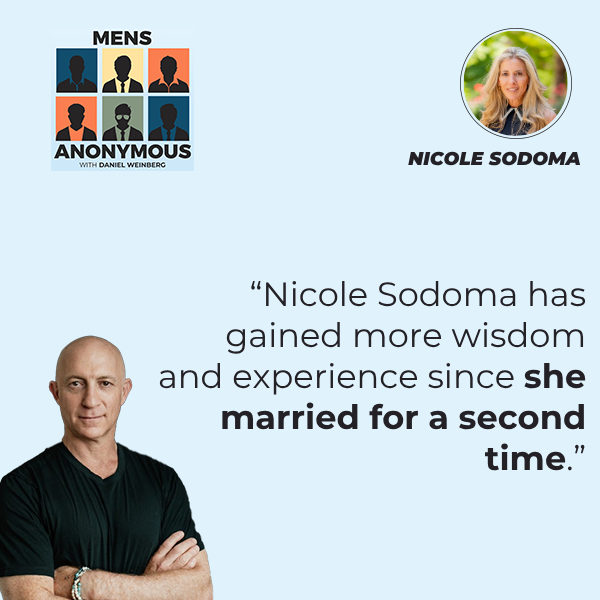
On this show, we’ve got Nicole Sodoma, who is Principal and Founder of Sodoma Law, a family law firm that is one of the biggest in the Carolinas. We talk about love, divorce, power, and the truth that men avoid.
Nicole, it is so great to have you on the show.
Thank you.
You are in the Carolinas, I believe. Is that right?
Yes, it’s a beautiful sunny day in the Carolinas. I’m in what we call Uptown Charlotte. Our mayor renamed it, instead of downtown, many years ago. You can hear traffic, trains, and real-life city outside, despite popular belief that Charlotte is a small town. It is a beautiful city.
Why People Still Get Married Despite The High Failure Rate
We’re going to go deep dive into a subject I’m quite familiar with. You run one of the largest family law firms in the Carolinas. You are the founder and principal. You’ve got a lot of experience in this space. I’m very excited to talk to you about it. I’m going to do the US statistics. It’s easiest here in the US, and it’s often a bellwether for the rest of the world. Approximately 56% of marriages end in divorce in the US. With the remaining 45%, about half of those marriages are said to be not in a favorable state. They tend not to split for one of two reasons. It is either for financial reasons or because of the kids.
If you look at marriage as a technology or a structure, it effectively has about a 75% fail rate. If you look at the statistics in the US, it’s about 2 million registered marriages per year. We’re all still doing it. From someone who has to manage the failings of that whole story, I want to ask you straight out of the gate. Given all of that, the 75% probability of a fail rate, why do you think people still get married?
Companionship, tradition, fear of dying alone, intimacy for however long it lasts, and, dare I say, love? For a lawyer, when you say it’s not fair, we laugh. Nothing ever feels fair when you’re in a courtroom. When we talk about marriage and use the word love as the reason we get married, that’s part of it, but there’s so much more to a marriage and a relationship than love. It’s not just that, but it’s certainly part of the equation.
Is there an alternative?
To not being married?
Yeah, what are the alternatives? In long-term deep relationships without the marriage framework, why do you think marriage still presents itself as the go-to solution for deep pair bonding?
That’s the tradition. I don’t think it’s going away anytime soon. There are great works on this. Marriage is a contract. It’s a commitment. People still honor that commitment. They realize the possibility of failure, but they go in not ever wanting to think about that failure, even with a prenuptial agreement or a premarital agreement. I’m replacing those words. I’m starting a trend. I decided. I started posting about it. I’m going to call it marriage insurance. Did you see it? I put it on social. We’re going to stop calling it a prenup. We’re going to call it marriage insurance. I’m working on it.
Importance Of Setting Up Pre-Nup And Post-Nup
That’s an interesting one. Smart move or going in pessimistically?
Smart move.
Tell me why.
I’m coining marriage insurance because we get insurance on so many things. We get car insurance, health insurance, home insurance, and rental insurance. All of these things we don’t ever want to have to use. Not only do we sign up for it, but the bank requires it and all of these things. The biggest contract that you will ever sign is going to be your marriage. It’s a lifetime contract.
There’s no other contract that we sign in our lives for a lifetime.
This is the one. We’re not getting marriage insurance, which got labeled as a premarital agreement or prenuptial agreement. The words are interchangeable. That is a contract. It protects that relationship. I support marriage insurance. Even if people don’t get marriage insurance, the idea is that they have the conversation about what their positions are going to be. That conversation is hard because you’re not predicting failure, but there are things that you can’t predict.
I say it takes 2 to say I do, and 1 to say I don’t. You come together in this contract, but it only takes one of you to break a contract. We know that term. It’s a breach. In a marriage, when you breach your contract or breach your commitment, you have no control over what happens. If you don’t have a contract or an agreement on what that’s supposed to look like, you’re leaving it in the hands of the law and the judge to make that decision for you.
It’s a difficult conversation, especially when it is required to be had in what you would consider to be the most loved-up stage of your relationship, which is getting married. How do you advise your clients on how they should have that conversation, and what the conversation should entail? What is the framework or thinking that one should have when they’re even discussing something like this?
First, I want to remind you that if you can have it before you get married, when you are in love and you like each other, what better time to have it? If you don’t have it, and your marriage fails for a reason that you or your partner created, you are not going to be in love or in like at that point. You are probably going to be in conflict. The idea that you’re not in a trusting relationship with this person, most likely, and you’re trying to navigate how to divide this partnership fairly, which is a little tongue-in-cheek, is insane. Why would we do that to each other?
Set up a pre-nup before you get married when you are in love with each other. Share on XAgreed. It’s a tough conversation. We need to get over the fact that it’s a tough conversation.
Hard conversations make us better, right?
Determining The Yours, The Mine, And The Ours
100%. One of the things that comes up as an issue is that there’s always going to be one party that has slightly more than the other. There’s no exact equals of anything. There’s one that has relatively more or less. It doesn’t matter what that amount is. It has no bearing. Other than that, the question becomes how does the party that has relatively less feel like there’s not a value being put on them? It’s taking the love and emotion out of it. How do they feel, “Am I only valued this?” What are the fair principles that you guide your clients in terms of how to think about what is considered to be fair?
First, we have to remember that it’s a contract. You get to create the contract based on what the discussion is. It doesn’t have to be somebody else’s contract. What we talk about in premarital agreements is usually property, stuff, assets, and debts.
What I’d like to hear is the guiding principles that you will tell your clients. James Sexton always says, “There’s the yours, the mine, and the ours.” How do you evaluate what should go in each of those buckets?
The yours and the mine is usually going to start with what you bring into the marriage. Most often, you’re going to hear, “I don’t have anything,” if it’s a first marriage. If it’s a second marriage, it’s, “I do have some things. I want to make sure to keep them separate.” Maybe you have kids. Maybe you have business at that point. Maybe you’ve inherited something.
Depending on the state you’re in, the law might already do that for you. What you don’t know is that the law is going to be wherever you live at the time you get divorced, unless you have a contract. Otherwise, you’re going to follow the terms of the contract. That’s something to remember because your marriage may be twenty years old, but you’ve moved to a state that is more friendly to moms or more friendly to dads. We don’t know any of that, but that is a thing. We know it’s a thing, even though we’re not supposed to say it’s a thing.
I think about what we can put in a contract because that’s determining the yours, the mine, and the ours. I’ve seen cases where the premarital agreement had a duration. It’s going to die after a certain period of time, or it would die if they had kids together. I’m saying die. It would terminate. I don’t love premarital agreements that have stages.
That’s the famous Tom Cruise and Nicole Kidman case. After ten years, you’ll start getting allocations. It’s like putting a value on the other person, which doesn’t feel like the right way to go about it.
All of a sudden, it’s like, “If I get out of my marriage now, it’s going to cost $10. If I get out a month from now, that’s going to cost me $100. That’s a big difference, so maybe we should go ahead and take care of this now.” That’s not what we want to think about with a premarital agreement or marriage insurance. We want to get our marriage insurance, put it away, and hope we never have to use it.
That’s right.
The things you can put in a marital agreement are the yours, the mine, and the ours. I was using the example that you have a house. One person has the house, and the other person moves in. Normally, the other person is going to want to buy into that house because they don’t want to live in your house. They want to live in our house. What does that look like? Can you have an asset early on that has different components, like half of it is ours, and half of it is mine? There are so many ways you can do this to make it work. It becomes effective when you get married. You put it in the drawer, and then you don’t have to look at it again, hopefully.
You can also look at post-nuptial agreements if things were to change. They’re conversations to have sometimes. Most often, we see post-nuptial agreements, which are like a premarital agreement. It’s something you sign after. We call them all kinds of things. I might call it a reconciliation agreement. Something has happened during the marriage that is critical. Maybe it’s something great. Maybe it’s something that’s not great. Maybe you write that your spouse is committed to adultery.
I always say, “Let’s look at a post-nup as a way to remove the financial strain of the what ifs, like, ‘What does this look like for me? Does this change alimony?’” There are so many questions that are going to come up, but they’re all related to money. Hardly ever are they not related to money. Let’s put the money conversation aside. Let’s do a post-nuptial agreement. Let’s try to work on our marriage. For whatever those reasons are, we’ll put the terms in a post-nup. If it still doesn’t work out, the post-nup will apply. Post-nups can have real teeth like pre-marital agreements. These are the tools in your toolbox. Whether you want to use them is entirely up to you.
It is a very difficult conversation to have. A lot of people shy away from it to their own detriment.
Why You Shouldn’t Shy Away From Hard Marriage Relationships
There are so many hard conversations that you have in relationships. I shy away from them. I’m remarried. I’m a second-marriage person. I also have a lot of regrets. I didn’t feel safe. I didn’t feel confident. I didn’t feel comfortable having hard conversations in my first marriage. What is something that I would advise a client who doesn’t feel safe having that conversation?
First of all, I want you to think about why you don’t feel safe, because that’s paramount to the whole conversation. If you’re not feeling safe, there’s something else going on. I stood in front of a room of women CEOs a few years ago. I asked all of them if they had pre-nups, and no one did. I asked all of them about how they would feel about having that conversation with their partner, and they all said they would not have that conversation. I was shocked.
The point is, I want you to first figure out why you don’t feel good about having that conversation, because that’s where you should understand. That’s where you should do some self-evaluation and some digging into understanding what that is. The second is how you have that conversation. Sometimes, it’s the language that’s overwhelming. Sometimes, you don’t know what you’re asking, and then you need some support.
Hence, why I was asking you what guiding principles you have. You don’t know what you’re asking until you have all that mapped out, so it’s clear what you’re shooting. It sounds like something scary.
It would feel scary. There are going to be tense moments. You should have two lawyers because your interests may not be the same, especially if one person doesn’t earn as much or if one person plans to stay home with children.
In most places, by law, you need to have two lawyers. Otherwise, the agreement will not stand if it’s one lawyer because you can always go back to, “It was his lawyer,” or, “It was her lawyer, and they convinced me.”
It would be a way to get out of or a way to set aside the agreement. The agreement might still be a good agreement, so long as one challenges it. What lawyers do is they might recommend that the other person have a lawyer, but they put this big, fat clause in it that says they’ve advised you to have a lawyer. You’ve waived that right or whatever. There’s been adequate disclosure, and you sign off on it. You can still challenge it later, but your success might change.
Ideally, you do have the advice of two different counsel. Maybe you’re working with a life coach. Maybe you’re working with a divorce coach. Maybe you’re working with a therapist or someone that you both trust to navigate this hard conversation. Maybe you are sharing a journal, and you’re writing it down because it’s too hard to talk about, but it’s easier to write about. Maybe you’re sharing a book back and forth on what your concerns and worries are. There are some other ways that we can have those hard conversations, but you have to have the hard conversation.
The Biggest Lie Men Themselves About Marriage
We’re going to deep dive into men now. This is what we talk about here. What’s the biggest lie men tell themselves before divorce?
The biggest lie men tell themselves about their marriage is that their wife is satisfied.
In all respects?
Yes, in all respects, all is well. Men think that all is well if no one is talking about what’s not well. In some of the statistics, the last one I read was that 67% of divorces are initiated by women because of a lack of communication.
That’s the reason why. I was going to come to you with that. I was going to say that to you after. It says something like in high years, it’s 75%, but something between 66% and 75% of women or wives initiated divorce. I was going to ask you why. It’s because of communication.
To me, that is where it starts. All the salacious stuff, the adultery, and all the other things that you’ll hear people get divorced, it starts with that communication. Only one person is working on the marriage or interested in working on the marriage. My analogy to this, and we’ve talked about this before, is when you’re an athlete, you’re working, training, listening to your coach. You’re figuring out how to better your skills, catch the ball, throw the ball, run faster, and all these things. We want to be great at it.
Divorce starts with the lack of communication. It starts to go down when only one person is working on the marriage or is interested in working on it. Share on XThe coaches always talk about that. They’re like, “How much effort do you put into your career? How much time are you dedicating to putting that presentation together and winning that deal or whatever? How much of that energy, or what percentage of that, are you allocating to your relationship?”
It’s phenomenal. All of a sudden, they’re blindsided” because they didn’t see it coming. I’m always fascinated by it. I’m like, “Did you? You didn’t see it coming.” We don’t want to see it coming. We want to think that we made this commitment. Especially women, if they have children and they’re looking for some new identity, I see it most between 11 and 13 years of marriage.
Give us the anecdotes of what you see in the field.
Even if you look at celebrity divorces, like 11 to 13 years, I don’t see a 7-year itch.
Both of my relationships were eleven years long.
I never looked at it from that perspective. I looked at it like, “Their kids are aging out. They waited.” We’ve always looked at circumstances. When I started to hone in on this number, it’s about 11 to 13.
Why is that? What’s that about? What’s the moment where it’s over?
When they’re in my office.
That’s true, but it happens before then. It happens before you get to the office. To take the data set of all the divorces that you had, which has been a lot, what’s a common feature where you know it’s over? From speaking to your clients all the time, when did you know it was over if you were to ask them?
There might be this one thing that happened that put it over the edge, but it is hardly ever just one thing. It started way back. It’s interesting. When they sit down for a consultation with me, I always ask how they met. I want them to be thinking about the relationship from start to finish so that we can dive into how we got here.
I ask why they’re here, and then I ask, “Why does the other person think that you’re here?” It’s always very different. Maybe it’s a woman who says, “My husband thinks I spend too much,” or, “My husband thinks we don’t have enough sex. There’s not enough intimacy. I think that he is controlling and abusive. He’s not engaged in our family life.” It’s usually a separate set of facts, and they usually acknowledge that very quickly.
You’re saying that what they’re saying and what the other side is saying is not aligned. Is that what you mean?
No. They’re not aligned. It has been 25 years since I began practicing family law. I don’t think I can count on one hand how many times I’ve asked the person why they’re here and why the partner thinks they’re here, and the answer has been the same. It is a rare occurrence.
Why is that?
We evolve differently. The things that we want in our relationship change, whether that’s chemically for women or whether it’s midlife for either party. There are so many things that we experience in these relationships. It’s the death of our parents. It’s children aging out. This is one of my new favorite things to consider. It used to be that when you saw your partner losing weight, going to the gym, or changing their daily routine, it was like, “They must be cheating on me,” because they’re taking care of themselves all of a sudden. They’re wearing their hair differently. They’re wearing more makeup. It could be men or women.
With the use of GLP-1s, it’s the other way around. They’re using GLP-1s. They’re starting to find themselves. They’re remembering what they were like, and they’re like, “I love this version of myself. I feel confident, but I don’t feel loved. I don’t feel appreciated. With this new self, I am ready to enjoy my life differently. What’s happening here is not for me any longer.” That’s an interesting evolution.
You can be a great parent and a crappy spouse. Share on XGLP-1s, being the Ozempics and Mounjaros, you’re saying, are leading to an increase in divorces?
I think it’s flipping what we see. People are gaining confidence. They’re starting to like themselves again.
Is that positive for the relationship, or does that lead to, “I’m not feeling gratitude or being loved as much as I think I should be loved.”
It could be, “I wasn’t loved before. Now, I’m more worthy.” I want partners who are in these relationships to notice this, but I also want them not to shy away from it. Your partner, as they’re starting to discover themselves, and their bodies, their mentality, and their mindset changes, they’re probably going to pick up a new hobby. They might start playing pickleball. They might start running or going to yoga. They’re going to have this new independence and freedom because they’re feeling so empowered. This is not just for women. This is men, too.
I want men to notice it if it’s happening with women. If you disengage, you are not going to connect. It is going to hurt your connection when you disengage. That would be my caution. When you see it, it’s not just, “You’re looking good.” It’s, “I notice you’re cycling. I’d love to do that with you if it’s not that big of a deal.” It’s bringing it together. Especially if you’ve been married for a long time, that is going to be a challenge because maybe it’s not something you want to do, but it’s something that you should be doing. It should be part of the work.
Why Men Hate Their Spouses More Than They Love Their Children
I’m curious. Is there any case you could tell us about that changed the way you see men? Are there any cases that come to mind, either in a positive or negative way? You’ve seen it all.
I have. Not a lot surprises me. My stories have stories. Without going into specifics, the thing that surprises me the most is somebody who hates their spouse more than they love their children. That has always been eye-opening to me. They would let their feelings for their partner get in the way of seeing how those feelings impact their children. They’re blind to it, and I think they want to be blind to it because of principle, ego, and shame. There are so many things that you see.
I recognize that the people we marry are not the people we divorce, but some level of respect when you are attempting to parallel parent or co-parent, the damage that it can do to your children, so unnecessarily. You can be a great parent and a crappy spouse. You can be a bad husband or a bad wife, but still be a great parent to the same kids. That doesn’t require you having dinner together, but it does require some modicum of respect so that the children see that.
I’m a mom of three boys. One of mine said, “I don’t understand it. You’re both my family. Can’t we all talk like we’re family?” That’s their perspective. You allow them to have that perspective. You don’t have to parent the same. You don’t have to have exactly the same thing in both your homes. You’re not going to. No court would require it.
Qualities Of A Responsible Co-Parent
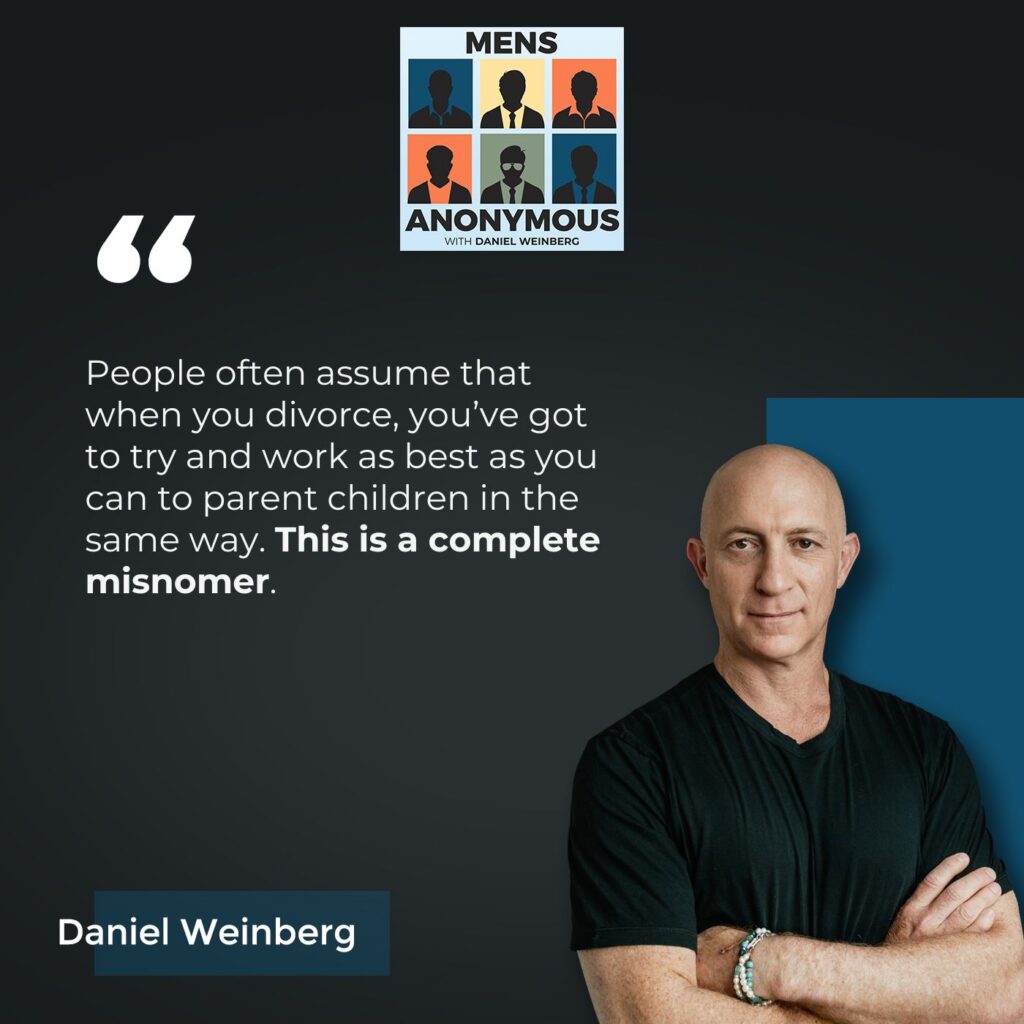
That’s interesting, what you’re saying there. Often, the misconception is that when you divorce, you’ve got to try and work as best as you can to parent them the same way, which is a complete misnomer. When that happens, there’s always one side that feels a bit like, “This is how we do things. I’ve got strict rules over here. Why aren’t you implementing what I’ve got over there?” That concept of parallel parenting is something that is not always well-received. There’s resistance to it because they feel like it’s the loss of one parent losing control in that co-parenting relationship. What makes a great co-parent?
Always putting the children first. I want to say strong communication, but that sometimes can’t happen. I’d say effective communication. If you’re putting the children first, usually, you should be able to co-parent.
Also, respect each other’s ways.
There’s usually a way to resolve conflict. An example might be that you have an athlete who’s injured on the field. One parent says, “I took them to the doctor, and they need shoulder surgery.” The other parent says, “I don’t know about anesthesia. He’s too young. She’s too young. I don’t want to do that yet. It’ll heal on its own.” Go get a second opinion. If the opinions are different, have the doctors get together and decide what they think, because guess what? You’re not a doctor. You’re not an orthopedic surgeon. You’re not a physical therapist.
There are ways to figure out what your strengths are. You’re not the same because you weren’t the same when you were in an intact family, either. People forget that. There was probably one that was more of a disciplinarian, and there was probably one that was more of a nurturer. There was probably one of you who was responsible for the schedule and one responsible for scheduling camps or whatever it is. Does that have to change? No, it doesn’t have to change. A lot of times, one parent feels like they’re obligated to take over that because it’s a control thing. What if it’s not a control thing? It’s like, “It worked during our marriage. Is there a reason why it can’t work now? You don’t feel in control? You were okay with it when we were together.”
I had a client come once. She said, “My husband is an alcoholic. He drives with our son in the car, and they never have a car seat.” She has all these complaints. She said, “After we separate, no parenting time. He is not allowed to have custody. He cannot drive with my child. It’s my child. That’s enough to drive me crazy.” I’m like, “Tell me what happened yesterday. How do you know that that’s what happens?” She was like, “It’s because he does it all the time now.” I was like, “It was okay for yesterday, but it’s not going to be okay for tomorrow. Help me understand that.” That’s the same logic in reverse.
If it works during your marriage, I know that there are going to be circumstances where you want to change. What if you get remarried and you have a blended family? There are things that are going to come in and maybe change it. When you start to enter into this territory of “She’s in control,” or “He’s in control,” what works for the child? Can’t we talk about what works for the child?
If you’re parallel parenting, the idea is we are on a highway, and we’re in the same direction, but we’re not in the same lane. Who’s in charge of what? If we don’t like that, let’s talk about that. If we’re not good at talking about it, let’s bring in somebody who can help us figure that out for the job, not for us. Co-parenting would be more of a dialogue. It is more of the ability to communicate, more resolution, more negotiation, and more respect for each other. They are very different. Using the resources and tools in your toolbox on how to make that work is important.
If you are parallel parenting, the mom and dad are in the same direction but not in the same lane. Share on XFinalizing Financial Settlements Without Pre-Nup Or Post-Nup
We’re going to go to the end of the discussion, which is actual financial settlements. Given my experience in the divorce world, because I’ve been divorced twice, I have a lot of men who come to me when they’re going through the process. There’s always someone going through this, especially at this stage of life. What I commonly hear from them is that they always try to tell you their story about why, and this thing. They’re like, “I did this. She’s this.” It’s all noise to me. It’s all pretty much the same story. What they commonly say is, “My lawyer told me I can get this.”
We discussed this before. What I try to explain to them and what I want to share is that I know you’re a great lawyer, but the fact of the matter is, you might be representing the husband in one financial settlement, and then the next settlement you’re doing in an hour’s time, you’re representing the wife. It wouldn’t be uncommon for you to represent the exact opposite argument you’re using for one negotiation, and you’ll be using the exact opposite argument in another negotiation, depending on who your client is. You’re trying to do the best for your client.
From where I sit, it’s a lot of theatre, but if you had to bring it down to real practical terms and give the audience a real understanding of what is considered to be a fair financial settlement. Someone without any pre-nup or post-nup is in the room. I know each state is a little bit different. Whatever word you want to use, what is deemed to be the most likely outcome, in general, when it comes to financial settlements?
It doesn’t matter how much one person worked or the other didn’t. Where does it generally land? When you’re dealing with and negotiating with other lawyers on the other side, you all pretty much understand, as lawyers and domain experts, where things should land. You know, if it goes in front of a judge, where it’s going to land. There’s an area. There are some nuances around the edges, etc., but in general, where should things land if there’s no post-nup or no pre-nup?
I might have the same argument, but hardly ever are the two cases and the fact patterns of these cases going to be the same. For example, if I’ve got Dad who works and has a robust 401(k), and Mom who’s 45 and doesn’t have any retirement in her name, she’s entitled to half of that 401(k), but also does not have any cash. She also doesn’t have any recurring income to buy another home, so she is going to be at a disadvantage. Her goals are going to be very different.
I understand the goals. Everyone’s got their goals. I’m trying to understand how the state looks at it.
Something fair to one person might not be fair to the other, but for very different reasons. We might be arguing the points, but this is what’s going to happen in the courtroom. Based on our statute, our law, and on precedent, assets are likely to be divided this way.
Is there not a standard?
It depends on your state. Let’s presume that your state says all assets and debts are divided equally. It’s an in-kind distribution. Outside of the courtroom in that mediation setting, I’m not required to follow that rule, which is a real advantage of staying out of the courtroom. Don’t go to the courtroom. You are also going to subject yourself to attorney fee claims. That might happen in mediation arbitration, too, but in the courtroom, you have a lot less control over things like that.
You have the advantage of arguing not in-kind exchanges. You have the advantage of talking about real-life things. You’ve given your house to your wife because you want the kids to stay there, and you don’t want to live in that house anymore. You want a two-bedroom apartment where you don’t have to worry about the law. I’m not being stereotypical because I don’t love taking care of my lawn either. You want to move to a two-bedroom apartment with a view of the city, whatever your thing is.
You had one income that was split between two families. You want Mom to have the house because the kids need to be in that environment. Are you going to rent, or are you going to own? Do you want cash or would you rather have retirement? Is a little of both going to be better? There are scenarios where what’s fair is going to be different.
When you’re in the courtroom, the court can’t tell the bank, “Loan him money. Loan her money.” That’s not realistic. What’s going to happen in the courtroom is that if there’s going to be an asset, it’s going to be divided down the middle. The value of that asset is often argued, especially for the self-employed. The states differ in the sense that the value of the asset in one state might be this day. It might be another day, and then you have to consider passive and active gains on that asset. It may be that somebody has continued to incur debt to the IRS, but that debt is only in one person’s name or in both persons’ names, and they didn’t know. There are so many different scenarios.
You always encourage mediation effectively.
No question. When you’re in front of a judge, you don’t know what kind of day the judge had. You don’t know whether that judge thought your shoes were scuffed, and you didn’t respect the courtroom, or that you didn’t wear a tie because your lawyer told you that the judge doesn’t like it when you’re going to look all stuffy. Maybe you’re terrible at testifying. Maybe you got defensive and acted like a jerk on the witness stand because you had a bad morning.
There are all these things that are out of your control, but you have this window to make an impression. That is the real theater. You have that time to make an impression. For the lawyer on the other side, their responsibility and their job is to make you look not credible and make you look worse than their client. You don’t know the judge’s experience. You don’t even know if the judge ever practiced a day in family law before they got on the bench.
I read about that. That’s different in Australia. That’s crazy.
I’ve been in a courtroom in my county. I was there for another case. There were two parties, the husband and the wife. They were pro se, which means neither one of them had counsel. Lawyers are a luxury. Not everybody can afford a lawyer. They were there pro se on their own, representing themselves. At the end of the hearing, the judge looked at me and said, “Miss Sodoma, get it right.” They had never practiced family law, and I’ve been doing it for a long time. The likelihood that either of those pro se litigants is going to appeal a ruling. That’s deep, heavy, hard stuff.
There’s no question. It is mediation if you have an opportunity. I always tell my clients, “Can we put a value on what this is worth? A lot of times, what happens is you’ll get down to 1 or 2 assets or 1 or 2 things. You need to decide, ‘You’re going to pay me in a courtroom? What is the value of this?” I always have my clients set goals before we ever walk into mediation, like, “I want your BATNA. I want all of those things in advance,” before she pisses you off or before you remember why you’re here or what she did years ago. That’s what I want from you. When we get down to those last 1 or 2 decisions, what is it worth to you?
One of my recommendations is to always take your whole estate and figure out what one percent of that estate is. I want you to think about it like that. When you’re looking at a 50/50 distribution, and you’ve got all these factors that could change that 50/50 distribution, if that’s the presumption, what is that worth to you? Add attorney fees. If one of you doesn’t work, you’re going to have a bigger chance of having to pay those attorney fees, depending on the claims.
I had a case where Mom was the breadwinner. She gave Dad a check for $1,500 to pay some taxes with. Dad cashed it and spent it. The judge thought that that was so reprehensible that she awarded my client 53% of the estate. A point in that estate was significant. Knowing what the point is, not knowing what’s going to happen in the courtroom, know what that is before you walk into mediation and see what you’re willing to risk.
Do You Still Believe In Marriage?
After all the time you’ve been in this caper, do you still believe in marriage?
I do.
Tell us why.
I say I’m a marriage-loving divorce attorney. I love the idea of marriage. I love the idea of working together. You learn so much about yourself in a relationship and in marriage. It challenges so many things. Being married a second time is incredible. I don’t think I knew myself in my twenties. I didn’t know what I was going to be or what my life was going to be like. Maybe I was telling myself a story based on what I was seeing around me. I remember being 28 and thinking, “All my people are getting married and having children. I don’t like this.” You do it because you think you’re supposed to do it. You sacrifice things that you would not have otherwise sacrificed.
If you are unfortunate enough to have to go through a divorce from a first marriage, the advantage that you’re going to have in your second marriage, despite what you see in statistics, is that you know yourself better. You’re going to be wiser. You pick better. You know what you’re willing to sacrifice. It’s a much bigger awareness. I do believe in marriage. I think it’s worth it if you do it well.
Agreed.
Do you believe in marriage?
I think about it. I flip. I’m very much a man of love. Right now, I’m in this incredible, deep, loving relationship. I often think, “What is the best form or format?” I understand the marriage framework, but I question whether you can do it without having the marriage framework around it? I flip.
It makes sense to flip. I love the idea of marriage. It’s a risk. You’re setting yourself up for a risk. It makes perfect sense. You did it when you got married the first time. I see where you’re coming from. You don’t have to be married.
I don’t think it’s a slam dunk. I’ll put it that way.
I think you’re completely right.
I wrestle with what you gain by having the marriage structure there. Why do you need it? I get it. That’s what you said before, which is the tradition. At the end of the day, it’s very much a contract with the state.
I’m onto something with marriage insurance. I’m making it happen.
That is a subject that people are not well-versed, not well-educated, and not well-informed in. They’re uncomfortable going there. It’s an area that would be a huge value add in marriages, considering that they fail.
Let me ask this question. My guess is that most of your fears, like the flipping, are related to financial security.
That’s a part of it. That exists anyway.
That’s what I’m saying.
For me personally, it has had a negative association, given I failed at it twice, or I didn’t succeed, or however you want to put it. That’s why it makes me think about seeing whether there is a different way to go about doing this to ensure a higher probability of success. All relationships that you go into, you are rolling the dice in forming a deep, connected bond with another.
You have to figure out what your contributions were to the failures.
What were their contributions to the failures?
You don’t see it as, “It’s the other’s problem.” I look at it as the combination did not work. It’s the same in anything. Business is the same.
Even knowing how you have conflicts and how you resolve conflicts. You’re always going to have conflict. You’re going to have fights. I did a piece on not going to bed angry. Figure out what that looks like for you. What is your fear about going to bed angry? I hate going to bed in a fight. I stay awake all night. I’m not going to resolve it at 1:00 in the morning. That’s not healthy for anyone. It is knowing, “Here is how I’m going to deal with conflict.” How are you going to deal with conflict? It’s like, “I have abandonment issues from when I was a kid. I have to own up to that. If you walk out on me in the middle of a fight, the story I’m telling myself is that you’re not coming back. I’m going to start changing bank accounts. That’s my fear.” I don’t do that.
What you brought up is that, especially later on in life, you have more wisdom and more experience.
You can’t bring that and saddle your new person with that. It’s your PTSD. It’s not theirs. They may be bringing something completely different to the table.
That’s right.
Since I’m remarried, there are moments in my relationship where my husband will say to me, “That’s not me. What you’re doing right now, I’m not that person. That’s him.” Then, it’s like, “I am doing that.” You also have to be aware of what you are bringing and what doesn’t belong there. It takes some work.
Answering Rapid-Fire Questions
It has been awesome talking to you. I’m going to ask you the five questions that I always ask my guests. Are you ready?
Okay.
Who would you like to say sorry to, given the chance?
You know I wrote a book called Please Don’t Say You’re Sorry, right?
No, I didn’t.
No apologies from me.
To anyone.
I did write a book called Please Don’t Say You’re Sorry because I grew up apologizing for everything. In my marriage, when things were broken, I apologized and begged forgiveness even when I didn’t think I did wrong. In separation, when people would say they’re sorry that I was getting divorced, I felt like a victim. It made me sad. I feel pretty adamant about not giving apologies.
Maybe I would say I’m sorry to my children for making them have to go back and forth between homes because I know it’s not the easiest thing. That was not their choice. That was my choice. We’ve done an incredible job of making it as easy as possible. I hope that they understand and see that one day, as a result of that, they get to see the best version of their mom possible. I got to bring something to them in this life that I couldn’t, I couldn’t give to them in the other.
What are you proud of being or doing in your life?
That I still get up every day and love what I do. I know that sounds cliché.
It’s amazing.
I don’t think everybody gets to do that.
Not at all.
Some lawyers should not be lawyers. Some lawyers should not practice in the area that I practice. I’ve been doing this for almost 25 years out of my 26. They might give us a bad name. They argue over things that create more conflict. They’re working a strategy instead of understanding the impact it’s going to have on the family they’re serving. I get up every day and love that I get to do something to lift someone up. I get to teach them something. I get to give them a tool. I get to send them to counseling to work out the thing. I try to bring that every day, and I still love it.
You’re amazing. When did you receive kindness while needing it most and expecting it least? Who is there for you in your darkest moment?
My husband. There was a moment in my separation that I did not think I would survive. I was ready to stop fighting for the thing that I knew was the most important thing, and that was my kids.
This is coming from a very experienced founder and principal of a family law firm. You say that. Can you imagine how challenging it is for most people out there? You know how the game is played.
I never thought that I would be on that side of the game. In hindsight, I can see it. When you’re in the throes of it, you see what could be taken from you, even if it’s not reality, but it is your perception in that moment. Your perception is reality. In my darkest moment, he picked me up. I remember it well. I don’t think that he had to do that.
I also think knowing what your coping mechanism is when you are in a deep, dark moment is so important. Not only do you need to know what it is for you, but what it is for your kids and your partner. You need to know how to help that person out. They’re going to forget what that coping mechanism is in that moment. It is knowing your body chemistry and knowing that your body is its own pharmacy. It is knowing what happens to you when you’re under that level of stress.
For me, I run a big law firm. We have 45 lawyers and 7 offices. I’m a mom of three kids. I own the building. It was a lot of responsibility, and there was a dark shadow of what it looked like. It feels big, and it’s going to feel big. It is knowing how to dig yourself out when you’re in what I call the fog. When you’re in the fog, know how to dig yourself out, and know how the people that you love dig themselves out. You never know what you’re going to find.
What did your mother or father teach you that you fondly remind yourself of?
My mother would say to me regularly, “Today is the first day of the rest of your life.”
I like that.
Have compassion for yourself. Forgive yourself. You’re not stuck with yesterday. You can be right here, be present, and move forward. I came to this area of the law, honestly, because my dad does not believe in marriage. We would play games as I was growing up. We’d go into a restaurant and guess who was married, who was dating, and who was cheating on their spouse. He taught me not to be as trusting, to question, and to be curious about relationships.
Today is the first day of the rest of your life. Have compassion for yourself. Forgive yourself. Do not get stuck with yesterday. Be right here and move forward. Share on XThat’s fascinating.
Neither one of them taught me anything about financials. That’s the same problem that we have. Those were some of my life lessons from them.
The last one is, what’s your superpower?
It depends on who you ask.
I’m asking you. What do you see as your superpower?
I think I do a pretty good job of reading a room. I also think that it takes a lot to get me angry. I do not get angry easily. I don’t know why that is, but I know a lot of people appreciate that it takes a lot to get me angry. Reading the room is probably one of my favorite things to do.
Thank you so much for your time.
Thank you.
I enjoyed the discussion.
Me too.
The audience is going to get quite some wisdom from our conversation, so thank you.
Thank you.
Important Links
About Nicole Sodoma
 Nicole Sodoma is a nationally recognized family law attorney, author and thought leader redefining divorce, co-parenting and modern family dynamics. She is the founder and managing principal of Sodoma Law, the largest family law firm in North and South Carolina. A former litigator, certified parenting coordinator and collaborative law attorney, Nicole draws on her own lived experience as a step-parent, mother, ex-wife and entrepreneur to provide personalized strategies and tools for families navigating complex transitions. She is the author of Please Don’t Say You’re Sorry, which helps readers navigate the challenges of marriage and divorce with insight, humor and practical tools to move forward. Nicole is also the founder of the Sodoma Law Foundation, and sought-after source on all things divorce and family, having been featured in outlets including The Wall Street Journal, USA Today and Business Insider.