Keeping a positive mindset amid a ton of negativity is easier said than done. But Michael Klim, despite facing many hurdles in his rollercoaster of life, held to his optimism and survived all kinds of hardships. He joins Daniel Weinberg to look back on his biggest struggles, from his experiences competing in the Olympics, getting rid of alcohol as a coping mechanism, and his battle with a rare autoimmune condition. Reflecting on his ups and downs, Michael explains the importance of adapting to change, his transition from professional athletics to entrepreneurship, and how he discovered his superpower of being in service to others.
—
Listen to the podcast here
Michael Klim
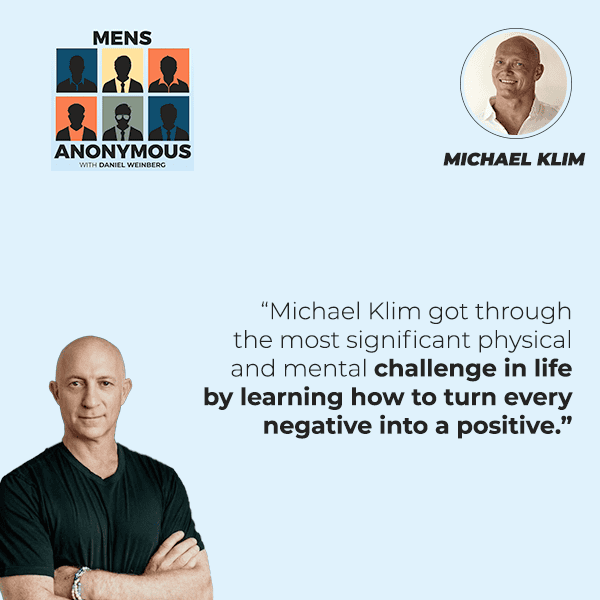
In this episode, we have Michael Klim, one of Australia’s greatest swimmers of all time. We have an incredible conversation around the ups and downs, the challenges, trials, and tribulations of what is an incredible story on the rollercoaster of life. Michael Klim, Men’s Anonymous.
Michael, welcome to the show.
Thanks for having me.
I am super pumped for this conversation. We have a lot to talk about. You’ve got a big story. I’m going to jump straight in. Where are you at the moment?
I’m in Bali. I came on a bit of a sabbatical after missing the London games, misqualifying for those Olympics. My wife at the time said, “You’ve devoted the last few years trying to make that Olympic team. Let’s go away, have a few months in Bali, and reconnect.” We collectively decided to base the family in Bali. I would commute back and forth to Australia, where we were running a skincare business. At that point, I made the commitment to live between two countries, which are very well about.
Introducing Michael Klim
We have lots to talk about. You’ve got a very rich history and life journey, which I don’t think a lot of people know about. You’re an Aussie but you didn’t start off in Aussie. You’re from Poland. All my grandparents are from Poland. You also ended up in 3 or 4 countries before you ended up in Australia. Why don’t you explain a little bit of your early childhood?
I’m blessed that I had a slightly different childhood. It gave me a few qualities and tools, not in my teens, but later on in life in terms of adapting to circumstances and surroundings. I was born in the north of Poland in a town called Gdynia, next to Gdańsk, where the Second World War started. My mom was from Warsaw and my dad was from Gdańsk. They used to play in the same playground and met each other one day. They’ve been childhood sweethearts.
Dad was very entrepreneurial. He did economics and business at uni and ended up working for the Polish consulate. He became the trade attaché and was stationed in Bombay, India. At the age of one and a half, they packed us up. We moved to Bombay. I have an older sister who’s eighteen months older. We were based there for four and a half years, then came back to Poland.
Do you remember anything about Mumbai?
I remember spending time at a country club called the Breach Candy Club. I remember eating ice cream and being in the pool. That’s what’s coming for me, very fun memories. I visited the local hospital a lot because I was very clumsy and accident-prone. I don’t know if these memories are from pictures or actual events that happened. I had a very similar childhood to what my kids have had growing up as expat kids in a tropical climate, attending country clubs for extracurricular activities. I never thought my kids would go through that but they did. To complete my journey, I went to Germany for a couple of years. That’s when my swimming started to take off. I was about 8 or 9. After that, we went to Toronto, Canada. My dad got a job in Australia.
This was all because your father was moving around for work?
Exactly. I applaud him for having the guts to change, especially since Polish people at that time were under a communist regime. You had to be ballsy to make a decision to travel and keep moving. Not many people got out or if they did, they were watched. He was very much a nomad, always seeking something better for us as a family than staying in Poland. We went to Canada, where my uncle had migrated. Dad was waiting for his contract in Australia to kick off.
We moved to Australia in 1989, coincidently, three months before the Berlin Wall fell and the communist regime collapsed. He was running away from that. The moment we landed in Australia, a lot of things changed. His friends and people in similar positions became very influential. They were progressive in terms of economics, bringing the Western world to Poland. Poland is a very progressive Eastern European country.
Dad sometimes has minor regrets about not staying. I think he doesn’t regret seeing my success in the pool and my sister’s success in tennis. She became a tennis Australian champion, sixteen and under. Looking back at us and our family and lifestyle, he’s pretty happy with where we ended up. From the age of eleven, I was calling myself an Aussie. I qualified for the Aussie team against New Zealand at the age of thirteen.
I didn’t have an Aussie passport yet, which they ended up fast-tracking. I had an Aussie passport before the rest of my family. Sports can bend a few rules when you need to. You can probably tell by my accent that I’m very much an Aussie. People ask me a lot why I never chose to swim in Poland. I feel astray. I would be very hypocritical if I changed countries after Australia provided me with all my learnings. I used up all the resources and the best coaches and used up the swimming and sporting culture. Having been part of some great Australian sporting moments, I am very much an Aussie.
Committing To Swimming As A Sport
Swimming is very much a solo sport. I’ve had quite a few swimmers around me in my lifetime, including other Olympians. My take on swimming is that it takes an enormous amount of commitment relative to other sports. Your training regime is, I don’t know how many days a week, you’re in the pool training, but I’d say it’s somewhere between 5 and 7.
It’s six days a week. It’s a full-time job.
It’s not a quick hit-out. It’s hours. It’s getting up early and going to bed early. It goes on for years. You’re in the swimming pool, up and down. You’re on your own. You’re in your head.
I’ll break that thought that you’ve got there because I never thought of swimming as an individual sport. For me, swimming became a constant in my life. I learned to swim very early. I was a good swimmer as a kid and always gravitated toward that environment. As a kid, when you’re good at something, you tend to prefer doing that, and you have recognition. It builds your self-esteem.
My identity was shaped pretty early on as being the swimming guy. There is a lot of team support from your squad members, coaches, and swimming parents. It’s a communal sport. It’s still very amateur. There is a solitude to the sport but there aren’t many athletes or swimmers who can achieve things on their own. I want to bust that myth.
Even Kieren Perkins or Grant Hackett, who swam distance events and did more than anyone else in the pool, still relied on training partners, coaches, and physios. There are probably other sports out there, like ultra-marathoners and triathletes, who are on their own longer than swimmers. Swimmers rely on social interaction because it is so hard.
When we learn our lessons, we have to enjoy. That’s when you mold yourself as a person and a character. You feel proud if you stick through those tough times. Share on XYou can chat with your mate while running.
Before training, there’s a warm-up in the main set. I get my guys to isolate an hour of focus, concentration, and visualization. After that, there’s some time to relax and chat between reps. In sports, in general, that’s what people like because there is social interaction. Swimming is a huge part of individual performance because one person performs on the day. No one else can affect the outcome or jump in your lane to make you slower or faster. You’re in the driver’s seat. It’s a solo sport from that point of view. The success of the Australian swim team shows how well we perform as a team. If it were such a solo sport, we wouldn’t outperform so many other countries.
I’m curious about this. What are you taught or what do you teach new swimmers about the mental game when swimming for hours? Are you taught to meditate, switch off, or focus on technique? What goes through your mind in the pool?
I have a lot of 14- or 15-year-old kids. A lot of them are on the borderline of deciding. When they get to the end of school and not performing, a lot of them fall off. I’ve seen so many swimmers continue past 17 or 18 and find success later in their mid-20s. I tell my guys to do everything they possibly can but there are no guarantees. I can’t promise they’ll be world champions or Olympians. Success might come in the next 2, 4, or more years.
A mate of mine, Brett Hawk, came here from Sydney. He did a great talk. He said that he only made the Olympic team on his third try at age 25. He started swimming when he was 10, which means 15 years in the sport without guarantees of getting to that high. There’s an element of wanting to see how far you can push your body. I had this same chat with my son. He’s dealing with health issues, injuries, and growth spurts. Sometimes he thinks about quitting because he got some stumbling blocks but that’s the easiest thing to do.
It’s so easy to go, “I’m going to stop and quit.” It can change. It’s not rocket science but that’s when we learn our lessons. You have to enjoy it. That’s when you mold yourself as a person and a character. You feel proud if you stick through those tough times. Swimming or sport itself didn’t give people joy or fulfillment, because there’s only less than 1% of people that qualify for the Olympics and win medals. I don’t know the exact number but it’s much less than that. There is something that gravitates people to that pursuit of not only excellence but the pursuit of wanting to see what one’s limits are.
Going back to your question, I tell them that you don’t always need to love it because it is hard. You go through the grind but you need to give yourself a chance to make that next decision if you get to the end of school and want to qualify for college and swim in America but if you quit, you’ll never have that opportunity. It’s all about keeping a lot of doors open. You never know when you’ll have that time to walk through that door.
You swam from the age of what when you were getting in the pool on a regular basis? What was the age when you were swimming 5 or 6 times a week?
When I got to Australia at the age of eleven, I joined the Melbourne Vixens, a swimming club with Gene Jackson. I started swimming once a day. He was good at holding me back. I was a talented junior and wanted to swim more. One thing I knew was drive and this hunger. I don’t know where it came from because I used to wake up my parents to drive me to training. In training, I used to compete every single day. Training is not for competition but I used it as competition every single day.
I appreciate him for that because he was able to hold me back until I was ready and my body was right and mentally. I wouldn’t get fatigued. From the age of 11 or 12, I started swimming once a day and added doubles at 14. I got a tap on the shoulder at 16 when I was at a competition. A couple of coaches said they wanted me to come to Canberra for the AIS. They were looking to put together a squad that might qualify for the Sydney Games, a relay squad for both the 4×1 and 4×2 relay teams. This happened in 1993. The Olympics took place in 2000.
They all focused on 2000.
There were no guarantees. Looking at the 4×2 relay that won gold in Sydney, Bill Kirby, Todd Pearson, and myself all got that tap on the shoulder. It was great that we were able to go through that whole journey and come away with the goal we had in mind. The other swimmer was a little unknown guy called Ian Thorpe. Not many people know him. He had a good career.
He had the big clippers, though.
He was physically gifted but one of the hardest trainers I’ve ever seen. Thorpe and Hackett revolutionized what was physically capable in the pool, in practice, and competition. Having them compete, going head-to-head, was something to marvel at. One of my best experiences as a swimmer was rooming with Thorpe, Hackett, and Simon Cowley at the ’98 World Championships. Thorpe was 15, Hackett was 17, and Simon Cowley was 17. Our room won the majority of the medals for the Australian swim team. We’d leave what was happening at the pool, come home, and jump on the PlayStation. I realized these guys are still kids. They love swimming.
How old were you?
I was twenty at the time.
You were the senior.
I was the senior, like the blind leading the blind in that case. It was amazing to see how pure talent and hard work took over. Their intuition was so strong. That was one of my special memories of being in the room with those three guys.
Achieving Peak Performance At Olympics
As best you can, explain the emotion and the feeling of being at the Sydney Olympics. You’re in Australia. You’re an Australian at your peak performance. Would you describe your career as being at the pinnacle of swimming?
In one event, definitely. The 4×1 freestyle relay that most people remember was the first event of the Olympic Games. I had a morning off and the buildup was huge. From the moment Australia got to the Olympics, I remember sitting in a wooden house in Moorabbin early in the morning when the bid was announced. The public, corporations, the world, and everyone wanted to be part of these Olympics. There was huge expectation and excitement.
A lot of athletes fall short when they do not plan their transition to normality. Share on XI’m a bit biased but it was a special Olympics. Those who were there look back at it fondly. I saw Ian Thorpe win gold that first night in the 400 and then had a few dramas coming on time for our event, the 4×1 freestyle relay. Our team was the underdog going up against the juggernaut of the US. There was drama that was built by the media and rivalry.
It was a special moment when some of these guys, including myself, were priming ourselves for this one moment for 7 to 8 years to take on the might of the US beat them at their own game, and dominate their events. I led off in the world record, which is my personal best split of time. It was magical. That see-sawing battle and having Ian Thorpe against Gary Hall Jr. in the final leg and Thorpe getting his hand on that wall first was amazing.
I’ll talk about it in more detail in my book but that whole period felt surreal. After the Olympics, there were experiences I never thought would be possible. My family is very much a tennis family. Even going to the tennis, I couldn’t walk through the crowd. I’m a bloody swimmer. I was getting standing ovations in different arenas of sport and recognitions and meeting famous people. Even to me, it feels like a lifetime ago.
What does it feel like? This is where it’s very difficult not to allow the ego to play into it. Everyone around you is praising you for being a superstar. At some point, you believe you’re a superstar, surely.
I was young. I started getting car deals and was sponsored by Westfield, Braun, Nintendo, big corporates onboard, Fairfax, News Limited, all these different guys around different times, and Speedo, who supported me for many years with technology development in terms of suits. At times, it did get to me. I worked my ass off. For about eight years, I didn’t miss a training session. I put everything on the line and probably put more pressure on myself, trying to surpass the expectations others had of me.
Being a Leo, part of me was ego-driven but there was another part that felt like a fraud because I was still an introverted Polish kid. I was still shy when I walked into a room. I could put on this persona and hold myself but it was challenging. To be honest, I looked at it with open arms and had a fun time. I tried to make the most of it, knowing the lifespan of a swimmer is short. I tried to enjoy those times, very quickly got back to work, and found what the next challenge was going to be. There’s always a challenge around the corner.
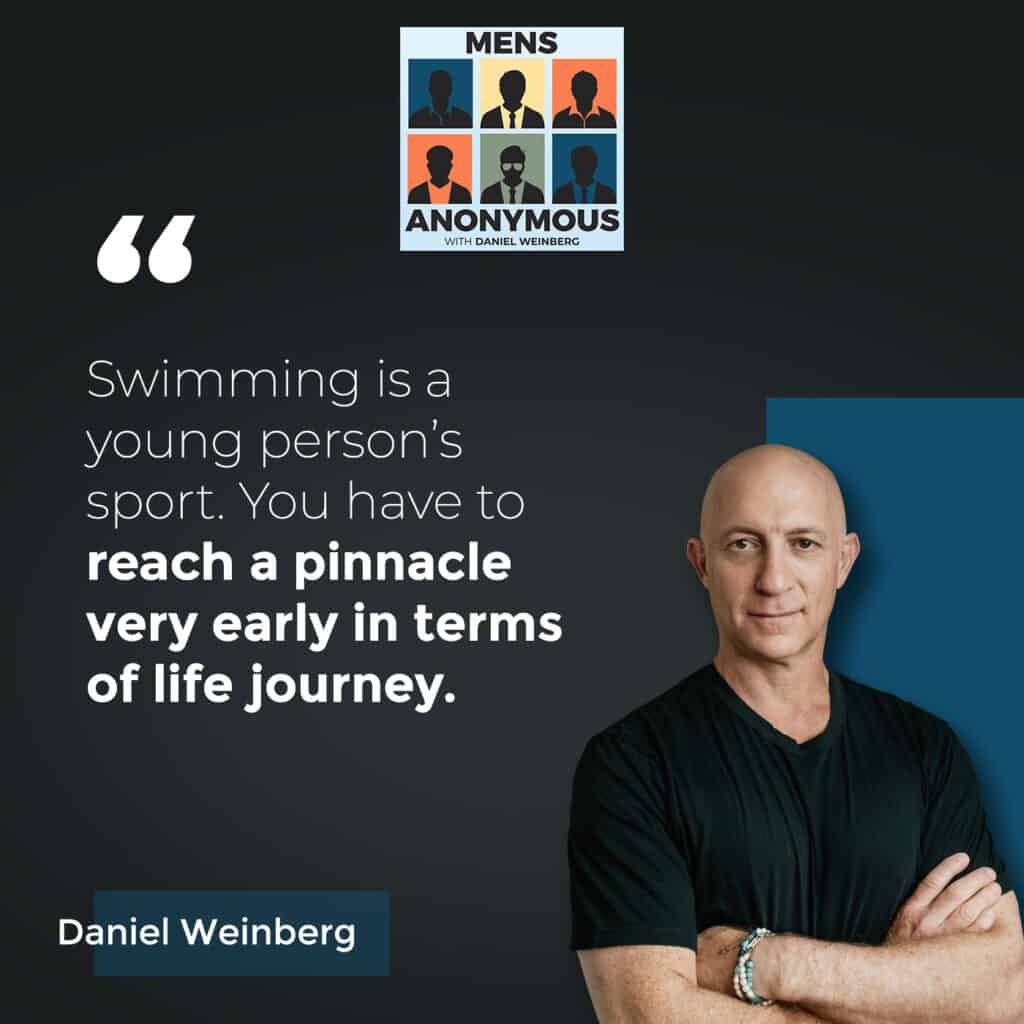
Swimming is a young person’s sport. You reach a pinnacle very early in terms of life journey. Your public perception and value become very much associated with swimming. It’s like someone working for a company for twenty years. Their success in their life is very much connected to another thing. For you, it was swimming. You had that shine as you moved beyond competing age. You did another Olympics after that as well.
I did Athens.
Were you in Atlanta before as well?
Yes. I went to three games. Around that time at Athens, cracks started to appear. I started getting injured and frustrated with my body. I was one of those guys who probably overtrained to give myself that mental edge, knowing others might not have done as much or swam as hard as I did. I started getting resentful of my body. It was a tough time between ‘04 getting back from Athens and then ‘07 when I retired the first time.
My relationship with the sport was a love-hate relationship. My headspace was the same as what it was before the Sydney Games but my body was starting to age. I couldn’t recover as well. A new era of swimmers was coming through. I couldn’t keep up with the progression. That was an interesting time. I found a new role on the team and became the elder statesman. I tried to lead by example through hard work and professionalism, staying devoted to my craft even when it was tough.
That was the first time when I first experienced a lack of mental toughness and sought support outside of typically my coach. For most of my career, it was just my coach and me. I moved out of home at sixteen and developed a close, almost father-figure-like relationship with my coach. Later, I moved out of the Institute of Sport and returned to Melbourne, injury after injury.
I started analyzing and projecting, “When will I retire? What will I do afterward?” That was never an issue for me. I knew reality would take its course. My family started a swim school business. I was fortunate to have great management, TGI, and my dad’s support. I started investing in properties. I knew I would be okay. It’s more about finding a personal identity.
We’re talking so much about my swimming but I feel that I’ve developed as a businessperson. I did a lot of stuff for charity. I’ve got different kinds of identities that I’m very comfortable with and have become a big part of my life. That’s where a lot of athletes fall short. They don’t plan for that transition into normality.
Going Into Retirement And Becoming An Olympian Again
Life before and after sporting success, let’s say. When did the wheels start coming off for you? When did you have so much success and then start turning? Your career was moving towards and you’re coming down the mountain. You passed the peak performance. Were you already married at this stage?
Yeah. I got married in 2006. It was probably around ‘05 and ‘06 when I started peeking over the fence about potentially what that other life is like. I had a child in 2006. Responsibilities came on board and I needed to start providing for my family. I knew there were issues when I started to almost self-sabotage my preparations in the sense that I wouldn’t do everything possible. I’d be out at dinners, drinking a little bit too much, and not getting enough sleep. It was little things that I would never even contemplate before that.
The discipline started waning.
It’s when that drive, which is almost subliminal, disappears. I knew I was in a little bit of trouble. In 2007, after the world champs in Melbourne, I announced my retirement. I realized that I couldn’t keep pushing my body. Probably one regret I had is that a lot of athletes take longer rests and then come back to the sport with a refreshed mindset and changing environment.
I always had an idea of going and training with Gary Hall at the race club in the US, training with different friends of mine, from Pieter van den Hoogenband to Gary, rather than being predominantly Australia-based. That never happened but I had a great experience in my comeback from 2010 to 2012. It’s that perspective of the sport. I got that love for the sport back because I knew the odds of me making the team were very slow. I was doing it for a completely different reason. I had two kids already.
I want to hear about that. You often see that in lots of sports like boxing, where they’ll make a final comeback or come out of retirement. What’s the thinking there? You know you’re not going to be as good as your past being where you were in 2012.
There is probably an element where it’s still a very fresh memory and that identity is still trickling along. As an athlete, you’re always curious to see if you could be competitive or add value to the team. I don’t think I could have picked a trickier time to make a comeback. I started a skincare business in 2000. I had two kids and a third one on the way. I was building a family home and then decided to make a comeback for my fourth Olympics.
What did your wife think of that? You’ve taken on fatherhood, house, and business. It sounds like you’re spreading yourself a little bit thin and then wanting to become another Olympian again, which is one and a half times a full-time job to start with.
In the book, I talk about how when you’re young and have the energy and the hustle, I didn’t give it too much thought. Most of the time when I go into anything, it’s all in. It’s almost like, “Why not?” That was a lot of my approach at the time. I had a very supportive family. I managed my schedule very well. I had a great coach in Rowan Taylor, who’s the national swim coach. We worked very collaboratively. It wasn’t like a junior swimmer-coach relationship. We were partners on this journey. It was exploratory to see where you could get a 35-year-old.
I got back to the same level that I did when I retired. I couldn’t go any faster. Unfortunately, the sport had progressed so I wasn’t competitive anymore. I was able to swim against Cameron McEvoy, Magnussen, and Eamon Sullivan, who was the new generation of our sport. It also made me realize when I was swimming, my coach once said, “You’re married to the sport.” He wasn’t a big fan of me having girlfriends. All of my travel was swimming-related. I didn’t have many holidays.
I proved to myself in that comeback that you can do a lot of different things at a pretty high level. You have to be very strict, disciplined, and present whenever you go from one thing to the next. You can still achieve being a functional and present dad. You can be a leader in a business and have other interests. It was almost an experiment to see if I could achieve that, to still be effective in different areas of life. I feel like I’m skimming through everything.
Dealing Mental Health Issues And An Autoimmune Condition
I now want to focus on changes happening in your life. When did mental health issues start creeping into your life? When did you start noticing that? You retired from the sport in 2012.
In 2012, I retired from the sport. I moved to Bali and was running a business in Melbourne. We were exporting a skincare brand called Milk & Co to about sixteen different countries. We were arranged in all the main retailers in the country. Milk is Klim backward. It lent itself to a very smooth transition into that space. It was probably created from the days when I was endorsed by Braun and doing a lot of shaving and grooming kind of stuff. I did a bit of work with Meyer and was within that grooming fashion space.
I was fascinated with branding, marketing, and creating something of my own. That was a natural progression for me. The business was growing. I was traveling, doing trade fairs all around the world, commuting back and forth, doing week-on-week-off travel, and flying back for board meetings. I was leading a fast-paced life, as you’re probably very familiar with.
There was a point where my approach and perspective on things hadn’t changed much or matured a great deal. I was still approaching everything at 100 miles an hour. I’d get off an overnight flight, go straight to the office, work a full day, and then go to the gym, socialize at dinner, get up at 5:00 in the morning, and do another session. No session was an easy flight. Everything was at full pelt.
At one point, I started getting a lot of niggles that’s popping up. My relationship fell apart because the kids were based in Bali. My ex-wife was here. There was a lack of connection. We started to drift apart with different goals. It was initially a collective journey, and then suddenly, you’re starting to bounce off and doing different things. We started to have different interests. Over time, as a marriage, it makes it tricky. That was probably the first stress that I had.
Going through a divorce was tough. I found that my feet as a dad and my role where I had the kids was 50/50. The juggle between two countries became much worse because I had the kids for one week, got on the plane, went to the office for one week in Melbourne, was back in time for Friday afternoon, and picked up the following week. That cycle kept on going. I was keeping up appearances and being a dad one day. For me, in retrospect, I took on too much from that point of view and didn’t slow down and prioritize things.
You’re a father in one country and one week as a business person or solo player in another country. It’s completely different roles. How long did you do that for?
Probably at least five years or so. It was tricky.
You drove 100 kilometers an hour into a brick wall.
I looked good and had this false impression of myself that if I looked good and was fit, everything would be okay. I put so much of my mental health on how I looked and how fit I was because that was what I knew. I never dealt with how I felt. I was either exhausted, on the go, socializing, or this and that. If you’re not going to stop, your body finds ways to stop. I went through another failed relationship, which was more stressful. Once through that, the company started having issues as well. We went through a sale, had new partners on board, and financial pressures, then COVID came.
In the lead-up to that, all these niggles started appearing. An ankle I had problems with fifteen years earlier started being annoying. I couldn’t walk. I had to get my ankle fused. I started having back problems and operations to sort out my back. I had detached retinas over a period of 3 or 4 years. I started losing vision in my right eye. I would fix these problems, Band-Aid them up, and keep going rather than addressing them. There were signs that I needed to stop and slow down. I was fortunate to meet my partner, Michelle. After another failed relationship, I had time to myself and bumped into Michelle here in Bali. We became inseparable.
Six months later, the world shut down. Six months after that, I couldn’t walk. That’s how fast CIDP hit me. I was ignoring all the signs of numbness in my legs and muscle wastage. I was addressing it but wasn’t doing everything I could to make myself better. I did all other things, from breathwork to mindfulness and having time to myself. Rejuvenation wasn’t a priority. It compounded for me. It started with leading a very fast-paced life to personal struggles, a little bit of financial stuff, more personal struggles, and then health towards the end. It tipped me over the edge at that last period.
Many people donate without wanting any recognition. They are the unsung heroes. Share on XWhat happened? Did you have a full-blown breakdown? How did you respond to it?
Physically, it was very confronting because my legs became like twigs.
Explain it.
I have a condition called CIDP, which is Chronic Inflammatory Demyelinating Polyneuropathy.
Very few people in the population have it, right?
It’s 2 in 100,000. It’s super rare. It’s where your body starts attacking itself. It happens with many different autoimmune conditions. In my case, it attacks the myelin, which is the nerve sheath around the nerves. By that, it can affect polyneuropathy in the hands, feet, arms, or legs. In my case, it only affected my legs. I started losing feeling in my legs, from my knees down. I lost my sense of balance and mobility. I couldn’t walk and was falling over. There was the confrontation of the physical aspect and then the mental aspect.
I felt like, in that period, my identity was being taken apart. We got to know each other as someone who achieved great things physically. Even after retirement, I kept pushing my body through anything I wanted, like adventure racing, long-distance running, kayaking, and cycling. There weren’t many physical limits I would put on myself. Also, surfing.
Not just that but the public perception. You’re on the front page of a magazine, seen as Superman, tall and incredibly fit.
That’s when I realized my ego started to poke its head out. I started believing that was all I was and that I was being taken apart. I was in denial and grief but I didn’t recognize it. COVID was both a gift and a curse because I was able to be on my own. I became a recluse because I didn’t want to go out in public. I couldn’t walk properly. I was relying on my kids and family to hold onto. I didn’t have to spend much time with anyone.
I was commuting back for treatment and being in quarantine. I wasn’t approaching my treatment or recovery with hope. I was just going through the motions. Many things that had once been innate to me, like physical routines, nutritional protocols, or supplements, I almost see as a default. I started pretending I was doing the things to help myself but I was drowning my sorrows. From 2019 to 2022, I was drinking too much. I was inactive. I wasn’t doing any mental health or self-development process. It came to a moment where it was confronting.
People who I love so much, like my family, my sister, and my parents, have unconditional love, not only because they are Eastern European, but it’s in their heart and blood, they would give anything for me. Also, my sister and my kids. When they sat me down and said, “We can’t see you do this to yourself because this is not you. This is not what Michael Klim is, even though this is what everyone knows.” I lost my character. I wasn’t bubbly or energetic. I was either bitter, resentful, or angry at what the world gave me. I was zoned out.
When you say you drowned yourself, you’re talking about drinking?
Yes, I drank a lot. I wasn’t abusing it but I was in a lot of pain from my condition so I used alcohol as medication to make sure I didn’t feel any of that pain. I didn’t want to feel much of it. At that point, I didn’t see a hopeful future for me. I felt like everything I had going for me was being taken away. It’s almost hard for me to talk about because I’m sitting here, probably only two and a bit years on.
My condition hasn’t gotten much better. I still have issues with my legs but I was able to reframe my identity. Through my position in society, I found a way to create a positive out of my negative situation. I was fortunate enough that Lifeblood gave me an opportunity to be an advocate for plasma and blood donation, which is my lifeline in terms of treatment.
Don’t skip over this because it’s no small thing you have to do. My understanding is, and correct me if I’m wrong, and I don’t know how regularly you need to do it, but when you do the treatment, you need to go for 2 days in a row and get 4 hours a session of plasma transfusion. I understand the plasma transfusion that you get takes 35 donors to give you a session. The extraction of high-quality plasma that you need for your treatment is not insurmountable.
There are so many people who donate without wanting any recognition. They are the unsung heroes. They gave me my life back because I was able to hold off my digression and a lot of the symptoms that were getting worse. I was able to find a good balance between my treatment and self-management. I gave up the booze. I started looking at what I was eating and prioritizing my life. I’m doing a lot of work on myself.
How To Turn Negativity Into Positivity
Let’s dig into that because you’ve gone from hero to close to zero in terms of significant physical and mental challenges in your life. You want to turn that around. Can you talk about the regime you and others could use in terms of turning such a negative into a positive?
In the beginning, I was going through the motions and doing things but half-heartedly. One thing that stood out for me from my sporting career that I knew I could implement was action. You have to do certain things for change to happen. You can’t have one foot in, one foot out. I try to implement that regimented mindset toward my treatment and rehab from the condition.
Experience transformation through incremental changes. You do not have to completely change your world upside down. Share on XFor me, movement became as important a part of my life as it was when I was training. You have to move it or lose it, especially with neurological conditions. It was movement every day, even if it was just stretching, mobility, cycling, or having a swing. For so many years, it was my meditative practice, which I didn’t even realize. I didn’t even do that for a few years. I brought back movement. It’s all about incremental changes. You don’t have to completely change your world upside down but even giving up the grog, changing your diet a little bit, exercising 1 or 2 extra days a week, or going to bed an hour earlier.
Add things that positively contribute.
It seems insurmountable when you look at it as a whole but over three months, my lifestyle has changed so much. I was in such a different frame of mind. I started coming back to this ego thing where, for so many years, I was receiving things, praise, and accolades. I had to change that tide. It had to become about me giving something back to others to then get something genuine. Becoming probably the highest-profile person with the condition in Australia gave me a little energy and motivation to help others going through this.
I was starting the foundation and easing this journey that most people might be experiencing. Not just the sufferers but the carers as well. There’s unpredictability with it. There’s no cure. We don’t know but hopefully, with the way the medical world is advancing, there will one day be new medication that can help with the regeneration of the myelin sheath and nerve regeneration. Even if there isn’t, with the help of orthotics, prosthetics, and so on, I’m still functional, coaching, and passing on my knowledge to others.
I’m able to look back, in hindsight, at the learning curves throughout my life and talk about it from three different chapters in my life, from my sporting life to my entrepreneurial normal life every day, father-businessman life, into being a wellness ambassador and someone as a CIDP sufferer, and how that is fueling my next chapter in my life.
Whenever people used to say, “When I got sick, it was the best thing that ever happened to me,” I used to go, “That’s rubbish.” My perspective on life and the things I appreciate has changed. I’m becoming less materialistic and appreciating quiet time and time with my family, partner, and kids, and experiences and memories. For a lot of my life, I was quite shallow, going from one experience to the next without appreciating a lot of those things. That was because of the pace of my life but there was a learning curve.
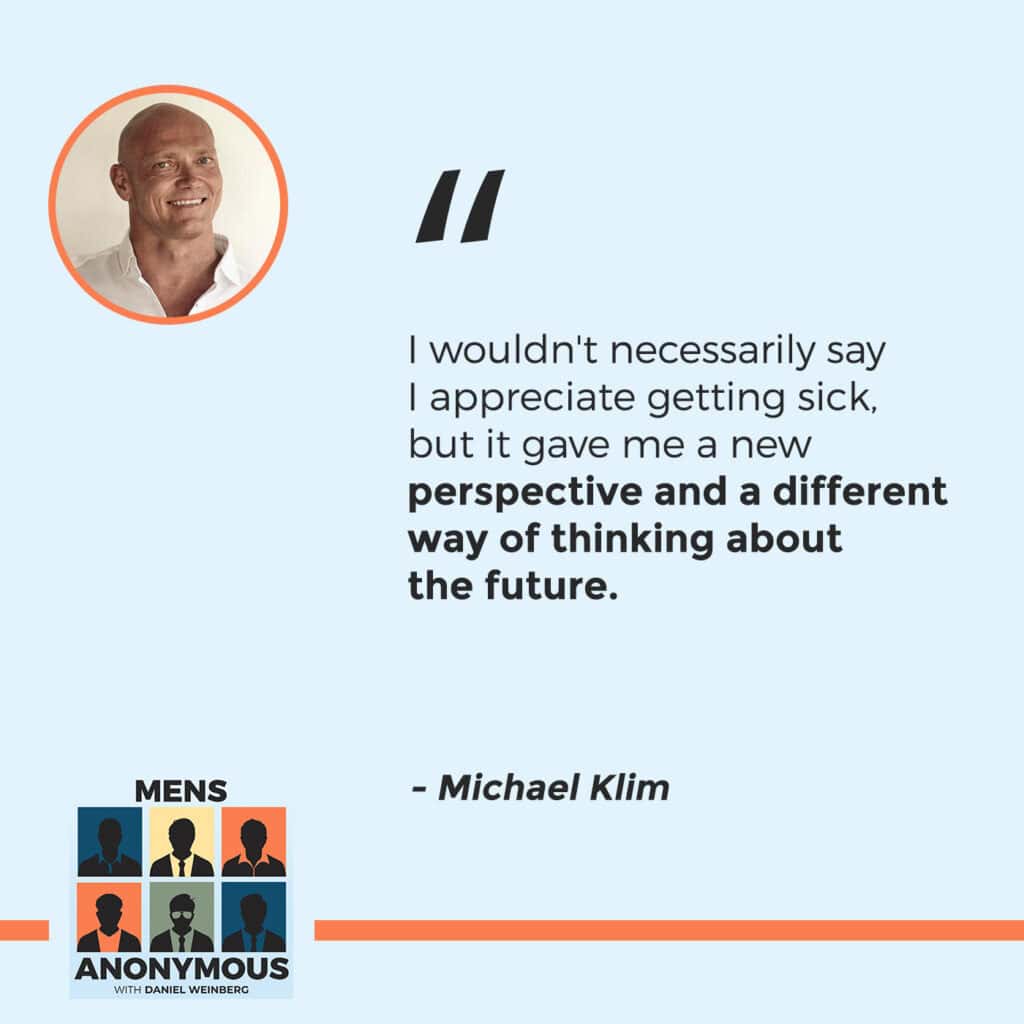
In my mid-40s or late 40s, it’s nice to be reflective on those lessons. I wouldn’t necessarily say I appreciate getting sick but it gave me a new perspective and a different way of thinking about the future. You can still have a huge impact. Not because I’m doing it to have an impact on the world but for me, it’s given me the drive to try and help others live a better, healthier life. CIDP gave me a bit of a new lease on life.
Being Vulnerable With Friends
How open are you with your close circle of mates? How vulnerable do you make yourself with regards to opening up about all these issues and struggles that you’ve had?
To be honest, it was one of the most fulfilling things I received when I got sick. There are so many people from my past, including our mutual friend, Tim, who would ring and check up on me, do things for me, pick me up, lend me cars, and give me places to stay. A lot of my relationships, which I sometimes neglected because I was so into my own stuff, became much better.
People who had gone through their own struggles, like Ian Thorpe, Hackett, and Daniel Kowalski, that nucleus of my friends became even closer. I can’t express how much I appreciate that. We are very open and vulnerable. We’ve gone past that stage of being much nail sinners, especially with my closest friend, who was an Olympic table tennis player. I met him at the Athens games. He’s one of my best friends. He held my hand through this whole medical journey.
This whole process helped me even to have this conversation. I wasn’t even able to string a few words together when I was sick. I wasn’t very articulate. Not that I am very articulate now but I can segment my life and pick up the things that worked and didn’t work for me, my personality traits. There were a lot of things that my awareness wasn’t there.
Were you feeling shame or embarrassment? Why do you think you weren’t able to talk at all?
I don’t know. It’s probably a bit of both. I felt like people were almost doing it because they felt sorry for me. There’s nothing wrong with that but I didn’t want to be that person. There’s a little element of that and I probably missed that old identity. I didn’t want to accept that swirl. I wasn’t in a place where I had done the work to reframe and recalibrate everything where I was heading in the future with this condition. It is going to be with me for the rest of my life. I had to do the work. Otherwise, I wouldn’t be a very functional person.
I very much enjoyed talking to you.
Thanks. We could do a second episode.
We could do a series.
If anyone wants to find out a little bit more about the chapters in my life, the Michael Klim book launched in 2024. If they want to find out a few more details, especially some of the swimming stories, they’ll be in that. Thanks for giving me the opportunity to share my life story.
Answering Rapid-Fire Questions
My pleasure. I ask a set of questions at the end of every show so I want to do the quick five questions with you. Who would you like to say sorry to, given the chance?
I have the chance to say sorry to my folks a lot. I have said sorry because there were periods in my life I wasn’t an easy person to be around. I was stubborn. I had a short fuse. They gave me so much in terms of opportunity and taught me family values and unconditional love. I don’t think I appreciated it as much as I should have.
What are you proud of being or doing in your life?
I’m proud that I’ve been able to transform and adapt throughout my whole life. I’ve been adapting all the time. I adapted when I was a kid, fitting into different cultures and environments, and then adapting as an athlete, finding my personality, way, and how I wanted to explore. Even adapting into an entrepreneur and then adapting to finding this resilience that was always there. It’s constant adaptation within my life. I’m proud that I’ve been able to come out the other side with hopefully some good lessons.
When did you receive kindness while needing it most and expecting least?
It’s that last comment I made about not just the swimming community but especially the swimming community. I mentioned the swimming friends from Daniel, Ian, Grant, Brett Hawk, Adam Pine, and our friend Tim Laforest. There are so many in the swimming community, like Manaudou. I could go on and on. Also, coaches who had coached me. Everyone came out in droves. I didn’t expect it. It was a beautiful period in my life. I needed it.
Back to your mother and father, who you seem to have a lot of respect for and are very fond of, what did your mother or father teach you that you frequently remind yourself of?
Mom and Dad reinforced this message very early on. I broke my first world record when I was nineteen and became a world champion. I went on to win many medals two years after that. Something I’m appreciative of is that they kept my feet on the ground most of the time, even though I’ve started to want to take off and get swept up in the excitement of the situation. My coach also reiterated that by saying, “It’s nice to be important but it’s more important to be nice.” It’s one of my favorite quotes. Being humble, approachable, kind, and caring is something I try to remind myself of every day.
The final question is, what is Michael Klim’s superpower?
My superpower has changed. I know superheroes have powers that stick with one but mine has become the ability to be of service to others, be open to share, and put myself on this kind of platform like you and I are doing, and for people to use that in anything that they may want to do with it like a learning curve. Being open and off-service is something that I feel is my superpower.
Michael Klim, a great Aussie and, more importantly, a great man. Thank you. I appreciate the time.
I loved it. It was good.
I look forward to chatting more.
Important Links
About Michael Klim
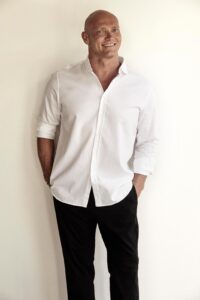 Michael Klim is a celebrated Australian Olympic gold medalist and renowned swimmer, whose career spanned 17 years. He competed in three Olympic Games, winning six medals, including two golds. Klim played a pivotal role in Australia’s iconic 4x100m men’s relay victory at the 2000 Sydney Olympics, setting a world record with his lead-off swim. He also holds 11 Commonwealth Games medals, 26 World Championship medals, and 20 world records. In recognition of his contributions to swimming, he was inducted into the International Swimming Hall of Fame in 2022.
Since 2020, Michael’s life has taken a new direction as he has faced the challenges of living with Chronic Inflammatory Demyelinating Polyneuropathy (CIDP), a rare autoimmune disease affecting the nervous system. Despite this, he has shown remarkable resilience, raising awareness about the condition and its impact on personal identity and relationships. Through the Klim Foundation, Michael supports others with CIDP and advocates for advancements in treatment.
In addition to his athletic legacy, Michael has ventured into entrepreneurship, with a focus on health, fitness, and wellness. He offers advice on maintaining physical and mental well-being, both in and out of the pool, while also sharing insights on lifestyle, travel, and self-improvement. Michael continues to inspire others through podcasts, such as the Rich Roll Podcast, where he discusses his career and ongoing personal growth.
Michael now lives in Bali with his partner, Michelle Owens, and their three children, Stella, Rocco, and Frankie. Through his health journey and business ventures, he remains a passionate advocate for resilience, balance, and purpose.